“Stick” To Traditional Weapons…

There is an unlimited number of martial arts styles from dozens of countries and backgrounds, all across the world. Some are surprisingly similar, despite having never intersected or crossed paths. I guess there’s only so many ways to throw a punch or kick. And throughout the centuries, some weapons decided to come along for the ride.

Having personally spent more than three quarters of my life studying an Okinawan style of karate, I’ve been exposed to a number of “traditional” Okinawan weapons including nunchaku, sai, kama and tonfa. I’ll just let you Google any of those terms that you may not recognize. And given that I’ve studied Kendo in reasonable depth means that I’ve developed some skill with the sword. But none holds a deeper place in my heart than one of the most basic weapons one could think of: the staff.

Let’s get real for a moment and agree that it doesn’t get any more basic than this. A stick is essentially the simplest and most basic weapon a person can grasp, and I’m sure that if we could have been there to see it, we’d also understand that humans have swung sticks around as weapons since the dawn of humanity. Given the styles I’ve studied and the culture from which it came, my version of the stick is referred to as a bo.

A typical bo staff usually measures about 6 feet in length, but can vary and reach almost 9 feet. The length of the weapon usually depends on one’s height and reach. A smaller, shorter version of the bo is a referred to as a jo, and is usually about 4 feet in length. This weapon is normally intended for children and martial artists of shorter stature. The bo will usually be made of a flexible wood, allowing for fluidity of movement and is tapered (thinner at the ends and thicker at the centre), which allows for proper balance during its use.

There are more variations of bo than I could possibly list, but they can be made of various different types of wood and shapes, including a rounded or hexagonal body, or even a square body. The shape makes no difference in the use of the staff and is mainly a preference. The staff has been included in some traditional martial arts styles such as Kobudo, which is an Okinawan style of weapons-based martial arts, or Bojutsu, which is effectively the Japanese martial art of training with the staff.

In simple terms, the staff is one of my favourite martial arts weapons because you can access one almost any place you happen to find yourself in a compromised situation. Mop or broom sticks, maybe garden tools… any wooden length of even a few feet can provide the benefits of bo training. Even if you don’t have access to Kobudo or Bojutsu in your area, many styles of karate will also incorporate the staff and can be an excellent addition to your combat repertoire. ☯

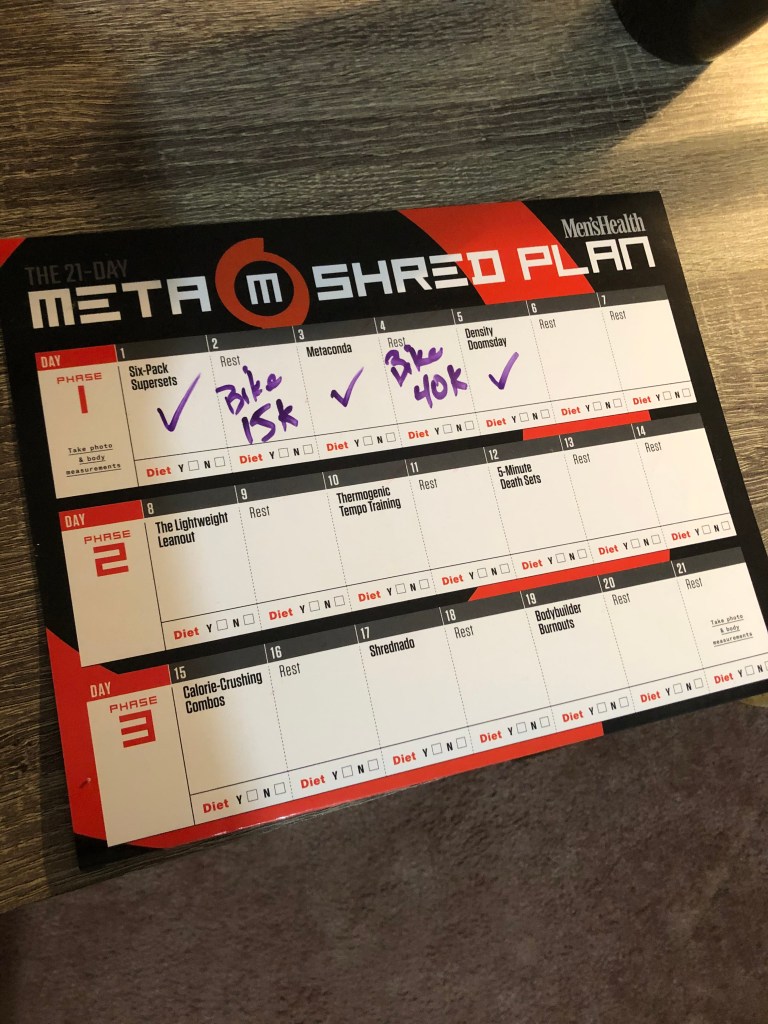
Workouts Of A Shredded Variety

I’m a big fan of including variety in my fitness routines. Besides martial arts, I like to include cycling, running, swimming and various forms of cross-training. In order to maintain one’s health and fitness, it’s of the utmost importance that one works on various aspects of physicality. I’m usually not one for specifically endorsing one product or another, especially since I consider my blog to be a forum for passing on information that can be interpreted freely by the reader, without direct influence.

Despite that fact, I’d like to share a 21-day DVD workout plan that I’ve used on several occasions. I’m referring to the 21-day MetaShred. Created by BJ Gaddour, it includes 9 workouts over 21 days and boasts unique workouts that never repeat themselves over the course of those 21 days. I first got it after seeing it featured in Men’s Health magazine and decided to order it. I’m usually not one for “fad” workouts, but I’ve done the full 21 days on a number of occasions and I have to admit that it never disappoints.

It’s been a few years since I ordered it, and I can’t seem to find a link to ordering it here in Canada. But I know that you can find the program on E-Bay, Amazon and various other online shopping forums. It includes a box with 3 DVD’s (3 workouts per DVD), a reusable water bottle that I use for cycling and a dry-erase 21-day calendar to track your progress and what workouts you’ve been doing.

As you can see from above, I recently decided to get back into MetaShred. I’m not one for sitting still, so I’ve been including my cycling between the actual workout days. Each workout is only 30 minutes, making it extremely manageable. My wife has joined me on some of these workouts often. It’s a nice way to work up a sweat when you need a change from your usual routine.

There are a lot of popular DVD workouts available on the market. I’ve tried some different things like Insanity, P90X and Body Beast. MetaShred just happened to be the one that suited me and works best with what I’m trying to accomplish. One of my friends has (or had) P90X and I’ve done a couple of those workouts with him, but I found the movements awkward and uncomfortable. My best suggestion would be to find friends, associates or co-workers who have some of these workouts and see if you can either join them or borrow the kit so you can try it for yourself.

They say variety is the spice of life. I’ve heard that on a number of occasions and I’ve often found it to be true. Don’t be afraid to branch out and try different things. on the road to fitness, there are very few wrong turns. ☯

Fill Up Your “Punch” Bowl With Proper Technique 🥊

I love a good action movie as much as the next person, and I’ve watched WAY more than my fair share over the past decades of my life. But having studied traditional martial arts and the human body during those same decades has often left me disappointed in how fights and/or punches are depicted in these movies. Often, you’ll see one of two extremes: someone who gets knocked out and gets back up moments later, no worse for the wear or two combatants who pummel each other’s faces and neither goes down until the penultimate moment where one is finally knocked out.

When I’m watching the movie, I’m totally in the moment and I could care less if the protagonist suddenly sprouts a third fist in order to win the fight and get the happy ending that the audience is hoping for. In the aftermath, I usually get analytical and start describing why “that couldn’t have happened that way” as my wife rolls her eyes at my running commentary of proper technique.

First of all, if you’re new to my blog I should start by pointing out that I’m not a medical professional. This means that you can take my description and information regarding the human body at face value, although I’ve studied and applied it over three decades of martial arts training. So, although I don’t have a thick piece of paper on my wall from some post-secondary institution, my accumulated knowledge still has some weight and value.

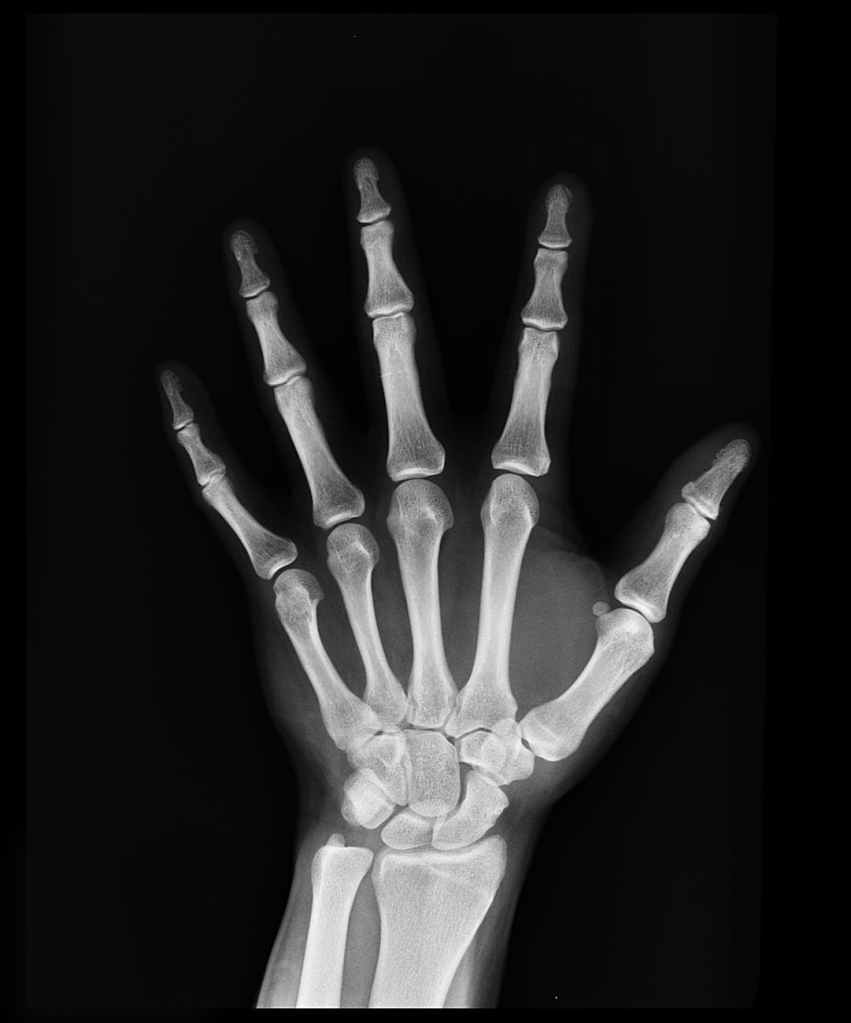
X-ray view of the human hand

Alright, now that the disclaimer is out of the way, let’s get back to the topic at hand. Punching is one of the most basic and rudimentary fight techniques. I’m sure that prehistoric humans closed their fists to hit each other before language was even developed. I don’t know, I wasn’t there. I may be old but I’m not THAT old. Give me a break, here…

But there is significant difficulty behind how a punch is supposed to happen and what the result may be. In considering my opening paragraph, what happens when someone is actually knocked out? The short of it, is that your brain moves around inside the skull and impacts with the sides. Once that impact occurs, the brain experiences trauma and brain cells start to die. Then, a combination of blood flow and neurotransmitter issues cause unconsciousness.

Now that the science of being knocked out is out of the way, quit yawning and take a sip of your coffee and listen to the important part. If you get knocked out as the result of a punch to the head, you SHOULD seek medical attention. Depending on how hard the punch is, there can be all sorts of permanent damage including but not limited to a concussion (which are not necessarily permanent but they are dangerous). But being knocked out will usually take several minutes to regain consciousness and once you do, its followed by confusion, lack of stability and balance. So what you see in the movies where someone gets knocked out then gets back up a few seconds later, full of indignation and ready to carry on is quite inaccurate.

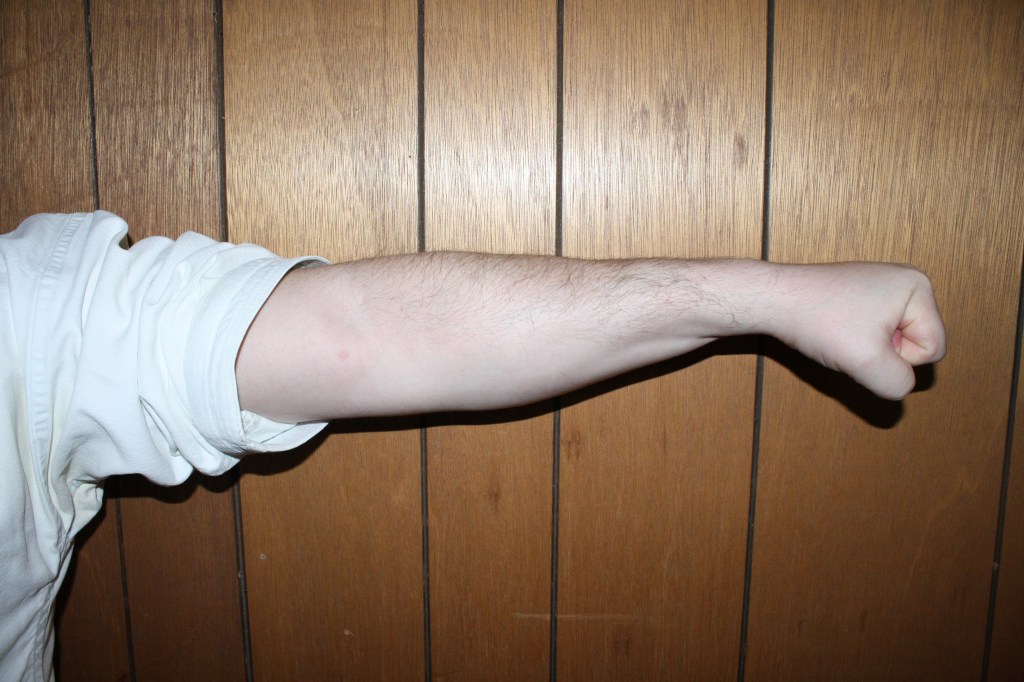
Proper alignment of a punch

Now that the target has been discussed, let’s cover the tool. Punching is a risky proposition. The human hand contains over two dozen bones, 8 of which make up the wrist. There are five metacarpals that constitute the palm with the remaining bones making up your fingers. The wrist and metacarpals are actually pretty delicate bones and require a little something extra in order to prevent fracturing and breaking if you’re to punch someone/something.

This is why proper bone alignment during a strike is so important, because it prevents such injuries. Martial artists will practice punching drills for hours where the proper alignment of the punch is engrained into our muscle memory so that when the moment comes to strike, the punch lines up without thought. This is why boxers and MMA fighters wrap their hands and wrists during training, because they focus on power as opposed to alignment and technique.

To be honest, unless you’re punching to the body or an area of soft tissue, a punch is a terrible technique to use on the head. Considering the fact that the head is wrapped in hard bone and is designed to protect the brain, coupled with the fact that your hand is chock full of tiny bones, throwing a punch to someone’s skull or even the jawline will likely cause injury to your hand. This is the part where you need to hope and pray that your first punch puts your opponent down.

The average punch, even from someone without training is strong enough to knock the average person out. Yes, I repetitively use the word “average” because every punch is different and everyone’s body is different. Something bear in mind. And I totally endorse the fact that the classic “action” scene where the two combatants exchange head strike after head strike without one of them going down can’t really happen. But should your strike not be strong enough, turns out to be a glancing blow or you just happen to be fighting someone with a thicker skull, you need to ensure your offensive tools remain intact long enough to survive the encounter.

All things being equal, if you NEED to strike the head I would recommend using an elbow strike. Yes, yes, an elbow strike means getting in closer to your opponent. But it also means less chance of injuring your hand and staying in the fight. An elbow strike doesn’t require bone alignment and your elbow is hard and stronger than you could possibly make your fist. If you plan on hammering a human skull, that would definitely be the better option. ☯

Gear Up For The Ride 🚲

I was recently asked what I bring with me on my bike rides, especially since I have Diabetes and my distances are starting to get longer and farther. I’m no professional athlete and I’m obviously not crossing the entire country (or the Province) but I certainly have some details to consider. Especially if I want to keep from, you know… dehydrating or passing out from low blood sugar.

So with that in mind, here’s a list of the items I carry with me, either on my person or on the bike itself, when I head out on my peddling adventures;

My two-wheeled cadillac
  1. A Bike: D-uh, right? But obviously you need to get yourself a bike that suits your needs. This bad boy is the Diadora Orbita 18-speed. It retails at about $300 (give or take a few bucks) and is a mountain bike. I point out that last detail because there are a few different types of bicycles including road bikes, comfort bikes and hybrids. The important thing is to ensure that the frame and wheel size are appropriate for your height and that you know what you’ll primarily be using the bike for. If you purchase your bike from a decent retail location, they’ll have specific sales people who deal with bicycles and should be able to help you with that. Depending on what you’re using it for, it doesn’t have to cost you a fortune. I would even recommend looking into getting a decent second-hand bicycle. But if you do, be sure to test it out before purchasing it;

2. A Water Bottle: It stands to reason that you need to stay hydrated during your travels. When getting your bike, you want to make certain that if it doesn’t already have a water bottle holder that it at least has the mountings for you to install your own. This is what I did. As you can see from above, there’s a second space to install a second water bottle holder across from the first one (the silver bolt in the lower right corner).

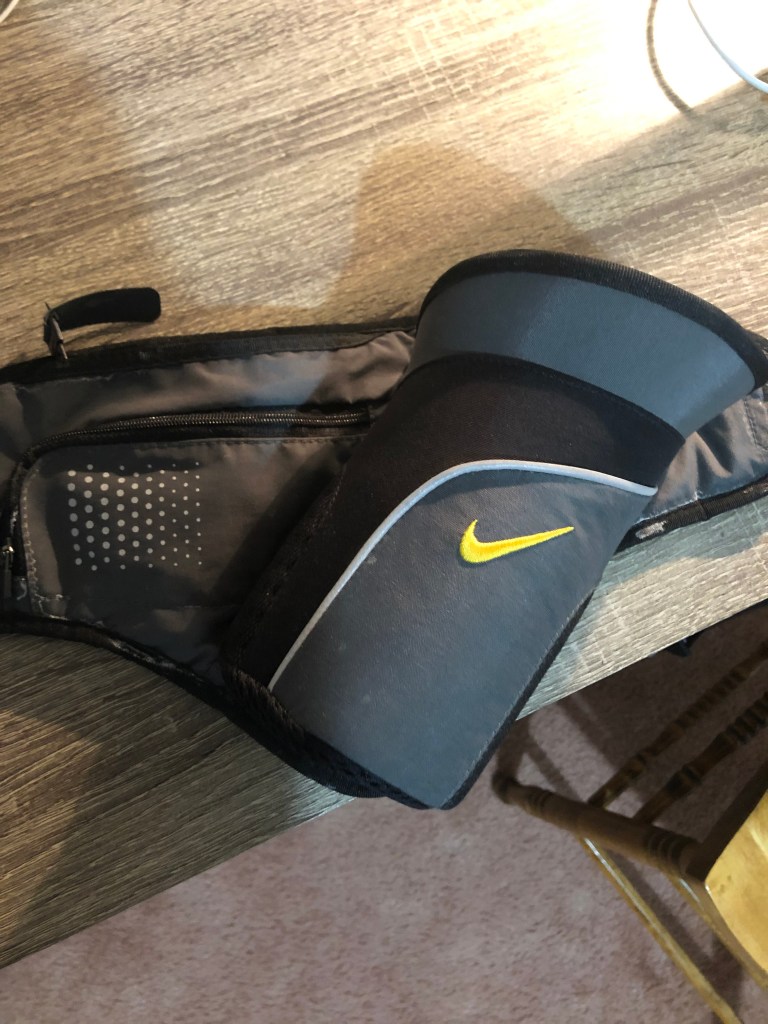
3. Second Water Bottle Holder: Although not a second bottle holder, I use this Nike Bottle Belt that’s actually intended for runners. But it works quite well while cycling as well. Between the two, it allows me to carry about a litre of water. I usually carry one bottle of water and one bottle of sugar-free electrolytes in order to ensure I stay hydrated and don’t succumb to hyponatremia while cycling. Eventually, I plan on getting a second bottle holder on the frame AND use the one pictured above.

4. Rear Accessory Pouch: There are a number of different frame-mounted bags and pouches you can get for your bike. The one pictured above is a small Diadora pouch I purchased at a local retailer that mounts under the seat. I use it to hold house keys, my first aid kit and anything that I would need to stop in order to use, such as nasal spray or painkillers. And speaking of First Aid kits…

5. First Aid Kit: Most people don’t consider this aspect, but if you’re out and about on a bike and are planning on travelling for a significant amount of distance, you need to consider the possibility that you may become injured. I purchased the kit as seen above from the “travel section” at a local retailer. At only $4, it contains a pair of vinyl examination gloves and basic bandages as well as some towelettes. This kit fits nicely in rear pouch of my bike and at such a low cost, it’s easy to replace if you end up using any of it. It’s a pretty basic kit, but honestly if you have an injury that you can’t cover with a bandage or band-aid, you should probably be calling for help;

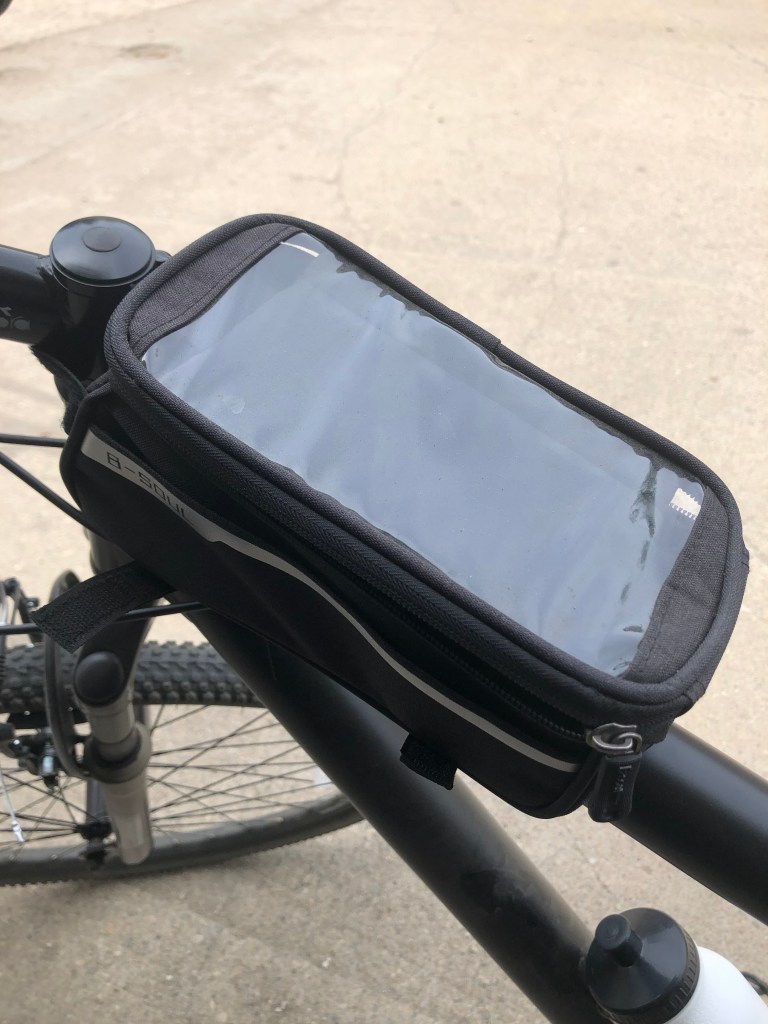
6. Main Storage Pouch: Alright, here we go. This pouch contains the essentials. I usually bring a small travel bottle of sunblock, gum, lip balm, my wallet and a small Tupperware container of jellybeans. The lip balm is important in order to keep winds and elements from drying and cracking your lips. Your wallet is an important aspect in the event you require medical attention or you happen to be approached by law enforcement (depending on where you’re cycling). The jellybeans are the best form of fast-acting glucose that works well for me. After about ten jellybeans, even some of my worst lows correct themselves quickly. This is also the place where I’ll jam a few dried meat sticks, some cereal bars and even some ibuprofen in the event I need it. The front panel is clear vinyl, allowing me to store my cell phone and see its display as I ride. This is handy as it allows me to use my GPS tracking app and monitor my mileage and what music I’m listening to.

Outside of what you may store on your bicycle, you want to make certain that you’re dressed in comfortable fitness gear. I wear a thin Under Armour long-sleeved jacket, which protects me from wind and other elements and also provides me with pockets for a few small items. I use fingerless gloves so that my hands are also protected from the elements but my fingertips are bare, allowing me to access the touch-screen on my phone.

You also want to make certain to wear an approved helmet and properly-fitted footwear. You’d be surprised how much of a difference it makes if you’re wearing sneakers that fit and are well broken in. Sunglasses are also a must, if not for UV protection, to protect your eyes from the wind and debris as you ride. As I continue to increase my distances, I plan on adding a rear bike rack with saddle bags. In the event that I start travelling for hundreds of kilometres, I’ll start including a single-person tent and a bedroll as well as changes of clothing and additional food and supplies.

I don’t want to get ahead of myself, of course. But the important thing to remember is that planning ahead is the important aspect. You want to make sure that you carry the essential items that you’ll require for the length and duration of your trip. Glucose, hydration and means of communication in the event of an emergency are always a must. ☯

To Learn Or Not To Learn

Let’s say you haven’t studied karate. Could you perform one of my forms? Right now? Without any instruction or teaching, could you protect yourself or others with a martial arts technique? If you answered no, that would be the typical (and wise) answer. The reality is that learning the martial arts is difficult enough on its own; let alone without the guidance of a proper instructor or Sensei.

Not everyone is fortunate enough to have a teacher. I know a number of fighters and martial artists that have committed themselves to learning through books, videos and simply by watching others. Although this CAN be accomplished, it’s an extremely difficult road to walk and most are unable to maintain their momentum. It’s a bit comparable to the guitar. When I was in high school, everyone was obsessed with grunge bands, and playing the acoustic guitar.

Tons of people went out and bought guitars with the intention of learning. Some bought primers to learn basic chords, some watched others playing… A few were even motivated enough to learn how to transition through four basic chords in order to play a simple rendition of “Time Of Your Life” by GreenDay (an awesome song, you should YouTube it, if you’ve never heard it). But within a year, most of those people would set down their guitars and forget about them by graduation and likely never pick them up again.

The same can be said of martial arts. It’s all well and good to read as many books on martial arts, philosophy and Bushido’s Code as possible; I encourage it, in fact. But if you want to learn any fighting art, you need at least some rudimentary instruction. You need someone to correct you, someone to guide you and someone to teach you the things you don’t know. Otherwise, how can you ever have a hope in hell of getting better?

I think it’s safe to say that modern society is a mixed bag of people who prefer their independence and people who expect to have everything handed to them. But as the old saying goes (and I forget who said it), “If you are not willing to learn, no one can help you. If you are determined to learn, no one can stop you.” If you are looking to learn, seek out a teacher. Find someone who has been where you are and has studied what you’re looking to learn. Not everyone is able to be a student; very few are able to go it alone. ☯

To Master One, Study The Other…

It stands to reason that in order to truly master something, you need to be committed to it. It’s very, very difficult to say, master a karate style if you’re training and/or studying in five different styles. Eventually, the differences in methods and techniques will catch up and confuse you, leaving you unable to properly master any one style.

As Master Robert Trias once said, “One Religion, One Love, One Style…” But your style should never stand alone. There are many things that you can do to help your journey along during your training. Many popular mainstream martial artists that you see on television or on film indulge in a number of other activities that the common person wouldn’t associate with martial arts.

Gymnastics or dance are some of the most popular ones, since they can provide a significant amount of benefit. It’s almost symbiotic, where dance provides benefit to the martial arts and vice versa. I started studying dance back in 2007, while living in Ottawa (that’s right, I can cut a mean rug). I absolutely LOVED it, and the instructor frequently asked me over and over if I was certain that I had never studied dance before.

I finally admitted to studying karate, which she immediately confirmed was likely why I was so good at dance, since it would help with balance, proper stepping and remembering sequences. And there are plenty of options as it relates to the martial arts, including music, poetry, gardening and floristry. But what I’m referring to, is specifically the examination and understanding of other types of martial arts.

Miyamoto Musashi wrote, “To learn the fist, study commerce. To only study the sword will make you narrow-minded and will keep you from growing outward.” It should make sense, right? When was the last time that you didn’t learn at least something from observing the actions of others? The same can be said of martial arts styles. By observing and learning a little something about say, Judo or Tae Kwon Do, I can learn a great deal about the shortcomings of my own style, the techniques I need to develop/perfect and what my style may be lacking as opposed to others.

Don’t be afraid to branch out and explore. As I’ve often said before, if you’re part of a martial arts club that discourages the observation and study of other styles, your respective instructor may not have your best interests at heart. Although you should ensure your dedication to a specific style, learning about others can provide benefits and correction that you may not get otherwise. Another perspective is never a bad thing. ☯

Because It’s There…🌋

Every once in a while, I’m reminded of something that I used to do in my youth. Specifically, things I used to do in my home Province of New Brunswick. I’m originally from a small town called Dalhousie (not to be associated with Dalhousie University, which is in Nova Scotia) but I would frequently travel to a neighbouring town called Campbellton, which is about 25 kilometres away.

Given that Dalhousie was lacking most amenities throughout the late 80’s and early 90’s with the drop in the paper industry as the digital age started to kick in, my friends and I would often lean on Campbellton as it was designated as a city (despite only having about 5,000 people) and had plenty of commerce, restaurants and stores. It also had the only Tim Horton’s in the area at the time, if you can believe it.

So we used to travel up there a lot, and when I hit my teens I started using my bike to cycle from Dalhousie to Campbellton. It’s ironic to think that just at the beginning of this year, I considered 20 kilometres to be a milestone, when I used to bike 25 kilometres to reach Campbellton, THEN bike around town and make my way back to Dalhousie. Oh, how youth provides a certain little something…

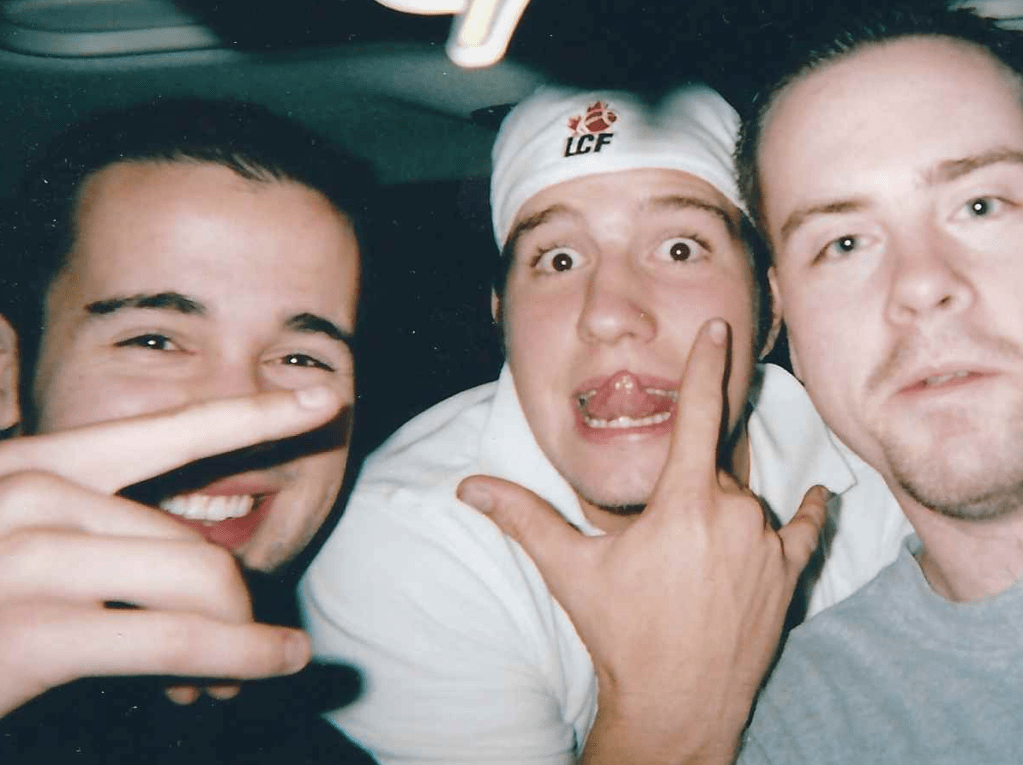
My friends Christopher (left), Kevin (centre) and I about to go climb Sugarloaf Mountain

In the late 90’s, I got into the habit of cycling to Campbellton quite frequently. Although once I got my driver’s licence and purchased a vehicle, my dynamic switched up and I started travelling up by car. I needed to find something to replace the exercise I was getting from cycling, so I chose to climb our local mountain, named Sugarloaf. Now, if you Google Sugarloaf you’ll find a number of different locations from around the world. But MY Sugarloaf is located on the southern side of Campbellton.

Sugarloaf Mountain, as seen from Highway 11, heading West towards Campbellton

Just to keep things interesting, I’ll give you some basic stats on this tree-filled lump. Sugarloaf Mountain is an extinct volcano. It was formed some 420 million years ago when thinning of the Earth’s crust allowed it to peak its nosy face out of the ground. It’s about 922 feet from base to tip, and has a walking trail around its base as well as a ski resort and multiple downhill skiing trails on the west side of the mountain.

I started climbing the mountain by its designated hiking trail for the first couple of years. But as I got bolder, I started wearing protective gloves and solid shoes and scaling the vertical sides, as well. I got a few friends to join me on some of those climbs, but they usually ended up quitting within the first 30 minutes claiming that I was out of my mind. And probably with good reason.

The boys and I, soaking wet after climbing back down in the mountain in the pouring rain

I miss climbing. I obviously don’t get to do much of it (none) considering I live in the Prairies now. There aren’t a great number of mountains out here. But I definitely plan on trying to make an effort to reconquer the mountain on the next occasion that I visit my folks. It’ll be interesting to see how different in may be, considering the mountain likely hasn’t changed, but I definitely have!

I haven’t seen or spoken to Christopher or Kevin in over fifteen years. We didn’t have a falling out or anything; we simply got on with our respective lives. And sometimes, that’s the way of it. Friendships sometimes come and go. But the good and happy memories you make along the way are yours forever. ☯

The Right Frame Of Mind

Developing yourself and reaching a goal can be difficult. Especially when you don’t allow yourself to have a strong frame of mind or proper perspective. Having a partner when you work out can be extremely helpful, as I wrote about in a previous post It Takes Two, Baby…🎶. But although having someone there to spot you and motivate you can be quite the benefit, you need to allow yourself to have a correct frame of mind behind your workout.

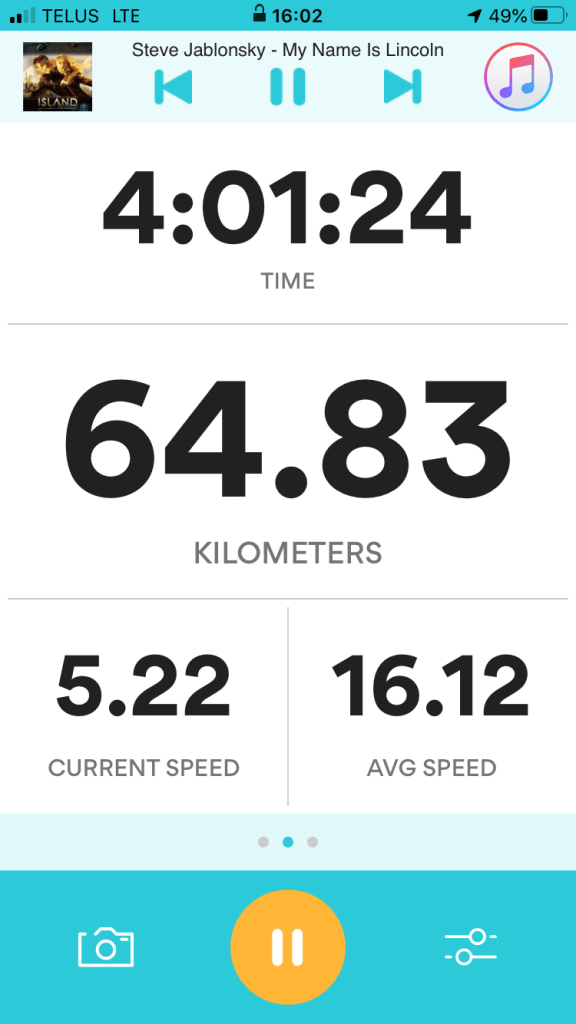
The distance I achieved yesterday

A friend of mine recently pointed out something important as it relates to fitness. Let’s say that you’re trying to lose some weight. You intend on climbing the nearby mountain with a partner, which is not only smart for safety reasons but can motivate you to push further in order to keep up. As you start climbing, you begin to feel tired. Your body is having difficulty continuing due to the excess weight that you’re trying to shed, and you feel compelled to stop.

Perhaps you tell your partner you need a rest. Or perhaps you tell them you can’t go on. Maybe you surrender to your body’s urge to have you sit down and give up. A terrible thing to allow, especially if you’ve set yourself some fitness goals that can be important for your health. For someone with Type-1 Diabetes, this can be a common occurrence, since fluctuating blood glucose levels can have the unfortunate side effect of making a person groggy and sluggish.

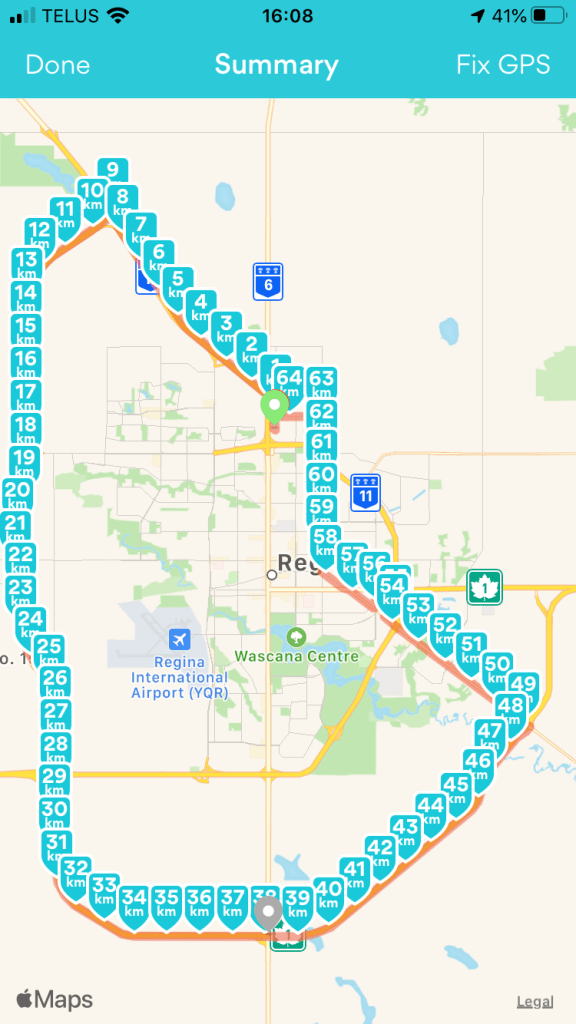
Yesterday’s route around the Regina Bypass

As I’ve often mentioned before, it’s important to ask yourself why? What is the reason behind your motivation? Your body should and will give out, long before you do. Why do you think people listen to music when they work out? It’s not simply for their love of it, although for some I would believe that’s included. It’s because music motivates us (and in some ways, distracts us from the physical exertion we’re going through).

This is why it’s so important to motivate yourself and stay positive. When I started cycling for fitness this year, I would get home after about a dozen kilometres and my legs would kill, I’d be exhausted and I would feel like total crap. But as you can see from the images above, the day before last saw me hit 65 kilometres. And yes, when I got home my legs killed, I was exhausted and dehydrated and needed food. But I can promise that a dozen kilometres now seem like a trivial amount, and I can do it quite easily in only about half an hour. This is something I wouldn’t have imagined when I started.

Sometimes it’s better to take things in small increments. If I’d hopped on my bike and tried to reach 60k on one of my first times out, I likely would have floored myself and became discouraged. But by staying consistent and building myself slowly, I’ve been able to keep building and developing how far I can go. The same can be said of martial arts or any fitness regimen that you may be attempting.

Let’s get back to our friend who’s attempting to climb the mountain. When exhaustion sets in and you feel like you can’t go any further, there’s no shame in taking a breather. But then, look ahead and spot a point further up the trail and tell yourself, “I can push at LEAST until that tree…” Then go for it. Once you reach that tree, maybe you’ll need another breather, maybe you won’t. But fix yourself another short goal and strive for it.

I think it was a Navy Seal that I had seen years ago, who described taking his training in steps, from day to day. At the beginning of the day, he would tell himself to simply get past breakfast. That’s it. Once this period had passed, he would focus simply on getting through the afternoon. Nothing more. With each piece of the day’s puzzle reached, he would be able to shift his focus and move on to the next, thereby guaranteeing he would make it through the day before hitting the rack. If he were to focus on completing the entire day, he would likely become discouraged and lack motivation. This is a concept that anyone can apply to their daily routines.

The idea is to allow yourself the time to grow. Have a positive and motivated perspective and you’ll go much further. If your thoughts are negative as soon as you begin, you’re sure to fail. how can you be motivated if you’re already defeating yourself? But if you focus on the positive, music, goals, health benefits, perhaps the scenery that surrounds you as you climb, you’re more likely to push farther and accomplish more.

Your own health and fitness is important; critical to your survival, really. And the proper mindset is what will help get you there. For someone with weight issues or Diabetes, staying fit and healthy can mean the difference between life and death. This is one of the reasons I push so hard. Life has too much to offer to lay down and die sooner than necessary.

And Diabetes or not, death will take me. Of this, there is no doubt. But I can promise two things: Death will lose ten pounds in sweat trying to make it happen and he’ll lose a mouth of teeth in the attempt. I intend to go down fighting. (Gee, that would make a great t-shirt) ☯

Life Isn’t A StopWatch

I hate being interrupted. Honestly, it happens in all aspects of life; there’s simply no getting around that. With children, work and daily obligations, interruptions to ANY task I may be doing is a common occurrence. And I’ve honestly come to expect interruptions and even become concerned when I’m not interrupted. This usually means that my son is up to something… (he’s literally pestering me for food as I type this sentence)

A good example is the fact that between the first paragraph and this one, I’ve been away from my keyboard for about twenty minutes making waffles for my son and trying to figure out why my Roku stick won’t play his damnable shows…(Burn in hell, Peppa Pig!) But the good news is with something like a blog, I can stop typing to deal with whatever the interruption may be and return to it once I’ve gotten clear. But what about something like working out? Can you stop your workout and come back to it, later on?

Life isn’t a stopwatch. There’s no way to pause time and restart it once we’ve gotten past whatever may be in the way. There are a finite number of hours in the week, and focusing on one’s fitness amidst needy children, work, chores around the house and anything else that may come along can prove to be difficult. How effectively can your fitness plans be instituted into your daily life in these conditions?

According to a blog post on Strong Mommas, there are four valuable tips to dealing with interruptions to your fitness routine. You can click the link to get the full details from the post, but I’ll synopsize these tips here, based on how I deal with things. There are only three tips listed in my post because #2 and #3 in the linked post are basically the same:

  1. Workout when you’ll be least interrupted. This can be a bit difficult, depending on your lifestyle and what job you have. The article describes the writer finally “sucking it up” and waking up at 5:30 in the morning to wake up. Screw that noise! I’m not a morning person to start with, so that’s the LAST option I would entertain. But it happens to be a period where the writer can guarantee she won’t be interrupted, so it works for her. Cycling workouts are best for me, as they happen to be outside the home. But even this gets interrupted, depending on what I have going on at home. If you have a period of the day where you may have some peace and quiet, this should be when you go for it. I agree on the writer’s last thought on this point, that working out during late evening when the kids go to bed can be rough, especially since you’ll likely be tired as well;
  2. Pick up where you left off. If your workout gets interrupted and you find yourself freed up, there’s nothing wrong with coming right back to it. This sucks, since you’ve likely cooled down while taking care of whatever caused the interruption. If you can get back to it within 15 minutes, you should be good to go. Depending on how much your body has cooled down, you may have to warm up again before resuming your workout. This will depend greatly on how tight your muscles feel and is subjective to the person working out. If you’ve barely reached halfway through your set, just start the set from the beginning;
  3. You may have to surrender and quit the workout. There’s a chance that depending on the workout and what the interruption is, you won’t get the chance to return to your workout. That pisses me off to no end and stubbornly, I often don’t include these instances in my logs. But as most fitness experts would tell you, doing anything is better than doing nothing.

If you’re anything like me, you should PLAN on being interrupted. Whether it’s a phone call, a child’s needs or anything else in the household, you can almost be guaranteed that your workout may be interrupted. I’ve found that what usually works for me is doing a shorter workout. Working out for only 30 minutes significantly increases the odds that you’ll get through your sweat before being stopped or interrupted. That being said, it also depends on what type of workout you’re indulging in.

The important thing to remember is to roll with the punches and not let it discourage you or stress you into NOT working out. You can exercise literally anywhere at anytime, so this is a pretty good flexibility when all things are considered. Look for opportunities and take advantage of whatever may be in front of you. For example, whenever I go for my eye injections in the city, I always walk from my hotel to the hospital, then back. It’s not an intense workout, by any means but it gives me the better part of over a kilometre of walking, which is better than nothing.

To be honest, I’m a creature of habit and routine, and I absolutely despise having said routines disrupted by anything. So I usually have to work pretty hard at not letting the anxiety levels rise to ridiculous levels. For example, while writing this post I was interrupted at least a half dozen times by the varying members of my family and their need of my assistance. Like I said, it’s GOING to happen, there’s no getting out of it. So plan accordingly, stick with it and keep pushing forward, no matter what the grind of daily life throws in your way! ☯

“Rowdy” Ronda Rousey

As usual, I’ve been reserving my Sunday posts for people that have inspired me or motivated me in some way. While going through my Kobo with my wife, we came upon the autobiography of Ronda Rousey, entitled “My Fight/Your Fight.” I started talking about the autobiography and about everything Rousey has been through in her life (up to that point) to get to where she is today. My wife suggested that I seemed pretty inspired by Rousey and that perhaps I should write about her. And here we are…

Many people in martial arts circles and non-fitness circles alike have expressed a love/hate relationship with Rousey. Some believing her to be more of a passing fad than a genuine athlete, some idolizing her as a true martial artist and pioneer in the women’s division of one of the most male-dominated forms of sport entertainment currently in existence. But the truth of it is she’s accomplished many great things. Most of which were accomplished through sheer force of will and has beaten odds that would have crushed a lesser person.

Rousey was born in California in the late 80’s and was born with a condition known as apraxia, which is a particular childhood speech disorder that made it difficult for Rousey to speak in a coherent manner for the first years of her life. This would be one of the first obstacles she’d overcome as she would eventually go on to speak normally, as anyone who has heard her speak in recent years could attest.

Rousey suffered tragedy early in her life as her father broke his back while sledding with Rousey and her sisters. Rousey’s father became a paraplegic as a result and took his own life in 1995. Years later, Rousey would begin training in the martial art of Judo, as her mother had been an accomplished athlete in Judo, having been the first American to win the World Judo Championship in 1984.

Rousey progressed, promoted and moved up the ranks in Judo and won more medals and trophies than I could possibly list here (you should read her biography for deeper details) and never gave up along the way. She faced personal difficulties at home, which saw her leave her family to train elsewhere and injuries that made continued training and development difficult. But along the way, she never stopped fighting, in the physical and metaphorical sense. Rousey became an Olympian by winning a bronze medal at the 2008 Olympic games, becoming the first American to win an Olympic medal in women’s Judo since its creation.

After winning an Olympic medal, Rousey retired from Judo professionally, and sought some direction in her life. Without getting into the nitty-gritty of it, my impression was that she slipped off the rails a bit when she failed to find that direction in her own life. I can definitely relate to that, on a number of levels.

Rousey fell into the world of Mixed Martial Arts in 2010 as an amateur, a term that wouldn’t apply to her for very long. She trained with the same passion and fervour in MMA and she had in Judo, and quickly came to make her mark on the sport and ultimately, the world. Her signature move was submission by armbar, and it seemed that no opponent could best her.

Rousey stepped into professional MMA in the following year and became Strikeforce’s Women’s Bantamweight Champion in 2012. Rousey would go on to be the first female signed with the Ultimate Fighting Championship, after a great deal of debate whether women would ever be in the UFC. Once part of UFC, Rousey was named the UFC’s first Women’s Bantamweight Champion, a title she defended over and over until her loss to another fighter in 2015.

Rousey was away from MMA for about a year before she returned to reclaim her title. She ultimately suffered another loss and unofficially retired from the UFC in late 2016. She was, however, inducted into the UFC Hall of Fame in 2018. Rousey has since moved on to professional wrestling, and has continued to make an impact there, as well.

The thing about Ronda Rousey is that despite the obstacles, difficulties and losses she’s faced in life and career, she never stopped fighting. Even at her lowest, when she felt she had nothing more she could lose, she found ways to rise up and pick herself up like a proverbial phoenix. Rousey has gone on to author books, star in action films accomplish inspirational things despite said obstacles.

If you want to learn about Ronda Rousey the person, I would definitely recommend picking up her autobiography, My Fight/Your Fight. You can get it from your local bookstore or you can get it as an e-book for your Kobo, which is what I did. It’s definitely worth the read and will give you insight on her character and her development as a person, as opposed to an entertainer and athlete. But, what an athlete! If you need some proof, just Google her fight record… From Judo to MMA to professional wrestling, the scales definitely tip in her favour.

As most of you know, I’ve never been a great fan of MMA. To a traditional martial artist, the term “mixed martial arts” doesn’t ring true under any circumstance. So, for me to be inspired and motivated by an MMA athlete is a bit of a step out of my comfort zone. That being said, holding a 6th degree black belt in Judo definitely helps. She’s a good combination of traditional and modern, with a warrior spirit to back it up. ☯