I usually write my posts ad nauseam, and often require a number of edits to eliminate them being twice as long as they are once they’re posted. Once in a while, I like to post something that simply to look at, without all the necessary background, citations and references. So, here’s what I found last week while randomly surfing the web…
I forget exactly where I found this little gem, but I’ve seen it floating around in a few places. What I love about this photo is the absolute look of intensity and determination on the kid’s face, despite the fact he’s tethered to what appears to be an oxygen tank. I’m ignoring the fact that he appears to be one belt shy of black, despite his young age. Let’s not go there.
But it goes a long way towards showing how much determination can pay off in the long run, and the fact that motivation has to come from within. This little guy reminds me of myself when I was younger. All guts and determined to live and grow stronger, despite the pitfalls and medical challenges that life threw at me. As long as you keep fighting, may lose some battles but eventually you’ll win the war. ☯
So if I haven’t grossed you out or scared you off with the title and you’re still reading at the moment, today’s post will be about karate uniforms. The “crotch” comment mostly references the wear and tear that the stitching on the crotch of one’s pants potentially go through during karate training. Mostly. But we won’t get into the “not mostly.” That can be for another day. But I digress… Moving on!
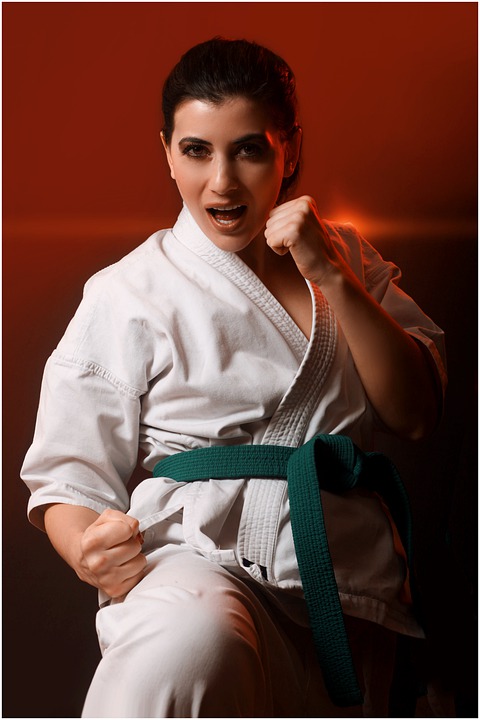
Karate is most often associated with the wearing of a white, cotton uniform or gi. But what most people are usually unaware of, is that karateka or students originally didn’t wear any sort of uniform while studying karate at all. In fact, you can still find a number of old black and white photos of Okinawan practitioners, training on the beach in nothing but a pair of shorts. In a lot of ways, this was preferable as it allowed teachers to see if proper muscle tension was being used by the students.
An example of a typical, white karate gi
The introduction of the recognizable, white karate gi as we wear it today came about as a result of it being introduced by Jigaro Kano, the founder of Judo, who developed the gi, which was later adapted by Okinawan Karate. Nowadays, you can see all kinds of ridiculous bullshit, depending on where you are and what dojos are available. I’ve seen karate gi of all colours, including blue, red, pink, camouflage and even multi-coloured. Since some of those colours have snuck their way into some dojos’ ranking systems, I think the whole thing is rather stupid and moves away from tradition. But that’s mostly because I’m a traditionalist.
Others may feel that it’s an evolution and one that’s unavoidable. After all, karate started with no ranking system at all. You had a teacher and you had students. No matter what your opinion or thoughts on the subject may be, the reality is that joining a modern karate dojo will usually involve the purchasing and wearing of a karate gi at some point, which brings me to the content of today’s post. Over the past 30-plus years, I’ve burned my way through about a dozen different gis, for many different reasons. I’m going to share some of that here, so that if you’re looking to buy a martial arts uniform for the first time, you’ll have an unbiased opinion of multiple brands. This is where I should clarify that I neither endorse nor discourage any specific brand of sports apparel, nor have I accepted any compensation for any positive comments provided herein. Buckle up!
First, let’s start with the basic, bare bones options. As seen in the photo above, I use a black, cotton karate gi that’s manufactured by Century Martial Arts. I use this one because the Regina Institute of Kempo Karate where I currently train, use black gis as opposed to white. Not a big deal and I’ve often worn my white gi on laundry days when I didn’t have my black one available. This cotton gi is single-layered and single stitched, making it ideal for beginners and junior belts, since there may not be as intensive a level of grappling and grabbing involved. It’s also comfortable and easy to wash, making easier to maintain even though it may not last as long as the subsequent brands below.
There are a few of these really good North American companies that manufacture some reasonably low cost karate gis. I love Century Martial Arts! They have an American and a Canadian website and have a ton of martial arts training equipment. But I need to calm down; we’re talking about uniforms. In New Brunswick, Sensei used to obtain his basic karate gis from a company called GeneSport, which is based out of Quebec. They had that same single layer and single stitch hem, making them an excellent, low-cost option for beginners. I went through three of them during my time climbing the junior ranks. But once I stepped up to brown belt and things got rougher, I needed something that could keep up.
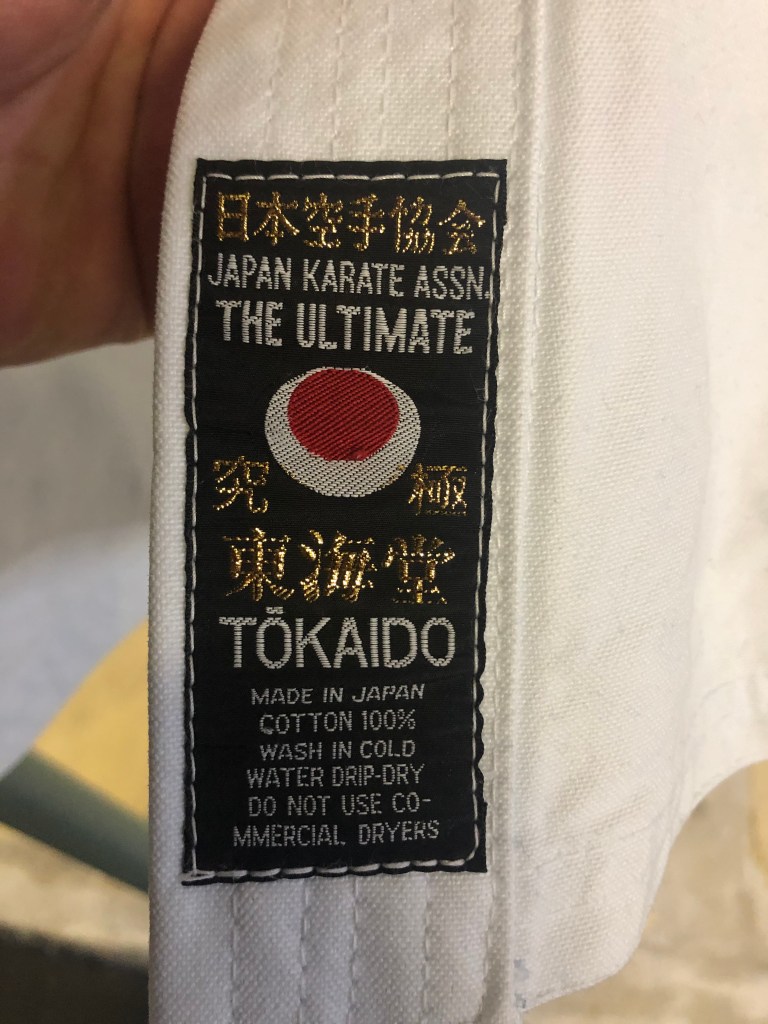
Next, we have the Tokaido. As you can see from the tag above, this is a 100% cotton karate gi that has double and sometimes triple-stitched hems for durability and strength. This company boasts being the oldest manufacturer of karate uniforms. I went through two of these during my years climbing through brown and black belt. They’re of a much thicker cotton and are an excellent quality. I can highly recommend this brand to someone making a long-term commitment to karate. I still have one today!
That being said, buyers should be aware that you’re paying quite a bit for that quality. As a comparison, my last GeneSport gi was roughly $40 (in 1996) and my Century gi was approximately $60 (2016). My last Tokaido cost me $230, but I still HAVE it! And it’s still functional, despite some holes here and there. So deciding on which brand to settle may have a great deal to do with one’s budget, especially if you join a McDojo that’ll charge you an arm and a leg for absolutely everything. But before I go on a rant, let’s move on to the last one…
The last brand I’ll touch on in this post, is Shureido. This company holds a special place in my heart, as it is a small, privately owned manufacturer of karate gi and martial arts weapons and equipment located in Naha, Okinawa. I visited this location in 2001 when I traveled to Japan, and I had the pleasure of getting myself a karate gi with Uechi Ryu’s banner embossed directly on the gi jacket. My black belt is also from Shureido and is stitched with my name and karate style. It’s pretty sharp.
Although they have a US distributor and an official Facebook page, there doesn’t seem to be an actual website available. This puts them in a bit of a different category than other manufacturers. I’ve recently reached out to the US distributors as well as sending a message to the Facebook page, without any response thus far. But since they cover all Okinawan and Japanese territories as they relate to karate and kobudo, I would imagine that they’re pretty busy. Cotton material and double or triple-stitched, these gis are top-of-the-line and are prominently used in the tournament environment. At least they were, when I was there in ’01.
These are the top-tier of price range, with a gi costing anywhere ranging from $250 to several hundred dollars, depending on size and accessories. Since I got a specialized gi and specialized belt, my package cost me well over $350. So it may not be ideal in terms of budget. Another issue is that my increase in size over the past five or six years has made it to snug to train in, which is problem. But I’ve had that gi for twenty years, at this point. It’s seen me through my black belt test and all the fun, in-class violence that ensued.
What level and quality of gi you decide to purchase depends on your perspective. An advanced student who buys one of the lower-priced, single-stitch gis may find themselves replacing it within a year or two as it’ll get torn to shit while sparring and grappling. That’s the issue I used to face. So if you burn through three or four of those gis, you’re already halfway to the cost of a basic Tokaido gi, which will be tougher and last longer overall. So you need to find a way to balance the scales.
You may also find yourself limited by the requirements of your dojo and what THEY require. Most traditional and functional dojos don’t care what their students wear, so long as they train hard and put in some effort. That is, until the time comes for a significant climb in rank. Most dojos don’t want to issue a green, brown or black belt to someone in their sweats and a Blink-182 t-shirt. But if you reach those ranks, the safe bet is you’ve invested in a gi already. The important thing is to have your gi loose enough to be comfortable and allow movement, while being snug enough to prevent snagging and grabbing on your opponent’s end. ☯
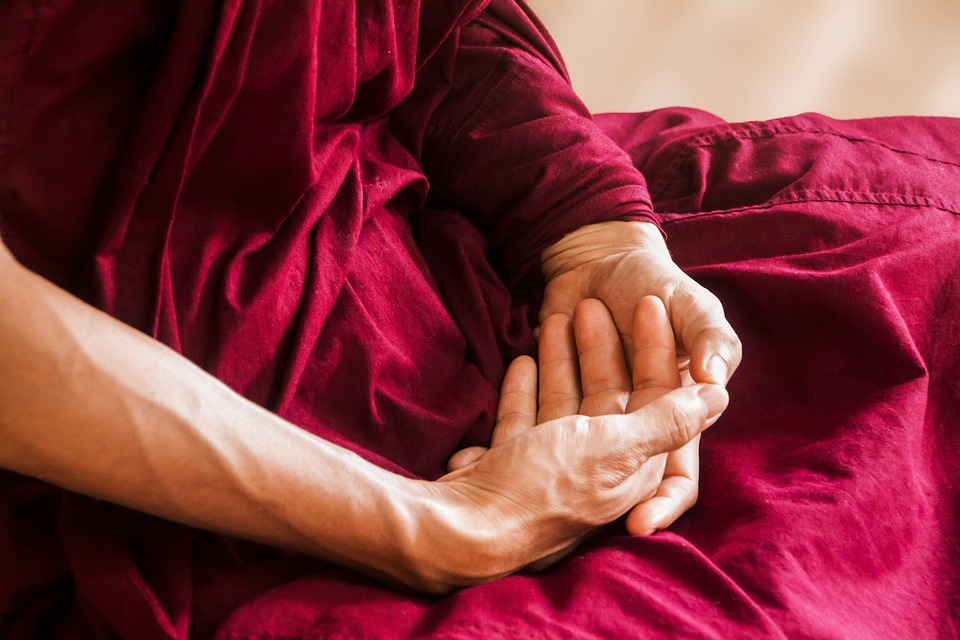
One of the beautiful things that I’ve discovered about meditation over the decades, is that there are so many ways to do it. In fact, I would challenge you to go Google “Types of meditation” and I can promise you, you’ll get some lists. Some of the best and more prominent examples I can think of include yoga, which is stretching movements that prepare the body for extended periods of sitting for meditation, and Tai Chi, which although a martial art, holds many aspects of moving meditation and almost puts you in a meditative state if you’re practiced enough to go through your movements on muscle memory alone.
But if you look into it, even on its surface, you’ve got moving meditation, sitting meditation, mindfulness meditation, focused meditation… It can become a bit convoluted, especially if you’re a beginner and are looking to TRY meditation and aren’t certain which type would be right for you. In Zen Buddhism, we practice a form of meditation referred to as “Zazen,” which is loosely translated as “seated meditation. Since some different branches of Buddhism describe and define Zazen differently, I won’t muddy the waters by going into deep detail. But there are some really great pages that provide insight on the specifics.
As for myself, meditation can be difficult even if I’ve been doing it for decades, thanks to a lovely batch of medically-defined acronyms that make the inside of my mind feel like it’s hurtling through space on hyperdrive on a constant basis. This is why, through the practice of meditation, I usually try to empty my mind and think of nothing. Depending on your philosophical background, thinking of nothing is still thinking of something so it opens up a whole can of worms. But the practice of “no mindness” is described by the term mushin.
Mushin is translated simply as “no mind” and since thinking about not thinking or “nonthinking” is a part of Zazen, they go very well, hand-in-hand. Confused yet? Got a headache? Need to go do a quick shot of whiskey to get through all my confusing etymology? Go ahead. I’ll wait… Mushin is a term used a lot in karate as well, as the development and practice of our forms, or kata, require us to know them well enough to allow the body to do them on instinct while thinking of nothing. So I’ve been familiar with the term for some time.
But when your mind is as busy as mine, you sometimes need an extra bit of something to help you focus. And this is where music comes in. Although traditional dojos won’t usually play music during training, I’ve found that music can be an excellent addition to your training regiment and adds a certain little something. IN fact, you can read my thoughts on that very topic here. I’m surprised I found that old post, since I wrote it in February of LAST year and after almost 800 posts in just over two years, I’m starting to forget what I’ve written about and what I haven’t. But I digress…
My point is, a little touch of music can go a long way towards making your meditation efforts easier and more effective. For myself, I enjoy having some classical music playing in the background. The complexity of sound and varying tones and volumes occupy my conscious mind, making it possible for my subconscious to stretch its legs and feel around a bit, unhindered. By focusing on one singular aspect of external stimuli, it allows thoughts and ideas to float on by without my getting involved with them, which is a big part of Zazen.
I also have several hundred “spa” type instrumental songs or “meditative music” on my devices, and those are extremely helpful as well. If you meditate frequently but have never tried music, I highly recommend it. Listening to music on its own has been proven to reduce stress, depression and elevate your mood. There are even studies that have shown it helps with heart-health as it improves blood flow. I have no source on that last one, but it’s pretty cool if it’s true. So add music to meditation, and I’d say that’s a pretty calming combination.
Meditation is one of those things I could write about or talk about at length. But in the interest of keeping my posts readable without having y’all fall asleep at the keyboard or on your devices, I’ll call it quits here. But should any of you have questions or curiosities about meditation, I’m always up for a good discussion. Feel free to reach out. Otherwise, settle into a nice seiza, put on some soft music and let your mind think of not thinking… ☯
Working from home may seem like a dream come true, but it can carry it’s own set of problems and difficulties that our animal brains simply don’t recognize when faced with the prospect of staying in our jammies while working. More and more as time progresses, the possibility of working from home is becoming more of a reality, as most companies and corporations work towards trying to maintain social distancing among their employees and to prevent unnecessary in-person contact.
Until recent years, working from home was a possibility reserved for private business owners, multi-level marketing or “direct” marketing salespeople or for people under special circumstances, such as a physical handicap or a family situation that didn’t allow for work outside the house. But since it’s 2021, and almost every conceivable administrative job hinders mostly on the digital frontier, more people have been staying at home to work since employers have not only been allowing it, it’s been encouraged.
Despite this reality and like everything else in life, working from home includes some good, some bad and some ugly. I’ve read a number of different articles, most of whom have provided the same basic recommendations for working from home. And since I’m too lazy to link almost a dozen different articles into this one post, let’s just go ahead and call the following list “my opinion,” shall we? But based on this reading and some of my own experience, here is my top ten things to remember when working from home:
Have A Morning Routine: This is a big one, and the most consistent one I’ve found in all my reading. Make a pot of coffee and much down a bagel while checking Facebook? Sure. Have a hot shower and make the bed? Absolutely. Just make sure that you have a dedicated routine that starts your day. Doing this programs your brain to understand that the day is starting and will help to shake of the vestiges of at-home fatigue;
Maintain A Fixed Schedule: This is another big one, as many people feel that working from home without supervision makes it easier to spend the morning binge-watching a show and getting to work in the afternoon instead. But doing this will not only affect your productivity and make it harder for you to have any “get up and go” once you DO start work, eventually your boss will likely notice the lack in productivity and you may suddenly find yourself being “that employee” who isn’t keeping up;
Have A Dedicated Workspace: Yeah, okay… I’ll stop saying it because they’ll ALL be big ones. This is SUPER important because the area you decide to work will be the area you associate with work. My wife was working from home at our kitchen table for the longest time while our infant son grew through his first year and she needed to be on hand as he was nursing. But it was chaotic because the table was always loaded with work materials during meal times. Plus, with two destructive children in the house, there’s always the possibility she’d have some of those materials damaged. Both of us now have a corner of the house that’s dedicated to our respective work. And for the most part, our kids stay clear of it;
Schedule Breaks And Observe Them: This seems like a redundant point to make. Most people would be inclined to think, “I take breaks during my day…” Maybe, but the question comes in the form of how MANY breaks you take and when. Treat your day as you would if you were at the office. Take a lunch hour (or 30 to 45 minutes, depending on what your company’s policies permit) and take the number of breaks appropriate to maintaining proper health. People tend to forget that remaining in a seated position for hours on end does a whole bunch of bad stuff to the human body. This can include bad posture, spine and back damage, development of chronic pain, not to mention it will affect your metabolism and likely make you go out of your mind from staring at a screen too much, which bring me to my next point;
Move Your Eyes Away From Your Screen: Since you need to get up from your desk every once and a while anyway, you should be having your eyes focus on something natural that isn’t a screen. Stay off your phone, stay off your tablet and keep your eyes away from any surface in the home that “projects” light. Take a few minutes to look outside and let your eyes adjust and focus on something else. If you feel the need to check emails during your break, then it isn’t a break. Sources vary on how often you should be standing up. One source says ten minutes of standing for every half hour. Another source says fifteen minutes for every hour. That’s the one I usually opt for;
Continue To Develop Yourself: Sitting at home to work may give you the feeling or impression that “this is it,” as in you won’t be doing anything different than what you currently are for the duration of your remote work. You couldn’t be more wrong. Be sure to get on your supervisor and make your career goals and intentions clear, voice your training wants/needs/expectations. Once that’s on the table and your boss is made aware of what you want, start looking into it. I can’t tell you the number of times I’ve been online to look up courses, seminars and training. This shows that you have some initiative and if added to a reasonable learning plan that outlines how it would benefit the company, you may even have some of it paid for. And considering the amount of institutions that provide online learning, just about anything is possible, nowadays;
Be Professional: This likely won’t be a popular opinion with most of my readers and it can be SO easy to attend that scheduled Zoom meeting with no pants on. But you can never be prepared for what MAY happen, so you want to maintain an air of professionalism while you work. Imagine you’re asked about something you need to to go get, so you have to crab-walk your way off the screen in order to avoid your boss and co-workers seeing your polka-dotted Hanes? Getting dressed for work is a definite start. Despite any video meetings you have on the go. This is a bit the same as having a morning routine. Getting yourself dressed and ready for work programs your brain to associate it with working. I don’t know about you, but I don’t like associating my pyjamas to work;
Be Mindful OF Your Health: This is a pretty straightforward one, but even if you’re sitting at home to do your work, you want to ensure to take proper care of yourself as it relates to a healthy diet, plenty of exercise and paying attention if your physical and/or mental health start to feel like they need a refresher. This brings me to my next two points…;
Maintain Contact With Your Boss and Coworkers: It can be pretty easy to feel like an army of one on a secluded island when you’re doing all your work from your home office as opposed to an office setting where you can chat, socialize and take breaks WITH coworkers. There’s a lot to be said for that social aspect, as it helps to bind people together towards common goals. So whether it’s Zoom meetings or stepping into the actual workplace on occasion, be sure to keep open lines of communication. It’s definitely not a Nerf gun battle, but it’s better than nothing; and
Go Outside: One of the things I’ve always had difficulties with is being cooped up in an office environment for 8 straight hours. I’m the type of person who needs to be moving so stepping outside the house a few times a day, whether on breaks or during lunch, will help get you through the slump by getting some fresh air, sunshine and gets you out of the house. If you wake up at home, work all day at home and then go to bed at home, it can start to get a bit overwhelming to be inside the same four walls, 24/7.
There you have it, folks. Hopefully these can help or give advice to anyone who may be working from home for the first time. Some of these are a bit on the subjective side, which is why I’m considering this an opinion piece as opposed to citing a bunch of sources, but a simple Google search will also provide all sorts of tips, suggestions and recommendations for keeping proper care of yourself while staying at home. Further that, it’s important to remember that if you have Diabetes, all of those health factors become aggravated as just about EVERYTHING affects Diabetes and blood sugar levels. So you need to be certain to take proper care of yourself.
Last but not least, working from home doesn’t mean you can’t ask for help and resources when you need them. Even if you happen to be working from the comfort of home, you have every right to be provided what’s needed to do your job properly. Don’t be afraid to reach out and ask for something if you need it. ☯
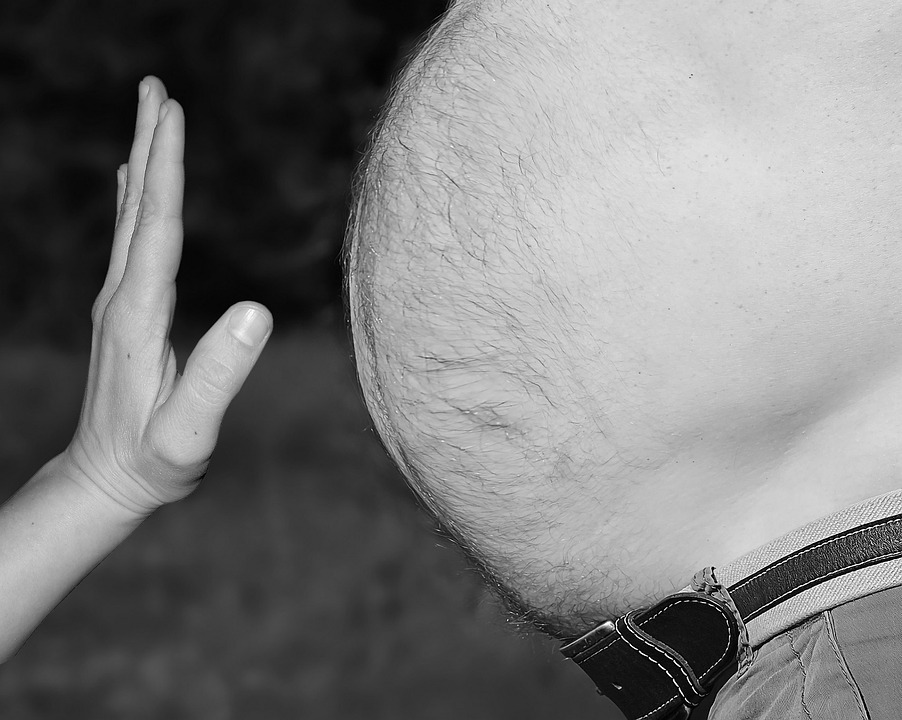
Before everyone jumps at me and decides to lynch me in a city square, let me start this post by premising the fact that I’ve never been the type to call a person fat… I totally agree that this is a derogatory term; one that’s been an issue since society’s perception of a pleasing form has been slim and muscular. It hasn’t always been so, but this seems to be the preference for now and considering the depth of society’s sensitivity towards being labeled or name-called, I want to be sure that everyone understands that when I refer to “fat,” I’m talking about the actual substance that causes weight gain and obesity. I’m not here to body shame or name call!
Now that I’ve clarified that I’m not some judgmental jerk and that I’m simply trying to help, let’s discuss what fat really is. Contrary to popular opinion, body fat isn’t limited to one’s gut or hanging off the arms. There are two types of body fat. The first is subcutaneous fat. This is the stuff that sits just underneath the surface of your skin and makes your gut look distended. It’s what’s getting poked on the Pillsbury Doughboy. But I digress… The other type is visceral fat. This is the nasty stuff that gathers around your heart, arteries and other organs. All caught up? Good. Now, let’s talk about this fat…
There are a lot of reasons behind WHY a person will accumulate an increase in gut size, including poor dietary choices, lack of physical fitness, alcohol consumption and in some cases, medical or genetic predisposition. I know that even I’m guilty of having gained what I like to refer to as the “COVID-19 pounder,” which refers to the nearly twenty pounds I’ve gained since the world turned into a lockdown nightmare. Diabetics will generally have difficulties with weight since insulin is a hormone and blood sugar management can make slimming down a bit difficult.
But for people in general, it can be a simple matter of just getting up off the couch and doing something. ANYTHING! Even if it simply means going for a walk. Work and lifestyle can often make it difficult as well. I know that when I was doing shift work, it played absolute hell on my fitness routines. Working overnight meant that I was usually blasted during the day and didn’t want to work out. Lack or poor sleep will also throw a wrench into your gut-slimming efforts. That’s why one needs to INCLUDE all the aforementioned aspects, fitness, diet, proper rest and good lifestyle choices, into one’s daily life.
In some cases, and the reason I’m actually writing this post, one faces a “chicken and the egg” scenario… What I mean by this is that a person will gain a bit of weight and will want to burn it off. But some excess of weight may make that person lethargic, tired and lacking in motivation to actually exercise. The result is lack of exercise and poor dietary habits will cause more weight gain. Wash rinse and repeat. I have a friend who is actually facing this scenario. He’s gained a significant amount of weight over the past few years and finds himself unhappy with the state of his body.
I’ve been trying to have him come work out with me, but he’s convinced he wants to start to his own because he wants to slim down first, despite my stating there’s no judgement. The problem is, he isn’t starting. This means the weight goes nowhere, he lacks exercise and fitness, and his shift work is dragging him further down the flubber rabbit-hole. He continues to be unhappy, which leads to further lack of motivation to do something about. Chicken and the egg. Brutal.
Just to be clear, fat is something the body needs. If you were to have absolutely NO body fat, you’d have organs malfunctioning, electrolyte imbalances and all kinds of nutritional deficiencies. A person needs at least a few percent of body fat. But trimming body fat is easier than it sounds and can involve nothing more complicated than eating more vegetables and lean proteins, cutting down on carbohydrates and overall calories (notice I said cut down, not eliminate) and exercising regularly.
Don’t let the current state of the world and lifestyle get in the way of your overall health. Even if you have a family who absorbs most of your free time, it’s very hard to take care of them if you don’t take care of yourself first. So don’t let yourself slip into an endless bad cycle. get up off the couch and start moving. As I often say, anything is something more than nothing. Just do something. ANYTHING! ☯
A little known fact about me that I don’t believe even most of my family members are aware of, is that I LOVE to dance. There’s something about the liberating feeling of allowing your body to move and sway in one’s particular way to a great song. And the beauty of it, is that everyone’s way of doing it can be different. Much like martial arts. And that’s the focus of today’s post: the connection of martial arts and dance.
It’s no secret that I’ve been studying karate for over three decades, but I never really “discovered” dance until 2007. At the time, I was living in the Ottawa area and working as a manager for a local pharmacy. I had the opportunity to get my hands on a couple of tickets for a show at the National Ballet of Canada. I went in with mixed feelings since, well… Most guys usually try to be macho and pretend they don’t like dancing, ballet and things of that sort. And I’ll admit that I may or may not have been on that bandwagon.
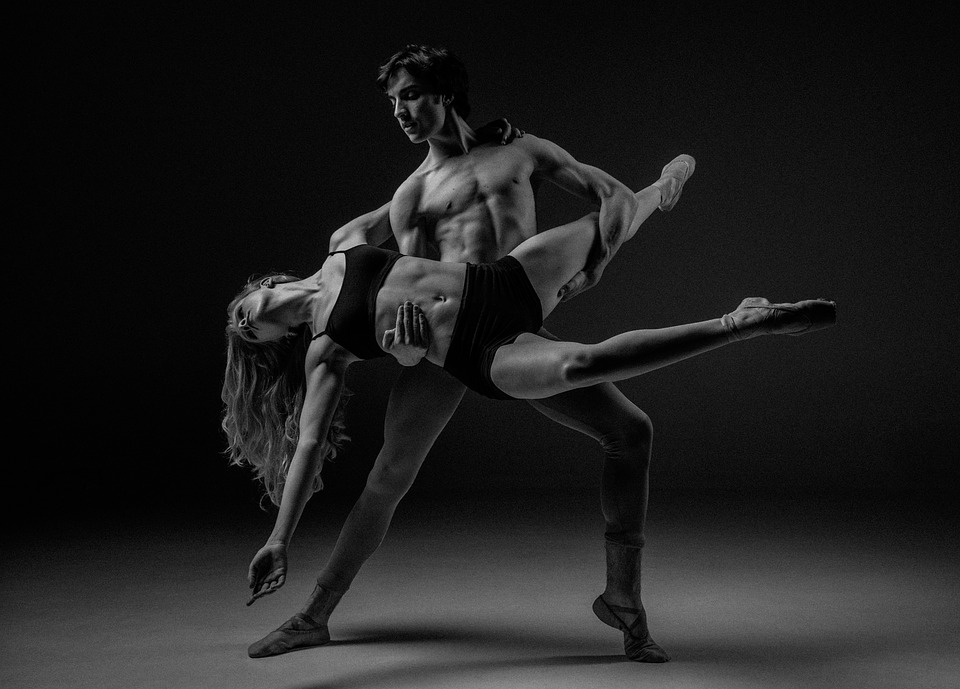
Look at this ripped bastard! I mean, c’mon…
But what I saw that night changed my perspective on dance, ballet and all the associated effort and fitness that is involved in the process. I can’t remember what specific production was being performed, but I felt a certain level of awe (and jealousy) at how fast, flexible and nimble the guys on stage were. Sheathed in sweat but moving about effortlessly, I watched as they moved, leapt and even balanced themselves on the single point of a wooden staff, seemingly defying gravity.
And their abs and muscles pissed me off, haha. I have to admit that I was impressed at the athleticism involved in what I was seeing and I couldn’t help but feel that some of the movements and efforts reminded me of doing forms, or kata. I decided that I needed to look into this whole “dance thing” in a bit more detail. A girl I dated in high school had a sister who owned her own dance studio, so I reached out and asked her what my best first step would be. She said I should find a dance school that would allow me to try out for free and give it a go before committing to anything. Now it REALLY sounded like karate.
My journey started in Ottawa’s ByWard Market, where a latin dance club had a “dance lesson” night where they provided free latin dancing lessons before opening up for the evening. It was pretty interesting and challenging, from a structured and instructional standpoint. But with over 50 people and only one instructor, I wasn’t really able to get the kind of one-on-one instruction I needed in order to actually LEARN the type of dance. It became clear that this was a gimmick more for fun than actual instruction. At the risk of getting discouraged, I gave up and left.
That’s where fate decided to intervene. A few weeks later, I received a coupon for a free introductory dance lesson at a small, privately owned dance studio that had just opened. I would love to remember the name of the place and truthfully, I tried to look it up. But with a dozen or more dance schools in the Ottawa area, it’s a bit difficult to jog the old memory. All I can tell you is that it was a privately owned studio located on a little side street and was on the upstairs floor of another business.
I was excited because the coupon boasted a free lesson in salsa, tango and cha-cha, to name a few. I can writhe and wiggle my body to music with the best of them, but this would be the first time I received formal instruction. It was one of the best 90 minutes of my life! I took to dance like a swan to a lake (see what I did, there?) and was able to memorize a lot of steps and do them properly on the first try. It seemed as though studying katas had an unexpected benefit in the sense that I could learn and recall dance moves without issue.
The instructor was pleased and impressed with me and asked if I had ever done dance before or even martial arts. I replied that I did karate and she explained that this was why I had good balance, centering and was able to learn dance the way I was. There were only five couples in total but I was partnered with almost every woman in the room that night, much to the chagrin of my ex-wife who apparently was born with two left feet. Dance, like everything else in life, is not for everyone and she didn’t take to it. Despite how much fun I was having, she was not a happy camper at seeing me dance with other women. Whatever. It was a LESSON for light’s sake… There’s a reason she’s an “ex”… Moving on!
At the instructor’s request, I joined a few more introductory classes and learned the rudimentary basics of dance. I absolutely loved it, and it provided some valuable tools that translated easily into karate. But once the whole “introductory” phase was past, the reality is that I simply couldn’t afford to pay for the lessons. Such is life. I also didn’t enjoy the constant fights I had with my ex-wife every time I attended a lesson. Apparently, she preferred having another woman punch me in the face instead of dancing with me.
The bottom line is that dance and martial arts share a lot of the same valuable benefits including but not limited to flexibility, balance, knowing where to step, increased circulation, a strengthened core and increased control over one’s own body. All of those are fantastic and shared aspects. That’s why, if you’ve ever thought about it or considered it, I would highly recommend dance as a a supplemental means of fitness. Or a primary one, if you aren’t in the martial arts. Ever try Zumba? Combination of cardio and dancing? That shit’ll kick your ass, believe me!
My sons are already obsessed with dancing. Of course, Nathan is all about the twerking… I guess I should just be grateful that he never learned flossing or one of those weird gimmick dances. I also think that precision and accuracy are important, shared aspects of martial arts and dance. And there’s no denying that professional dancers are superb athletes that work extremely hard. Hence, the jealousy at the ripped abs and being able to wear a unitard without looking like a sausage about to burst out of its casing. Not that I want to wear a unitard, of course. Jus’ saying’… Now if you’ll excuse me, I’m gonna dance my way out of that last comment! ☯
I was having an interesting conversation with my Endocrinologist, two weeks ago while we were busy high-fiving and patting each other on the back for an excellent A1C result (which you can see my excitement in the video I posted here). The conversation involved telling me that I was a very “boring” patient, because I took care of myself made an effort to maintain and control my Diabetes as opposed to allowing it to control me.
He explained that he occasionally spoke of me to some of his other patients (without using my name or personal information, of course) in relation to things they should be doing and he wanted my opinion as to what I felt the success of my treatment was attributed to. I gave him my usual spiel about exercising, trying to eat well and testing my blood sugars often, but the biggest factor I provided was the WILL to do those things.
It’s no secret that uncontrolled blood sugars and in fact, Diabetes in general can cause a person to be without energy, drive and ambition. Most importantly, a person who has suffered through Diabetes for any number of years will often just throw up their hands or hang their heads low and say, “Fuck it…” before indulging in an easier lifestyle and all the vices and poor health choices that it includes. And that’s where I differ from the norm…
The body is a complex machine; one that requires constant attention and maintainance. And that’s not just an expression. Although biological in nature, your body IS a machine, with a shit ton of complex and delicate moving parts, functions and movements. You need to fuel this machine in the form of food consumption for energy, patch up and repair when there’s damage and provide supplementation and medications, as well. And all of that is controlled by a meaty computer processor that’s protectively encased in an armoured helmet. Not least of which is that we have a tail pipe that vents gas and expels waste like a vehicle.
Even the most high-end and sophisticated engines will eventually seize if hey aren’t maintained, lubricated and fed the appropriate types of fuel. And the superb machine that is your body is no different. I’ve had this discussion with a number of Diabetic associates that I’ve had over the years (most of which are unfortunately already deceased). Although it can be easy to just eat whatever’s laying around and whatever’s easiest, one needs to put in the effort to eat fresh foods, lean proteins and portions that won’t cause you to balloon up like a morbid, meat-based beach ball. I’m partial to salmon and tuna steaks, and enjoy a carb-free meal of fish and brussel sprouts at least twice a week.
Exercise is already an integral part to keeping oneself healthy and it’s no surprise that it would be all the more important for someone with Diabetes. I’ve struggled for years against weight gain, blood sugar levels and better body chemistry, all of which can be manipulated and improved through exercise. And to be honest, unless you’re part of a club or formal fitness club that you’re paying for, it doesn’t have to take huge lengths of time. At home, I keep my workouts limited to thirty or forty minutes. This allows for a good sweat, an increased heart rate AND it allows me to opportunity to get the workout done before my children make me wish they were old enough to wear sparring gear! The point is that you can hammer out any variety of workouts in the short time that it takes you to watch one episode of whatever you’re binge-watching at the moment.
Between food and exercise, you need to pay close attention to your insulin levels and blood sugars. Maintaining those two aspects of your Diabetes in conjunction with food and exercise will guarantee an increased longevity and less chance of serious Diabetes complications. Most Diabetes complications are permanent. Although you can get SOME organs replaced, there’s never any guarantee. You can remedy an amputation by getting a prosthetic, but this ain’t a sci-fi movie. You won’t be hustling around with a cybernetic limb. At least not yet.
So knowing that it could help you live longer, be healthier and feel better, one would be inclined to think that this would be the only motivation you need. But unfortunately, this is rarely the case. You need to WANT those things. You also need to recognize that stepping up and putting the effort is the ONLY way you’ll get them. An important part of it is to ask yourself what you have to fight for.
Personally, I’d like to live long enough to see the potential birth of my grandchildren and grow old with my wife. I can’t do that if I have a heart attack in my forties because I ate like shit and sat on the couch day in and day out… So folks, work hard at keeping your engine running. It’s the only one you’ll get. And once you’re dead, there are no backsies! So work hard, eat well and make the effort to make all your medical appointments. Your engine will run smoother, longer and you’ll get to reap the benefits that come with a longer, happier life. ☯
It should come as no surprise that just about everything has moved to some sort of online forum in the past year. In my household, we’ve even started doing some shopping and Costco orders online and had them delivered; something we had never done prior to the pandemic. Considering that most things have been slowly moving towards online options in the past decade or so, the pandemic has been that last little push that was needed to force us to do everything else without face-to-face-contact. This week, the karate club I train with started having classes on Zoom.
Our Zoom Meeting Dojo (That’s me in the blue!)
It was a strange and different experience, that much I can say. As you can see from the image above, we all met via Zoom and took instruction from Master Harding as he guided us through an hour’s workout. It was interesting to see everyone who had made do with whatever space they had available in living rooms, basements and home dens. I was among the lucky ones that had a large, open space to work with that included my black, foam workout mats. But as I’ve written in previous posts, karate doesn’t require much more than a four by six-foot space to train in. And the group proved that, over the sixty minutes that followed. ☯
The human hand is a wonderful thing and is comprised of almost three dozen bones. Some of those are pretty damn small, making your hands some of the most delicate appendages on your body. Our hands are used for a number of things that we often don’t realize and take for granted. For example, your arms and hands are responsible for helping you with balance when you walk, run and even while standing. None of which mentions that you need your hands to pick your nose and eat burgers. But I digress…
Given that they’re comprised of so many small bones and have those brittle, breakable fingers on them, why do we depend on hands so much in the fighting arts? This is pretty bold talk, coming from the guy who studies a martial arts style directly translated as the “way of the empty hand.” But it’s not so much the use of one’s hands that’s the issue. It’s the WAY and manner in which we use those hands that’s important. And that reminds me of a story. Buckle up!
Decades ago, I was a green belt in class with Sensei and one of the brown belts. It was a quiet night of just the three of us, and the brown belt was slated to test for black belt within the next month or so. As such, Sensei’s attentions were focused on him for the evening while I was relegated to a corner to practice forms on my own. I was fine with this since, as you all know, I love forms. But I was also keeping an unseen eye on the two of them as they were caught in a rather heated sparring match.
As their speed and movements increased, the brown belt tried to perform a grab of some sort. I can’t be sure if he was trying to grab Sensei’s sleeve of gi jacket, but it didn’t work. Sensei isn’t one for sitting still and he kept moving as the brown belts hands was still trying to get a grip (pun fully intended). Two things happened simultaneously: Sensei executed a strike against the brown belt AND the brown belt’s pinkie finger snagged in the open mouth of Sensei’s sleeve and snapped.
An example of Master Uechi’s hand positioning for Uechi Ryu
The brown belt made every effort to conceal how much pain he was in, but it was very clear that the finger had broken. He and Sensei stepped out so that Sensei could drive him to the hospital to get splinted. It was one of the first times I was left completely alone in the dojo, which was interesting to say the least. And it gave me a wake-up call very early (or what felt early) in my martial arts career about the importance of hand placement and guarding one’s fingers.
Depending on the style you study, an open hand may be necessary. It rather hard to perform proper technique in a grappling style with closed fists. On the flip side, it can be a bit difficult to practice a striking art with your hands wide open. For a style like Uechi Ryu, that combine strikes, grappling and pressure points, it can become a little bit convoluted as you’ll need to combine all of those things. But even while using ANY open-hand technique, the important part is to properly protect your fingers. A broken finger isn’t lethal, by any means. But the pain can be enough of a distraction to cost you dearly in a real fight.
I’m not often a big fan of kicks and I usually favour hand techniques in lieu, especially since raising one’s foot off the ground places all your weight and your centre of gravity on one leg. This leaves you vulnerable and isn’t a comfortable position to be in. That being said, I usually prefer a solid punch or an elbow to using open-hand techniques because I like my fingers and don’t want them breaking. At the end of the day, there’s no easy solution to this dilemma, if you study the martial arts.
You can see Master Uechi’s hand positioning in the photo above. Notice the open left hand while he delivers an empi (elbow strike) with the right arm. Far be it from me to question the way a master places his hands, but those spread fingers make me nervous. Sensei has taught us that above all else, keep the thumb tight against the palm and the fingers pressed together. It’s comparable to bamboo; a single finger can be weak but all four fingers combined will be much stronger.
So, that’s the take home lesson in this instance. I always like to relate things back to the street and in an actual street-based altercation, technique and style usually go out the window in favour of just staying alive. This is why muscle memory and training drills are so important. And if it means life or death, a distraction can mean the difference between walking away or being put down. Protect those fingers, people!
One of the things I’ve come to realize in recent years is that “dad bod” is a VERY real thing. Having a condition like Diabetes that increases your gut size doesn’t help, either. But I recently made a short video where I filmed myself doing karate katas and when I reviewed the video to do some editing, I was taken aback at how “thick” I looked. And since this isn’t a rap video, being “thick” is NOT a good thing. I work pretty hard at trying to maintain my weight, but the old adage about gaining muscle mass increasing your overall weight holds some truth as well. I guess that classifies me as a muscled fatman (says the word “fatman” with a raspy Batman voice).
This is why I’m usually game to try anything to help trim the fat, as it were, so long as it isn’t dangerous or harmful and doesn’t affect my Diabetes. Granted, let’s agree that EVERYTHING affects Diabetes, so that’s a tough one. But I try to maintain four to six workouts a week, I’ve incorporated reduced-carbohydrates, reduced daily caloric intake, green tea consumption and trying out any supplements that might help in slimming me down. The bottom line is that falling into a caloric deficit that forces one’s body to burn fat as a fuel source is the only genuine source of weight-loss, although there are different ways to achieve this.
That’s why I was deeply fascinated when I read somewhere that proper sleep can help with weight loss. To be honest, no one loves sleep more than I do. Except maybe my wife. But given Type-1 Diabetes, PTSD and small children in the house, getting a proper night’s sleep or even enjoying a decent nap can be a somewhat fleeting thing. Not to mention that as much as I LOVE my insulin pump, it’s frequent alarms for all reasons throughout the night tend to keep both my wife and I from getting a full, uninterrupted 8 hours of rest.
For those reasons, I decided to look into the matter and see what could be potentially inflating my middle, other than my love for a good burger, as it relates to sleep. An article posted by The Sleep Foundation states that there seems to be a correlation between modern families getting less sleep and the fact that obesity is on the rise. One of the concepts the article proposes is the fact that lack of sleep affects the neurotransmitters that control one’s appetite, leading to greater consumption of food throughout the waking day.
This actually makes a lot of sense to me. I used to work with a lady who swore by grabbing a snack when she felt sleepy on the job. I’ll admit that on days where I felt blasted and needed a nap, grabbing a quick bite to eat would usually refresh me for a short period of time, so I personally feel that there’s some truth to this. Not least of which is the fact that lack of sleep will cause a lack of energy for sports and activities.
The article goes on to point out that less sleep means you have more time to snack and eat, a pleasure that I am FREQUENTLY guilty of. Especially during late-night blogging sessions, I’ll often indulge in some of the very snack foods that I should be trying to avoid. It ends by pointing out the usual sleep recommendations: regular schedule, pitch-dark room, no eating before bed and reducing one’s stress. To be honest, I don’t know of any person who can do ALL of those things. So are we just basically screwed and have to surrender to the oncoming “dad bod?”
Another article I found by WebMD brings up most of what the Sleep Foundation article does but it also points out that we tend to make bad decisions when we’re tired, which leads to depending on sugar-filled caffeine drinks to jumpstart our mornings and eating crap all day since our bodies have difficulties fighting food cravings when tired. Add to that fact that if you’re exhausted you’ll be in absolutely NO mood to exercise and BAM! Weight gain! One direct point that the WebMD article makes states, “Too little sleep triggers a cortisol spike. This stress hormone signals your body to conserve energy to fuel your waking hours. Translation: you’re more apt to hang on to fat.”
I found a few more articles from different sources but they basically parrot what I’ve provided already, so I won’t bother. But the take home to today’s post is that sleeping won’t make you LOSE weight, but lack of sleep will certainly hinder your efforts to do so. In fact, lack of sleep can cause you to gain weight. So, let’s clarify this… Getting more sleep can help me to curb my appetite and encourage my efforts to lose weight? Sounds fantastic. Now, to find a way to get a full, uninterrupted night’s sleep… ☯










 The Blogging Buddhist