Some Winter Supplementation…

Most of this material was part of a post I wrote in June of 2019. It was one of my favourite posts and one of the most researched. This is one of those posts where I should point out that I’m not a medical practitioner, dietitian or health professional. So, consult your physician or medical practitioner before starting any supplementation. That being said, this is my third time posting this material in the past three years, and for good reason. I haven’t met a doctor yet who hasn’t recommended using a daily multivitamin to supplement my meals. And since any given doctor has no way of knowing which vitamin I’ll purchase and it isn’t a prescribed item, the conspiracy theorists can’t even spit out their usual bullshit about “big pharma” trying to coerce us into buying them. It’s one of the few things where one needs to acknowledge that it can be helpful. And since the winter weather causes everyone to catch every little bug that comes about, I thought it would be a good idea to remind people of the importance of vitamins and minerals in the everyday diet.

One of the key reasons behind the consumption of food is to obtain carbohydrates for energy. The human body requires energy to carry on normal functions and, well… stay alive! But what else do we get from the food we eat? A proper diet will also include a number of vitamins and minerals that we require to maintain proper health, growth and energy levels within the body. We’ve all heard about getting enough vitamins from a young age. I remember getting my Flintstones vitamin everyday as a kid.

But if you’re like most people, you’re likely wondering what these vitamins are for and what they do. My goal is to cover off the main ones here:

Vitamin A: This is an all-around vitamin that provides a number of functions including but not limited to the proper health of various bodily functions, tissues and helps to fight chronic disease and is known to be good for the eyes.

Vitamin B: This one is a bit complicated, as there is a large grouping of enzymes, vitamins and minerals that fall under the “B” category. In general, B-vitamins are used for energy production, immune function and absorbing iron. Some them include B2 (riboflavin), B3 (niacin), B9 (folate) and B12. There are a few more that I can’t recall, but B12 is considered amongst one of the most important of vitamins overall because it helps you turn food into energy.

Vitamin C: At some points, this one has been referred to as the sunshine vitamin. I’m thinking that’s mostly because people’s main source of Vitamin C is from citrus fruits. But this vitamin also helps with iron absorption, immune function and is a natural antioxidant that helps with the elimination of free radicals. Eating citrus fruits are also what sailors used to eat on long voyages to prevent scurvy.

Vitamin D: This vitamin helps with the strengthening of bones and teeth. Our bodies are designed to self-generate this vitamin naturally through exposure to sunlight, but obviously that needs to be done in small doses. Modern life has created an environment where more people spend their time indoors, away from the sun. So supplementation becomes important.

Vitamin E: A pretty straight forward vitamin, this one helps with proper blood circulation and clear skin.

Vitamin K: This vitamin is essential for blood-clotting. In order words, if you’re deficient in this vitamin, small cuts or injuries can cause excessive bleeding that can become dangerous.

Folic Acid: We hear people speak about this one as being necessary during pregnancy. And they would be correct! Folic Acid helps to prevent certain complications during childbirth but is important to everyone for proper cell renewal. This one is also known as Folate, or Vitamin B9 (as listed above).

Calcium: Most people should be familiar with this one. Teeth and bones, people! Teeth and bones! Good calcium levels are required to keep those body parts healthy.

Iron: This helps to build muscle tissue naturally and helps with proper health of the blood. As an interesting sidebar, it’s also what makes your blood red through the reflection of light!

Zinc: Immunity and Fertility. I’m a little unfamiliar with this one and haven’t had the opportunity to research it a great deal.

Chromium: This one is near and dear to my heart. Because it helps to control blood sugar levels. Chromium is what helps all the systems of your body to get the energy they need when they need it. Some traditional medicine practitioners will suggest Chromium supplements for Type 1 Diabetics who may have difficulty in maintaining proper levels.

Magnesium: This one helps your body to absorb all the other vitamins and minerals. It also acts as something of a relaxant to muscle tissue and play a role in proper muscle contraction.

Potassium: This mineral helps with the proper hydration of your body and helps to control blood pressure.

There are many others of course, but I’ve tried to cover off the main vitamins and minerals required for a proper diet. We get most of what we need by eating regularly and including a variety of healthy foods. A lot of people take a daily multi-vitamin, which is fine. But unless you are experiencing symptoms or unexplained illnesses, there shouldn’t be a need to actively try and take added amounts of anything. Your medical practitioner should be able to advise you if further supplementation is required. For example, patients who are recommended to take Folic Acid and Iron during pregnancy.

Obviously, all of this is extremely important; not only for proper health and fitness, which is important to me, but to help with Type 1 Diabetes as well. Taking a daily multivitamin can help to ensure that your body gets everything it needs, in combination with carbohydrates, lean proteins and fibre. My wife Laura originally gave me the idea for this post in 2019 when she asked about B-vitamins. So, I should once again extend a shout out to her for keeping me inspired and constantly feeding me ideas. ☯

A Little Something To Help The Journey…

As I’ve written in previous posts, I recently started practicing Shotokan karate. I was lucky enough to find a school in Regina and it’s quite traditional and shares many of the same values I was raised on, from a karate perspective. I officially registered with their school this month, making it the first time in over a decade that I’ve been a registered student in any dojo. I missed the majority of classes last week due to other obligations, a problem I didn’t have in my teens and 20’s, and I’ll be missing today by virtue of it being my eye injection appointment.

But it’s been fun and exciting. I’ve already learned some new forms and ways of doing techniques I’ve been using for decades. Learning something new is always a good thing and for me, the stagnation that’s come from training by myself for the past ten years has made me realize I have a long road ahead of me if I expect to regain some of the lost skill I used to have. Recent classes have shown that I lack muscle tone, flexibility and skill in certain areas where I used to shine. Ali used to say that it isn’t the mountains ahead that wear you out, it’s the little pebble in your shoe. Well, I have a lot of little pebbles…

One of the biggest things about karate is that it isn’t a “one and done” where you go to your scheduled classes every week then call it a day. A practitioner needs to focus on lessons outside the class, practicing what they’ve learned and honing it on their own, using class time as a means of obtaining correction and guidance to keep growing further. Otherwise, a 10-year journey will easily turn into a 20-year one. That’s why it’s important to have some tools to help you along your training. For most modern, western dojos, students won’t have access to their instructors outside of class hours. Depending on the style you’re studying, you can be lucky enough to find videos on YouTube that will demonstrate your techniques and katas so that you can practice them and obtain correction. In my day, we had do something different; we used books.

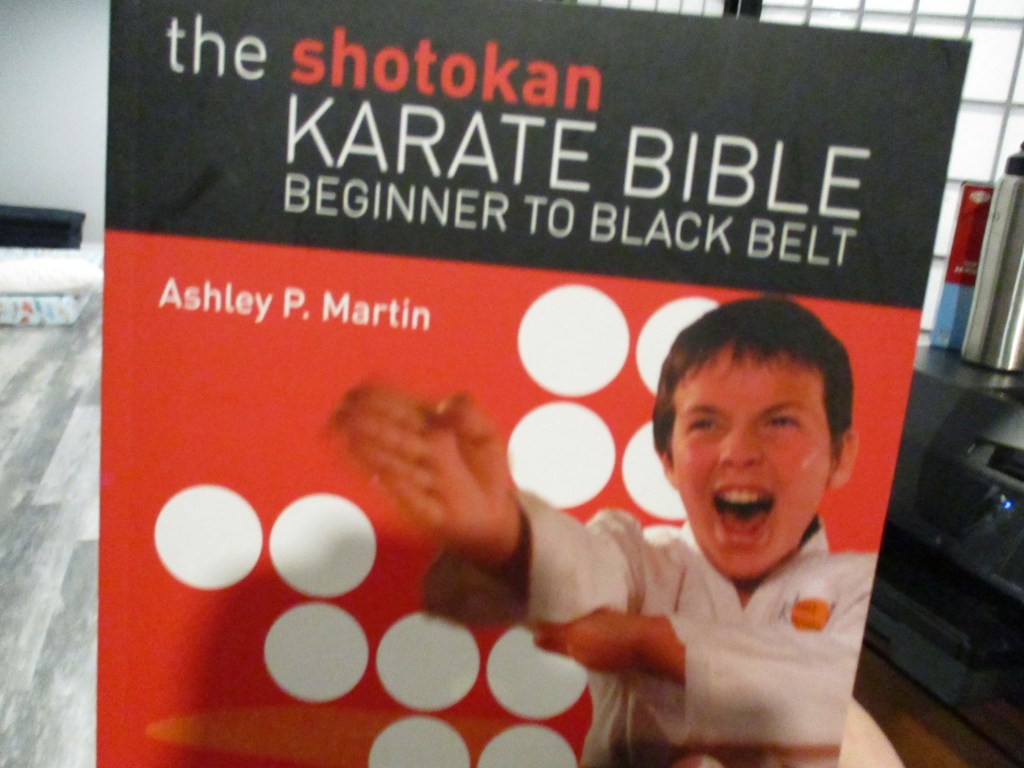
The first book on Shotokan karate I purchased years ago…

I can hear Mr. Miyagi’s voice in my head from the original Karate Kid movie, when he walks into Daniel Larusso’s apartment to fix the sink. “Learn karate from book?” The heavy accent and curiosity made the question seem as though he couldn’t believe what he was seeing. And with good reason. Book are a fantastic way to supplement one’s training and can contain material that’s valuable to a student’s progression in karate. But it’s important to note that a supplement is all that it is, and that nothing substitutes being in class learning from your counterparts and instructors. But I digress…

The book pictured above is one that I purchased almost five years ago. I was out at a book store and even though I am primarily a Uechi-Ryu practitioner, I was drawn by the book and chose to buy it. In all honesty, I never understood why and with all the material I read in the course of a year, combined with work, my kids and writing, I never gave it more than a cursory glance. Fast forward to this year, where bI’ve coincidentally joined a school of Shotokan. Most people are divided on the concept of all things happening for a reason but there’s something to be said for the fact I purchased a book on a different style of karate, years before I would consider joining one of their schools.

In an effort to try and get a leg up (karate pun fully intended) in my new learnings, I cracked this bad boy open and started using it to learn my first form. Learning from a book can be difficult if you’ve never seen the form done in person, since even if the illustrations are clear you could potentially err in such aspects as what direction to turn and how to place your footing. That’s one of the reasons that I suggest that being in-class and learning first is important, even if you’re practicing at home.

My most recent purchase…

Since I’d been training with Shotokan for a couple of weeks, I decided to get pro-active and look into whether they had some sort of primer of book that would relate directly to the founder of the style. This is where I came across the book pictured above. Some years ago, I came across the book entitled “Uechi Ryu Karate,” by George Mattson. Although written by an American, this book contained all the materials of my style from start to finish and all the illustrations included Master Uechi himself. It’s been an incredible aid in maintaining my katas and techniques, especially since I don’t have Sensei here to correct me.

“Karate-Do Kyohan” is similar in its content in that as far as I can tell, it contains all the pertinent material for Shotokan that covers all levels of training. I was pretty pleased to have found a second-hand edition of the book that someone was wiling to part with. The amount of material is immense and the illustrations clear in such a way that I will be able to get ahead of the curve on learning this new-to-me style of karate.Considering some of the differences in how they stand and their approaches to certain techniques, it will also help me to acclimate to this new environment as I learn one of the more popular styles of karate.

Karate is a life-long commitment. Unless you’ve completely given up on yourself it never goes away, even if you haven’t been in the dojo in years. And with that commitment comes the requirement to work hard and practice OUTSIDE THE DOJO. If all you do is attend class two or three times a week, do your hour then head home… Sure, you may get some fitness and some cardio in. As long as you pay attention and participate, you’ll even learn a thing or two. But if you want to become proficient, you have train outside of class. Take a couple of evenings to contribute an hour to your training. It’ll make all the difference and will help with your proficiency and overall karate journey. ☯️

One Foot In Front Of The Other…

People aren’t usually thinking about their feet. Other than having one’s partner or one’s children tell them that their feet smell bad, we don’t give them much thought, other than to ensure their properly covered when going outdoors or giving them a cursory wash while showering or bathing. But for a Type-1 Diabetic, the care and attention of one’s feet is critically important; all the more so when one is a martial artist.

Over the course of my life, I’ve trained on a variety of different surface including but not limited to, polished hardwood, concrete, tile, sand and rocks. And let me tell you that not all surfaces are created equal. What even funnier, is that your feet will tend to callous in a very specific way that accommodates the surface you’re training on, so that training on a different floor that’s still made of wood will affect your feet.

So why do Diabetics have such a difficult time with their feet? The short answer is that Diabetes causes a bunch of secondary conditions that relate to the limbs, including arterial disease and neuropathy. This will decrease circulation and make one more susceptible to sores and infections. Left unchecked, it can lead to serious complications that often result in amputation. This is why you hear of so many people with Diabetes losing a foot.

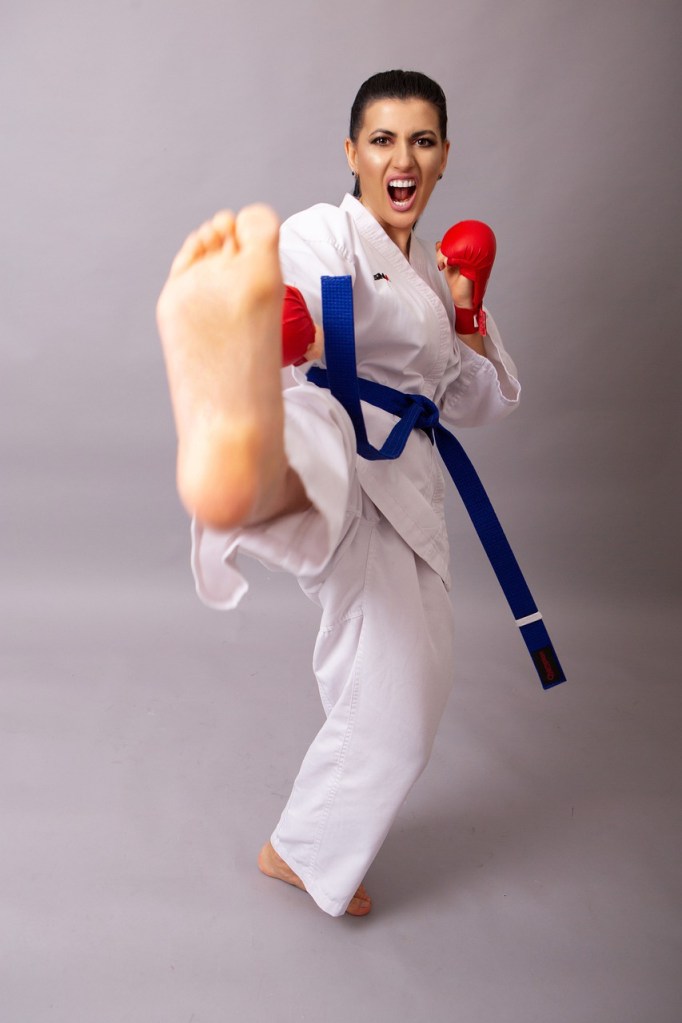
Besides being one’s main method of moving around, the feet are what support us. We use them to walk, run, maintain balance and, oh yeah… KICK! Pretty much every martial art I’ve come across uses kicks in some given way, shape or form, so maintaining the health of my legs and feet is definitely important to me in several ways. But there’s no denying that training in karate normally involves training bare-footed, which can present its own set of challenges, depending on the floor’s cleanliness and soundness.

There’s plenty you can do from the Diabetes standpoint to ensure the proper health of your feet. This includes the usual laundry list of things I mention in almost every second post, like consistently working out, monitoring your blood sugars and blood pressure and eating a healthy diet. Reducing your stress can be a big one too, since increased stress will affect al the other things I just mentioned as well as cause other issues.

The reason Diabetic feet are prone to easier injury and infection is mainly because the decreased blood flow and neuropathy will cause a loss of sensation. This means that if you get a cut, bruise or sore on your foot, you’ll be less likely to feel it and you’ll keep walking on it, ignoring it and putting pressure on it, which can cause certain injuries to aggravate. And THAT’s exactly what you want to prevent.

We discussed what can be done from the medical side. What about the practical side? First and foremost, wash your feet daily. That should probably be obvious. But also CHECK your feet. Visually look at the soles, between the toes, at your heels… Watch for injuries, cuts, scrapes and sores to ensure an injury doesn’t go unnoticed and gets infected. Perform self-checks on your feet to ensure you still feel light sensations, pressures and different temperatures.

One good thing to remember is something that seems minor or menial to the average person can pose some serious risk to someone with Diabetes. If you DO have any injuries on your feet, make sure you aren’t picking at them or removing scabs. Keep your toenails trimmed and avoid going barefoot unless absolutely necessary (like during karate class). ☯️

Not Just The Boy Scout Motto…

Even if you’ve never been in the Boy Scouts, you’ve no doubt heard of their motto, “Be Prepared” in television or movies at some given point. I myself, was a Beaver Scout in the early 80’s, until I was diagnosed with Type-1 Diabetes and my world was turned on its head. But before I turn this post into a pity party, let’s focus on the motto, which is the aim of today’s post. Being prepared in life is important. Since we live in a relatively comfortable environment where most resources and amenities are available to us (at least here in Canada), people have a tendency to overlook good preparedness.

Now, I could be very generalized and discuss how one should be properly prepared in ALL aspects of their lives, including the care of their home, family, health and property. But what I’m going to focus on today is specifically as it relates to one’s fitness, especially in conjunction with Diabetes. It’s no secret that having Diabetes presents a plethora of challenges, especially when you’re working out. This means you need to be prepared for the inevitable issues you may face when training.

First of all, we need to agree that it’s somewhat easier to function with high blood sugar than it is with low blood sugar. There’s a certain where where either one is an issue but if you’re doing something fitness-related, you’ll find you can at least push through and won’t pass out if your blood sugars are high. The same can’t be said if your blood sugars are low. For that reason, it’s important to ALWAYS bring some fast-acting carbohydrates with you. For me, jellybeans work best. I know that some people will use a variety of juices, gummy candies and even straight sugar and water. You’ll want to find what works for you and be sure to keep it on hand. You want to avoid certain foods like chocolate, which is basically just a block of fat that will take forever to bring your levels up.

Next and equally important, is water. If you haven’t noticed from the thousand+ posts I’ve put up (yes, I am now in the thousands), hydration plays an integral role in fitness and overall health. Proper hydration is also helpful in maintaining balanced blood sugars. Most sources will say that we should all be keeping a reusable bottle with us and consistently siping from it, throughout the day. My wife is far better at this than I am. When it comes to fitness, you want to strike that proper balance and try to avoid dehydration AND drinking too much water.

You probably read that last sentence and asked, “Can you really ever drink TOO much water, Shawn?” Why, yes! Yes, you can! Consuming too much water in the wrong conditions will cause something called hyponatremia. This condition can be caused by an increase in diuretics, severe or excess sweating or consuming too much water. The result is your body’s concentration of electrolytes, namely sodium, gets too low. Back in the summer of 2020, I experienced this condition firsthand. I woke up on a day off and chugged an energy drink, which I unfortunately seem to do every morning. Then, I performed the longest bike ride I had taken (at that point) where I peddled from Regina to Balgonie.

It’s a 56-kilometre trek, back and forth, which is far from the farthest I’ve managed to achieve since then. But it was summertime, with temperatures in the mid-30’s and dry Prairie air… My phone shut down halfway due to being too hot, I was sweating like a hog and chugging back water ever five minutes. To my credit, I had brought plenty of water and fast-acting carbs, but little else. This meant that I kept pumping the water in to slate my thirst but I was losing electrolytes through my sweat. Like, a lot!

By the time I got home, every joint was killing me, I had a headache, nausea and difficulty focusing. It took several minutes of trying to look up the symptoms and my wife helping out to discover that I needed to take in some sodium. I slugged back a couple of bottles of Gatorade and ate some salt & vinegar chips and laid on my bed with the A/C going at full strength. Once my body slowly started to regulate, I got groggy and fell asleep for a while. It was probably the most uncomfortable and painful experience outside of a tangible injury or Diabetes.

Since then, I maintain a practice of mixing electrolytes with water as I cycle, which has served me well on my 70 and 80-kilometre treks. But it was an important lesson to recognize that getting to the end of a significant workout can require more than just sheer will. Easy things to carry with you, whether at the dojo or while out doing cardio, are little things like a portable battery pack to charge your phone in the event of an emergency and bandages or a small travel first aid kit. You may never NEED any of those things but it’s always better to have it and not need it.

Being prepared is an important aspect of anything one does in life. It can mean the difference between potential facing a dangerous or hazardous situation or being temporarily inconvenienced. it all depends on how prepared you want to be. For most people with Type-1 Diabetes, being prepared and constantly dragging along a small bag with carbs, testing equipment and food can mean the difference between good health or a hospital trip. Why not take the few minutes required to ensure that you always have what you need for any workout or outing you go on. ☯️

One Step At A Time…

Habits. Vices. We all have them, in one form or another. Sometimes it can be associated with our state of mind; either suffering from self-image or mental health issues or we’re simply unhappy, which is a big part of life for most people. As a result, some will seek comfort or relief from various sources including but not limited to food, drugs, smoking, alcohol and even sex. You could think that using that last one wouldn’t be a negative thing but there are a number fo negative aspects to USING sex as a coping mechanism that most people wouldn’t consider.

For me, I’ve indulged in a number nasty vices, including cigar smoking, eating and alcohol. The first and last are mostly by virtue of my previous career, relaxing me and providing calm in the middle of emotional tempests. The middle one typically happens when I’ve indulged too much in the last, as I don’t always make the best decisions. Hey, I’m human. More often than not, I somehow manage to rationalize what I’m doing to myself, with “I can work this off later” or “just this last time” (followed by buying another bottle on the way home the following day).

It can be difficult to overcome certain bad habits on your own. Especially if those habits become severe enough to be an actual addiction. In those cases, getting help from medical professionals or specialized programs can be important. But if it’s something you feel you can overcome on your own, there are a number of things you can do to help get you out of your funk. I’ll provide a few of my thoughts on what’s worked for me in the past:

  1. Don’t Put Off Exercising: Thanks to the frequent ups and downs of blood sugars, the amount of grogginess and lethargy I deal with can be a real pain in the ass. But if you can push past the fatigue and do something physical, it has a dynamo effect. Once you hop on board the exercise train, all you want is for it to move faster. Start slow and easy at first and increase resistance/distance/challenges as you go along. After a while you’ll look back and realize you’re at the level you used to WISH you were at.
  2. Don’t Quit Everything At Once: Sometime during the late summer, I decided to quit cigars, alcohol, junk food and excessive caffeine. Those sound like good ideas, right? Maybe, but doing it all at once wasn’t the greatest idea. Besides the physical toll it takes on a person’s body, you’re more likely to regress and slip up if you deny yourself everything completely. Most sources I’ve read agree that you should allow yourself the occasional indulgence. Doing so means you’ll be less likely to slip up. So if you have a habit of binging junk food, maybe allow yourself to eat out once a week.
  3. Buddy Up: A problem shared is a problem halved, right? If you need exercise, join a club, a gym or fitness group. If you’re trying to eat better, there are groups for that, too! Or you can just commit to eating better with a friend. You can keep each other on track, remind each other of your goals and step in if you happen to be “falling off the wagon.”

Improving oneself and making oneself feel better takes time and effort. If you think it’s hard, that’s perfectly normal Anything worth achieving in life is hard. Just remember that you don’t have to do any of it alone and there are always resources out there to help you reach your goals, whether it’s weight loss, increased fitness, learning a new skill or quitting a bad habit. ☯️

Shake Things Up…

As I’ve often written about before, fitness and weight loss involves something simpler yet more complicated than a fancy fad diet or weird food restrictions. And contrary to what some people still believe, crunches and sit-ups won’t do anything but firm up your ab muscles and likely won’t do much to melt the fat in front of it. You need a healthy combination of consistent exercise and proper diet, which includes eliminating unnecessary sugars, excess fats, carbonated beverages and alcohol as well as junk food in general. That sounds pretty simple in print but to someone who has unhealthy habits built into their daily routine, change isn’t without challenge.

One of those big changes for me, in recent months, has been the inclusion of breakfast into my daily routine. When most of us were kids we always heard that “breakfast is the most important meal of the day.” I was never fond of breakfast, since eating a massive bowl of cereal before school without the proper amount of fast-acting insulin to deal with it, meant I would spend my morning classes groggy and struggling to stay awake. It led most of my teachers to think I was lazy or unwilling to learn. To their credit, I didn’t understand what was going on myself, so how could I have articulated it to them? But I digress…

My point is that even in adulthood with an insulin pump and a control over my Diabetes that’s better than what in was in my youth, my morning routine usually involves forcing myself out of bed, grabbing caffeine in whatever form I can get it and getting ready for work before rushing out the door. The concept of that first meal is usually the farthest thing from my mind until I’ve been at work for an hour or two and my stomach starts protesting at the lack of tenants it has. This will usually result in my purchasing something quick and less than healthy during my morning coffee. Not so great a habit to maintain and it contributes to one’s gut.

Breakfast!

As a reasonable alternative, I’ve been using my Blendjet to carry my breakfast to work with me. I posted about this device before Christmas and as much fun as I was having with it, I haven’t been using it QUITE as much as I should have or for its intended purpose. In fact, I think my wife has been using them mostly to make smoothies for our kids, which isn’t a bad use but my intention was to have a low-carb, easy to manage breakfast. So on Monday of last week, I buckled down and started including the mini blender into my daily routine. Once I’m up, my first stop is to the kitchen, where I prepare Nathan’s lunch for school. While I’m in there, I’ll put all my ingredients into the blender and bring it downstairs with me where I shower and prepare for work. I’ll run the blender once to mix the ingredients then store it in my work bag until my arrival at work. Then, I’ll blend it again as the ingredients settle and I can gulp it down at my leisure as I work.

It’s been working pretty well. It hardly adds five minutes to my morning routine, provides me with something that keeps me filled and prevents hunger until I make it to lunchtime and the mini blender is convenient and easy to lug around as opposed to packing a meal or ordering out, which does nothing good for one’s overall weight loss and fitness goals. Granted my weekends are still reserved for a more traditional breakfast with my family. For example, this morning will likely see me preparing bacon and hash browns for my wife and I, and toast for the boys. My toddler enjoys a strip of bacon but my 7-year old absolutely hates bacon. I know, I know… I’ve failed somewhere. Moving on!

The calm convenience of breakfast in the morning sunlight

As great an addition to my morning routine as a shake may sound, it’s important to recognize that what you put INTO the shake is almost as important as including breakfast into your routine. If all you’re doing is tossing bananas, milk and chocolate syrup into your blender, you’ll be lacking some key components to your nutrition and health. I mean, eating a banana at breakfast is inherently a good thing, but you want to make sure that you’re giving your body some good stuff to help it along as well as fuel it. Normally, my shake includes half a banana, a dozen or so blueberries, a tablespoon of flax seed and a cube of frozen spinach. The frozen spinach is nice because it not only provides me with all the good stuff that spinach does, it substitutes for ice, which allows more room for the key ingredients.

I was basing all of this with water at the start, but I found the taste left something to be desired and I was still getting hungry during my morning. So I started using milk instead. This isn’t a bad thing, you know, calcium and all that jazz… Diabetics just need to remember that one cup of milk has enough carbohydrates to require additional bolusing. Plus, you can use skim or 2% milk to cut down on the unnecessary fat. If you find that your overall shake is a little bland, you can BAM it up a notch with a small squirt of maple syrup or honey. I occasionally steal a bit of chocolate syrup that my wife uses for the boys’ smoothies but again… carbs!

I know that when most people think of weight loss, their thoughts immediately go to either exercise or eating less. But it’s important to remember that your body needs rule in order to function. So eating less can only be done so much. And when all is said and done, it’s not the amount so much as WHAT you’re eating. But it’s another chicken or the egg scenario… If you eat less, you have less fuel and won’t be able to burn at your workouts as efficiently. You gotta feed the machine! But I find that having a shake, especially one loaded with fibre and good stuff, eliminates the problem of skipping breakfast, doesn’t affect my overall morning routine and is helping to get me healthier. Food for thought… (pun intended) ☯️

Your Comfort Zone Is A Horrible Place To Die…

When all is said and done, you’ll really only get as much out of life as you put into it. Want to lose weight? Eat right and exercise. It won’t happen on its own if you’re sitting on the couch scarfing potato chips and doing fuck all. Wanna learn a new skill? Buckle up and settle in to study, train and develop yourself. Wanna learn karate? It ain’t a knitting circle so you need to be prepared for the blood, sweat and tears that will ensue over the next decade or more to become proficient. Notice that I say “proficient” and not “master,” as karate is a lifelong journey that you’re never really done studying.

An important lesson I’ve learned recently is just how little I actually know. I’ve been studying Uechi Ryu for over three decades at this point, with one third of that time being on my own by virtue of living 3,400 kilometres away from my Sensei. The passage of time and lack of travel ability has brought me to my current state where I made the decision to transition to a new style. Still karate, of course. But I recently joined a Shotokan school and it’s already been quite the ride…

Besides the fact that I’ve become older, slower and thicker (not in the complimentary way), the challenge is significantly different for me, this time around. Add to that the fact that I’m an old dog, teaching me new tricks is not without challenge. My hat’s off to the team of instructors in my new dojo that has to deal with the skilled, unknown black belt gracing their dojo yet doing everything just a LITTLE bit different than how they do.

And this is where the relevance of the title comes in… The past couple of weeks have certainly taken me out of my comfort zone. I’ve started learning different stances, different ways of doing the techniques that ARE familiar, as well as being exposed to a plethora of new forms and katas. I’m definitely enjoying learning new things but it’s been a humbling experience to acknowledge that even though I’ve grown proficient in my style, I’ve also grown comfortable and complacent, which is a horrible state to be in. Complacency leads to loss of proficiency in a terrible “chicken or the egg’ scenario, when it comes to one’s training.

I’m glad that I’ve been able to hammer on and start learning again. Despite how long I’ve at this and the realization that I don’t quite have the same amount of piss and vinegar that I used to, it’s humbling to recognize that there’s still a lot to learn, still a long road to travel and still some exciting surprises for me in the world of karate. I attended my second class of the week last night and my legs are definitely feeling it, with the last class of the week scheduled for tonight. Between work and other obligations, I’m hoping I can keep the circulation going and hammer through tonight’s class efficiently.

Find something you’re passionate about. I think that’s my main message. It’s important to have goals to achieve, but it shouldn’t be torturous and you shouldn’t come out of it feeling as though it was a chore. It’s okay to acknowledge that it was hard; anything worth your time will be. But hard and torturous are two entirely different things. Karate started out as a way to save my life. That’s why I started training. But it’s become a part of me and something I love. I’m blessed to have found a new path on this journey and would encourage all of you to find the path that’s right for you. ☯️

Cobra Kai, Season 4: A Review (Mild Spoilers)

Look, I’ve often written about some of the issues I take with how martial arts are portrayed on the big or small screen. And those opinions still hold true but this doesn’t mean that I don’t fully enjoy watching martial arts on television. Especially when the story is sound and the plot is solid. With that in mind, I thought I would take a few moments to share my thoughts on Season 4 of Cobra Kai, which my wife and I just finished binging this weekend.

First, I’ve provided my opinion on previous seasons of Cobra Kai in previous posts, so even though some of what I’m about to say will be repeated, it’s still relevant. When I first heard about this show, I was beyond excited. After all, the last time a genuine instalment of the Karate Kid came out was 1994, with Hilary Swank playing the delinquent student who couldn’t stay out of trouble. It was an interesting take on the series, considering the original Karate addressed the classic scenario of the new kid being bullied, ten years prior to that.

When I first watched the Karate kid, I recognized a lot of what Daniel Larusso was going through in myself. Although not so much when the film came out, my formative years were chaotic at best, being bullied and considered an outcast (sound familiar?). When Cobra Kai came out, I was happy to see that Larusso had found some success in his life, including a beautiful wife and kids (one of whom is Type-1 Diabetic in real life), lovely house and prosperous business, he overcame the apparent issues of his youth and made life work for him. This resonated with me deeply.

Then, I faced a speed bump in that only the first two episodes were available on YouTube unless one signed up for YouTube’s streaming service. Unfortunately, I wasn’t willing to subscribe to YET another service, since I already have a few on the go. Lucky for me, Netflix picked up the series a short while later. I started watching it and enjoying every episode. I think it was an interesting turn of events to see Johnny Lawrence, big, bad-ass bully in the 80’s having fallen down on his luck and became the one with the struggles.

I would never wish ill on any person but there’s something to be said for karma. I know that some of the guys who used to bully me have gone on to face the same karmic consequences as the show’s anti-hero. But I digress… The concept and the storyline was sound and it only took one or two episodes for my wife to get on board and I started the series over from the beginning so that she would be caught up.

Season 3 left off with some really important cliffhangers, including long-time enemies joining forces to overcome a common foe, something you might not see in reality. It also featured episodes where Larusso returned to Japan and Okinawa and put an old rivalry to rest by sparring with Chozen and acknowledging that their respective karate comes from the same roots.

In making my way through Season 4, I could clearly see the struggle of two teachers with very different philosophies trying to keep their students on the straight and narrow. It would be similar to a plumber and an electrician trying to teach a group of apprentices BOTH sets of skills; it can be done, but the difficulty would be immense. Some students would adapt better than others and both groups would go on to compete in the All Valley Tournament, which I won’t get into detail as it may spoil a bit too much of the storyline for those who haven’t yet seen it.

The season finished on a curious note, with Larusso appearing once again to team up with another old rival. It will be interesting to see how Season 5 plays out. That being said, let’s examine a few of my pros and cons for this show. It stands to reason that it IS a show and total realism can’t and shouldn’t be expected. The storyline is somewhat sound, considering I’ve known dojos that demonstrate similar rivalries as depicted in the show.

One aspect that really gets my hackles up, is the fact that we see a number of newly-minted karate practitioners who had never donned a gi before, learning karate and suddenly getting into these long, drawn out fights with their peers within weeks of starting. Considering karate takes YEARS to become proficient, this is definitely an unrealistic expectation for anyone studying unless they have previous training and experience or have done some other martial art.

We see this effect in Samantha Larusso, the protagonist’s daughter. She had been studying karate with Larusso throughout her childhood before taking it up again. And as I’ve recently realized, it can be very much like riding a bike. Tori, one of Cobra Kai’s top students, had some previous training as well before stepping into the Cobra Kai dojo. But then we see some of the less-athletic students who, just a short while prior, were getting their asses handed to them becoming proficient in a short period of time and holding their own. Right. Okay, moving on…

All in all, it is a fantastic show with some great writing and evokes definite feelings of nostalgia in old dogs like me. Including karate into the mix is simply icing on the cake. If you’ve never seen the show, I highly recommend it as something simple and easy to binge, with the seasons running on only about a dozen episodes. ☯️

An Update…

It’s a snowy, Saturday morning here in Regina but the good news is the boys actually let my wife and I sleep in until 9:30, this morning. I never thought I’d reach a point in my life where that was considered “sleeping in,” but here we are, hence the lateness of this post going up. Considering we usually try to get the whole family to go out on Saturdays for whatever errands we may need to run, I’ll try to keep this brief.

Since it’s been two weeks and I’ve actually registered, I am now an attending student of Midwest Karate. There, I have begun studying Shotokan, which is also an Okinawan style of karate, featuring many turns, stances and hands positions that I find myself unfamiliar with. It’s a rich style and although I missed a couple of classes last week due to Diabetic difficulties, it’s been challenging and I haven’t had a class yet where I don’t break a sweat.

Since I was actually looking for a challenge, this dojo seems to be a good fit. What’s more, the senior students appear to be interested in learning some of my forms and techniques as well, making for a good exchange of philosophies. So who knows? If we stay in Regina for the next decade or more, I may just get my wish and learn a new style from scratch. Time will tell, I suppose. After all, life rarely cares about ones plan. ☯️

Cookie Cutters Should Stay In The Kitchen

If you look back about fifty years, society had certain expectations from a person. Hell, even just thirty or twenty years back will let you see it. In general, a person was expected to study, work hard, get a job, meet that special someone, buy a house, get married and have kids. Raise those kids to do the same, wash, rinse and repeat ad nauseam.

During my mother’s generation, schooling didn’t need to be completed in order to have a successful life, with many dropping out in early high school in favour of getting a job and starting their lives early. Such a thing isn’t COMPLETELY unheard of now, but it’s discouraged and even frowned upon in most instances, with even the simplest and lowest paying jobs requiring a high school diploma at minimum in order to be hired.

Why is this important and why am I bringing it up? Well, it relates to a phenomenon that’s caused a shift in societal view in recent decades. Although the expectation in the past couple of decades is that a person will not only attend school but see it through to graduation, there was a rising wave of belief that post-secondary education was the most valuable route to a successful life. That wave has crested and fallen in recent years, with many people acknowledging that a college diploma or university degree isn’t the “be all, end all” of a successful life.

Along with this changed perspective comes the enlightened view that not all persons learn in the same way. Some are visual learners, some need to practice and exercise the material themselves while others simply need to hear something once to absorb it. I think we can all admit to being a little jealous of the latter. The point is, that learning institutions are slowly coming around to the fact that one can’t expect to deliver a single curriculum to three dozens individuals and expect that they’ll absorb it the same way. Many schools have started to incorporate some of this forward thinking into adaptive learning for the students who may struggle or show difficulty in certain environments.

This also applies to the martial arts. Over the decades, I’ve come to understand that not all practitioners are created equal and not all students will learn the entire curriculum the same way. If we apply this principal to class in general, we come to realize that one-on-one learning with some personalization becomes necessary in order for the practitioner not only to learn the material but to apply it properly. Depending on the size and style of a given dojo, this presents SOME difficulty, although there are always alternatives.

When I was coming up in the ranks, it was common that most students wanted a piece of Sensei’s time. After all, he was the patriarch of the dojo, had “been there, done that” decades before any of us had, and was the image of the kind of martial artist we all aspired to be. But getting some time with him was usually difficult when held up against actually starting the class, teaching and coaching all the students and the awkward ask of having him stay on after hours for some additional coaching. All things considered, Sensei often did this for me and a number of other students.

Considering I never paid more than $25 for a karate class in my life, it was pretty generous of him when you consider that he was basically teaching us for free and our monthly tuition barely covered the month’s rent on the dojo. But there was one concept he maintained that was sound: I would never be allowed to move on to the next step until I had mastered the current one, which is likely why reaching senior belt levels took well over a decade as opposed to just a few years like some other dojos.

School teachers face an interesting challenge because students are generally MADE to go to school, whereas the majority of students in karate are there by choice. This makes teaching them somewhat easier, despite frustrations faced when dealing with aspects of training a particular students dislikes. If I take myself as an example, I was always more of a forms guy than a sparring guy. I never really enjoyed the fighting aspect, preferring the careful, meditative nature of a well-performed kata. So, Sensei trained me as such.

It’s important to tailor one’s curriculum to how the student will learn, and to help ensure that they absorb it, as opposed to force a cookie cutter curriculum to an entire group, expecting that everyone will learn it. Work on one thing at a time. yes, it’ll be slow as hell, but it ensures the roper progression of a student. It’s better for a practitioner to learn and absorb one technique properly and completely, than to learn very little of the entire art. Food for thought… ☯️