When Diabetics Get High… (but not the way you think)

Type 1 Diabetes is a constant battle. It involves frequent blood glucose testing, insulin injections and/or oral medications as well as tightly controlled diets and exercise regimes. At least, it does if you want to maintain some modicum of control or perhaps maintain your overall health.

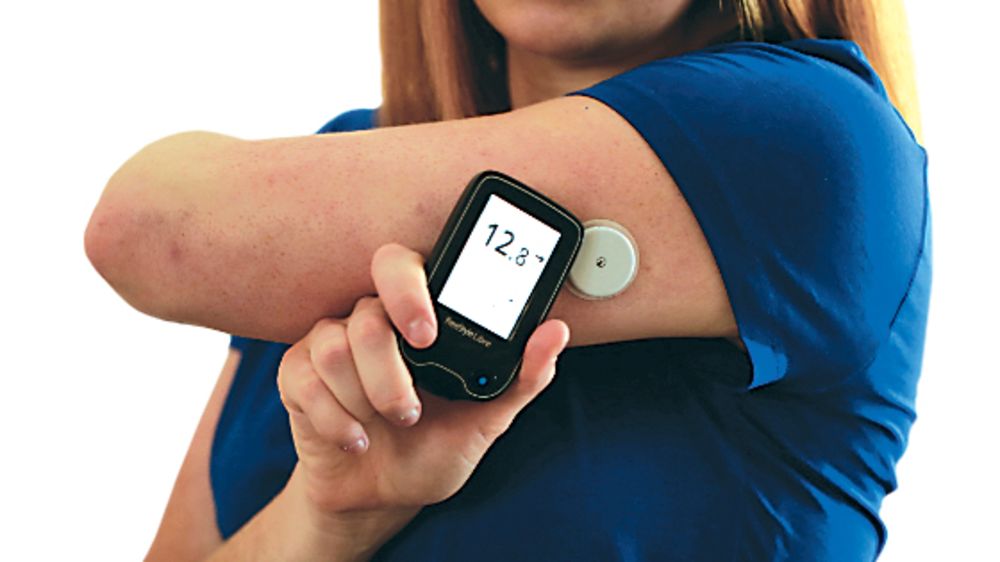
Only some of the tools used in the daily life of a Type 1 Diabetic

Type 1 Diabetes tends to shorten your lifespan. In 2012, the University of Pittsburgh published an article containing the results of a 30 year study that revealed that Diabetes can shorten the average lifespan by over 20 years! Through my own studies, I’ve always heard 10 to 15 years was the more accurate prediction. But once again, this all depends on the person’s overall health and willingness to maintain some control.

The takeaway from this study is simply that one’s life is shortened by Type 1 Diabetes. This can be for a number of reason, including but not limited to Diabetic complications, lack of health or poor control.

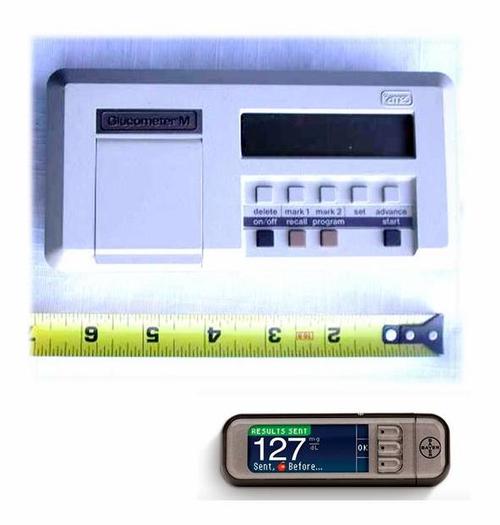
Technology has come a truly long way in making my life easier. When I was first diagnosed in 1982, my blood testing machine was roughly the size of a brick and it took a five-minute process to test. I had multiple injections that were required every day, starting first thing in the morning. Nowadays, I wear an insulin pump that takes away most of the guess work and deals with proper insulin distribution. I now take one needle every three days as opposed to a minimum of three EVERY day.

A comparison of my first glucometer from 1982 to the one I currently use today!

But before I start rambling, the purpose of today’s blog is to discuss what to do when you come across someone who appears to be having a hypoglycaemic or hyperglycaemic episode (low and high blood sugar, respectively).

Bearing in mind that I’m not a doctor, I’m passing on advice based on what I’ve come to learn over 36 years of being a Type 1 Diabetic. So take this advice with grain of salt as I am a big fan of making it clear that every person is different.

Most people will tell you that their medical status is private and doesn’t need to be shared with anyone. Although this is true as far as a person’s basic rights go, it’s also incredibly irresponsible. When it comes to one’s health and well-being, I’ve always had a policy that the sharing of pertinent information can be important and could potentially save your life.

One of the first steps I always take whenever I get a new supervisor, boss or employer is advise them that I am a Type 1 Diabetic. This is important, as it can go a long way towards letting your employers know the hows and whys when issues arise. It doesn’t mean you need to shout it out to everyone you work with, necessarily. But it can help prevent issues down the road.

I also take this step with any sporting or fitness clubs I join. This is almost more important, since excessive exercising can lead to blood sugar extremes. When I last joined a weight gym and had a membership, I had the owner put a note on my electronic membership file indicating I was Diabetic. That way, if something ever happened while I was training, the staff would be in a position to tell medical personnel about it.

Outside of taking these preliminary steps, here is what I tell everybody in relation to helping me treat any outstanding issues: either I’m conscious or I’m not! If I’m conscious I’ll be able to take steps, such as testing my blood and taking the appropriate steps including eating some fast-acting glucose. If the person is unconscious, please, PLEASE, don’t try to feed them or administer insulin! You could aggravate the situation or send them spiralling in the opposite direction. Either the person will be able to administer what he or she needs on their own, or you should be calling 911 for medical assistance.

Jellybeans or Skittles are my preferred choice for treating lows, as they’re essentially fat-free and are about 1 gram of carbs per bean!

Through the years, I’ve heard some medical professionals say that if you find an unconscious Diabetic, try and feed them some juice or something of the sort. That way, if they’re too low it will bring them up and potentially save their lives. If they’re too high, medical professionals can deal with that once they arrive. The problem I have with that is simply that if the person is already too high, you risk throwing them into a Diabetic coma, the outcome of which is not pleasant. Plus, you’re dealing with the potential issue of trying to feed something to someone unconscious. And what if the person’s current situation is not related to Diabetes? You could be adding one more layer on top of the issue.

At the end of the day, it all comes down to communication. Be willing to communicate and speak with the important people in your life and let them know what YOU need. Only you will truly know what is required to treat your current blood sugar levels and help you get better. ☯

Crack A Cold One For These Boozy Facts…

I’ve covered coffee and green tea in previous posts (the green tea thing is going fantastic, by the way!) So today, I’ll be covering a beverage type most people don’t consider as having health benefits: alcohol.

Yes, you read that right. In certain circumstances, alcohol can lend a number of health benefits (when it doesn’t include getting black-out drunk).

When one drinks in moderation, and just to be clear, moderation means no more than about two drinks a day, here are some of the benefits:

It can lower the risk for heart disease. Moderate alcohol can help increase the amount of “good cholesterol”, help improve insulin resistance and can help prevent certain blood clots.

It can improve your libido! Although there’s a lot more study to be done on this subject, some results have shown that alcohol can help prevent erectile dysfunction. And I don’t know about you guys (pun fully intended) but this is an important detail. Again, this is based on extremely moderate consumption.

Alcohol can help prevent dementia and reduce the chance of gallstones. Studies have shown that small amounts of alcohol can help make brain cells more fit. I’m not certain how one would measure the reduction in chance of developing gallstones. I mean, maybe you’re just someone who doesn’t develop them, right? But then again, that’s why I’m not a scientist.

It’s also been shown to reduce the chance of developing Type 2 Diabetes. This is apparently linked to healthy lifestyle choices used in conjunction with moderate consumption, of course. But while we’re on the subject of Diabetes and alcohol consumption, let’s talk about carbohydrates.

Obviously, carb counting becomes extremely important to insulin-dependant Diabetics. With that in mind, just about any pure spirit is carb free. For example, whiskey and tequila are actually carb free. As long as you don’t mix your drink with sugared alcohol or juice, you should be good to go. Unfortunately, just about all blends of beer are heavy on the carbohydrates. You know, hops and yeast and all that…

Frequent or heavy use of alcohol can LEAD to several health complications and a bunch of inconvenient things like weight gain and addiction. So be sure to drink in moderation and check your blood sugars frequently while consuming. Alcohol can keep your liver so occupied that it forgets to release glycol and your levels can drop quickly.

You can visit the Mayo Clinic’s website to read further about the benefits and complications of alcohol consumption. Here’s the link: https://www.mayoclinic.org/healthy-lifestyle/nutrition-and-healthy-eating/in-depth/alcohol/art-20044551

On The Road To Enlightenment…

I’ve had people ask about how I came about studying Buddhism. The question makes sense; a French-speaking white male living on the Northern shore of New Brunswick wouldn’t necessarily have a great deal of exposure to eastern religions.

I guess it all kind of started in the mid to late 1980’s. Although I hadn’t become entrenched in the martial arts by this point, my religious beliefs would feed off of my martial arts and vice versa, in the years to come. I had already become an avid reader and would pick up any book or manuscript I could get my hands on and read it. My father, in an attempt to steer me away from my grandmother’s medical text books (he felt they were inappropriate for a kid) started trying to find “cool things” for me to read.

Sometime in 1987, my father found a copy of the Tibetan Book of the Dead, and provided the manuscript to me in plain text format on a 3.5 inch floppy disk (I realize how old that makes me sound, and you new age kids can Google “floppy disk” if you don’t understand). It was slow reading, especially since there was only one computer in the house and I had to wait for my father to be gone to work to get a turn.

Without getting into details, the Tibetan Book of the Dead is the western title given to one of the three main manuscripts in Buddhism. It basically describes the transitional period in which a person exists between the death of one life and the beginning of another. There’s more to it than that, but that’s the gist. It was intense and fascinating reading, and I don’t think that my father knew exactly what it was that he had given me. It started me on a path of self-study that I am still entranced with to this day.

To explain how Buddhism gained some roots within my own life, it’s important that I explain a little bit about my family’s religious beliefs. This is not to shine a negative light on anyone’s chosen faith, but my entire family on my mother’s side was intensely religious. In fact, most of my grandmother’s siblings had studied the seminary and most had become nuns. Since my mother had also gone to seminary school, the Catholic faith had deep roots on my mother’s side and I was made to attend church twice, sometimes more, a week. Although teaching your family’s beliefs to the next generation is important, I would come to believe that a traditional church service holds no interest for a young child and can in fact get quite boring. In recent years, some churches offer child programs that allow for the teaching of their faith in a forum where young children are distracted and enjoy the experience. This was not so, for me.

By the time I had reached my pre-teens, my mother gave me the choice as to whether I would attend church or not. And like most children who are given the choice, since I had been forced through it for most of my life, I chose to walk away from it.

By the time the very late 1980’s came along, my health had waned to the point where I was facing death (I’ve written about this in previous posts, if you want to check out that story). Once I began my martial arts training, I began to learn more about Buddhism, Taoism and Zen. One began to feed of the other and I began to actively seek out Buddhist texts and study in greater detail. The more I read, the more I came to feel that the Buddhist faith reflected much more of my personality than my family’s religious faiths (I pluralize that, because my father is actually not Catholic).

My Sensei was a big help, since certain Zen precepts are very dominant in karate. What I study is called Zen Buddhism, a sect of Buddhism that originated in China but built roots as a Japanese form of Buddhism focusing on meditation and intuition. Based on Mahayana Buddhism, it combines aspects of Zen and Taoism. Although there are obviously far too many details about it to draft in a blog post, the Buddhist faith has helped me through the decades by encouraging self-motivation, increased health, focus and concentration and acceptance of all other religious beliefs.

Although my studies were akin to a starving person in front of a buffet, most studies were done on my own. In October of 2001 I travelled to Japan with my Sensei, and had the opportunity to visit a number of Buddhist temples, including temples in Narita and Tokyo. I made friends with a number of the monks in Narita and was invited to stay and become a monk myself.

I was caught in a dilemma. Although their peaceful way of life and quiet study appealed to me, I didn’t know how survival would be possible, being a Type 1 Diabetic. The monks explained that they normally used monetary donations as a means to obtain medical supplies for monks who required them. The monastery would provide my insulin in exchange for joining them.

I could have stayed. A part of me wishes I had stayed. But I came to two realizations that night as I was trying to make my decision. The first thing I realized is that the world keeps on turning. Even if I hide within the walls of a monastery, how am I genuinely promoting peace if I’m hidden from the world? Would I be contributing in a way that would satisfy me and make me feel as though I’ve done my part? The answer was certainly no!

The second thing I realized is how embarrassing it would be to have my mother hop an international flight to drag me back to Canada by my ear! Being an only child, there was no way in hell she would have allowed me to join a monastery on the other side of the world!

But there you have it. I often wonder if my path would have been the same if my father hadn’t provided me with that first manuscript. Maybe so. But as much as I would like to say it all happened by accident, it likely wasn’t. As Jean de la Fontaine said, we most often find our destiny on the road we least thought to travel.

No Matter How Much You Love Your Donut, It’ll Never Love You Back…

It almost seems as though they come out with some new fad diet every year. And with every new fad, people are subjected to different angles to trying to lose weight. Some involve cutting out carbohydrates (which is a really dumb idea since it’s our source of fuel), some involve trying to eat like our paleolithic ancestors (which is also another ridiculous concept, since our digestive systems have evolved WAY beyond what our ancestors had) and some involve eating nothing but vegetation (probably my biggest pet peeve, since the human digestive tract is designed to be omnivorous).

The bottom line is that it’s more the fact of what you eat than how much you eat. And also HOW you eat. After all, every person is different and the amount of food you require depends on age, fitness levels, overall health and a score of other factors.

For example, a man of my age, fitness level and size require almost 3,000 calories a day. My wife requires about 1,800 calories and my son would only need somewhere in the range of 1,000 to 1,400 calories (although I swear to the light that his energy level dictates he consumes SOOOO much more!).

Fad diets won’t help you lose weight. I mean, they might… But it severely depends on how you manage your lifestyle in tandem with the diet. Make sure that you consult your health practitioner prior to starting any diet regiment that seriously alters your eating habits from what you’re used to. Combine it with a healthy exercise schedule and watch for any change in your body’s behaviour that may be an issue (chest pains, random sweating, light headedness, etc…)

Last but not least, listen to your body. Dieting shouldn’t leave your stomach grumbling several times a day. If you’re constantly hungry, it’s a sure sign that your body is telling you that you need to eat more.

My Tea Is Green With Envy…

First and foremost, let me clarify that I drink about 3 to 4 litres of water a day. Between my fitness regiment and the facts I have Diabetes, water plays an integral role in my daily routine. But I do have an affinity for tea, and green tea is especially high on the list (with orange blossom and cinnamon being my top choice).

There’s a lot of attention being given to tea. Specifically, green tea. Studies have shown that green tea has a surprising amount of positive effects on the body. Most recently, I read about how drinking at least 5 cups of green tea a day can help in losing weight, most of it in the belly. Since Type 1 Diabetics have difficulty losing weight in the gut due to insulin use, this would be fantastic. True, there are no hard and fast beverages that melt off the fat for you. And it becomes most important to pair your tea consumption with other healthy habits, such as limiting your alcohol intake, eating well and exercising regularly.

Some of the health benefits include, but are not limited to improving blood flow and lowering cholesterol, aiding with blood sugar control and contains a number of antioxidants. These are just to name a few, and the studies are still happening as we speak.

One important benefit is the relaxing routine that comes with consuming tea. In fact, most Buddhist monasteries include the consumption of tea as part of the morning routine, as we believe that it helps with the cultivation of body and mind. It isn’t always necessarily green tea, but it usually involves a similar blend. Green tea has also been used in traditional and holistic medicine for next to forever.

I’ll be trying the whole “5 cups a day” thing for the next little while. In addition to how I’ve been killing myself on a bicycle lately, we’ll see if it does help to trim the gut a touch. I’ll also be watching my blood sugar levels to see what effect it may have. I’ll be providing updates as I go along.

My “short” little bike ride tonight…

So grab yourself a cup of green… When preparing your tea, it is recommended not to use boiling water as it can be damaging to some of the good stuff in the tea. Hot but not boiling water is best, and remove the tea bag once it has achieved the desired strength.

Some good articles that cover the material I’ve written on and more include WebMD (in case y’all haven’t noticed, I’m a big fan of this page) and MedicalNewsToday.com. These articles can be read at https://www.webmd.com/food-recipes/features/health-benefits-of-green-tea#2 and https://www.medicalnewstoday.com/articles/269538.php respectively.

Enjoy!

I Promise It Isn’t A “Man Flu”…

So I took a nap, yesterday afternoon when I started to feel a bit sluggish. My blood sugars were fine and I was waiting for a buyer to come pick up some furniture I’m trying to sell. It was mid-afternoon and the sun was warming the living room and my couch was doing that strange whispering thing: “Go to sleep… Go to sleep…” No? Maybe that’s just me. So, anyway I fall asleep for a short nap. When I awoke a little while later, my head felt as though someone has tightened a vice on it and my throat felt as though it had been refinished with a belt sander. I had apparently caught a cold…

I know, I know… There’s a standing joke that when a guy catches a cold, he makes it seem like it’s the end of the world. Although I know a few guys who fall under this category, I assure you this isn’t the case.

One of the big problems with being a Type 1 Diabetic (Like there aren’t plenty!) is that it compromises one’s immune system and causes one to catch every little bug that comes along.

According to the Mayo Clinic, a cold is a viral infection of the nose and throat. It’s generally harmless, although symptoms often don’t make it feel that way. The average person recovers from the common cold within 5 to 10 days, unless it’s accompanied with a fever or other aggravating factors, and the symptoms usually show up days after you’ve actually caught the cold. The Mayo Clinic website explains this in further detail and can be read here: https://www.mayoclinic.org/diseases-conditions/common-cold/symptoms-causes/syc-20351605

For someone with Diabetes, some symptoms become aggravated and blood sugar levels are often affected. This is because the body will release particulars hormones to help combat the viral infection. That added release of hormones makes it difficult for your insulin to be effectively used and can cause a raise in blood sugar levels.

Not that this doesn’t apply to non-Diabetics, but it becomes extremely important to consume fluids regularly to help prevent further issues. This will also help to better control your blood sugar while trying to combat the illness. unlike most people, we don’t have the benefit of a loss of appetite. Although you may not be hungry, a Diabetic needs to try and eat at least small amounts every hour or so.

Over the counter medications are doable, but one has to be sure to read the information label to ensure that they don’t contain sugar. This is especially the case with cough syrups and cough drops.

Test your blood sugar frequently and do your best to try and maintain your levels. The only thing worse than cold symptoms would be slipping into ketoacidosis, which would be side effect of dehydration during illness.

Now if you’ll all excuse me, I’m going to curl into a ball on the couch with my blankie…

No Pain, No Gain! Let’s Be Honest… There Was Pain!!!

It’s important to keep some variety in your workouts. Doing different things helps to build different muscle groups and keeps things interesting. In my case, it also helps with better blood sugar management. This is referred to as Cross Training.

Cross training refers to training in a routine that covers off several different forms of exercise. In order to excel in your chosen sport (such as martial arts), it’s important to train consistently in that discipline. however, cross training allows you to vary your workouts and helps to develop an overall high level of fitness. It can help to prevent injury by ensuring more areas of the body are developed, can help with weight loss and will help to ensure you stick to exercising since it won’t get boring.

Ace Fitness has a good article on this and can be read here: https://www.acefitness.org/education-and-resources/lifestyle/blog/36/what-is-cross-training-and-why-is-it-important

This morning, I decided to do something different. I got up at 6:30 am, slipped on some dry fit gear and a helmet and hit the frosty streets on my bicycle. It was -3 degrees Celsius, the windows of most vehicles were frosted over. Since I was wearing a bike helmet, I had no protection for my nearly bald head and my face was seized with cold.

One of the benefits of biking like this is that no matter how uncomfortable or cold I got, the only way for me to get home is to keep peddling! This morning, I faced that exact situation. Within five minutes, I had left the suburban neighbourhood and was faced with endless open fields (I live in Saskatchewan, after all). The morning breeze was light, but combined with the speed of cycling along, caused the muscles in my face and neck to twitch and beg me to seek shelter.

By the end of my run (when I reached my driveway and hit stop on the tracker app), I had reached 4 kms in 21 minutes. That’s a far cry from what I wanted to accomplish and it sure didn’t burn as many calories as I expected, but I got outside, stuck with it and did something different. I’m hoping to start shaving that time through consistent biking over the months to come. Who knows? I may even start biking to work… (someone’ll make me eat those words eventually)

It was nice to do something different. I spend so much time lifting weights and doing martial arts, I realized I have a few muscle groups I don’t use often, and I don’t often include cardio. I may or may not be cursing my legs at the moment.

Right now, I’m using an app called RunKeeper. It’s pretty sweet, it allows me to track distance, time and pace with just about any type of workout one can imagine. In fact, I also use it as a passive log to document my karate classes and weight workouts.

A screenshot of this morning’s bicycle adventure

The above image is what you can look at once you’ve ended your workout. There’s a lot more information available on the previous screen and as you screen down, I just think the map function is super cool!

Although you kinda need to download the app on your smart phone, since that’s the point, you can check it out at the following website: https://runkeeper.com and sign up for it for free.

Now if you’ll excuse me, I’m going to go load my legs with analgesic cream and nap before karate class tonight!

Lethargy and Apathy are NOT countries in Eastern Europe…

One of the many pitfalls of Diabetes is that is can often cause sluggishness and lack of energy. Many people tend to see this as laziness, but it is often attributed to out of control blood sugars and the physical tolls it takes on the human body.

Just to clarify, lethargy and apathy are pretty similar. the first means a lack of energy and enthusiasm; the latter means a lack of interest, enthusiasm or concern. Sometimes it’s easy to confuse the two.

People often wonder how to “push through” and get their workouts or exercise done, despite the lack of energy. This takes concentration and the willingness to push beyond what your body is telling you. Don’t get me wrong; it is important to take rest when it is required. Your body will eventually need to recharge and replenish itself. This is why most trainers and health professionals will tell you that you shouldn’t work out seven days a week. Eventually, you start doing more damage than good.

But as a matter of course, it is important to push yourself. When you get those days where you just don’t feel like getting off the couch, those are exactly the days where you should. Yesterday, I skipped a karate class. This is not a common practice for me, but some days one simply can’t find the motivation. Is that a bad thing? Not necessarily. But the throbbing pain in my upper back and right shoulder, coupled with my inability to keep my eyes open, told me that if I didn’t take a rest and allow these muscles to heal, I would likely injure or harm myself further.

So it becomes important to know the difference between required rest and lethargy. It is also important to recognize the difference between the ache of a rigorous workout and the pain of an injury. If you are ever uncertain as to which you are feeling, don’t hesitate to visit your family practitioner, chiropractor, massage therapist, whatever you need. Even if it turns out to be nothing, it’s always better to err on there side of caution. Your body will thank you.

Mind Over Matter, It Doesn’t Matter So Never Mind…

When was the last time you sat down at your kitchen table with a hot cup of coffee or tea and just SAT there? No agenda, no tasks or chores that need doing and no work to get to on that particular day? Can’t remember the last time that happened? Don’t feel bad, neither do I! But this likely means that we are lacking something very important in our lives: the ability to be still!

This morning I brought my son with me to check in at work and run some errands. As usual, he was his typical buoyant self, attracting everyone’s attention and fascinated by everything he sees. He seemed to be on a kick this morning of claiming he’s only one year old! According to him, his teacher told him this, although I’m sure something got lost in the translation. I asked him what he’d like to do this morning for an hour before going back to see his mother, and he replied with typical time-proven favourite: breakfast and the play place at a local fast-food eatery.

Now, I include breakfast because it would be ludicrous to think that we’d sit in a restaurant and not order something! But let me be clear; Nathan could care less about the food; he simply wants to play on the play structure with other children. A part of me is pleased that he wants to interact and socialize with other children. Another part of me longs for the silence that I wouldn’t get even if we were there alone.

Since it was an unplanned trip, I had limited resources with which to occupy myself while Nathan played. Oh sure, I had a book in my backpack. I almost always have a backpack when I expect to be out of the house for more than an hour. When you have Diabetes, you have little choice to do otherwise. What with testing equipment, fast-acting glucose and my glasses and other medications, I generally make it a rule to keep at least one piece of reading material with me. This morning’s selection was UechiRyu Karate Do by George E. Mattson.

But as I sat there, I found myself doing something I occasionally fall into: I observed the world around me. And this is what I noticed… People bustling and in a hurry. People raising their voices over mistaken orders and everyone staring at their watch. I happen to be in a position where sitting still at 9 in the morning is a very real possibility for me, but even when I’m at work, I like to think that I live in the moment and take time to do what’s immediately in front of me. Most of the people I observed were getting their coffee and/or their food because they need it to get on with their day, as opposed to sitting and enjoying it.

An important part of one’s mental and physiological well-being is to occasionally take the time to just sit still. Let the world around you melt away and just take the time to enjoy the moment. Sounds easier said than done? You damn right it is! But the benefits can be plentiful. Even for someone with Diabetes. Allowing yourself to relax causes your heart rate to slow, your blood pressure to lower and permits you to relax (depending on how many milligrams of caffeine may be in your beverage of choice, of course), all of which will help with blood sugar levels.

Today’s rat race makes it all but impossible to find time to sit in silence. And thanks to the advent of technology and social media, most of us can’t comfortably sit in silence anymore. But the practice is still sound and should be exercised. So, take some time for yourself. Sit there and let your mind drift. Well-known authors and composers have claimed that they do their best work when they simply let the ideas come to them. Why not emulate this behaviour and let your mind reset. Maybe you’d be surprised at the ideas you could develop!

The Future Is Now!

I still remember how I felt when I was first diagnosed with Type 1 Diabetes. I was four years old, it was 1982 and technology was a far cry from what it is now.

I recall a number of symptoms that, at the time, made me angry and sad without having the benefit of understanding what was happening. I began wetting the bed again. This was the most humiliating, since my parents felt they had no option but to put me in diapers when I went to bed. I would wake in the morning with a soaked diaper, wondering why I didn’t wake up to use the washroom. My weight and appetite fluctuated and my personality changed almost overnight. My thirst was constant and I was always cranky.

My parents thought that perhaps I was simply going through a phase. I had just turned four, after all. The well-known “fournado” period was well under way. It wasn’t until I awoke one morning and sat at the kitchen table, complaining of stomach pain and feeling strange that things reached a plateau.

One morning, I promptly passed out into my bowl of Cheerios (I don’t know if it was actually Cheerios, just to be clear. But one can assume…). I was transported to the local hospital, but I don’t remember a great deal of the next few days. This is likely because I was comatose. I would later learn that my blood sugar had gotten so high that the glucometers of the time couldn’t effectively read my blood glucose. Considering my modern day glucometer caps off at 33.0 mmol/L, that’s saying a lot.

Once I woke up (several days later), it was discovered through testing that I had been diagnosed as a Type 1 Diabetic. Although I didn’t really know what this meant at the time, it would go on to define me as a person for the rest of my life.

The weeks that followed involved a lot of trial and error as well as a glucometer that took almost three minutes to test with, and was about the size of a brick. My parents had no concept of what carb-counting was, or how to ensure that I didn’t ingest glucose from sources they weren’t aware of (“oh, bread doesn’t have sugar, sweetheart! You can have as much of that as you want”). Back in the 80’s, sugared goods were sugared goods; I’m talking cookies and baked goods and stuff. Bread, milk and potatoes were considered non-sugared goods. Unbeknownst to me, I was causing all kinds of damage to my system from consuming all those carbs without the benefit of calculating how much insulin I would require. It would prove to be a challenge I would have to deal with, later on in life…

I don’t blame my parents. They did the best they could with what they had available at the time. I honestly wouldn’t learn about carb-counting and such until 2015, almost 33 years after I was diagnosed.

My point is, now I’m connected to an insulin pump that is tethered to my body. It weighs less than an ounce and I test my blood using an interstitial fluid glucose reader, which would have have been considered inconceivable ten to fifteen years ago. But it’s how I live my life now.

Yesterday, I had the opportunity to meet some people interested in upgrading to a new insulin pump. The latest design, it calculates and adjust one’s glucose levels every five minutes and helps to eliminate a number of steps required to maintain good glucose levels.

I met a gentleman who had been on an insulin pump in the 1980’s, as well as a youth who has only been on the pump for about three months. The variety was humbling, and I’ve ultimately decided to upgrade and move on to something newer.

Although I have always been a believer that technology isn’t the answer to everything, we keep moving one step closer to a point where perhaps someday, we’ll achieve a worry-free system that will take care of itself. We may not be able to create a new pancreas, but we can sure as hell combine technology with biology to provide a better tomorrow for future Type 1 Diabetics.