Bring The Noise

Sleep is something that I’ve had an issue with for as long as I can remember. An elusive thing at best, the quality of my sleep often depends on blood sugar levels, stress, PTSD symptoms, other medical issues (ex: colds, flus and the like) as well as the fact I have two small children in the house.

I’ve written a number of posts that outline the benefits of a good night’s sleep. There’s no getting away from it; sleep is a necessary and integral part of a person’s health, well-being and interestingly enough, their sanity (that last aspect is information for another post).

For Type 1 Diabetics, sleep is a mixed bag, because our sleep is affected BY our blood sugar levels, but sleeping through lows or highs can also be extremely dangerous.

After reading a bit on sleep habits and therapies, and having heard about it from different sources, I started trying something new about a week ago that has improved my sleep: white noise.

Before I start describing some of my experiences over the last week, I should start by explaining what the hell white noise actually is. Not everyone is familiar with White Noise, or its lesser-know cousins, Pink Noise and Red (Brownian) Noise. Let’s do some learnin’…

White Noise is described in layman’s terms as a sound that contains all the audible frequencies that can be heard by the human ear. These frequencies are all at the same intensity, giving the sound an almost “static” quality, which is how many people describe it;

Pink Noise is a sound that contains MOST audible frequencies, except the higher ones, and whose intensity decreases as the frequency increases. This can potentially make it more pleasant than white noise, and a good alternative if white noise doesn’t work for you. The sound of a steady rainfall is a good comparison.

Red Noise, or Brownian is similar to White and Pink but with even fewer high frequencies, described as having more bass notes than white noise, which makes it more tolerable and pleasant to listen to than White Noise. An undisturbed ocean wave lapping on the shore is a good comparison.

All three of these are mathematical constructs that do NOT occur naturally in nature, despite what many people think. Although white noise is often generically described as “background noise”, all three of these sounds need to be carefully constructed in order to qualify for the definition. Some people have tried white noise and noticed no benefit. In cases such as those, it would be to their benefit to try pink or red noise, as these could be alternatives that would work well for them.

There are a lot of benefits to using white noise. First and foremost, white noise will buffer out background sounds that have the potential to wake you during the night. A slamming door, a revving engine outside or a family member going to the washroom all have the potential to at least partially wake you, disturbing your sleep cycle. White noise prevents this. It’ll also help you stay asleep as it will mask noise that may wake you and even if you do wake, it’s usually easier to fall back asleep.

White noise also helps to shut off your brain. Have you ever tried going to sleep, only to have life’s problems replaying in your head? Or upcoming tasks lingering in your mind? White noise will help to prevent this, as well. It can also be a helpful tool while learning how to meditate, as it helps the practitioner focus and shut out the distractions that may prevent them from effectively reaching a level of meditation.

There are plenty of other benefits that I’m only just learning about, and the National Sleep Foundation has a great article that defines white noise and offers different aspects, such as falling asleep with your tv on and managing noise in your household in general. Here’s the article: https://www.sleepfoundation.org/bedroom-environment/hear/what-white-noise

I have all of the issues I’ve described above, so this has been a life-saver in recent nights and even during nap times. You can experience the benefits of white noise in a number of different ways, from downloading free apps on your phone that will produce it, all the way to paying moderate money for an actual “white noise machine”.

I use a free app on my iPhone called Noisli. What’s nice about it (besides being free) is that it allows you to experience a variety of sounds such as rainfall, thunder, leaves blowing, rustling trees and has all three “Noise” options including White, Pink and Brownian. It allows you to blend and mix all these sounds to your liking, which means you can have a rainstorm with thunder and heavy blowing winds, if that’s your go-to relaxing sound.

At the end of the day, sleep is one of those things that will affect every other aspect of your life. If your sleep routine sucks, it WILL affect your health, appetite, work and fitness life… all of it! That’s why it’s so important to have a regular and consistent sleep routine (going to bed around the same time every night) and ensuring your sleep is profound and deep. You can take advantages of the methods I’ve described above without breaking the bank, or don’t be afraid to take advantage of sleep therapy if you find that it still isn’t happening for you.

This is one of those things that you have to try for yourself in order to be the judge. Now if you’ll excuse me, it’s time for a nap! ☯

The Right Path Isn’t Always The One Of Least Resistance

Gene Dunn once said, “Your technique means nothing if you’re not using your talents for the betterment of humanity.”  

I began studying the martial arts what feels like a very long time ago.  Thirty-one years ago this year, to be precise.  Although I started this journey with the intention of improving my health and saving my own life against the complications associated with Diabetes, it would end up becoming who I am as opposed to something I was doing.

Martial arts have provided me with more than I could possibly express in written word.  I have carried and used my skills with dignity and with respect for others. Through my study of the Way, I came into Buddhism, which became the central focal point of my faith.  I believe that as a people, we have an obligation to give as much as we get.  And on the occasions where the only possible response to prevent harm to others or myself was violence, I have been swift but just.

My chosen career has carried me far from home and away from my dojo over the past ten years.  Although I have never stopped practicing, it’s been a lonely road considering the rural areas I’ve lived in generally never have martial arts schools.

When I moved to Regina, I was elated to hear that there were several schools that I could explore and I was excited at the prospect of training among other students of the way once again.  I visited MANY martial arts schools over the course of a few weeks and observed several classes.  None of them seemed to be a fit.  Although I wouldn’t presume to classify any one style better than another, I believe a style should call to the person and fit their requirements.

That’s when I walked into the Regina Institute of Kempo Karate.  After observing only one class, I came to realize that it would be a good fit.  Not only because there were some techniques and aspects similar to my own, but because of the ambiance and the manner in which students were taught.

Without hesitation, I was accepted as a student despite being an outside black belt (something that many instructors would not allow).  When I decided I would be testing for my next degree of black belt, I was allowed to step outside of protocol and practice my forms during class even if they were not of the same style.  

For the many who believe that learning the martial arts is simply about learning how to fight, it’s important to look at the quality and value that comes out of a dojo’s students. The growth, maturity and knowledge that is imparted on a student is truly the trademark of a quality dojo. If you consider training, be sure to do your research and find something that is a good fit for you. In the long run, you’ll get much more out of it. ☯

World Diabetes Day

Today is World Diabetes Day. There are a lot of “holidays” that float around on the internet, most created in the US and North America, such as National Donut Day and things of the like. But this one was created in 1991 by the World Health Organization and holds a different theme every year. It is observed on November 14th to coincide with Dr. Frederick Banting’s birthday. For you non-Diabetics who may not know, Dr. Banting is the man who co-created insulin alongside Charles Best.

This year’s theme is The Family and Diabetes. I still remember when I was diagnosed with Diabetes, all the way back in 1982. I recall my parents being visibly emotional and overwhelmed. I don’t remember much about how I reacted, except that I felt my parents would make everything okay. I was very wrong.

Over the years that followed, everything was most certainly NOT okay. I suffered from insulin resistance, Diabetic comas, ketoacidosis and score of other Diabetes-related complications. Carb-counting was not a generally known aspect of Diabetes control at the time, and I often suffered severe highs from that lack knowledge. My mother would often say things like “If you’re hungry, have a slice of bread with peanut butter” or “If you’re thirsty, have some milk”, as my mother assumed these things had no “sugar” in them and should be fine for me. All the while, I was being pumped full of carbohydrates and my insulin couldn’t keep up.

Once I got older and began taking control of my treatment and nutrition, things became exponentially better. After all, it’s much easier treating yourself than relying on others. Especially since you can feel symptoms and issues you may be suffering through much better than family members could. Obviously, I don’t hold my parents accountable for the difficulties I faced as a child. I was the first Type 1 Diabetic in my family and they did the best they could with the information they had at the time.

But family is important; not only for the treatment aspect but also for the support aspect. There were a lot of times as a child where I was denied certain privileges like spending weekends away at scout camps and having cake at birthday parties and such. It made my childhood difficult on top of all the medical concerns I faced. And let’s not forget the half dozen times that I likely would have died in my sleep, had my older brother not recognized that I was having a Diabetic seizure and woke my parents.

Family continues to play an important role in my life. When my wife and I started dating, I’m sure she wondered what the hell she’d gotten herself into after seeing me experience a severe low for the first time. Drenched in sweat and practically eating myself out of house and home, I can only imagine at what thoughts may have been floating through her mind. But these days, she’ll be the first to take one look at me and ask if I’m having a low. She’ll remind me to bolus based on the meal’s carb count and she keeps an eye on me.

Family is an important cornerstone in helping one properly control Type-1 Diabetes. They can give you focus and keep you on the straight and narrow, especially when things get rough. They are taking the journey with you, despite not having Diabetes themselves. As you observe World Diabetes Day, take time to include your family. They deal with it, same as you do. Every high, every low and every mood swing. ☯

A Shovel Full Of Common Sense

I don’t know about the rest of you, but winter is in full swing in Saskatchewan, and the snow is falling heavily today. As I look out my window, there’s a flurry of heavy flakes falling, with a decent wind pushing it all about. Some Provincial highways have been closed due to snow and ice. Winter wonderland, indeed…

One of the activities associated with winter (besides pelting my son with snowballs) is shovelling. Let’s be honest: shovelling snow is a major pain in the a$$! I don’t recall ever hearing someone say, “Oh, I LOVE shovelling snow! It’s so much fun…” Yeah, no, it sucks.

But it’s a necessity of winter. Whether you rent, own or otherwise, you’ll likely be required to clear away snow in some capacity, at some point. I currently own my home, and one of my biggest pet peeves is the fact that I even have to clear the sidewalk in front of my home, despite it belonging to the city.

Most people forget that this necessity is also a major workout! Don’t get me wrong, it’s not a workout I willingly include but shovelling out one’s driveway or front sidewalks gets the heart rate up, increases blood flow and works several muscle groups.

Unfortunately, it’s also incredibly taxing on your heart, increases blood pressure and leaves you at risk for blood clots. A decent article article posted by Harvard Health Blog outlines some of the factors to be mindful of (https://www.health.harvard.edu/blog/protect-your-heart-when-shoveling-snow-201101151153)

Some little tips I can provide in order to prevent issues include keeping yourself in good physical condition, maintaining your hydration and taking frequent breaks. Consider stretching before you begin shovelling, same as you would with any other workout, and remember to lift with your legs.

Jumping out in the freezing cold and moving hundreds of pounds of snow after being sedentary for months is dangerous and ill advised. We already know that people with Diabetes are at a higher risk for heart disease and heart failure. So it becomes all the more important to remember to test your blood before heading outdoors and keep some fast-acting ready, just in case. ☯

We’re Only Human

We all get old, eventually.  It’s one of those few uncontrollable aspects of life that none of us can escape.  We can, however help to alleviate what happens as we age.  Most of this involves having good eating and fitness habits and staying away from the nasty things that can potentially bring our existence to an end.

Don’t get me wrong, I have no illusions of being “old” per se, but some age is often felt rather than gained.  I have to admit that in recent years, my blocks have gotten a bit slower, my techniques a little sloppier and my ability to get up and go has got up and gone (Yes, I just referenced an earlier blog post of mine!)

The shirt I just got yesterday

It really doesn’t take a great deal…  A few too many break days, skipping meals or lack of sleep and your health can easily start to fall off the rails as you get older.  This is especially true for Type 1 Diabetics who depend on a proper balance to keep things in check.  And balance really is the key!

Start by getting proper rest.  The average adult requires between 7 to 9 hours of sleep every night.  As long as you’re getting it all at once (unlike me, who occasionally cluster naps) it should go a long way to helping you rejuvenate yourself.  Many of your body’s systems are working at resetting and/or resting while you do. This is one of the reasons why you shouldn’t eat heavily before bed.

And while we’re talking about food, make sure you’re getting your three meals a day and that they’re properly balanced with vegetables and proteins to help with muscle repair and growth.  It’s okay to have some cheat days now and again, as long as you don’t go overboard.

Last but not least, get some damn exercise.  Even when you’re sore, tired and just plain fed up… it gets exponentially worse if you just sit back and do nothing.  You have to keep moving.  Movement is life.  Even if you just start by doing some light stretches first thing in the morning, it’ll help to get the blood flowing, make you more alert and start your day off properly.

All of these points become increasingly important as you collect more birthdays. Muscles become less flexible, joints are less limber and if you don’t keep up with everything, you may find yourself seizing up. ☯

Liquid Courage Or Stupidity? It’s A Fine Line, People!

Although Homer Simpson is definitely not a source of what one may consider to be a source of salient wisdom, he is definitely quotable in Season 8 Episode 18 where he says, “To alcohol!  The cause of… and solution to… all of life’s problems.”

The consumption of alcohol poses a distinct societal issue in modern times, as we have the world’s information and communication at our fingertips… even when we’re drunk!  That’s not a good thing.  How often have you heard of a friend drunk-texting, messaging or contacting an ex-partner?  Or someone who has shopped and made frivolous and even ridiculous purchases online?  It happens more than we care to think about, and most of us only realize our mistake and check our phones the morning after, while in the throws of a hang-over, questioning our life choices.

For someone with Type-1 Diabetes, there’s definitely more to think about when consuming alcohol than declaring one’s undying love for the one you left behind. There’s a great checklist available at Diabetes.ca (https://www.diabetes.ca/DiabetesCanadaWebsite/media/Managing-My-Diabetes/Tools%20and%20Resources/alcohol-and-diabetes.pdf?ext=.pdf) that will help you ascertain whether or not it would be safe for you to enjoy a drink or not.  Further into the article, there a table that provides a general guideline to the number of carbs you may be ingesting, depending on what you drink.

The problem with alcohol is that one can never be certain what effect it will have on one’s blood sugars.  While some drinks may cause your levels to rise, excess alcohol may actually cause your levels to drop dramatically since, you know, your liver is otherwise occupied…

If you’re going to consume alcohol, first and foremost, do it in moderation.  This isn’t always an easy thing if you’re out for a weekend bender with your friends or you happen to be at Burning Man, but it can be helpful.  Further, avoid using mixes that are full of sugar, such as fruit juices or regular pop.

Alcohol (depending on the drink) usually contains a lot of empty calories and can lead to weight gain.  And if you’re anything like me, losing weight around the gut is difficult enough without the added obstacle.  Alcohol may increase blood pressure, triglyceride levels and heart rate, all of which are big no-nos for someone with Type-1 Diabetes.  Last but certainly not least, booze will often trigger your hunger reflex and make you want to eat, and our impaired judgment will often have you making less than healthy food choices while intoxicated.

If you’re going to consume, be sure that you do it with friends who are aware of your condition and some of the accompanying effects.  Have a safe way home (which should apply to everyone, really), which could include a designated driver.  Although I hate them, medical alert jewelry identifying you as a Type-1 is very important as well.  Especially since some effects of alcohol consumption can mimic the effects of low blood sugar or worse; they may hide them.

Look, I enjoy the occasional alcoholic beverage, especially when it can be enjoyed with others.  In fact, I had the opportunity to sit and enjoy beers with a good friend of mine just last week.  Like everything else related to Diabetes, the key is proper control and moderation. And stay off your phone, unless it’s to call for a ride home! ☯

Through The Eyes Of Another…

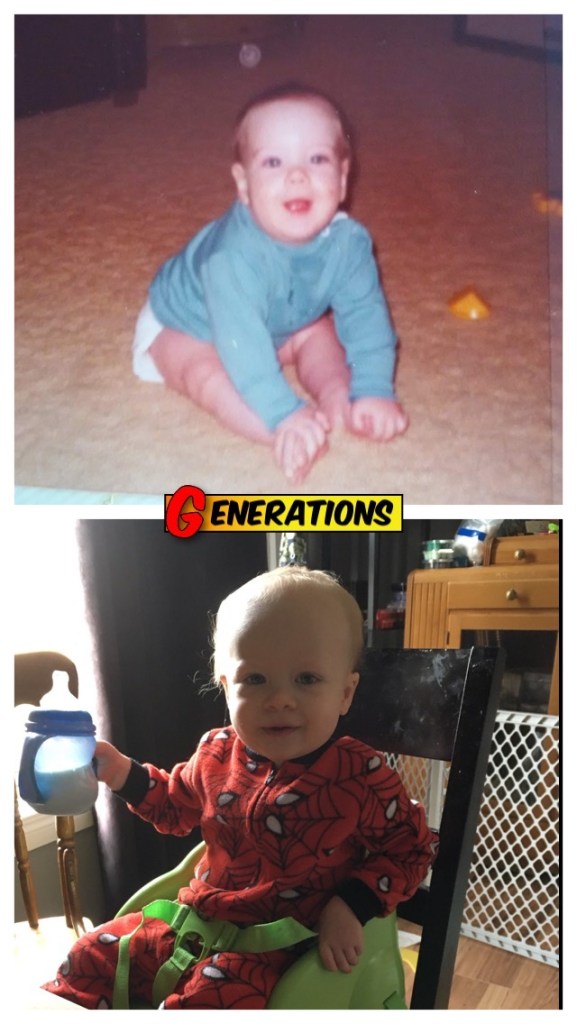
Kids are great!  No, seriously… they’re totally awesome (as I rock gently while downing yet another shot of whisky).  All jokes aside, children genuinely are a wonder.  They are the only way to indirectly ensure one’s immortality, and they allow a brief glimpse into one’s past.  I can’t tell you how many times I’ve seen my son Nathan, do something and think, “Wow, I used to be JUST like that!”  And with the arrival of my second son, Alexander, I’m sure the comparisons will continue.

That’s me at the top, and my son Nathan on the bottom, both at 1 year of age

With another Halloween come and gone, I’m left remembering aspects of my childhood and how I dealt with them.  I was faced with many dietary and health restrictions due to my Diabetes.  Having been diagnosed at the age of four, I really never had the opportunity to go door-to-door like all the other kids.  My mother had some friends who would provide things like raisins, apples and “sugar-free treats” (it wouldn’t be until decades later that I would discover how many carbs and how sugary all of those other treats actually were).  But the prospect of a genuine “trick or treat” outing was nonexistent.

Enter: Nathan.  It’s difficult for me to draw a line sometimes, because I realize and acknowledge that he isn’t limited by the same health restrictions that I was at his age. He turns into an absolute hell-spawn when he eats sugar, much like any child; but I can’t resist allowing him to indulge in the ways that I couldn’t.  Maybe there’s a bit of indulgence on my part as well, since I get to experience it vicariously through his eyes.  Such is parenthood.

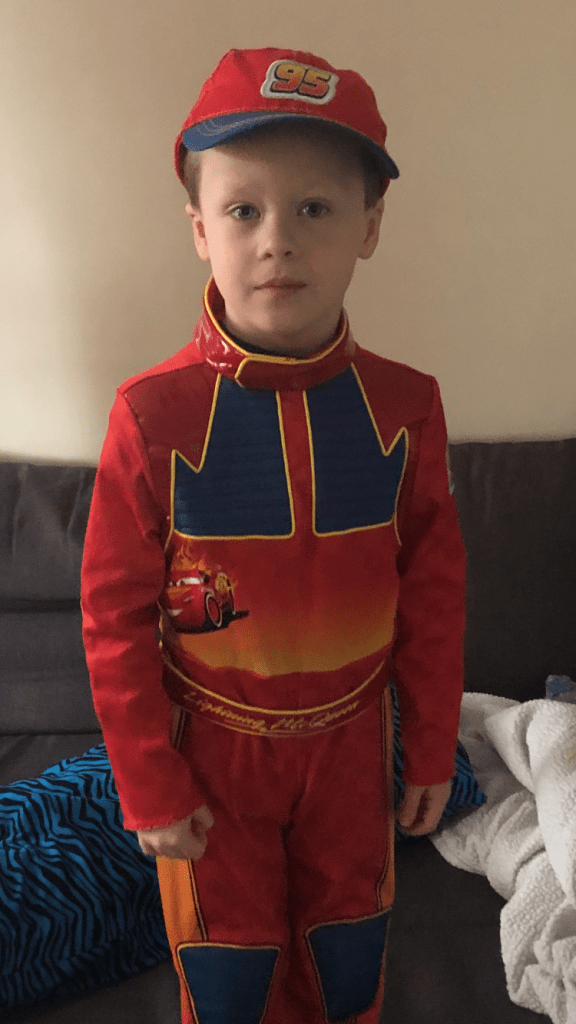
My little Lightning McQueen

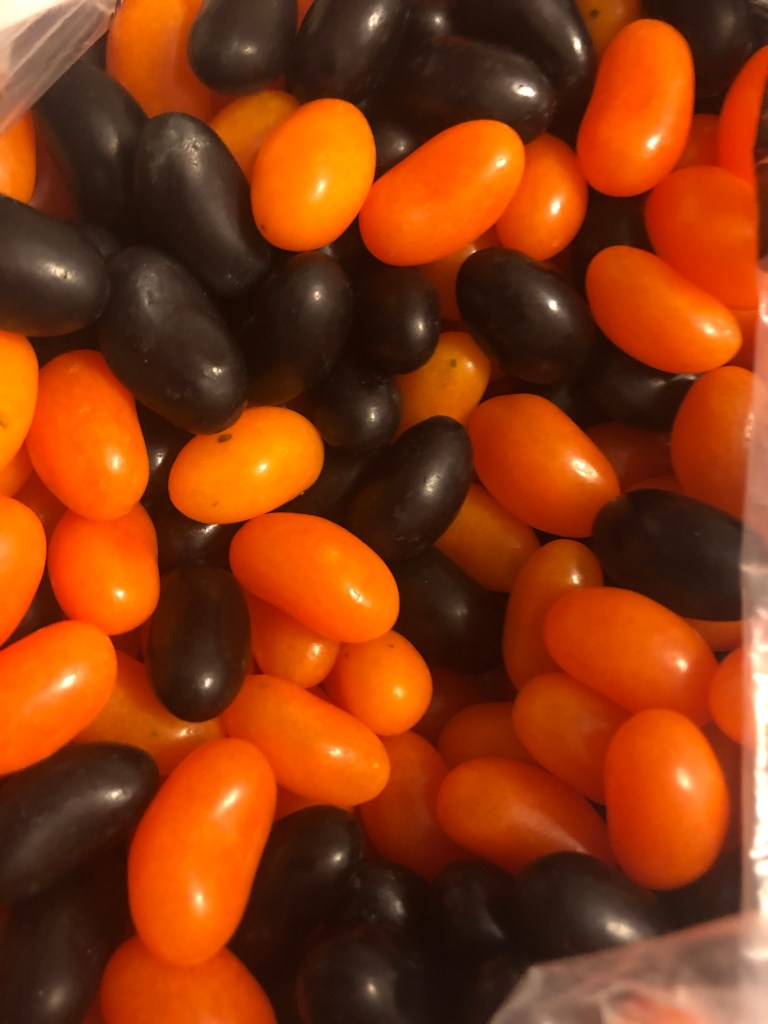
Yesterday, my wife and I took Nathan to an artisan ice cream parlour.  Clad in his Lightning McQueen costume, he was treated to a free ice cream of his choice.  He chose triple chocolate brownie.  That’s my boy!  Tonight, he indulged in some jellybeans that were left over from last night’s trick or treaters.  Although we normally suffer through the after-effects of the sugar in his system, it’s hard for me NOT to allow him the pleasure, since I never had that pleasure myself.

Our Halloween jellybeans

Sure, I can take insulin dosages necessary to enjoy things now, as an adult.  But I can’t help but wonder how different my childhood would have been, had I not been limited and held back by Type 1 Diabetes. Luckily, Nathan doesn’t have that issue and can enjoy his snacks in the guilt-free way that any child should: by driving his parents nuts during the sugar rush! ☯

The Second Time Was Much Sweeter…

I’m not one for being stubborn (as my wife shakes her head), but I wasn’t satisfied with how my sugar pie turned out a few days ago.  As a result, I did a search and found a French Canadian recipe that only included two ingredients (I may have mentioned this in the last post).

The recipe only involved 400 grams of maple sugar and 225 mL of whipping cream. Despite my best efforts, I couldn’t find maple sugar, so I chose to use brown sugar instead.  Most sugar pies these days are made with brown sugar anyway.

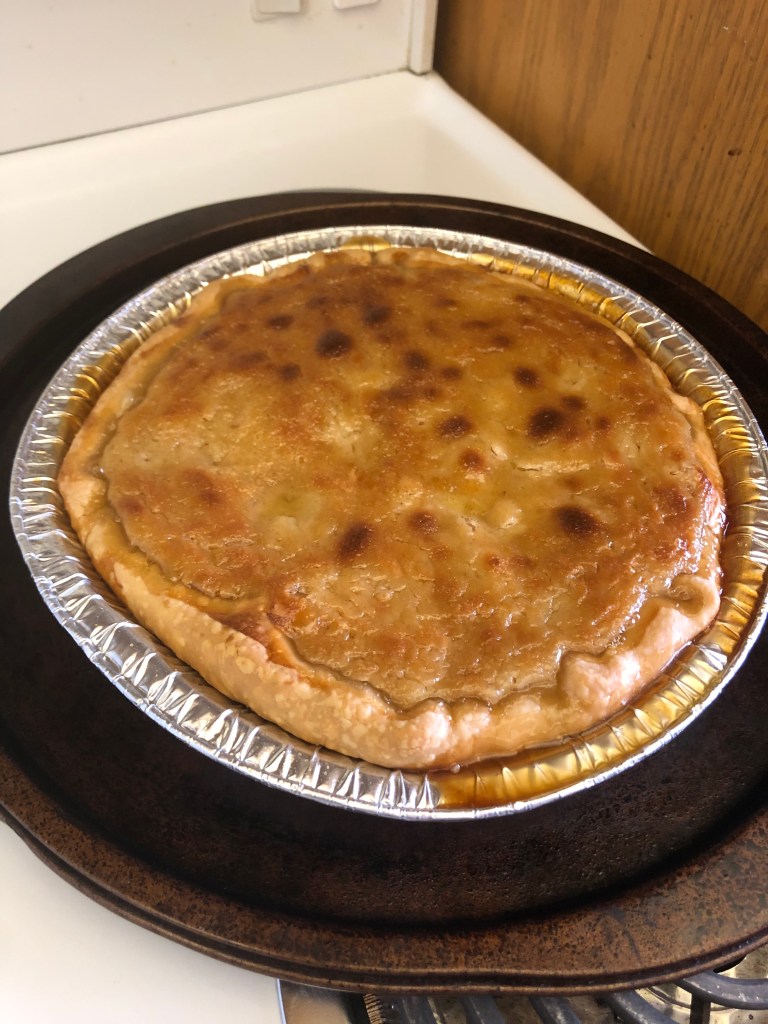
I started by mixing those two ingredients and heating it up for fifteen minutes to thicken the mixture.  Once that was done, I poured the mixture into an uncooked pie crust and baked at 345 degrees for about half an hour.  Despite a slight burning smell from some of the mixture bubbling over, there was a nice, warm aroma of brown sugary goodness in the house.

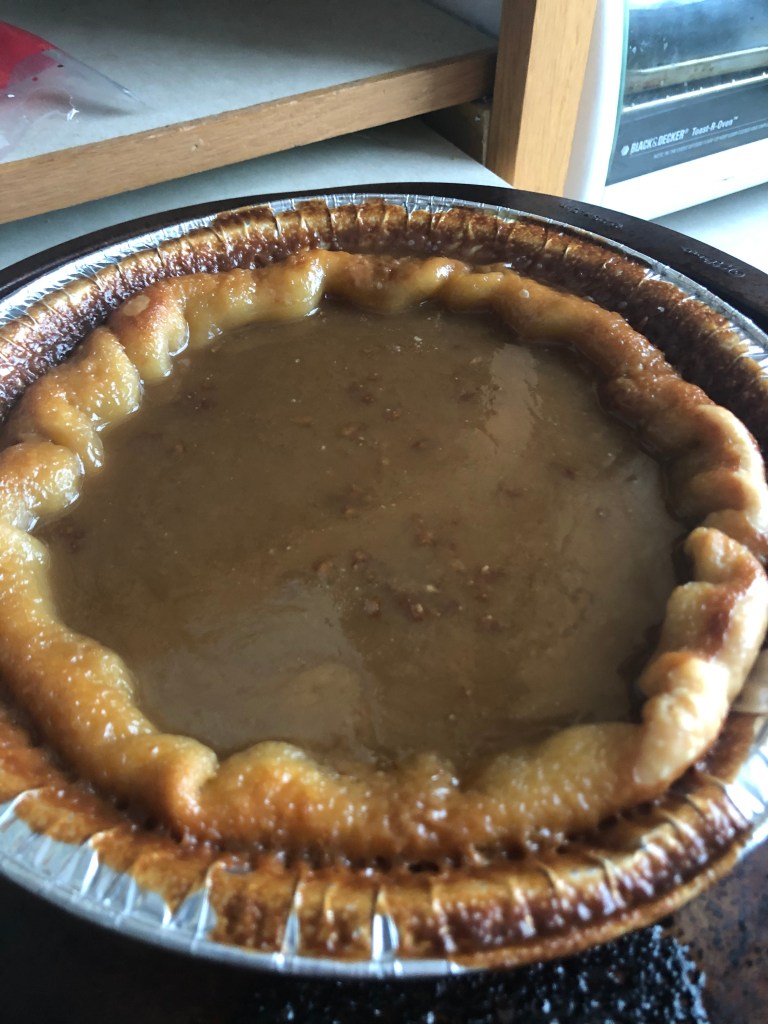
Way better attempt, this time

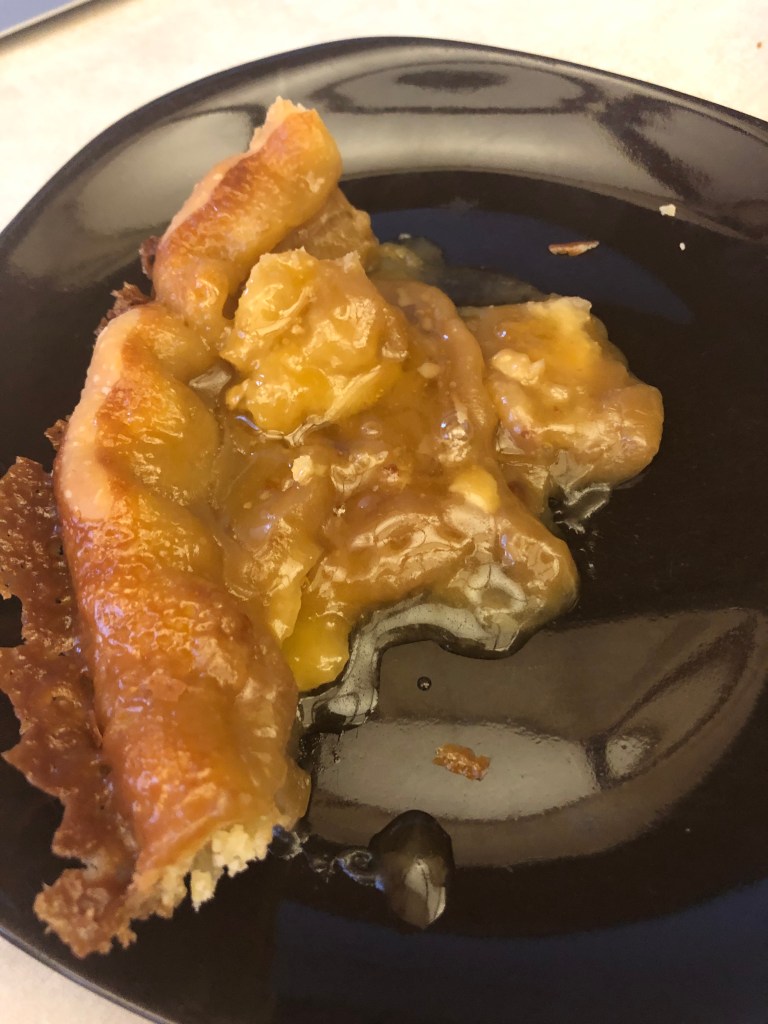
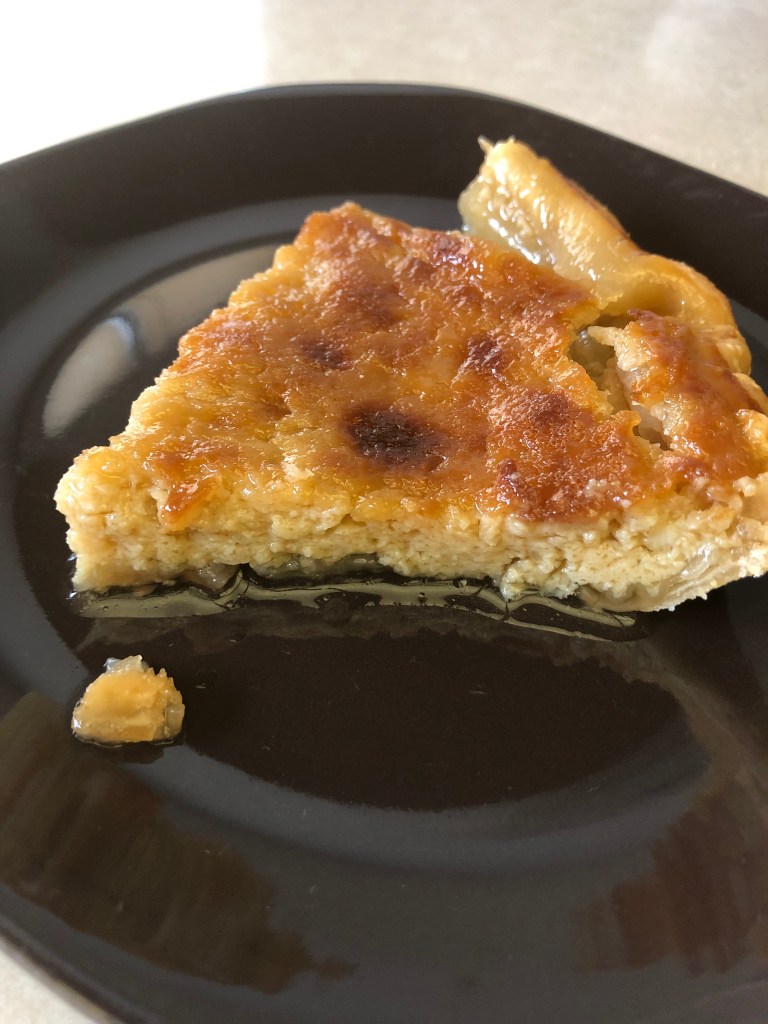
Once it came out of the oven, I let it cool for a while then put it in the fridge to let it set.  I had the benefit of having low blood sugar, so I gave in to temptation and had a piece. It was still a bit liquidy, perhaps from needing more time to set.  But it was good enough that I was sorely tempted to eat the entire thing!  It may not have been 100% like the sugar pies back home, but it was damn close.

A bit on the watery side but still delicious

It just goes to show what happens when you’re stubborn enough to keep at it until you get it right.  It may require a few more tries and a lot more insulin! ☯

When It Doesn’t Make Sense Is When You Need To Keep Working At It

One of the weirdest lessons in life is how things have to be the opposite of the result you seek to achieve in order to realize you have to change it.  For example, most people won’t necessarily realize it’s time to change their diets and hit the gym until they gain a noticeable amount of weight and start experiencing health issues.  Or we often won’t eat properly until we are diagnosed with some measurable health deficiency or dietary issue caused by eating too much junk food or making bad health choices.

I think it was Albert Einstein who said, “If you don’t understand it simply, you don’t understand it well enough.”  There’s a depth of truth in this that applies to all persons, regardless of their goals. Here’s the simple truth: you shouldn’t wait until you fall out of shape or gain weight to start “getting into shape” or exercising.  You shouldn’t wait until your blood sugars run rampant or your health falters before you change your diet and eat better.  And live better.

That’s an important aspect as well.  It’s not all about diet and exercise (although they are two of the most important factors and the focus of this post).  You have to be well within your own existence.  You have to be able to wake up in the morning WANTING to face the day instead of dreading the next 8 hours that may be coming.  Trust me, when I say that this is not always an easy aspect.

But let’s focus on the two first factors, diet and exercise.  I once read that the only way to get in shape is to show how out of shape you are.  What I interpret this to mean is, there’s nothing impressive about the 250-pound muscle jock benching huge amounts of weight and screaming with every rep. Sure, he no doubt worked to get to the state he’s in, but what’s more impressive is the brave soul who steps onto the treadmill and sweats within a minute and has to struggle to speed walk for five minutes.  Then they come back the next day.  And the next. And the next.  And before you know it, this person is losing weight and becoming stronger, faster and better.  That’s how change is made.  By showing up and doing it!

Your diet is the next big aspect.  It has to be specific to what you’re trying to accomplish.  The athlete training for a heavy weight boxing match won’t have the same diet as someone trying to slim down and lose weight.  And most people seem to be confused about what diets can work and what specific foods can do for you and/or against you.

Let’s discuss carbs for a moment.  Carbs are a Type 1 Diabetic’s biggest nemesis.  Why? Because carbs are the reason we need to take insulin.  The more carbs we ingest during a meal, the larger the dose of insulin that’s required. That’s an over-simplification, but carbs are meant to provide energy for the body.    This is true for all people, Diabetic or not.  So it’s usually not advisable or healthy (unless instructed by your health practitioner) to try and be completely carb-free.  Carbs get broken down into glucose or stored as fat.

Carbs get stored as fat when we take in more calories than we require or burn within the day, and get stored in all those lovely areas we hate to look at when we hop in the shower.  That’s why many professional athletes will “carb load”, because they know they’ll need the energy and it will all get used up, as opposed to being stored as fat.

The lesson here is that in order to lose weight and get into shape, you need to combine exercise AND diet.  There’s no getting around this.  You have to fire up your metabolism to help you along, and there’s no magic pill that will accomplish this.  You just need to get off the couch and do it.  You can’t diet but sit around like a lump and expect t lose weight.  You can’t exercise like a pro athlete then go out and eat the entire value menu at your local fast-food restaurant and expect to stay healthy.  You have to combine both aspects.

You want to avoid refined carbohydrates and sugars such as pastries, white breads and pastas as well as sweetened drinks and sodas.  Base the amount of carbs you ingest on your level of exercise.  If you are just starting, then keep your carb intake on the lower side in order to prevent increasing those fat stores.  Eat plenty of fiber and lean protein to help with muscle repair and development and the continuance of “friendly” bacteria in the digestion.  Lean protein means meat options that are low in fat and provide the healthiest totality, such as skinless chicken or fish (sorry vegetarians, cutting out meat does NOT help you lose weight).  And last but not least, don’t make any major changes to your lifestyle without consulting your health practitioner and/or professional trainer.

All pebbles seem small until you have one stuck in your shoe.  I forget who said that, but it’s true.  Getting into shape and reaching your health goals always seem like a HUGE challenge… until it’s not.  Then you get to maintain that health instead of trying to fight for it, and you can look back on the days you wished you were in the shape you are now. But you have to start.  One step, that’s all it takes.  Then once you get moving, you’ll be amazed at how difficult it is to stop! ☯

Sugar Pie, Honey Bunch… You Know I Love You! 🎶

You know, when you spend every day minding what you eat and watching your health it can get a little tedious.  Sometimes we forget that it’s okay to take a step back, take a breath and let ourselves enjoy simple pleasures that we’ve always been told were a no-no.

Enter sugar pie!  As some of you may remember from earlier posts, I’ve been living in the Canadian Prairies for the past ten years.  During the past decade, one fo the things I’ve missed the most from the east coast is exactly that: sugar pie.  This delicious desert has many different backgrounds in North America, but the one I’m referring to traces its roots to the Province of Quebec.

French Canadians have a bit of a dark history and faced many difficulties during the country’s development.  Many of the recipes created during this period were rich in calories with lots of fat and sugar.  This helped early French settlers to survive the harsh living conditions they faced due to the elements.  Of course, the modern recipe is made with brown sugar, a rare commodity that wasn’t available back then.  The original recipe called for maple syrup as opposed to brown sugar, so the flavor may have been different but many recipes still use either, or both.

The results of my attempt at a sugar pie

Today I decided to try my hand at making a sugar pie.  It’s one of the few vices that I long for whenever I visit my family in the Maritimes, and I’ve never been able to find one anywhere in Saskatchewan. Although some people have mentioned having heard of sugar pie, no one has ever been able to provide me with a place to get one.

I happened to find a recipe for it online today, and decided to try my hand at it. The ingredient composition may have been a bit more complicated than the original recipe, but I figured I’d give it a shot.  Depending on the taste, it may be an indulgence I can now allow myself.

Watery and unsuccessful…

Ultimately, it tastes like a bowl of jellied s&*t!!!  I should leave the baking to those who know how.  The French settlers would have likely opted for starvation over eating this thing.  I’m not sure where I went wrong, but it’s watery and tastes nothing like any sugar I’ve ever had out east.  But hey, at least I tried… ☯