Ain’t That A Bitch…

I usually try to keep calm in most situations. After all, that sort of lines up with the whole Zen thing, right? Most people, when hearing that I study Zen Buddhism, assume that I’m so calm BECAUSE I study Zen Buddhism. The unfortunate reality is that I study Zen Buddhism so that I CAN stay so calm. If you don’t grasp the difference between the two, don’t feel bad. Most people don’t.

That being said, there are times when my ability to acknowledge and manage my emotions and reactions is strained. Emotions are normal. Everyone has them and it would be foolish to think that one can suppress them. Nor should you. But it’s how you REACT to those emotions that defines you and controls who you are. I recently joked with a colleague that I really only have two emotions: anger and sarcasm. I was only joking, but I wasn’t really far off the mark.

As you may or may not know, I recently started a new job. I’m incredibly happy, the staff are great, my superiors are supportive and the hours can’t be beat. Especially after spending a decade and half doing shift work. And along WITH that job, came medical benefits and coverage. Splendid. I don’t think I need to tell you that medical benefits are almost as important to a Type-1 Diabetic than the salary is. Diabetic and pump supplies are expensive and frequently need to be refilled, making for a heavy financial strain should coverage not be in place.

Not my current pump, FYI

Pump therapy has been an absolute life-saver for me, and has improved my overall control and health in ways I wouldn’t have thought possible without hospitalization mixed with constant, hands-on monitoring. But here’s the thing: it’s expensive as shit! The pump unit alone costs somewhere in the neighbourhood of $7,000 and that’s BEFORE adding in the reservoirs, infusion sets and the actual insulin required by anyone with Type-1.

In fact, when you get right down to it, having Type-1 Diabetes is expensive all around. Between insulin, blood glucose testing equipment and blood strips, lancets, needles, continuous glucose monitoring and any other medications one may need to help or assist in the proper control of one’s Diabetes can not only get costly, it can easily total to over $1,000 per month.

In Canada, we’re reasonably lucky that we have the health care system that we do. Although most people fail to realize that we technically still pay for that health care through the tax system and such. But for the most part, most things are covered, such as yearly eye exams. Under my Provincial health plan, I get a yearly eye exam at no cost. But prescriptions and pump supplies fall under a different batch of bullshit, which is where the need for medical coverage comes in.
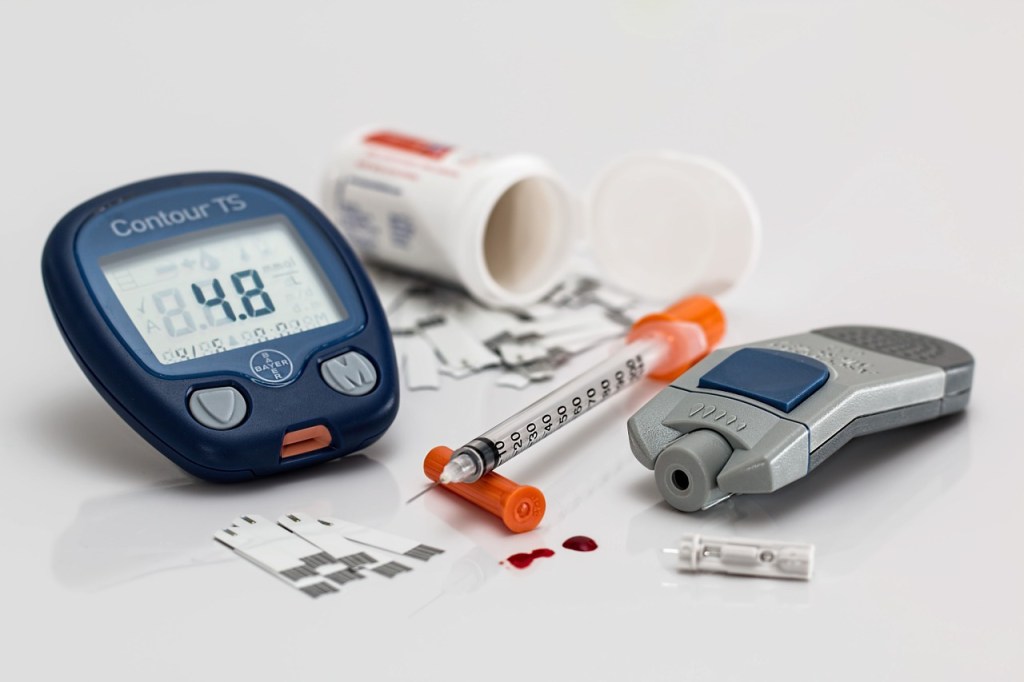
When I started my new job last April, I received my coverage card about a month later. I walked into my pharmacy and ordered my required prescriptions and equipment and was pleased to see that everything was covered and paid for. Such as it should be. Diabetes isn’t going anywhere, and neither are the inherent costs of keeping myself alive. If one is provided with medical coverage, then PROVIDE the medical coverage, right? Apparently, not…

Last week, I went into the pharmacy and ordered reservoirs and infusion sets for my pump. Bearing in mind that this equipment comes in at about $400 and I go through a box of each a month, the cost can climb rather quickly. So imagine my surprise when the pharmacy technician walked up to the till and advised me that I had hit my “maximum” and I would have to pay the cost out-of-pocket. Excuse me? What the fuck???

I reached out to my insurance company requesting an explanation since I had been all over my online account and couldn’t find any reference to a maximum, but like most insurance providers, they were slow to respond. When they finally did, they responded with a single sentence reply that indicated that I was only entitled to $1,000 per calendar year for Diabetes equipment.

What does this mean? Is that $1,000 ONLY for the tangible equipment, or doe this apply to insulin and test strips as well? Am I now on the hook for the remainder of the year? Is there a way for me to potentially pay a monthly premium and get an increased limit? You gotta love when an insurance company gives you a generic, one-sentence reply that, although answers the base question, provides no clarity whatsoever.

I recognize that many and perhaps most people don’t have the luxury of medical insurance and often find themselves struggling from month to month in order to obtain the life-saving therapies needed to maintain control over Diabetes. For this reason, I’m extremely grateful for the resources and availability of the things I DO have. But now that life has taken a positive turn and things are looking up, I’m disappointed to find that I now have to make some very important life decisions as they relate to Diabetes. Do I come off pump therapy? Do I eliminate CGM to save on costs?

I shudder to consider going back to a basic version of injection therapy and blood sugar testing. I remember the increased difficulties I faced with my A1C’s and overall health. Some provinces have a 100% coverage for Diabetes in their health plans. I kind of wish Saskatchewan had the same. I somehow find it difficult to understand how this insurance company could actually believe that $1,000 is adequate to cover an entire calendar year of supplies. I guess I’m grateful that it all starts over in just over two months. At least I’ll have a few months of coverage to sort it out in 2022. Just another example of how Diabetes can throw a wrench in life. Not only in a physical and medical way, but a financial one, as well. ☯️


A Little More Than Fried Eggs…

I don’t know if anyone else remembers, and maybe I’m unnecessarily aging myself, the anti-drug commercials that used to air on television. If I had to make a guess, I’d say they came out in the mid-80’s. Basically, the message was showing a raw egg, still in it’s shell and saying “This is your brain…” The, they’d crack the egg and drop it into a hot pan, causing sizzling ands frying of the egg, followed by saying “This is your brain on drugs.” It was an effective means of passing on the message that drug use fries your brain. It worked well for the time and elicited a lot of school yard jokes as well, since memes weren’t a thing back then. Imagine that? We had to get our laughs verbally as opposed to with an electronic device. but I digress…

Some time later, they released another commercial portraying the same scenario, but they started it by saying, “Alright, let’s do this ONE more time…” thereby suggesting that perhaps the message hasn’t gotten through as effectively as it should have the first time. I often feel that this is the case with the information I share. And I don’t necessarily mean with this blog. After all, there’s no expectation on my part that the entire world will read my writing. But when it comes to explaining things about Diabetes, I often feel that I am providing the same information ONE more time.

Generally speaking, non-Diabetics rarely know much about Diabetes beyond the need to take insulin and perhaps that they should avoid sugared goods. Although there’s some truth to that, it isn’t entirely accurate and one of my greatest frustrations is when people throw Type-1 and Type-2 Diabetes into the same basket. Although both called Diabetes, they happen to be significantly different conditions with different methods of treatment. This is while acknowledging that there are other types and several sub-types of Diabetes (LADA, Gestational Diabetes, etc…) but for the purposes of today’s rant, I’ll be focusing on Type-1 and Type-2 as they are the more commonly known and consistent types. Let’s do this ONE more time…

Type-1 Diabetes is an autoimmune disorder that usually shows its ugly face during early childhood but can also develop in adults. That’s why the old term for Type-1, “Juvenile Diabetes“ isn’t accurate. At least not anymore. Back in the 80’s when I was diagnosed, if you get Diabetes as an adult, it simply wasn’t believed to be Type-1. I’m rather grateful that medicine has evolved somewhat, even in the past twenty years.

Although there can be a number of factors behind WHY someone may develop Type-1 Diabetes, excess weight gain and eating poorly aren’t the cause. There have been links to a possible genetic component, but we definitely know that becoming overweight DOES NOT CAUSE TYPE-1! Diabetes develops when our body’s own immune system starts attacking and destroying the cells that produce insulin, known as islets. Once enough of these islet cells are destroyed, the body stops producing insulin and the need for the injections to control glucose levels kicks in. Contrary to popular opinion, the human body NEEDS glucose, even Diabetics, since it’s a source of energy. It’s the level of glucose present in the bloodstream that causes the issue.

Type-2 Diabetes is different in the sense that the body doesn’t use glucose and insulin efficiently. The body’s immune system aren’t attacking the islets, but in some cases the pancreas isn’t producing enough insulin or the body’s cells don’t respond well to the insulin the pancreas DOES produce. this is a condition known as insulin resistance. Now THIS is the type that has been linked to body weight, as being obese or failing to get regular exercise have been linked as contributing factors.

Type-2 Diabetes used to be called “adult-onset Diabetes,” in contrast to Type-1’s “Juvenile Diabetes.” But those are both misnomers now, since children have also been know to develop insulin resistance and Type-2. It can be treated with a variety of oral medications but may also require insulin, depending on the severity of the condition. Weight loss and exercise have also been proven to help in treating it. I’ve also heard of cases where people diagnosed with Type-2 Diabetes have eventually progressed to Type-1.

Ultimately, the only aspects that these two conditions have in common are their name, the possible need for insulin injections and the fact that there’s no cure. For either. Although Type-2’s symptoms can be mitigated through proper diet and exercise, it can’t be cured. If you bought one of those books that’s claim that a certain diet or lifestyle change will cure your Diabetes, you’ve been duped.

Hopefully, this provides clarity on the difference in types. I made a big show with the introduction, but a reminder and an explanation of the different types of Diabetes is never a bad thing. There’s always someone new who may read a post, that may not have been around for the previous one. So, it’s all good. The Mayo Clinic’s website is also a fantastic repository of information, if anyone is interested in looking up the different subtypes of Diabetes. ☯️

When You Start Lacking Some Pep in Your Step…

We’re slowly starting to creep into that time of year when it takes the sun a bit longer to decide to grace us with its presence. Just a short month ago, I would leave to work just prior to 7 a.m. and the sun would already be blinding me on my transit down the road. However, if I take this morning as an example, I stepped outside and walked to the car and I felt the distinctive chill of the season seep through my layers and the sky was still dark. That first little while that this starts happening can be disconcerting and confusing, especially if you leave work late enough that the sun has already started to go down.

The view outside my office window

Depending on the environment you’re in throughout your day, this change in season can wreak havoc on your system. And no, I’m not just referring to the presence of pumpkin-spiced everything… I promise I’ll stop picking on those who enjoy those treats eventually; I just need to get a few shots in before the caffeine levels in my blood make me more reasonable. MOVING ON! My point is that some folks are fortunate enough to work in an environment where they can actively see the daylight. Some are not so fortunate and may work in a remote environment or an enclosed office where access to daylight isn’t always possible.

It should come as no surprise that the daylight plays an important role in a person’s health. First and most importantly, access to sunlight helps our bodies to naturally produce Vitamin D. Since I intended this post as an opinion piece and not necessarily an educational one where I’d have to cite sources and shit, I’ll keep it light. But the reality is that Vitamin D is necessary for all sorts of things like good bone health, stronger immune system and certainly not least or last, it helps with managing Diabetes. That last one is a touch important to me, as you might imagine.

Sunlight plays an integral role in the body’s function, including proper sleep patterns and managing your circadian rhythm. That’s your “internal clock,” which helps you to manage getting to sleep and waking up. So you end up feeling all sorts of fucked up, when you wake up for the day and it’s still looking pitch dark outside. Most people don’t have a regular work day where they wake up with the sun streaming through their window while soft violin music plays.

For all the reasons I’ve described above and much more, it’s important to take some preventative steps to ensure the colder weather doesn’t get you down into the dumps. Once you’re in the groove, these steps can become overall good daily habits. Here are a couple of things you can do to try and ensure you keep your energy levels on the up-and-up:

1. Starts Your Morning With Exercise.
This is the best one, and something I wish I had more drive to maintain. I will FULLY admit that I’m terrible at doing anything, first thing in the morning, other than reaching for some caffeine. But doing exercise first thing in the morning gets you or blood flowing and oxygenated and will help you to hit the ground running far better than any cup of coffee you may grab. My wife is an absolute champion at this, usually starting her morning with a rigorous exercise routine she follows. During the pandemic winter, I used to walk my spin to the bus stop then walk anywhere from 5 to 10 kilometres. The result was the cold air woke me up and brutalized me before facing my day.

2. Drink Some Water.
I’m a huge fan of caffeine for a variety of reasons. So I can’t honestly say with a straight face that I do this one, but there are studies that show that gulping down a glass of water first thing in the morning will jump start your system and help to wake you up. I have no idea if it works or not, since I guzzle caffeine minutes after waking. And don’t ask me what studies I’m talking about. I don’t have enough caffeine to remember where I read them…

3. Get Outside And Take A Walk.
If you don’t work in an environment where you can see the sun, then go to where you can access it. Get some fresh air, take a walk and get some natural light on your body (and no, I’m not condoning stripping down and sunbathing while at work). Twice a day, I’ll take fifteen minutes to take a short walk outside, get some air and move around a bit. It makes all the difference and helps greatly with productivity. Most jobs entitle you to breaks throughout the day, so you should take advantage of them.

4. Control Your Blood Sugars.
It’s obvious that you should be doing this anyway, but maintaining balanced blood sugars will help keep your overall energy levels up. Nothing saps your energy faster than having an extreme high or low, followed by balancing it out. I don’t know about the rest of you, but that usually leaves me feeling like all I want to do is sleep. Keeping your blood sugar levels balanced is not only a good idea for Diabetics in general, it can go a long way towards keeping you energized and moving throughout the day. Especially when in conjunction with everything else on this list.

There you have it. I’m no genius and none of this is reinventing the wheel, it’s simply common sense. But not everyone thinks about these things so maybe this will spark some ideas for the cold weather ahead. Especially here in Saskatchewan, the morning blahs tend to hit all that much harder once there’s snow on the ground and the weather reaches -50 degrees Celsius. That almost guarantees wanting to stay curled up in bed, despite whatever steps you may take. But life happens and facing the day is a necessity. May as well try to make it a energized and motivated as possible. ☯️

It’s Not About The Sugar…

It can be hard to teach an old dog new tricks. And before everyone swamps my comments section (not that any of you ever do), I’m not necessarily calling my parents old dogs. But sometimes we learn something during a time when it’s relevant and important, only to have it disproven or updated decades later. Most people will hold true to the previous knowledge they had learned, especially if the results were quasi-positive. When I was diagnosed as Type-1 Diabetic, or “Juvenile” Diabetic as it was inaccurately called back in the early 80’s, my parents were told that combatting Diabetes only required two things: take insulin and don’t eat sugar.

Obviously, we now know that this isn’t correct. It’s about the proper balance of insulin use and carbohydrate-counting, not sugar intake. You can have something with no sugar indicated on the label but will have lots of carbs and will require a dose of insulin. This was something my parents didn’t recognize, way back when. You’re thirsty? Sure, have a glass of milk. There’s no sugar in that… Not only is that incorrect, milk has approximately 12 grams of carbs per cup depending on the brand. Oh, you’re hungry? Sure, have some a piece of toast. toast doesn’t have sugar… Although wildly incorrect and a slice of bread has anywhere between 10 to 25 grams of carbohydrates, depending on brand, thickness, etc.

I hold no malice against my parents, as they did the best they could with what they knew. But it explains a significant number of issues I’ve had to deal with, such as suffering through a number of Diabetic comas in my youth, as well as having damage to my eyes throughout my 20’s and began requiring eye injections in my late 30’s (as opposed to my 60’s or later). I’ve always fought very hard to be as healthy as possible, and I like to think I’ve done a pretty god job since I still have a clean nervous system, no amputations, good circulation and I can still outrun many people of equivalent station in life who AREN’T Diabetic. But I can’t imagine the different it would have made in my youth, had carb counting been a part of my childhood.

I was reminded of this recently when I was on the phone with my mother and we were talking about how Diabetes and how the total number of people with some form of it in Canada was continuously increasing. Then she made a comment that it was because these people were “eating too much sugar.” Although certain dietary and lifestyle factors will contribute to Type-2 Diabetes, this isn’t the case with Type-1. But try explaining that to someone who was taught and truly believed that “you just shouldn’t eat sugar” as a means of treating ALL Diabetes.

There’s a lot more to Diabetes than avoiding sugar. It requires proper diet, which includes carbohydrate counting. It requires frequent blood sugar testing to ensure you’re remaining “in range,” if you happen not to be wearing a CGM. you also needs regular, consistent exercise, control over cholesterol, blood pressure and ensure good oral and cardiac health. Diabetes is a rich mosaic of crap that one needs to stay on top of, in order to have a full, healthy life. ☯️

Some Cold, Hard Facts…

I’ve noticed in the past week that the weather seems to be at single digits in the morning, prompting a lot of pain in my old joints and signalling that the warmer, summer months are gone for another year. With that comes the need to recognize that one’s fitness routine may be altered or NEED to be altered in order to accommodate the colder weather. We all know what’s coming next…. That wonderful white stuff that makes getting to work ion the morning an absolute nightmare.

But we aren’t going to talk about THAT, since we still have time before it starts hitting the ground. Hopefully. Today, we’re simply going to talk about colder weather as it pertains to fitness. For the most part, our brains tend to tell us that comfier and easier is better. This means that when we notice cold winds or a drop in temperature, we may be less inclined to step outside to do something physical. But there’s some inherently good and bad aspects to working out in the cold.

On the positive side, doing something physical outdoors will help with blood circulation, will wake you up better than a cup of coffee and will leave you feeling even cozier once you DO decide to hit the couch with a blanket and a warm cup of joe. Working out in colder temperatures can improve your mood and provide a somewhat different challenge than working out in the warmer weather.

For me, I’m slowly falling into the season where cycling for long distances is becoming less-favoured as a form of working out. Besides being cold, the colder wind whipping my face while cycling is a definitely no for me. I prefer to work up a sweat than try and defrost myself, so I look to different workouts, such as punching bag workouts or karate in my garage. I’m still outdoors, but without the Prairie winds taking advantage of my award-winning face. Kidding.

There are definitely some things to keep in mind, when stepping outside in cold weather. The first, is that you WANT to feel cold. Don’t believe me? The problem is that if you step outside feeling warm and comfortable, you need to understand that once you start exercising, your body heat will cause an increased amount of sweating, which is a recipe for disaster when you’re outside. Dress appropriately with a layer of moisture-wicking material first, and something insulating and breathable over that. This prevent the sweat from staying wet against your body.

When you sweat, your body inevitably loses heat through the evaporation of that sweat, which can leave you susceptible to being chilled. So, if you start off feeling cold but start working out, your body will take care of itself. The other side of the coin is to know what you’re personal and preferred limits are, and stick with them. Cold is cold, but only you will know what’s TOO cold for you. Is there a weather warning in effect? Maybe work out inside on that day.

Lastly, people tend to ignore a lot of the important steps when training outside, like applying sunblock to your exposed skin if it’s sunny and staying properly hydrated. The cold doesn’t protect you from UV rays and you’ll dehydrate just as easily in the cold. In some cases, easier. Not least of which is the fact that cold weather can have adverse effects on underlying health conditions, like asthma and Diabetes. Although subjective to the person, blood sugars will vary from prolonged exposure to the cold.

Keep an eye on yourself for warning signs of frostbite or hypothermia. Drink plenty of fluids and monitor your blood sugars frequently. And remember that if you FEEL it’s too cold, there’s no shame in moving your workout to the indoors. After all, winter is coming…. ☯️

Supplements? We Don’t Need No Stinkin’ Supplements…

Supplementation can be an important tool for proper fitness, but it’s one of those things that is very specific to the user. What works for one person may not work for the other, and if you happen to have Type-1 Diabetes, you need to be very careful about what you may be putting in your body, as it may inadvertently affect your blood sugars.

So, what are supplements? As they pertain to this specific post, supplements are anything you consume in order to help improve performance, muscle growth and/or energy levels in order to allow one to develop better. They can come in various forms, including pills, powders and even pre-mixed shakes. They vary in their delivery, meaning some need to be taken prior to working out, some after and some don’t really matter and simply need to be consumed on a daily basis.

I think that one of the important aspects to bear in mind, is that there’s no “magic pill” or supplement that will do anything for you. You have to put the work in, even if you take supplements and use them on a regular basis. I’m always reminded of an old friend of mine, from years ago. I stopped in during early morning to go for coffee. before we left his house, I noticed he scooped out a spoonful of some unknown powder and consumed it with a glass of water. When I asked him what the powder was, he said it was creatine, because he was trying to gain mass. When I asked him what workout regimen he was following, he gave me the curious puppy look and asked, “Workout? What workout? That’s what the supplement is for…”

Here’s the thing: a supplement is defined as something that completes or enhances something else when added to it. This means that there’s no supplement that will make you lose weight, help you gain muscle mass or burn fat on its own. The important thing to remember is that ALL of these supplements need to be used in conjunction with proper diet and exercise. It won’t DO the job for you, it may simply help make it a touch easier.

Another important aspect to remember is that most supplements are substances that you either already get from a proper diet or that your body already produces. Creatine or whey protein for example, can be good supplements to help push you along your fitness routine, but these are substances produced by the body and/or can be obtained by consuming certain foods. “Pre-workout” supplements, that I’m aware a lot of people I know consume, are basically just B vitamins, caffeine and creatine, which you can obtain naturally or elsewhere. I would argue that unless you’re feeling sluggish, there may not be a great need to take a pre-workout supplement.

From a Diabetes standpoint, it’s important to recognize that a lot of supplements may contain sweeteners, carbohydrate amounts or simply affect the body in such a way that will cause fluctuations in overall blood sugars. I’ve noticed over the years that almost everything indicates “not suggested for people with Diabetes” for exactly this reason. It isn’t that it will inherently cause issues. But it COULD affect Diabetes, which is why it becomes important to consult your doctor prior to starting any supplementation.

I’ll be the first one to admit I’d be hitting up my pharmacy, should they ever create a pill that will melt the fat off my gut. Otherwise, know what you’re putting into your body, consult your doctor and remember that there are no shortcuts to fitness. It’s incumbent on the person to include proper diet and exercise in order to reap the benefits of supplements. The body is programmed to do what it needs to, but should you feel the need to use a supplement, just be wary. And keep a close eye on what secondary effects you may get from using them. ☯️

Tired Because of Exercise, Or Trying To Exercise When You’re Tired?

Life is exhausting. If anyone says that it isn’t, they’re lying to themselves. I could get into the whole reason behind some of that exhaustion, including the plethora of Diabetes-related issues that can cause lack of sleep or fatigue, even when you are well-rested. But that ins’t really the purpose behind today’s post. I recently wrote a post about the issues surrounding working out when you’re hungry. Therefore, it stands to reason that my next step would include addressing the issue surrounding working out when you’re tired. Buckle up!

Maintaining a fitness routine is difficult at the best of times. Between work, family and home responsibilities and health concerns, being able to say you work out at specific times on fixed days is spotty, at best. So, hat’s off to the folks who manage to be part of fitness clubs with scheduled classes or who go that extra step and manage to maintain consistent fitness at home, because I personally know it ain’t easy. It becomes all the more difficult when you’re tired.

Being tired is one of those things where one needs to find a balance, or perhaps compromise with oneself. On the one side, being tired will often elicit the response that one should take the opportunity to rest. On the other side, sometimes you just gotta push through your fatigue or you’ll never overcome it or get anything done. Assuming you can tell or “feel” the difference, here are some potential effects of working out when tired:

1. You’ll Resent Your Fitness: It’s hard to concentrate and be motivated when you’re tired. If you find yourself “pushing through,” and I’m not saying you shouldn’t, you could find that exercising when tired will do little more than tire you further and possibly make you resent exercising. Much like the bedroom should only be associated with sleep, associations help to form our opinions on certain things;
2. You’ll Make Mistakes: Being tired or exhausted could lead to making mistakes, being inadvertently clumsy or working out improper. Ever drop a dumbbell on your foot? That shit hurts, and can potentially break bones., which leads me into my next point:
3. You Could Injure Yourself: Fatigue can be distracting, and if you’re tired to the point where you’re making mistakes, you may potentially harm yourself as well. Besides dropping random weights on yourself, fatigue may distract you in karate class enough to cause injury. These are just some examples, of course;
4. You Won’t Achieve Your Fitness Goals: This is a big one for me and pisses me off to no end. There’s nothing I hate worse than being out on the bike for a solid 20k, thinking I should push through the fatigue, only to completely drag ass and have it take twice as long to complete my distance AND I’m just further exhausted afterwards; and
5. You May Require Longer To Recover: If you push yourself too hard when you’re tired, it may take longer for you to recover and feel better. This applies both to feeling rested and to recover from any fitness-related healing you may need, including muscle and tissue repair.

So, what can you do to prevent some of this? Obviously, I’m a big fan of naps. If you’re tired and you know that you have a workout coming up, grabbing a quick snooze on the couch can be helpful. One need only be cautious about sleeping for too long, which can have the effect of leaving you groggy and slow-moving, which isn’t the best when you’re about to get into some physical exertion. Keep your naps short, about twenty minutes or so. Just enough to take the edge off.

If your fatigue is light and perhaps just the result of the typical daily grind, this might be where you want o push through. Fresh air and movement will often be an effective means of wiping out fatigue and getting your day back on track. I’ve lost count of how many times I sat on the bike or went to karate class, feeling as though I should be hitting the bed instead, only to be re-energized and rejuvenated once I got through it.

Ultimately, there will be times where you may simply need to take a step back and take a break. Naps and pushing through notwithstanding, there will be times when the best alternative will be to simply acknowledge that you need to take a day and just rest. The key is knowing one’s body enough to recognize whether it’s a “take a nap” scenario or a “push through” scenario. But in there interest of being rested and allowing one’s body to heal, sometimes taking the day and saying “screw it” may what the doctor ordered. ☯️

When You Feel Like A Yo-Yo…

One of the biggest issues I face with Diabetes is the occasions where I become exhausted from going above and beyond what’s required for a normal day. For example, when the average person wakes up, they go to the washroom, wash their face and get breakfast going. Likely, they’re including coffee in that mix. Although if they aren’t, the light help them. But for me, my morning start with the consumption of three different medications, testing my blood sugar and depending on the day I may need to change up my insulin pump’s infusion set. THEN I get to use the washroom and potentially consume breakfast. But caffeine is a must. Obviously. Moving on…

Once in a while, I’ll succumb to this exhaustion in the sense that I’ll skip steps in the process that I likely shouldn’t. this was demonstrated last Tuesday night when my CGM sensor decided to expire at about ten o’clock at night. Now if you know anything about the process for getting one’s CGM going after a replacement, it’s a lengthy one. I’ve written about this before and in fact, I’m pretty certain I’ve thrown up a video of the CGM installation as well, but the bottom line is that it takes anywhere between 4 to 6 hours for a new sensor to be up and running.

This is because once you’ve injected the sensor and installed the transmitter, there’s a 2-hour warm-up period required. then, the pump prompts you for a blood glucose test to calibrate the sensor, followed by another one sometime in the following few hours. Starting this process at 10 o’clock at night when my head should be hitting the pillow doesn’t sound appealing. So, I did the only thing a reasonable and exhausted person in my position would do; I shut off SmartGuard, plugged the transmitter in to charge for the night and went to sleep without it.

That night wasn’t such a huge problem, although I did have a waking blood glucose reading of about 10.4 mmol/L, which is a tad higher than I’m used to. But I could live with that. Since I primarily place my CGM on my triceps, I usually recruit my wife to help install the sensor and transmitter since I can’t see the back of my arm, especially if I’m pre-coffee. Insert whatever nurse-fantasy jokes you’d like, here. But given that she was quite exhausted from dealing with my hyperactive loinfruit the day before and she was still asleep, I figured what the hell…. I’ll go a day without and install it tonight. No biggie, right?

Don’t get me wrong, I love my insulin pump. Honestly, I can’t understand how I survived as a Diabetic for as long as I have without it. It has the potential to make life SOOOO much easier…. Please note that I used the word “potential” in that sentence. I didn’t think I would ever have to admit that I could become addicted to an electronic device, but apparently I have become incapable of managing my blood sugars properly with the use of a CGM. By the time I got home from work, I had fluctuated from high to low at least three times and I was exhausted and just wanted to sleep.

Let me break down why this scenario is a problem…. When you DON’T use CGM, your pump delivers a pre-programmed base rate of insulin, referred to as a “basal rate.” But as your blood sugars fluctuate, the pump doesn’t take that into account until you test your blood sugar to discover that you’re either high and need more insulin or low and need to eat something. Meanwhile on CGM, SmartGuard will begin to trickle in an extra bit of insulin on top of your basal rate in order to stem higher blood sugars and will set off an alarm if you start going low. The result is better time in range, better overall control and less feeling like you just want to voluntarily curl up into a coffin and stay there. Still with me? Good.

Once I had the CGM installed, my evening started to go a little bit better but my blood sugars somehow managed to creep up a bit. So I corrected. This started a yo-yo effect that lasted through the night. My correction caused a low. In my sleep-induced haze, I ate a few too many jellybeans. Fell back asleep. My many jellybeans caused a high and I was woken by an alarm. I treated. Then I woke with my alarm in the early hours of the morning with a low. Bloody lovely.

Despite the fact that some of that can be attributed to human error (too many jellybeans, etc), it stands to reason that this can happen frequently depending on a number fo different factors. I’ve written about this type of this before but once in a while, it’s good to remind people that it ain’t all joy and jellybeans, even with the advantages of an insulin pump. And that complacency can start to have an effect if you get to used to the technology you’ve been given. ☯️

Six Of One, Half Dozen Of The Other…

That time came once again to visit my endocrinologist. If you read the previous post, my last appointment was last May, when I received news of the lowest A1C reading I’ve had in almost two decades: 6.9. Why is this reading important? For you non-Diabetics, the A1C results basically calculate a Diabetic’s average blood sugars over a period of three months. Although still an important reading, one’s A1C can be manipulated through extreme highs and lows, making it a less efficient means of proper blood sugar control than one’s percentage of “time in range.” Time in range can’t be manipulated; either your blood sugars are good or they aren’t.

I made my way downtown quite early this morning; well before most businesses were open. The air was crisp and the morning had the feeling of autumn. I was only semi-caffeinated but the walk did its job and woke me up properly before I reached the doctor’s office. I was almost half an hour early, which wouldn’t have been an issue, pre-COVID. Now, most clinics and doctors’ offices frown on arriving early, since they try to keep patients from interacting as much as possible. But my laptop was outdated and couldn’t update to support the Medtronic CareLink Uploader, meaning I needed the office staff to do it for me. This did not please them.

Once my pump was uploaded, I saw my endocrinologist and discovered that my A1C had increased to 7.4, which was disappointing but I had expected a rise of some sort. I expected it because I’ve had a significant amount on my plate since the last appointment. Between starting a new job and a new routine in April, we’ve got major renovations happening in the house as well as my son Nathan, deciding to use his bedroom as a public washroom and basically hosing down every corner. This resulted in the removal of the carpet and discovery of asbestos tile, which obviously needed to be replaced. Then, we repainted, put in new flooring and new baseboards and basically dropped some serious G’s into renovating his bedroom far ahead of plan. And budget. FML.

Long story short, added stress and life issues caused some variations in blood sugars that I’m not proud of. What can I say? I’m human and far from perfect. As I said, I expected it. What I didn’t expect, was the increase in cholesterol and blood pressure. To the point that my doctor has increased some of the “preventative” pills that I take. My Endo considered me a bit of a medical oddity, since despite the increase in cholesterol, I somehow managed to lose about ten pounds. Ain’t medicine wonderful? He also added a new pill that would work in tandem with my other medications to help bring my cholesterol and blood pressure in check.

Despite the medicine aspect, we discussed some things that I could do to improve things on my own. The reduction (but not elimination) of sodium in my diet, increased water intake and reduce my alcohol intake (I don’t drink constantly, but everyone could stand to drink less) and ensure I cut back on foods that may be fried or processed. He also suggested trying to eliminate some of the stress in my life. This aspect can be a bit tougher, since some stress is inherent in the course of normal life and can’t necessarily be eliminated.

I left the doctor’s office feeling a little down. It was a strange combination of victory and defeat, considering one of my main goals has been to breach the 200-pound weight level. It was nice to have the doctor acknowledge my hard work in losing ten pounds, even though I haven’t crossed that 200 mark, yet. But the raise in cholesterol is concerning. Certain lifestyle changes will need to take place. I think that first and foremost, and if this wasn’t written here, many who know me wouldn’t believe it, that I need to cut back on the caffeine I consume in a day. I should refocus my efforts towards some herbal teas and water. I can easily recognize that the multiple caffeinated beverages I consume throughout the day easily contributes to my increased blood pressure.

My wife and I have been on a decent salad kick, recently. We fell away from that, somewhat. So tonight’s supper involved some chicken with a very lovely salad. The best part is that there was enough salad left over for me to bring to work tomorrow. The day wasn’t all bad. I got notice today that karate classes will resume tomorrow evening. That’s been a long time coming. I haven’t trained with others since March of 2020, so it’ll be good to get back at it. And last but not least, I’m currently typing this post on my newly purchased MacBook Pro. Since my old laptop could no longer support any updates or sync my phone, I decided it was time. In today’s world of technology, I think that six years is a pretty good lifespan for a computer. ☯️

Carbs vs. Calories, The Battle Continues…

This is going to be one of those posts where I make a point of saying that I’m not a doctor or health professional, nor am I a nutritionist or dietitian. If you want the real Slim Shady on any of the facts I’m describing in this post, you should consult one of the professionals mentioned above. But I certainly have information I can contribute for the sake of conversation, so take what I write with grain of salt. But not literally, since you shouldn’t be salting your food. But I digress…

I’ve often written that the most important and consistent factor behind proper fitness and weight loss is being able to burn more calories in a day than you consume. I’ve also mentioned on many occasions, the importance of reducing one’s overall carbohydrate intake in order to promote better blood sugar control and to help with weight loss as well. So, which one is the important one? What should you be focusing on for your weight loss efforts? Well, the easy answer is… both.

Because I’m wordy and I like to write, let’s start by pointing out that “fad diets” are bullshit. I’m sorry, but they are. At their core, most fad diets (which I won’t name here because I don’t like the potential for getting sued) target a certain core demographic based on a gimmick, or a trend. The whole concept of “don’t eat this” or “only eat that” will always work for JUST enough people that the masses will quickly jump on the bandwagon to try and slim down using these methods, fully unaware that like everything else in life, it’s subjective to the person and that maybe eating like humans did in paleolithic times isn’t ideal, because our bodies have evolved past those methods and that method may have worked for your neighbour who now looks great in their yoga pants, but it won’t necessarily work for you.

Even if you partake of one of these trends or fad diets, it won’t change three very important realities. That being that no matter what the diet, 1) you need to include regular exercise, 2) you need to burn more calories than you burn, and 3) you need to make good lifestyle choices. It’s a holy trifecta of fitness that simply can’t be ignored. If you start dieting consistently, you may shed some pounds, but your efforts will plateau pretty damn quickly. You have to include some exercise in there to help with muscle tone, blood circulation and calorie burn. This is especially important for us Diabetics.

The lifestyle choices can apply to a significant number to things. For example, you may have gotten a solid workout in and ate a green salad for lunch. But those efforts are wasted if you cap off the evening by sitting back with a six pack of beer and nachos. Mmm,…nachos…. Umm, moving on! The point is, there has to be a balance. So, while I’m not saying that you shouldn’t occasionally treat yourself, since life is meant to be lived and it’s been proven by multiple sources that depriving yourself will make your efforts all that much harder, you still need to be smart about it. Still with me? Good. Let’s examine the difference between calories and carbohydrates.

Good old calories…. If you want to get all scientific about it, a calorie is the amount of heat required to raise the temperature of a quantity of water by one degree. For the purposes of food consumption, calories are the measurement of energy contained within the food. When a person consumes more calories than they burn, the body tends to store the excess as body fat, which results in weight gain. On the flip side, consuming too few calories can lead to some dangerous deficiencies in the body, as one may not be getting all the vitamins and nutrients required throughout the day. Depending on the source you draw on and your age, metabolism, level of fitness and even gender, the average person needs to consume anywhere between 1200 to 2000 calories a day.

You may be asking, what’s the point of consuming them if you’re only going to burn them to lose weight? Wouldn’t it make more sense to simply keep reducing one’s overall calories? The answer to that is no. Look at that previous paragraph, again/. While burning the calories is important in order to maintain good weight loss potential, you still need the vitamins and nutrients you draw from food. Eating at a calorie-deficit will prevent you from getting everything you need to keep your body running smoothly. Make sense? Good. NEXT!

Carbohydrates are a naturally occurring compound, found in most foods but not all of them. Carbs are a source of fuel for the body and since they are a key nutrient, are a requirement, as much as I’d like to eliminate them altogether. Mainly comprised of sugars and starches, they get broken down into energy for the body. There’s that word again: energy. And in case no one was paying attention, you need energy to well,… live. Because of the nature and composition of carbohydrates, they’re usually the nemesis of someone with Diabetes, since we need to take insulin in response to the amount of carbs we consume.

So, what’s the difference? One is the measure of energy, the other is fuel that gets burned as energy. Am I the only one who feels that they both kind of sound like energy? I found a good article posted by The Cleveland Clinic, and I apologize because I didn’t seem to be able to copy the post. But it discusses the fact that “a gram of fat has about 9 calories, while a gram of carbohydrate or protein has about 4 calories. In other words, you could eat twice as much carbohydrates or proteins as fat for the same amount of calories.” That sounds like a lot of math to me, but you can go to my.clevelandclinic.org and check out the article entitled “Fat and Calories: The Difference & Recommended intake.”

For me, the difference still ins’t clear. But for weight loss, you need to burn more calories than you consume. We’ve already covered that. For carbs, you need to count the number of net carbs you consume, which involves subtracting fibre from the total carb count on your nutritional label. That is to say, if what you’re eating even has a nutritional label AND if they’’re count is accurate. That’s why portion control is important. Whether you count calories or carbs, portion control is important. I would say the latter is more important for Diabetics, since it involves insulin consumption.

No matter which you choose to reduce or limit in order to help with your weight loss journey, bear in mind that reducing either by too much will leave you feeling weak and may not actually help in weight loss. Instead, consume healthier foods that are lower in calories or carbs but still contain a lot of the nutrients your body needs in order to function properly. Vegetables, lean proteins and limited starches made of whole grains are ideal. And don’t forget to consult a health practitioner before starting any radical change in food regimen. ☯️