I Can “Sense” It…

It’s been about a week since I ran out of CGM sensors and transitioned back to Freestyle Libre. To provide some context, I recently found out that the health benefits at my new work only covers $1,000 worth of Diabetes equipment. Prescribed medications seem to be fine, but tangible “equipment” seems to have a cap on it. Imagine my surprise, when I got to the pharmacy to pick up my $360 worth of sensors only to be told I had to pay for them. I shouldn’t complain TOO much, since I know many people don’t have the benefit of, well… benefits!
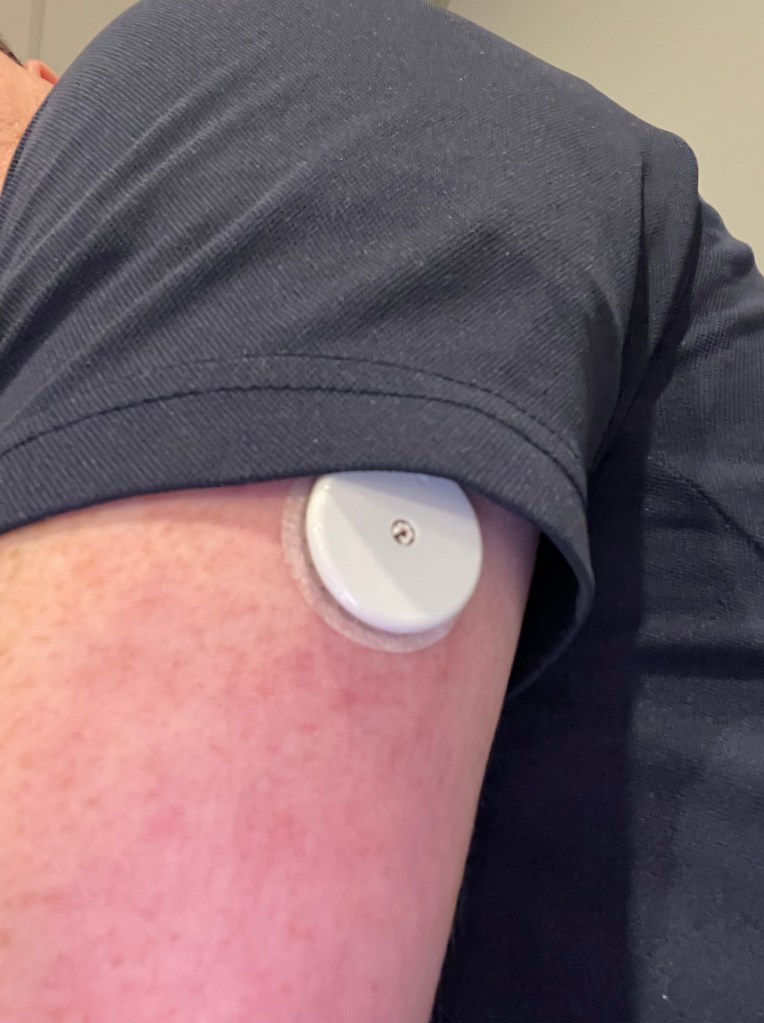
My recently placed FreeStyle Libre

I remember the long-gone days of having absolutely no coverage and living by manually injecting two different types of insulin using pens and re-using the needles ad nauseam because I couldn’t afford to buy fresh ones. Don’t even get me started on how often I used a finger lancet before I changed it. Those were dark days, considering I had months where I couldn’t afford to insure my car because I had to choose between a vehicle or paying for Diabetes supplies.

Considering my posts over the past two days have been a bit on the morose side, I don’t want to necessarily focus on the negative. Once I joined the Force, I was blessed to have complete coverage without ever needing to worry about paying for something. The only exception was my eye injections, which required me to pay up front and be reimbursed later on. No big deal, right? My new coverage plan apparently has some limitations. Unfortunately, given the cost of pump supplies, this coverage maximum only provides for about three to four months of coverage.

I’m currently doing research to ascertain if I can obtain some type of external coverage to supplement these costs or else I may face the prospect of coming off pump therapy. This would be detrimental to my health, considering how well I’ve been doing and how nice my A1C’s have been. The only saving grace is that my benefits start back up at the beginning of the calendar year. So I really only need to make it through until January in order to get some coverage, albeit for only a few months.
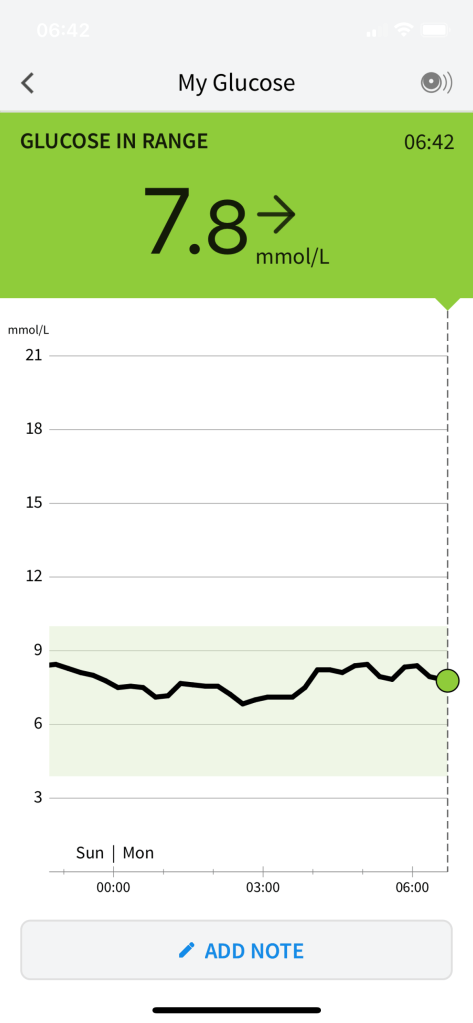
My sensor glucose, first-thing in the morning

As seen from the image above, using a Freestyle Libre has some benefits and disadvantages. Unlike CGM, it requires my active involvement to read sensor glucose. The CGM would read glucose on its own every five minutes. The Libre lacks some precision where the CGM would provide much more precise readings and tether with the pump so that it can provide micro-boluses to accommodate rising blood sugars. Luckily, a free app that can be downloaded to my iPhone allows me to take readings without paying the approximately $65 for a reader that does the excat same thing.

Some of the benefits include the fact that unlike CGM, the Libre lasts for 14 days instead of 7. As to why CGM hasn’t caught up with that trend is beyond me, since it’s supposed to be more advanced. The other benefits is that a 1-month supply of Freestyle Libre is far cheaper than CGM (almost half the cost, in fact), making it easier for me to get by and pay out of pocket. The nice thing is that once I had switched to CGM I stock-piled some of the Freestyle Libres I had coming in, so I have more than enough to get me through until January.
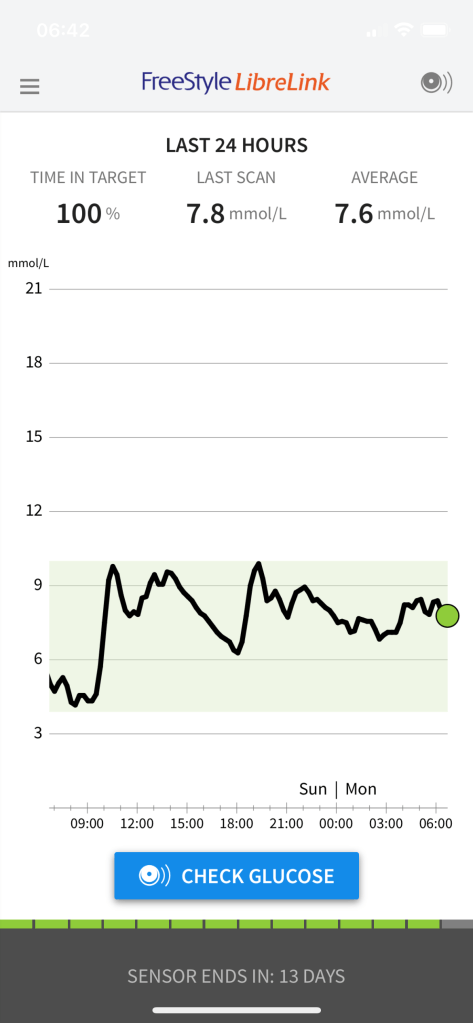
My readings look a bit more chaotic when compared over 24 hours

My whole reason for upgrading to the Medtronic 670G was because of its supposed amazing sensor usage and SmartGuard technology. Despite the fact that there was nothing wrong with my previous pump (besides being over five years old and off warranty) I decided to try it and I wasn’t disappointed. Sometime last summer, I was slapped in the face with the lowest A1C reading I’ve had in decades: 6.9! My last one, which would have been in September, had crept back up to 7.4, but this was mainly attributed to the stresses associated with starting a new job and overseeing renovations of my basement.

Am I pleased to have dropped down to using Freestyle Libre again? No. Could it be worse? I hate it when people tell me this, but yes. Yes, it could be much, much worse. I still have control over my blood sugars, albeit with a little more effort. I’ll still maintaining my health and taking active steps to ensure that I manage myself properly. Hopefully when the dust settles and I manage to figure this out, it’ll be back to business as usual. Until then, I just have to appreciate what I have as opposed to complaining about what I don’t. ☯️

All The Colours Of The Alphabet, Part 2

Alright, so this is a continuation of yesterday’s post. If you haven’t read that one, I highly recommend that you do before reading this one. Should you choose not to, it can easily stand on its own as an individual post. But just to provide some context, in the past thirty years I’ve been diagnosed with ADD, OCD and PTSD. The difficulties and complications I’ve faced as a result of these letters attached to my name have been plentiful. When combined with Type-1 Diabetes, it pretty much means I won the bullshit lottery of life. But as most would agree, there are worse things in life.

I’ve often written about some of the worst things that you can say to someone with Type-1 and even type-2 Diabetes about their condition. And trust me, there a lot of things you shouldn’t ask or tell someone with Diabetes, although educating these folks is the key. But it recently dawned on me that there are a number of things that people have told me over the years that absolutely grates on my nerves, as it relates to ADD, OCD and PTSD. I thought it would be productive to provide the top five things you should never say or ask to someone with ANY of the conditions I’ve named herein:

  1. Can’t You Just Sit Still? No, asshole! I can’t! Next question… Seriously though, this one is the top of the list because it drives me absolutely nuts. If I could sit still, don’t you think I could? If I could sit without constantly clicking my nails, playing with the hem of my jeans or constantly surveying the room I’m in and needing to have my back against a wall, I would. But I can’t, by virtue of ADD and OCD but forced upon me by PTSD. Moving on…
  2. It’s All In your Head… Umm, yeah. No shit! This one is actually correct, although not in the context that it’s intended. All of my acronyms are part of who I am and are, in fact, in my head. PTSD has been proven to alter one’s brain activity and causes a measurable injury to one’s brain. ADD and OCD can cause severe anxiety in the involved person, as well it feeling as though it’s beyond our physical capability to stop doing certain things that we do, including but not limited to trying to live in a clean and neat environment, compulsively repeating certain behaviours as well as dealing with the recurring trauma by inadvertent triggers in the general public. These things aren’t anyone’s fault but still cause damage and makes a sufferer’s life all the more difficult.
  3. Maybe You Should Just Let It Go… Oh, this one is like the shit that has nuts in it! Picture holding someone in your arms as they die and you’re the last thing they see as the light of light extinguishes from their eyes. Picture spending HOURS searching for a victim’s leg on the snowy highway before a coroner will allow the body to be removed. Picture staying by a man in his 20’s bedside for several hours because he attempted suicide and failed, leaving him with no face, no ears and no mouth and you’re the only one at his bedside as he faces death with no contact to the outside world. It took him over six hours to finally die… These are not things one can let go. And they are NOT something one can forget. And they are NOT things that any human should have to suffer through or witness.
  4. It’s Just Their Excuse To Drink… Mmmm, no! Unfortunately, since there’s no cure for PTSD, it’s left a lot of sufferers trying to find solace in things like alcohol or elicit drugs. Although these aren’t ideal, they’re often the only recourses for someone stuck in a serious funk because of their condition. War veterans who have historically and recently found themselves without work, seeming to suffer from mental health disorders and alcoholism suffer from PTSD and are usually misjudged by the public. They aren’t lazy, unwilling to work or trying to live a hobo life. They’re simply so deep into their condition that they can’t find a way out. At least not on their own.
  5. It’s No Excuse… Maybe not. And this one hits close to home for me, because I’ve always made a point of trying NOT to use my conditions as an excuse for anything I do. But for some people, a lot of people, they can’t help the compulsions they feel and have to act one. When someone suffers from extreme PTSD and succumbs to it, they can harm not only themselves but others. This is where it becomes important to recognize those signs and be able to remove themselves from that scenario, especially for family members.

ADD, OCD and PTSD are still widely misunderstood and often misdiagnosed conditions, even in modern times. The latter is probably the most prominent in my life and causes me issues and challenges t overcome on a daily basis. It’s at times like this that I’m grateful for martial arts as well as Buddhist and meditative training. they’ve gone a long way towards helping me to maintain myself and prevent issues within my own life. But it isn’t without challenge. Loud and constant noise, such as that created by my children for example, tend to create a static inside my head that I can’t fight off.

If you question or doubt someone’s personal situation on the basis of some mental health related, be sure you know what you’re talking about before you comment. Even though you may be commenting from a place of concern or maybe even exasperation, your comments can have damaging repercussions. Asking why they AREN’T doing something can be far worse than asking what YOU can do. Sometimes it can mean just leaving the person be. Sometimes, they may actually need help with something. Everyone is facing a battle others won’t know about. At the end of the day, helping and healing should take precedence over questions and judgments. Food for thought… ☯

All The Colours Of the Alphabet, Part 1

To say that my childhood had an interesting variety of bullshit would be an understatement. On the one side, I got to spend the majority of my childhood in various hospitals for both myself and my brother. Being there for myself was better. When I was there for my brother, I got to face the potential that we were there because he would die. I learned from a young age to sit still, be quiet and wait for the storm to pass. Having learned to sit still is a bit of an irony…

From a young age I seemed to find myself unable to sit still for extended periods of time, my mind would drift away from the matter at hand and I was always living life with my head in the clouds and preferred not to pay attention to the realities of life. This made sense when you factored in my health complications and my brothers. A world of make-believe was obviously better than dealing with the multiple comas I suffered through due to Diabetes or the constant threat of death my brother faced due to the multiple health conditions he faced.

But soon after my seventh birthday, I attended a doctor’s appointment that changed my life. I thought I was getting a check-up because of my Diabetes, which I had learned to zone out and let the adults talk. Turns out that was part of the problem; this appointment was the day I was diagnosed with ADD. ADD or Attention Deficit Disorder, is usually diagnosed when a child’s school work begins to suffer as a result of lack of attention, impulsive behaviour and hyperactivity. That last one never really applied to me but I found myself frequently unable to sit still for longer than a few seconds at a time (a problem I still face as an adult).

Being the stubborn French-Acadian woman that she is, my mother refused to allow the doctor to prescribe any mood-altering medications often associated with ADD by virtu of the fact she had to watch my older brother shovel a dozen different prescriptions down his throat every day. She felt the risk of how new meds would affect my blood sugars far outweighed the benefit of “calming me down.” I’m grateful to her for that, but it still made for a difficult childhood and even my teens years. It would get WORSE once I hit my teens…

Worse, you say? How could it possibly get worse? Well, my attention issues became compounded by certain compulsive behaviours. On their own, one wouldn’t think much of them. As a combined totality, I was soon diagnosed with OCD, or Obsessive-Compulsive Behaviour. Contrary to what most people believe, OCD doesn’t just involve a compulsive need to clean things. It can involve annoying and intrusive obsessions, repetitive behaviours and strict routines that can cause wicked anxiety if they aren’t adhered to.

One good example is my inability to purchase only ONE of something, when the special indicates that you can get two for the price of something. The urge is stronger than I can overcome. I do have some cleaning and neatness compulsions that piggy-back on my many ticks and compulsions. That doesn’t make it better. I’m jus’ sayin’… Even though OCD isn’t genetically inherent, it’s a good time to point out that my mother has full-blown signs of OCD, cleaning and neatness compulsions. My grandmother was so bad that she’d walk by sliding on two squares of paper towel for a full week after cleaning her floor.

Then I decided I need to do my part for the world and train to protect others. As a result, I spent thirteen years working as a police officer. The population as a whole have a love/hate relationship with the police. Some see them as an important part of keeping our society safe. Others see them as part of the problem. No matter which side of the balance you happen to find yourself, I shouldn’t need to explain that we’re often subjected to situations that can cause severe damage to a person’s psych. that’s where the next acronym comes in: PTSD.

PTSD, or Post-Traumatic Stress Disorder, is defined differently depending on the source you read. For the most part, it involves having a person exposed to traumatic events, sustained violence or threats of injury or death. Although a bit biased, I would say that policing puts one in this context, easily. I won’t get into some of the situations I’ve lived through during my policing career, as reminding myself of them is problematic. But some of the things I’ve seen and experienced haunt me years later, cause nightmares and trigger me at the worse possible times. Like the way being in a crowded restaurant sets my brain on fire. But I digress…

Over the years, I’ve been “blessed” with having all these acronyms attached to who I am as a person. They’ve provided significant challenge and combining the three has made a fantastic milkshake of difficulty and complications that I struggle with from week to week. It makes it difficult to sleep, difficult to deal with large public masses of people and exceptionally difficult to want to do anything outside the house (with some exceptions).

Before I get too maudlin here and spoil the mood (if I haven’t already), the reason I bring all of these up is that the last ten years or so have seen some fantastic strides in recognizing these conditions as something genuine and not just “all in one’s head.” ADHD, OCD and PTSD have come to be acknowledged as actual conditions and not just something that one needs to treat by self-medicating with drugs and alcohol. Despite these strides, there’s still a lot of stigma and misunderstanding associated with these acronyms. It makes one’s life difficult, in work, leisure and home life. How it’s perceived by public carries a lot of weight to how society chooses to understand these conditions. Food for thought and more to come… ☯

It’s Not All Bad, It’s About Control…

I’ve done a pretty good job at bashing my vices in the past couple of weeks. Self-improvement is never a BAD thing, so long as it doesn’t come at the cost of being who you are. With that in mind, I have recently discontinued the practice of purchasing cigars, I’ve reduced/eliminated my caffeine intake in my usual ways and I’ve cut out alcohol, except for on the rare occasions that one of my friends may invite me out for a beer to socialize (which hasn’t happened in a while).

The caffeine aspect has been the harshest, since I’ve stopped purchasing the energy drinks that have become a staple of my morning routine for the past few years. I’ll still enjoy a coffee once I get to the office, but that lack of the energy drink has left my body bitching up a storm the likes of a crack addict on withdrawals. It sucks. I haven’t really missed the cigars, which makes sense. It’s getting colder outside, and I have no inside venue in which to enjoy one. And it wasn’t the one or two cigars a month that could genuinely be considered a vice.

The alcohol aspect has been the interesting one. I’ve always prided myself on moderation and consuming certain forms of alcohol by virtue of flavour and not to become intoxicated. Since it had been about a month since I had consumed ANY alcohol, I decided to treat myself a few days ago with a bottle of cognac. I had just watched Van Damme’s Double Impact and I was itching to try it out. If you haven’t seen Double Impact, I highly recommend it. Great movie. Van Damme plays twins and one of them lives in Hong Kong, making a living peddling French cognac. I’m suggestible, so of course I had to try it.

The good news is that like most pure spirits, cognac is carb-free, meaning I could enjoy a glass of it without worrying about bolusing. The big problem with consuming alcohol when you have Diabetes, is it may not only be about dosing yourself with insulin. Different sources will provide different effects but the reality is that alcohol can either raise or actually lower your blood sugar, depending on how you react to it.

Because alcohol need to be processed by the liver and keeps it occupied, the liver may find itself unable to release glycol to help keep your blood sugars up. This can result in a significant drop in blood sugars and can catch on you quickly, if you aren’t monitoring yourself. In other cases, you may spike. This will happen when you consume something that isn’t a pure spirit. Beer for example, contains anywhere from 10 to 25 grams of carbohydrates per can or bottle. It can be tedious and difficult to bolus appropriately as you consume, especially if you’re not sure of how many carbs are actually in the beer you’re drinking.

Red wine, on the other hand, will only have between 10 to 15 grams of carbohydrates PER BOTLLE! And no, I’m not suggesting you sit back and suck down an entire bottle, I’m simply illustrating the difference, based on the drink you’re consuming. It can be hard to calculate, but there are a number of fitness apps and websites out there that will actually provide an estimate of how many grams of carbs may be in what you’re consuming.

If you want to be REALLY sure, reach out to your local distributor or the manufacturer of the drink you plan to consume. When I was still observing the tradition of doing Fireball shots on the anniversary of graduating from basic training, I contacted the company that actually makes the drink and found out that it sits at about 11 grams per standard shot. That makes for a lot of bolusing in a two or three hour period. Hey, it’s “flavoured corn whisky.” One has to expect that it would be sweet and sugared to high-hell.

Diabetes Canada has a great PDF document that I’ve used a lot in recent years, and you can find it here. I particularly like the last page, which provides a basic outline of carbohydrate amounts for standard alcoholic drinks. It’s only a basic guideline and you should always try and get confirmation of the specific amount contained in what you’re drinking. It can mean the difference between enjoying a couple of casual drinks with your friends or spending the night trying to lower or raise your blood sugars.

The reason I bring it up and why this is important is because we’re a couple of weeks away from hitting December, when the holidays will be just around the corner and potential celebrations and family get-togethers may happen. And with that comes the consumption of alcohol. Not always, obviously. but if you have Diabetes, it’s an important consideration.

Moderation is key, folks. Most people have been calling me crazy for quitting all these things at once. And maybe I am. granted, I did try that cognac, but it wasn’t great. I won’t be getting it again. But as we move into the holiday season, the Diabetes mantra remains the same: exercise, eat properly and monitor your blood sugars often. And enjoy in moderation. ☯️

Take A Break And Relax With This Post

Given the hectic demands of modern family life, it can be pretty easy to forget that it’s important to take time for yourself. In most cases, we get so tangled up in the requirements of our daily grind that we tend to overlook our own self-care and care of our home. I can relate to how easy that can be. For example, one of the few “benefits,” if they can really be called that, of the pandemic quarantine when everyone was pretty much sequestered to their home, is that I had far more time to do some reading, writing, playing the daily challenges on some games and playing with my kids. With some aspects of society slowly returning to normal, that extra time has disappeared and my ability to self-care seems to have disappeared with it.

Taking breaks and finding the time to relax is important. Because as they say, you can’t help or take care of others until you’ve taken care of yourself. Don’t ask me who “they” are, I have no clue. But this is a very true fact and it applies to work, leisure and family life. If one doesn’t take the time to let one’s head cool, it gets difficult if not altogether impossible to properly manage one’s daily grind and responsibilities.

Work is a great example. Any productive job will be a roller coaster of busy-ness. one week may be pretty tame and you have plenty of time to catch up on things and the next week will feel like the job is literally trying to drive you to drink from all the added pressure. And that’s why, even when it’s busy, you can and SHOULD take time for coffee breaks and step away from the computer. Whether you actually get coffee or not is irrelevant. The act of walking away from your computer or work for even fifteen minutes gives you the opportunity to recharge, get some fresh air and will actually increase one’s productivity.

Some there are and those are they, who are often inclined to believe that taking a break when they’re busy will cause the work to grind to a halt or make things worse. But let’s be realistic, here…. The work will still be there whether you take the break or not. Fifteen minutes won’t make a measurable amount of difference in the workload BUT it may make a measurable difference in your productivity. And that’s where the important difference lies.

The same applies to your home life. Maybe you have work to do at home. Maybe you have a spouse who needs your attention. Maybe you’re a parent and have to help your kids with homework and play with them. It can seem pretty daunting, especially if you work long hours, do shift work or usually end up needing to bring some work home with you. By the time the family meal is done and everything is cleaned up and you’ve squared away the kids, you’re likely too tired to commit yourself to work.

It can be all the more difficult if your life includes anything extra. Let’s use an example like, oh, I don’t know…karate! Although an experienced practitioner can train at home, it stands to reason that most students need to attend class. Finding time to do so with everything I’ve described can be a bit difficult, especially if you know that stuff is piling up and waiting for you. Not to mention that despite the fact that those activities are important to you, your family may not understand and often resent your absence.

That’s why communication is important and integral, in both personal and work circumstances. Most of the time, unless you’re being radically unreasonable, communicating and explaining your needs will go a long way towards helping others understand what you need to take better care of yourself. Once that communication has been achieved, you can work on some self-care, which in turn will help you to better help others.

Although I totally understand that it’s often easier said than done, take your breaks. Indulge in some self care. No matter the time constraints, the workload or the home responsibilities, you owe it not only to yourself but to everyone in your entourage to ensure that you’re refreshed, relaxed and can give them your best you. Working or stressing yourself into an early grave is pointless. After all, you only live once. That we know of…😉 Food for thought…☯️

I Think I Need More Coffee To Write This Post…

Ah, coffee…. I try to imagine how different my life would be without caffeine. I don’t think I like it. But in all seriousness, caffeine plays an important role in many people’s daily routine. I remember consuming coffee for the first time when I went to college. To be honest, I remember thinking that it didn’t seem to be doing much to lift the tired fog from my mind. But then again, I also had blood sugars to contend with AND the college’s cafeteria coffee was mostly brown and water. So, there’s that…

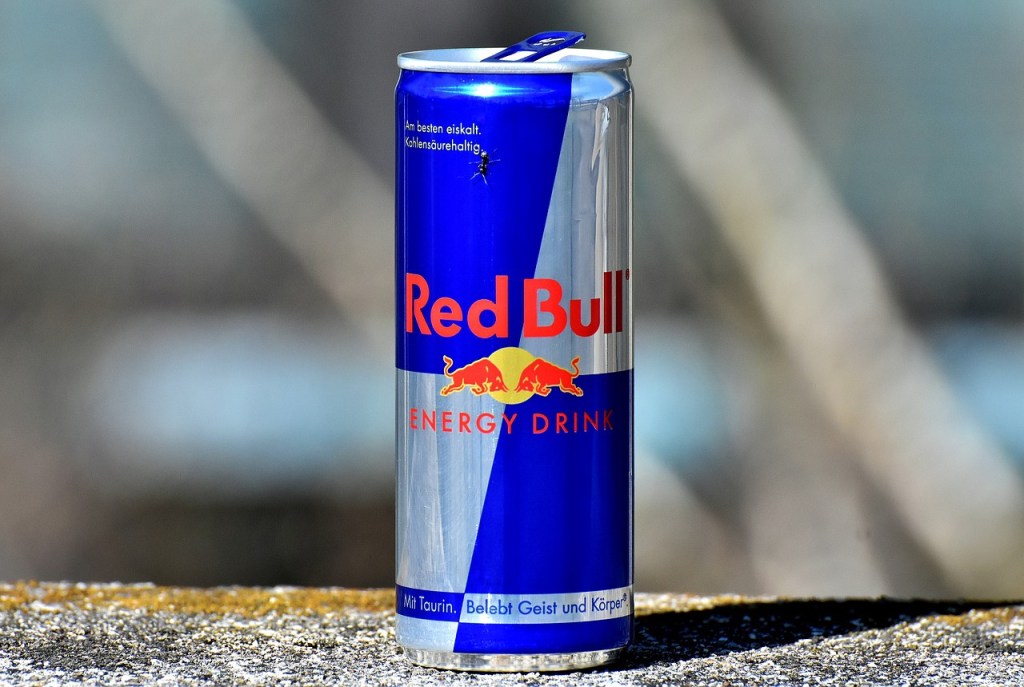
More than half a decade would pass and energy drinks had become a new trend, although I had never tried them. Then one day, a Red Bull representative came knocking (not literally) while I was managing a big box pharmacy. The company had agreed to provide some shelf facings for the product to be displayed and the rep wanted to offer me a sample so that I would be able to speak to the product’s quality, flavour and effectiveness. When I mentioned I had Type-1 Diabetes, he surprised me by offering me a can of sugar-free Red Bull. It was all down hill from there…

Over the years, caffeine has played an integral role in my effectiveness in karate, work and even my personal life. I’ll admit there are a few times I may not have made it home if I hadn’t downed a cup of coffee before getting behind the wheel. For the past 20 years or so, I’ve had a roller coaster relationship with caffeine, often trying to quit at the most inopportune times (like taking a course or travelling for long distances). So, what is the good, the bad and the ugly of coffee?

According to an article by Healthline.com, caffeine actually works due to its effect on the brain. It “functions by blocking the effects of adenosine, which is a neurotransmitter that relaxes the brain and makes you feel tired.” Well… f$%k me…. Here, I thought it just jacked up one’s heart rate, causing increased blood flow, which makes you more alert. See, even an old dog like me can learn new tricks. Moving on…

Caffeine can kick in quickly with the average cup of coffee often taking only about 20 minutes to kick in. Another article by Healthline.com lists a number of benefits related to caffeine consumption, including but not limited to improved energy and reaction times, weight loss, improved physical performance, protections from certain health conditions (including Type-2 Diabetes) and coffee just happens to be very high in antioxidants, making it the ideal beverage to consume on a daily basis.

You’re probably thinking, “Alright, Shawn…. What’s the other side of the coin? You never list all the benefits of something without listing what’s bad…”. Well first of all, thank you for paying attention. I love that shit. Secondly, according to the Mayo Clinic, “Up to 400 milligrams (mg) of caffeine a day appears to be safe for most healthy adults. That’s roughly the amount of caffeine in four cups of brewed coffee, 10 cans of cola or two “energy shot” drinks.” Bear in mind that exact amounts vary from drink to drink and the key words are “most” and “healthy.” But we’ll get to that…

Drinking more than what’s basically indicated in the article can lead to side effects including but not limited to:

– Headaches;
– Insomnia;
– Nervousness;
– Irritability;
– Frequent urination;
– Fast heartbeat; and
– Muscle tremors.

I don’t know about you, but none of those sound like a spa treatment. Not least of which is the fact that caffeine can be addicting. You start by consuming a cup in the morning before work and months later, you’re downing a full POT while getting ready for work, then grab an extra large through the drive-thru on your way to work, followed by more coffee during coffee break. And that’s all before 10 am…. I may or may not be speaking from experience.

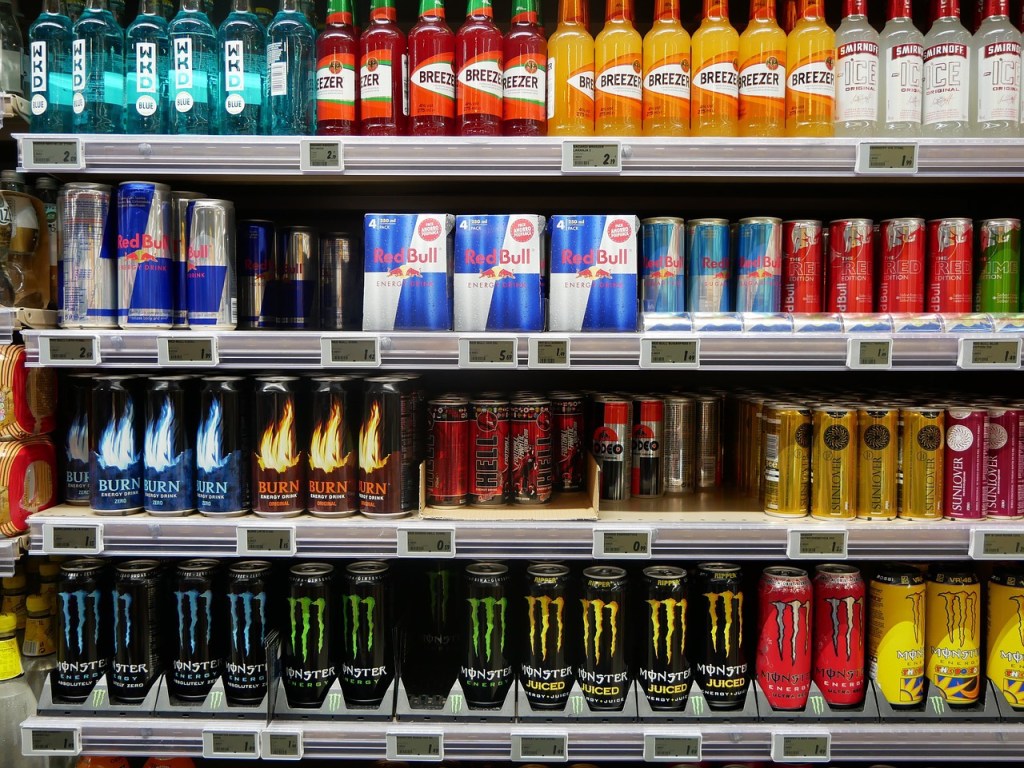
For the most part, energy drinks have become my go-to caffeinated drink and have been for the past few years. This is for a number of reasons, including the fact that it’s cold and I can get it down my gullet way faster than a hot coffee. there’s also a slightly higher caffeine content than your average cup of coffee, which can help when you’ve spent had the night up due to your insulin pump or fluctuating blood sugars keeping you up. There’s also the fact that energy drinks usually carry a whole bunch of extra stuff on board, like increased B vitamins and minerals.

The down side is that depending on the energy drink, you can find yourself consuming ingredients that could affect blood sugar levels. Further, besides making your urine a weird fluorescent colour, you start getting addicted and needing the additional stuff you get out of energy drinks. So, it’s important to mindful. Why is this important? Well, I usually only allow myself the luxury of energy drinks because I get them on special at my local corner store for cheaper than a cup of coffee. Otherwise, cheap, stubborn Shawn won’t buy them. Last Thursday, I went into the store and noticed they weren’t on special so I didn’t buy any. It’s been a few days. I fear for society’s well-being…

Ultimately, there’s nothing wrong with caffeine consumption, provided you don’t take in more than what’s recommended and safe for you and that the side effects don’t outweigh the benefits. If you find yourself experiencing some of the side effects listed above, it may be a sign that you need to cut back. We’ll see how long I hold out without my daily energy drink. Just one more vice to work on…☯️

What’s It All Mean?

This is one of those fun posts where I get to explain and clarify that I am not a doctor or trained medical professional and the information contained herein is strictly for entertainment and reference purposes. Although I research things ad nauseam, and try only to quote from reputable and peer-reviewed sources, one can never be too sure. This is why I always say that anything you may be wondering about should always be discussed with your doctor or medial practitioner to ensure you don’t do something or change something that could have a serious impact on your health.

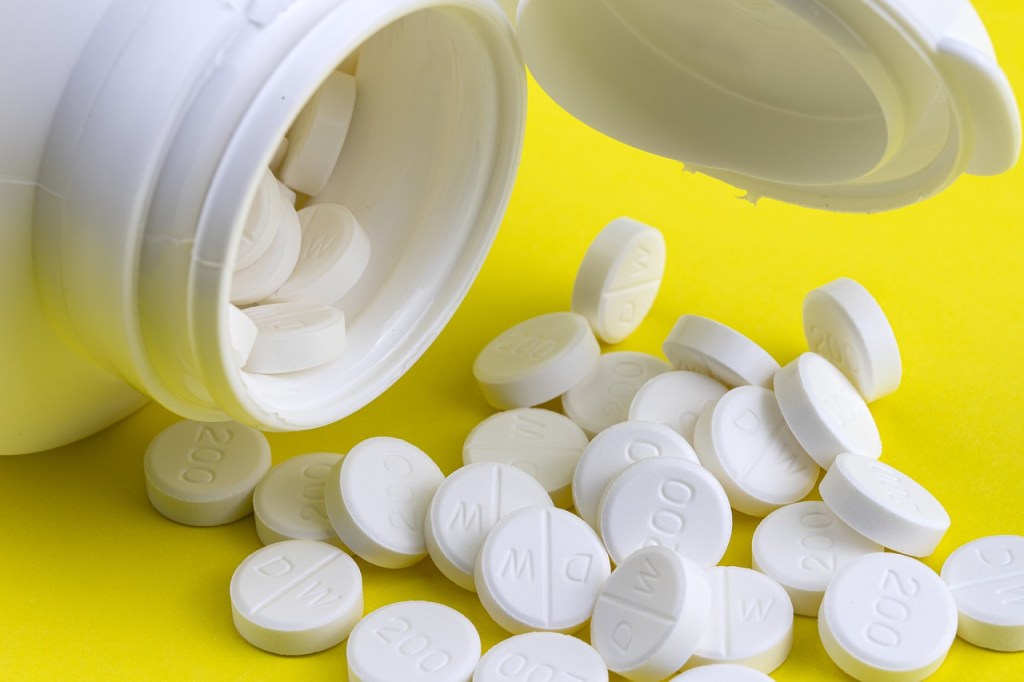
Now that I’ve gotten the pesky disclaimer out of the way, having type-1 Diabetes has meant that I’ve found myself having to consume different medications throughout my life. And a lot of these medications will come labelled with instructions or warning that can be concerning and off-putting. If you’re anything like me, you’ve likely often wondered what some of these labels mean or what happens if you don’t follow the instructions they indicate. This mostly refers to pills, but also apply to some liquid medications and can be prescription or over-the-counter. I’m going to try and address some of the top ones I’ve seen, in this post.

“Take With Food…”
Let’s start with the most basic one, and an instruction that we can find on numerous different types of prescription and over-the-counter medications and supplements. I’ve learned the hard way that when a bottle indicates that certain pills should be taken with food, those instructions should be followed without exception. If you find a label that says “take with food,” this is an indication that there may be components of the pill or medication that will cause severe stomach upset, nausea or heartburn if taken on an empty stomach.

I remember one instance where I had started the habit of taking my daily multivitamin first thing in the morning. This makes sense, right? Since one should be having breakfast during the first hours of their day, it would make sense to take a capsule that needs to be taken with food during breakfast. But on a particular morning, I was running late and I popped a multivitamin and chased it with an energy drink and dashed out the door. I was minutes away from my work destination when I started to feel nauseous. It got back to the point where I began sweating and had to pull into the parking lot of a local business and threw up all over the lot.

The combination of an empty stomach and carbonated drink didn’t sit well (pun intended) and I emptied what little contents were in there, multivitamin included. Most sources I’ve found have stated that so long as you don’t take your medication no more than about 30 minutes prior to eating, it should be fine. And eating something that will adequately coat your stomach and trigger the digestive process is best. This helps your body to absorb and metabolize the medication faster and avoids the embarrassment of bystanders watching you retch all over a parking lot.

“Take On An Empty Stomach…”
Here’s the flip side… Some medications will actually REQUIRE that your stomach be empty when you take them. A supplement my doctor recently prescribed has this instruction on it, and I got curious. What, exactly, happens if your stomach isn’t empty when you take this medication. This one is what prompted this post, actually. According to a post on NHS.uk, “As a general rule, medicines that are supposed to be taken on an empty stomach should be taken about an hour before a meal, or 2 hours after a meal.”

So the big question becomes, what happens if you don’t. Although forgetting to take them on an empty stomach on rare occasions shouldn’t do harm, per se, doing it as a habit could mean that your medication won’t work as intended, could be adversely affected by certain foods or other medication or may even CAUSE adverse affects against other medications. Taking on an empty stomach allows your medication to be absorbed into your system before other foods or medications join the party to potentially screw things up.

According to a post by HealthLine.com (one of my favourite sites), “Generally speaking, it takes about 2 to 4 hours for food to move from your stomach to your small intestine.” This can depend on a variety of factors since, as you all know, every human body is different and one’s metabolism may differ from others. So if you’re starving and need to eat prior to taking these medications, you should wait at least a couple of hours to let your digestion take place, first. These days, I grab the medication that requires an empty stomach as soon as my feet hit the floor in the morning. Then, by the time I’m prepped and at work, I can take my other meds and have a light breakfast. It can be a bit convoluted depending on how busy my day is, but one’s health is worth it, right?

“Do Not Take If Pregnant, Have Diabetes, blah, blah, blah…”
This one kind of pisses me off a bit, because I see it on almost ALL over-the-counter medication, whether it’s sinus or cold meds, nasal spray, multivitamins… you name it! The everyday OTC products that people grab on the fly when they may be feeling down or trying to address a specific condition usually spit this warning out at me, every time. And yes, you should ALWAYS read the information label to anything you consume. That’s YOUR body you’re dumping that stuff into. You should know what’s contained within. But I digress…

According to an article posted in the endocrinology section of Healio‘s website, the issue is that a number of inactive ingredients contained in some of these medications can raise blood pressure or blood glucose by virtue of carbohydrates or even alcohol content. The best example is NyQuil, which includes 10% percent alcohol. Taking these medications without considering their content could mean spikes in blood sugar or raises in blood pressure, both of which can be an issue for someone with Diabetes. Depending on the labelling required by the prevailing health authorities in your respective country, you may not even be made aware of these inactive ingredients.

Just because some of these meds can raise blood sugar, it doesn’t mean you shouldn’t take them, According to an article posted by Everyday Health (Wow, I’m heavy on the links today!), some medications that may affect blood sugars can include corticosteroids, beta-blockers, statins (which I take), Niacin, antipsychotic meds, some antibiotics and certain decongestant meds. If you have a cold and grab a generic, store-brand bottle of cold caplets, you may not be considering that the decongestant may cause a spike in your blood sugars.

All of this is to say that one should be mindful and inform themselves when taking something that may fail to work, affect something else you’re taking or affect your overall blood sugars. If in doubt, speak to your doctor before taking anything. I know that the current state of the world makes accessing one’s doctor a near impossibility (especially for something like a medication consult) but a good alternative is talking to your pharmacist. Although doctors are extremely educated and knowledgeable, pharmacists specialize in the ACTUAL pills and meds you take, and can offer insight into possible substitutions, side effects and more.

And let’s not forget the usual outlying problem, where certain medications may not directly affect insulin itself, but can affect how your body processes and uses insulin. This can be critically important for overall blood sugar control. At the end of the day, be sure to read all information available on the meds you take, consult your doctor or medical practitioner and don’t forget to test your blood sugar regularly. Forewarned is forearmed, so if you know something may cause your blood sugars to spike, you can adjust accordingly. ☯️

Conquering The Challenges

Sometime at the beginning of the summer, I wrote about trying an app called “The Conqueror Challenges.” The premise behind the use of this app is pretty simple. Once you have it installed and create an account, you can sign up for virtual marathons. These marathons (at least, that I’ve seen) have been as short as 26 kilometres all the way up to several thousand kilometres. You pay a nominal fee and you are able to choose a time limit (weekly amounts) to complete your challenge.

It’s a fun and interesting way to contribute to one’s overall fitness. The organization that runs the app plants a tree for every 20% of the challenge you complete. You get post cards and updates as you progress. For example, I completed the Mt. Everest virtual marathon, which involved travelling 64.2 kilometres. I gave myself a 3-week timeframe, but I was done within the first week. 64.2 kilometres racks up pretty fast on a bicycle.

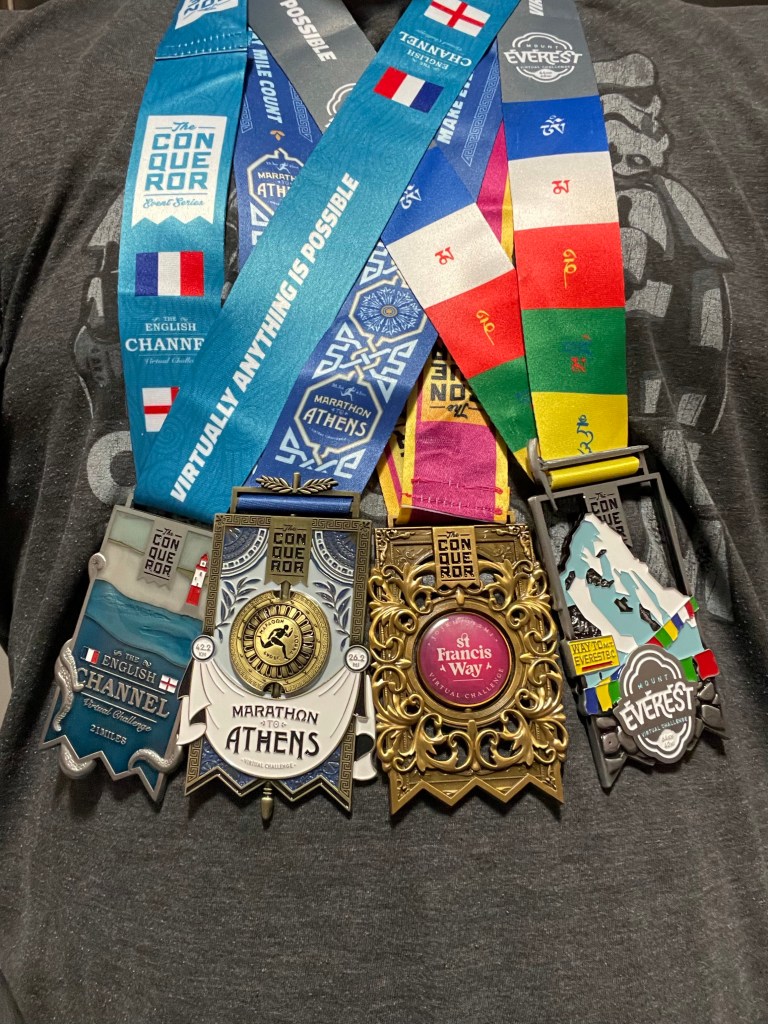
At the end of your challenge, they ship you an actual medal depicting the challenge you were on. They’re pretty sweet, made of metal and usually have some special aspect to it specific to the challenge. For example, my “Marathon to Athens” medal has a slot with a Greek coin inside it. A reproduction, of course. But neat, nonetheless.

My swag, so far. #5 is in the mail and I’ve almost completed #6

The app syncs automatically with my Runkeeper app and will include any distance-related workout, such as running, walking or cycling. The St. Francis Way medal you see in the photo above was 502.8 kilometres. One of the best ways that this app keeps you motivated is that you pay money but lose the medal if you don’t complete the challenge in time. Nothing lights a fire under your ass like knowing you’ll actually lose money you’ve paid, if you get lazy and skip a few days of working out. Plus, you get to learn a great deal about all the different countries that are featured in these challenges.

I’m having a blast with these and they’re definitely conversation starters for those who see them. If you’re looking for a way to keep yourself on track, I highly recommend this. As long as you keep your goals realistic. I gave myself an 8-week timeframe for the 502.8-kilometre challenge. It would have been ridiculous to try and have it done in 2! But as long as you keep it realistic and consistent, you’re good to go.

Doing things in a virtual environment is the way of the new world. Why should marathons be any different. I’m always on the lookout for new ways to increase my fitness and new ways to exercise. This one has been loads of fun and it doesn’t hurt that I get a bit of bling to brag about, after the fact. ☯️

I Want To Live…

I want to live. Makes sense, right? Most people do. Most people have the opportunity. Not many people fight for that privilege. And I know what you’re thinking…. Why should someone have to fight for the privilege of living? Well, I don’t mean fighting for the privilege of staying alive because of oppression, war or famine. I mean fighting for the privilege to live against something that came to be, completely out of one’s control. If none of you have guessed that I’m talking about Diabetes at this point, let me clarify: I’m talking about Diabetes.

One of the best things about living in modern times, is that Diabetes is no longer an automatic death sentence. If you were diagnosed with Diabetes prior to the creation and distribution of insulin, that was pretty much it. I’ve written posts about how long a Type-1 can survive without insulin, even if they completely eliminate carbohydrates and continue to exercise. So I won’t get into that part, since that’s not what this post is about. Needless to say, insulin isn’t JUST about lowering blood sugar levels.

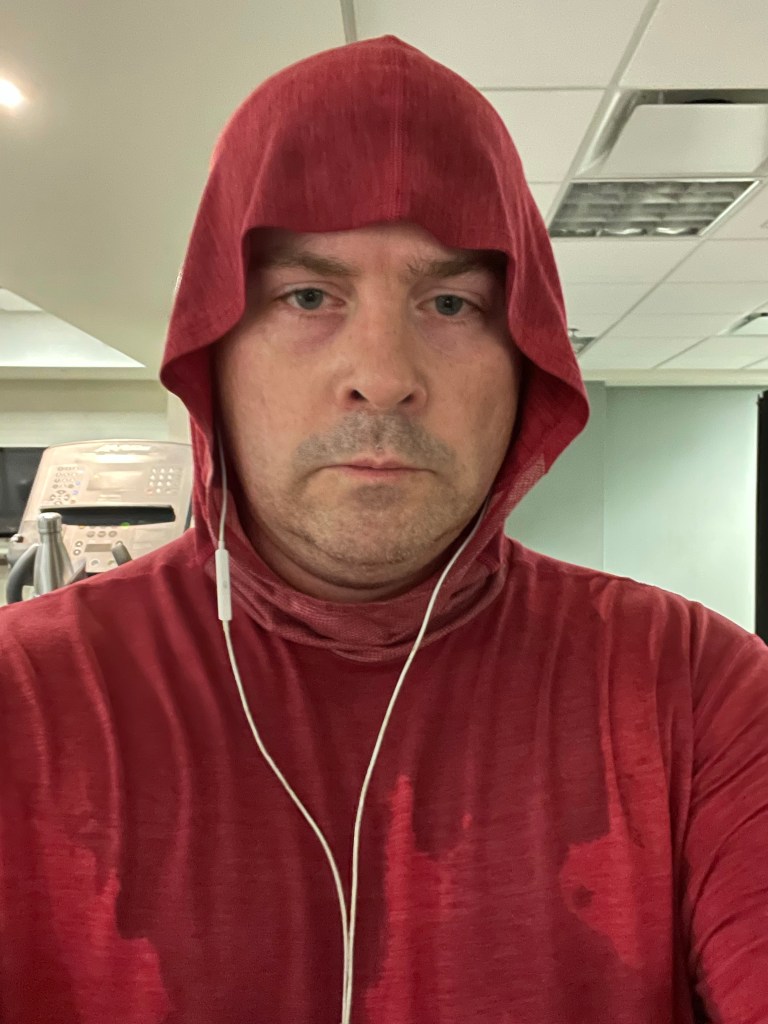
People have often asked me why I push so hard when I exercise, or why I do so much. I’ve had folks commenting on the fact that by the time I’ve completed a workout, I look like a wet cat who got stuck in the rain. Sometimes, it’s can be belittling or condescending; as though they’re suggesting that I shouldn’t be a sweaty mess in a public place where other folks can see. It’s almost akin to those who make fun of an overweight person in the gym for trying to get in shape. Granted, not EXACTLY the same, but the concept is the similar.

I learned from a very young age that Diabetes would show me no quarter. If I let up my guard, even for a day or two, it would find a way to swoop in and make my life difficult. Maybe this difficulty would come in the form of high or low blood sugars, which typically fuck with my entire day. Or maybe it would simply make me more susceptible to illness and make my day-to-day interactions all the more dangerous. Or perhaps it’ll take something simple like stubbing one’s toe and turn it into an automatic, infected toenail. Just because it can. Diabetes shows no mercy because it has no emotion.

Fitness is an important part of ANYONE’s lifestyle. It’s no secret that someone who doesn’t exercise regularly will face a host of health problems too numerous to list here. But staying fit and active is an important part of life and all the more so for someone with Diabetes. Again, from a young age I recognized this, especially in light of my doctors telling me I’d die due to Diabetes complications before I reached my teens (I’m now well into my forties, in case you were wondering).

I guess where I’m going with this is that there are a number of different reasons to work out and go to the gym. Some people want to get fit, some want to get muscular and some want to lose weight. hell, some people go to the gym simply to be social and see certain key people they may associate with. And that’s fine. At the end of the day, whatever your reasons for training consistently will never be bad. Anything will always be something more than nothing. My point is you’ll be able to easily discern who’s training to get fit and who’s training to save their lives.

That’s what I do. I train in order to save my life. I train because if I don’t, Diabetes complications will reach me all the sooner and take away something that I need in order to live. That’s why I’ll spend an entire hour on a cardio machine at a high level and end up soaked and breathing hard. That’s why I rarely take break days or rest days. Diabetes never takes a rest, so why should I? I push myself because I’m trying to stay ahead of a condition that will ultimately end my life, despite all the therapies, despite all the available resources and despite all my efforts.

And that’s the ultimate punchline of my existence. This is a race against time and a race against a condition that I will inevitably succumb to, despite my best efforts. But like trying to outrun an oncoming tornado, I have to try. I need to give it my all because I refuse to let it take me down. I have too much to live for. I owe it to myself and to those who matter in my life. I’m fighting against complications. I’m fighting against organ failure. I’m fighting against death. Besides, I’m well aware that there are those who push and train harder than me, anyway. But my efforts are mine and mine alone.

So, the next time you see me breathing hard at the gym, it doesn’t mean I’m “out of shape” or new to working out. When you see me walking away from a machine looking drenched like an alley cat left out in the rain, it isn’t because I couldn’t handle the exercise I was doing or I was doing too much. It’s because I’m fighting for my life. And if you don’t come out of that fight bloody and covered in sweat, you’re not really fighting. And you will lose. Ask yourself why YOU do it. No matter what your reason, you should never judge someone’s efforts or appearance when trying to better themselves. Whether it’s someone trying to get slimmer or fitter or someone who is simply trying to prolong his life long enough to see his children into adulthood. Food for thought… ☯️

Becoming Ill Will Make You Sick…

I don’t think I need to point out that the pandemic is showing no signs of slowing down, with the number of infected fluctuating and outbreaks coming and going with the kind of frequency one would expect from sailing on rough seas. A constant to and fro of cresting a swell and slipping into the depths, only to surface for air long enough for it all to happen again.

I’m certainly not here today to argue the merits of vaccination versus not. There are enough forums on the internet for people to argue about all of this without my involvement. I’ll reserve judgement in that regard since it doesn’t pertain to the actual topic of today’s post. It’s no surprise that most hospitals, at least here in Canada, are facing critical capacity issues as the number of infected patients are overfilling the ICU’s to the point where there is no room for anyone with any other illness than COVID-19. For the most part.

I realize that I can’t back this claim with anything more than what I’ve recently read in Canadian news releases. But the most concerning that I’ve read in recent days is from here in Saskatchewan, were ICU patients have had to be air-lifted to Ontario for care because we no longer have the in-Province resources to do it. Let that sink in for a moment. The second largest city in the Province, with two very large hospitals, no longer have the available staff, resources and room to accommodate potentially dying patients. Setting aside the statistic that the outstanding percentage of COVID-19 ICU patients are unvaccinated for the moment, this new development is frightening in more ways than I can put into words.

Throughout my entire life, there’s been something of a comfort knowing that if I became ill or faced complications with Diabetes, I could attend my local hospital for treatment. During my teens and into my 20’s, it wasn’t unusual for me to become suddenly ill from dehydration, requiring the intervention of an IV drip for a couple of days in order to bring myself back to health. Although one never enjoys laying idle in a hospital bed, it was something I knew was always there and waiting, should I need it. As well it should, but that available resource appears to be disappearing.

It’s no secret that hospital waits have become exorbitantly long, even prior to the pandemic. The best example I can think of, is when my son slipped on the steps of our landing and struck his head. He had a gash on his head, so we rushed him to the emergency room, fearing he may have a concussion (despite having not lost consciousness) or other injuries that we couldn’t identify or treat. Despite explaining that we had a toddler with a head injury, we waited for almost four hours before finally throwing in the towel and simply going home. By then, Nathan started getting fidgety and playing as normal anyway, so our fears were alleviated somewhat. But still…

It’s a fitting example of how low things have become in the health industry and COVID-19 has made it worse, since the majority of hospital resources are allotted to dealing with the pandemic. Any and all medical requirements short of immediate trauma are being rescheduled and/or cancelled. This includes organ transplant surgeries and dialysis treatments. For someone whose immune system is already spotty at best, this scares the shit out of me.

When you consider that a lot of this concern and strained resources comes as a result of people choosing NOT to be vaccinated, one needs to wonder where the line is drawn between “my rights” and “doing what’s right.” I can’t help but feel that if a loved one of mine died as a result of having their organ transplant cancelled because the ICU is overflowing with unvaccinated patients, I might feel some kind of way about that.

Freedom of choice is a staple of any modern, civilized society. It’s up to the individual to recognize that even when it seems or feels that they’re not being offered the choice for something, they really are. Do you need to eat out at restaurants? No. Do you need to go to bars or pubs? Certainly not. Do you need to join sports teams or participate in extra-curricular activities? Definitely not. None of these are your “right” and none of those things will save your life.

There’s a running joke in my household, whenever the boys are playing rough with each other or doing something stupid (which they often do). Either my wife or I will remind them not to get hurt, because there’s no hospital service to lean on, if they do. They’d essentially be at the mercy of my very limited field medic training, which is rudimentary at best. Light help them, if they break a bone and I have to set it myself. It’s almost like being back in medieval times, where becoming sick or injured is basically tantamount to the end of one’s life. Scary time to be alive… ☯️