Peace Or Power Through?

Life certainly has its share of difficulties and nothing is intended to be easy. As I’ve often said before, life doesn’t care about your plan. Given the various schools of thought that I study, I frequently find myself in conflict. What do you do when your faith conflicts with what you’re built to do?

I have often found that my faith tells me that I should pursue the most peaceful way possible, to follow the path of least resistance. I’m inclined to eliminate suffering as much as possible, if you will. And to be honest, this is the normal human condition, if you think about it.

As humans, we are biologically designed to take the easiest path to any result. Like the flowing of water, we tend to follow until we reach our lowest point. This isn’t always ideal, and can sometimes cause more issues than it solves.

Sensei has always told me that I shouldn’t force things so much, that I should go with the flow and allow life to guide me on the path I’m meant to take. Although the prospect of simply sitting back and allowing life to guide me along the lazy river, this isn’t the easiest thing to do when you have a home and a family to support and need to follow the expected requirements of modern life.

Meditation can often provide some clarity when trying to decide one’s path

The other side of the coin is that I was unfortunately raised as a fighter. I don’t give up and I never surrender, even when it causes me pain. If my life, my way of life, my family or my country are threatened, I won’t stop fighting until I win. For obvious reasons, this is also not always the best path.

It’s kind of ironic, because the same man who raised me to never stop fighting is also the same man telling me not to force things so much! That’s how things tend to get convoluted, when messages get confused and you don’t know which direction to take.

Ultimately, I don’t have an answer. If I did, I can promise that I wouldn’t be writing this post! No matter what path you choose to follow, life takes a lot of work. There’s no getting out of it. And when you carry the weight of the world on your shoulders, it makes the journey take twice as long. ☯

A Society Of Automatons

I’m not a HUGE fan of modern technology, despite the fact I can admit to being an avid user. Although modern technology has brought us ahead in relation to medicine and research, the effects it’s had on modern society is almost palpable. And nauseating.

After enjoying supper with my family last night (I made Chicken Alfredo, it was quite delicious) I made a quick run to the grocery store. I needed milk and whipped cream for a chocolate pudding dessert I was making. Boy, to hear the recipes I prepare, you’d never think I have Type-1 Diabetes…

Anyway, I consider myself to be something I call a cluster-shopper. What this means is that rather than do a month’s worth of groceries in one sitting, I’ll go to the grocery store every few days instead, sometimes daily, in order to acquire the ingredients we need for our meals.

To make a long story short, going to the grocery store on a Friday evening turned out to be laborious. The grocery store was crowded, and filled with mindless automatons who were more concerned about looking around aimlessly than paying attention to their surroundings. Besides having people in front of me who were walking down the middle of the aisle at, as Ron White would say, “half the speed of smell” and preventing anyone from getting by them, I also had the pleasure of having multiple people cut out in front of me from a cross aisle, make eye contact with me and seeing my hustle, yet slow me to half the speed by coming to a crawl in front of me… FML!!!

It amazes me at how people are so communicative and quick when it comes to their smart phones and devices, yet they become mindless automatons simply going through the motions once they’re out in public. They don’t pay any mind to what’s happening around them, almost to the point where they cause strife in others around them. Their lives revolve around their social media accounts and smart devices, and they run on instinct once they return to the real world. It’s a real shame.

Folks, don’t forget that the real world still exists. You spend the majority of your day in it and there’s a lot to see, despite the fact it isn’t reflected into your eyes by the screen of a device. Take time to appreciate it and pay attention to your surroundings. You may be surprised at what you’ll see. ☯

It Could Always Be Worse…

No… No, it really couldn’t be! I mean yeah, it could be if you look at it from a perspective of, “Wow, I broke my leg! I guess it could be worse; I cold have broken my neck…” But really, how efficient and effective a mindset is that?

It’s no secret that people who say “it could be worse” are a serious pet peeve of mine. I’ve been hearing it all my life, especially in relation to my Diabetes. It’s unbelievable how often I’ve heard people throw comments at me. Here are some of the gems:

  • “It could be worse, you still have all your legs and toes…”
  • “It could be worse, you could be blind…”
  • “It could be worse, you could have heart or kidney failure…”
  • “It could be worse, you could have cancer…” (my personal favourite, and the word cancer is often interchanged with just about ANY other illness)

Why do people do this? For some people, it’s a defence mechanism. They simply don’t know what to tell you. If you mention an issue in your life and they believe that explaining a worse alternative will somehow make your current predicament better. Your car got totalled in a collision? “It could be worse, your house could have burned down…” As if losing your primary source of transportation suddenly isn’t terrible when compared to the imaginary scenario in which your house catches fire…

In our defence (“our” being the people with Diabetes who talk about it) we become so used to our condition that we often discuss things without realizing that a non-Diabetic may not consider it so normal. Like when I casually mention to someone I just had my bimonthly eye injections. Most times I get disgusted looks and dropped jaws. But it’s become so routine and normal to me, I usually think nothing of it.

But the reality is that even if something COULD be worse, it doesn’t take away from whatever bad or negative situation one may be facing at the moment. Everyone has a story, right? And not everyone may handle difficulty the same way, so it’s important to acknowledge a person’s situation for how they’re feeling it.

Although looking on the bright side is a fantastic perspective for life, trying to explain to someone why their situation could be worse is definitely not ideal. It certainly shouldn’t be said to someone suffering a medical condition, no matter how much worse a different condition may be. ☯

In Teaching Others, We Teach Ourselves

I can’t recall where I read the proverb I used in my title, but it’s pretty accurate. If there’s an important lesson I’ve learned in almost four decades, it’s that we gain almost as much from teaching and passing on our knowledge as we do from obtaining it.

I’ve previously mentioned the martial arts ladder, and the importance of helping other students climb beyond you, once you’ve reached a certain level. Some “old school” martial arts teachers will often claim that it’s important to hold something back; keep that secret technique to yourself so that you always have a finishing move to fall back on. I was raised on a system of martial arts where the students have the potential to learn EVERYTHING the style has to offer.

Shintaro-san showing me some specifics of a kata
Okinawa – 2001

Humans are competitive by nature. There’s no getting around it. Something about “survival of the fittest”, and one of the aspects of that competitive nature is showing off your skills. Most people are inclined to show others what they’ve learned and showcase their skills. That’s why most sports are competitively displayed for spectators. Although some instincts are hard to fight, one can easily turn that competitive nature into an instinct to teach.

One of the best times of my martial arts career was when I had a school of my own, back in New Brunswick. It was a wonderful feeling, opening the class with all the students bowing to me and following my instruction. There was a deep feeling of satisfaction in knowing that these people were learning and progressing based on what I was teaching them. Seeing their progress taught me a great deal about how I was learning.

Leading a junior class in Sanchin, sometime in the early 1990’s

I was reminded of all this when I saw a Tai Chi group practicing in the open hallway of a local shopping mall this morning. The group was a bit on the smaller side, maybe more than a dozen. I don’t like using the term “elderly” but the group was a touch on the older side, and you could see that the person leading the group was deeply invested in coaching a guiding the people that were there.

I had to close my school in early 2009 as I had to move across country for my career. Since my job usually moves me around every few years, I’ve never had the stability to open another school. It wouldn’t be fair to any prospective students to start training with me, only to have me leave after a few years.

But it got me thinking about decades down the road, and wondering if perhaps eventually I’ll be teaching my own group once I retire and finally settle to a permanent home.

Learning any new skill is exciting and loads of fun. But should you ever have the opportunity to teach what you know to others, I highly recommend it. Like most thing in life, teaching has its difficulties but can offer great rewards and satisfaction. ☯

It’s All In How You Look At It

Perspective is important. We interpret the world in what we see and hear, but our specific perspective of what we see and hear defines the world around us and helps to define us as people. As we grow and age, we unfortunately develop a certain pre-programmed mindsets regarding the things we see and experience. And if any of you have come to learn anything about me while reading this blog, y’all know that I’m going to give you an example.

You step out of your local favourite burger spot after a fantastic meal with some friends (mine is a place called FatBurger, I highly recommend it). As you step out, you see a guy sitting on a bench against the building. As you look at him, you notice a number of things about him.

His cloths appear disheveled and filthy. There are traces of mud and dirt all over him. His hair is grungy and he looks as though he hasn’t shaved in a long while. He’s bent over and appear to be staring into space. He isn’t really doing anything in particular and just seems to be sitting there.

What thoughts would go through your mind to see someone in that state? Without speaking a single word to this person or knowing any of his background, your perceptions would decide for you. These perceptions would be defined by previous experience and what you may have been taught or told by people of influence in your life.

One side of the coin, depending on your perspective, is that you may think this man is homeless. You may assume that he’s decided to have a rest while wandering the streets, perhaps begging for change outside of eateries in the hopes of getting himself a meal.

On the other side of the coin, and the one you wouldn’t know unless you spoke to him, is that this man just finished a 10-hour construction shift and is waiting in exhaustion for his wife to come out of one of the local businesses so he can go home with her, explaining the filth and dirt and his general demeanour.

Which one is accurate? Without first hand information, you’d be hard-pressed to make an informed decision. But your perceptions would fill in the gaps for you, whether you like it or not.

The lesson here is that lovely quote by Edwin Rolfe that tells you not to judge a book by its cover. Everyone has a story. The question is whether we choose to guess what that story is, based solely on what we see and hear or whether we choose to believe that there’s always a chapter we haven’t read yet.

Basic humanity and compassion are not extinct. They are still very much alive and we need simply not be afraid to let them surface. Although your perspectives may have provided you with some of the guidelines you’ve needed to get through life, it’s okay to allow your scope of the world to expand and learn. This is how growing is done. ☯

The Right Path Isn’t Always The One Of Least Resistance

Gene Dunn once said, “Your technique means nothing if you’re not using your talents for the betterment of humanity.”  

I began studying the martial arts what feels like a very long time ago.  Thirty-one years ago this year, to be precise.  Although I started this journey with the intention of improving my health and saving my own life against the complications associated with Diabetes, it would end up becoming who I am as opposed to something I was doing.

Martial arts have provided me with more than I could possibly express in written word.  I have carried and used my skills with dignity and with respect for others. Through my study of the Way, I came into Buddhism, which became the central focal point of my faith.  I believe that as a people, we have an obligation to give as much as we get.  And on the occasions where the only possible response to prevent harm to others or myself was violence, I have been swift but just.

My chosen career has carried me far from home and away from my dojo over the past ten years.  Although I have never stopped practicing, it’s been a lonely road considering the rural areas I’ve lived in generally never have martial arts schools.

When I moved to Regina, I was elated to hear that there were several schools that I could explore and I was excited at the prospect of training among other students of the way once again.  I visited MANY martial arts schools over the course of a few weeks and observed several classes.  None of them seemed to be a fit.  Although I wouldn’t presume to classify any one style better than another, I believe a style should call to the person and fit their requirements.

That’s when I walked into the Regina Institute of Kempo Karate.  After observing only one class, I came to realize that it would be a good fit.  Not only because there were some techniques and aspects similar to my own, but because of the ambiance and the manner in which students were taught.

Without hesitation, I was accepted as a student despite being an outside black belt (something that many instructors would not allow).  When I decided I would be testing for my next degree of black belt, I was allowed to step outside of protocol and practice my forms during class even if they were not of the same style.  

For the many who believe that learning the martial arts is simply about learning how to fight, it’s important to look at the quality and value that comes out of a dojo’s students. The growth, maturity and knowledge that is imparted on a student is truly the trademark of a quality dojo. If you consider training, be sure to do your research and find something that is a good fit for you. In the long run, you’ll get much more out of it. ☯

My Gut Isn’t Fat, It’s A Fuel Tank For A Deity…

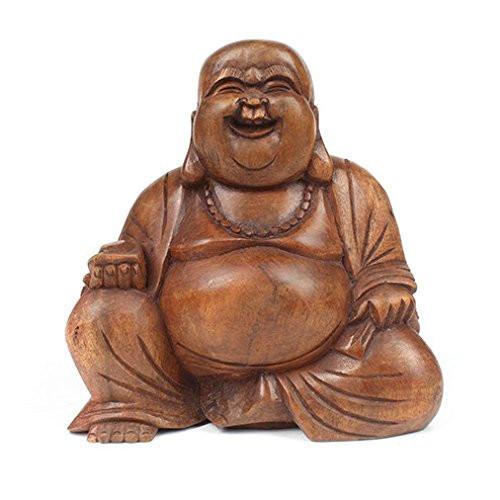
One of the common misconceptions that many people have about Buddha is the depiction often used in the Western world of a fat, bald little man. This depiction is not actually of Buddha, but of a 10th-Century Chinese monk known as Budai.

Budai is almost always depicted as smiling or laughing, in a seated position with a protruding stomach. Budai has been incorporated into Buddhism, Taoism and Shintoism and is believed by many to be destined as the next Buddha after Siddhartha Gautama.

Depiction of Budai

Budai was a wandering monk, and would often be said to predict people’s fortunes. He claimed he was an incarnation of Maitreya, the Buddha of the Future.

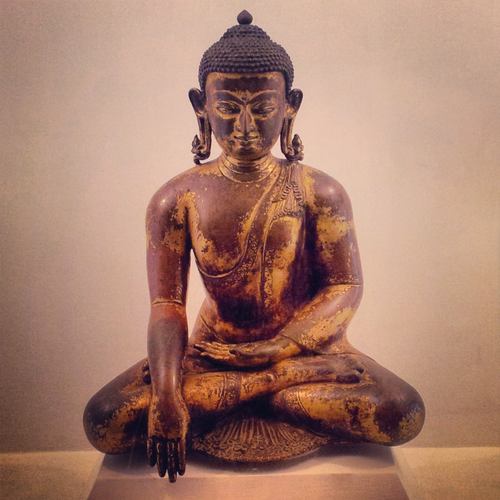
Siddhartha Gautama was a monk who taught in India between the 6th and 4th Centuries BC and is the person on whose teachings that Buddhism was founded. Gautama was believed to have been born in what is now known as modern day Nepal, and some accounts are that he was born to royalty. Gautama renounced his princely upbringing in order to become a holy man.

Depiction of Buddha, Siddhartha Gautama

One could write indefinitely on the intricate details of this topic. There are a number of different variations and some of the details are a little vague, but like most faiths it all depends on what source you research your information from.

This is a bit like the game some may have played in grade school, Telephone Game. It basically involved sitting in a circle and the first person whispers something into the next person’s ear and so on until it reaches the last person, who speaks the message out loud and reveals how the message may have unexpectedly changed.

The background of some of Buddhism’s origins is a bit similar. With the passing of time and modernization, the Western world has come to recognize Buddha as a little fat man who smiles and little else, which is genuinely unfortunate. ☯

Keeping An Appointment = Keeping Your Word

We live in a world that has evolved to limit personal interaction. Almost everything we could ever need can be purchased online, including groceries, clothing and necessities. All of these things can be mailed or delivered, and we never have to deal with someone face to face while doing it. In the meantime, most of us spend the majority of our down time with our noses buried in an electronic device, gaming, checking social media or other online activities.

In fact, I recently ordered my son’s birthday gifts through an online website, based on choices he showed me from a catalogue. I remember thinking that this made my life incredibly easy as I didn’t have to go out to try and find something for him. Such has become the way of the world.

And while there’s nothing wrong with the ease and simplicity that the internet provides, there’s still an expected standard of etiquette that must be followed. Even if you purchase something from a person over the internet, you still need to have the same courtesy, respect and understanding as you would while dealing with someone face-to-face.

I’ll give you an example… My wife and I are members of a few online buy-and-sell websites, which require you to become a member in order to do business. It’s a great tool for selling things around the home that we no longer use. I enjoy it, because I prefer selling an item to someone else who may make use of it rather than toss it out. It allows me to channel my inner KonMari and clear out all the unnecessary clutter from my house. I can almost hear thousands of eyes rolling but I’m sorry to say it guys… There’s definitely something to Marie Kondo’s organizational method. But I digress…

I currently have over a dozen used items posted for sale online. There’s a lot of haggling and negotiating that usually happens. This also relates to the pick-up or delivery of items as well as when the transaction would happen. Because it’s peer-to-peer, this site requires the buyer and seller to work out whether the items will be picked up or delivered, unlike E-Bay and Amazon.

I had a buyer express interest in not one, but three of my items. We discussed a price for the combined items and a time that the buyer would come pick them up. I was tickled pink… Not so much about the few dollars I was making, but the fact I was getting rid of a few items. The expected pick-up was agreed to be on the Friday, which was three days away… A little long in the tooth, as far as these interactions go, but since the buyer planned on taking a number of items, I agreed to reserve the stuff for them and wait until the Friday.

Friday rolls around and my person is a no-show. A major “faux pas” in the peer-to-peer buy-and-sell world. I allowed almost a full hour beyond our scheduled meeting before I reached out, asking if she still intended on showing up. Nothing. I waited until the end of the day and messaged again. Still nothing.

There’s a system in place on most of these sites that allow a person to report someone for “infractions” like no-shows. I know what you’re thinking: maybe there’s a good reason. Maybe there was an emergency or something critical that happened. Maybe so. Here’s the problem: maybe it was nothing. I’ve dealt with a number of people who simply decided, between agreeing and meeting that they were no longer interested and simply didn’t bother to show up. Then they don’t bother responding, since they’re no longer interested.

It’s much easier to ignore someone when you don’t have to deal with them face-to-face. It’s an aspect of our society that is quickly dying out. Courtesy and good communication should have been improved with the advent of the internet, not hindered. But this doesn’t always seem to be the case. Let’s not forget that good communication with each other is the foundation of a strong society. ☯

Those Who Forget The Past Are Condemned…

Look, shit happens! I apologize for being so blunt, but life is short, and we all make mistakes. Sometimes these mistakes are born of stupidity and bad decisions, sometimes they are a result of life in general and are unavoidable.

It’s okay to make mistakes; this is how we grow and learn. But that’s the key element: to learn from it. Otherwise, we’re condemned to repeat the same mistakes, as the old saying goes.

Paulo Coelho once said, “Everything that happens once can never happen again. But everything that happens twice will surely happen a third time.” I rather prefer to think that any mistake that happened once is going to happen again, unless you have an adequate response to prevent it from happening again.

It’s one thing for a mistake to happen, regardless of the source, but if you don’t do something about it, then shame on you. One needs to protect oneself from having the same mistakes happen again. Especially if an outside source is the cause of whatever issue may have caused you strife. ☯

You Gotta Break In The Sneakers

Last night, I had a special opportunity during karate class that hasn’t happened in years.  I had the chance to train with a new student on his very first night of karate.  You would likely ask, “What’s the big deal?”

There’s something special about training with someone when they’ve walked into a karate class for the first time.  Everyone has a different reason for joining the martial arts.  Some do it for exercise, some are looking to learn the art and some have a seriously deluded idea about what martial arts actually is!

But regardless of the reason, there’s a palpable anxiety that people have when they train in karate for the first time.  The mysterious movements, the unknown techniques and the awkward attempts at trying to follow along.  I got to train with a young man tonight who came in with the hopeful gaze of someone looking to learn the martial arts.

He struggled throughout the stretching and the warm-up portion.  Once we started working in pairs, he got some pointers from a few different students and we eventually got to working together.  As his frustration grew while trying to learn some techniques we were working on, I compared his training to buying a new pair of sneakers:

“At some point, you’ve chosen new sneakers, right? Well, even when you find a pair that fit you just right and look good, you have to break them in.  They’re brand new, and the first number of times you wear them, your feet will adjust and shape them to your specific steps and the needs of your feet.  Karate is very much the same.  You have to break it in.  The first few times you do it, it’ll be a bit awkward and it’ll take some time to adjust. But once you do, it’ll feel comfortable. Just like a decent pair of sneakers…”

The class ended with the young man ready to come back the following week.  It’s just one of those things…  When you start learning something new, you have to be prepared to work at it and get used to it before you decide whether it’s for you or not.  You gotta break in the sneakers… ☯