I Swear, I’m Not Stretching The Truth…

Stretching is an important requirement to proper health and fitness, and it continues to amaze me how many people don’t take it seriously. For example, I see a lot of karate students who show up to the dojo five minutes before start of class and jump into it cold. There are significant risks to such a practice, which many students seem to forget. Yes, I know what you’re thinking… In the street, you won’t have time to stretch if you get into an altercation and had to defend yourself. While this is certainly true, we stretch and train our body so that in the event of a cold start such as a street fight, your body is conditioned and muscle memory kicks in.

There’s a significant balance between too much and too little, when it comes to stretching. Have you ever gone a full week without doing any exercise? Notice how everything feels tight and it seems a bit harder to move? This is because over time, your muscles will shorten and tighten up if you don’t stretch regularly. This is why stretching is required in order to stay flexible and mobile and to allow full and proper motion of our joints. In fact, some would argue that stretching is more about mobility than fitness. But I believe it holds some importance in both.

The key thing is to not overdo it. You should aim to stretch for anywhere from about five to ten minutes in order to ensure your muscles are warm and pliable. Not to be mistaken with an actual warmup, of course. But after about a ten to fifteen minute warmup, get to the actual workout. It is actually possible to stretch TOO much, and this can lead to injury, damage to ligaments and tendons, pulled muscles and even hypermobility.

Although most people have some form of hypermobility somewhere in their body, it’s not a good thing. Hypermobility refers to the ability of certain joints to move beyond their supposed range of motion, which is a problem that can cause it’s own batch of complications and issues. So it’s important to find a correct balance in stretching and warming up the body.

Stretching should be done right before a workout, although some argument has been made for stretching afterwards, as well. Depending on the type of workout you do, stretching after the workout can help keep the muscles flexible and help prevent stiffness and injury. But you should start by finding a comfortable corner and stretching slowly, breathing and moving comfortably. Although it can be useful to try reaching a bit, it’s important not to extend beyond what’s comfortable. Stretching can provide a feeling of tension, but it shouldn’t be consistently painful or stinging.

Once you’ve stretched and warmed up all the required muscle groups, you’ll want to slip into a warmup. Warmups can contribute to stretching and mobility, but depending on the workout you’re doing are meant to get your heart rate up and the blood pumping. So it’s important to keep the two separate, in terms of completion. Start small, going no further than what your body can comfortably reach. As you fall into a routine, you’ll likely notice that your flexibility is increasing and you can stretch farther. But don’t push it! It isn’t one of those things where if you reach it once, you can reach it again. Muscle tissues will tighten and loosen depending on how frequently you stretch and exercise and how often you don’t.

If you’ve managed to overstretch or stretch too much, you’ll notice a number of symptoms including swelling, redness and weakness of the muscle in question. In fact, it may even hurt while you’re at rest and you may not be able to use that particular overtaxed muscle for a period of time. At home treatment can include some over-the-counter anti-inflammatory pain meds, resting the muscle in question and using the PRICE method (Protection, Rest, Ice, Compression and Elevation) until the injury subsides. The important thing is not to return to stretching the damaged muscle before its had a chance to heal.

If you hear a sharp popping sound while stretching, feel pain at a level that can’t be tolerated or ignore or are completely unable to move the limb associated to the muscle group, you should seek immediate medical care. You may have torn something that can only be repaired at the hospital. It’s important to use your judgement but don’t try to “tough it out,” and injuries can be become aggravated easily. You can stretch after a workout as I mentioned earlier. But if you do, keep it to a minimum as your body will already be tired and it can be easy to overdue it. ☯
Don’t Judge A Baseball Bat By The Matted Hair…

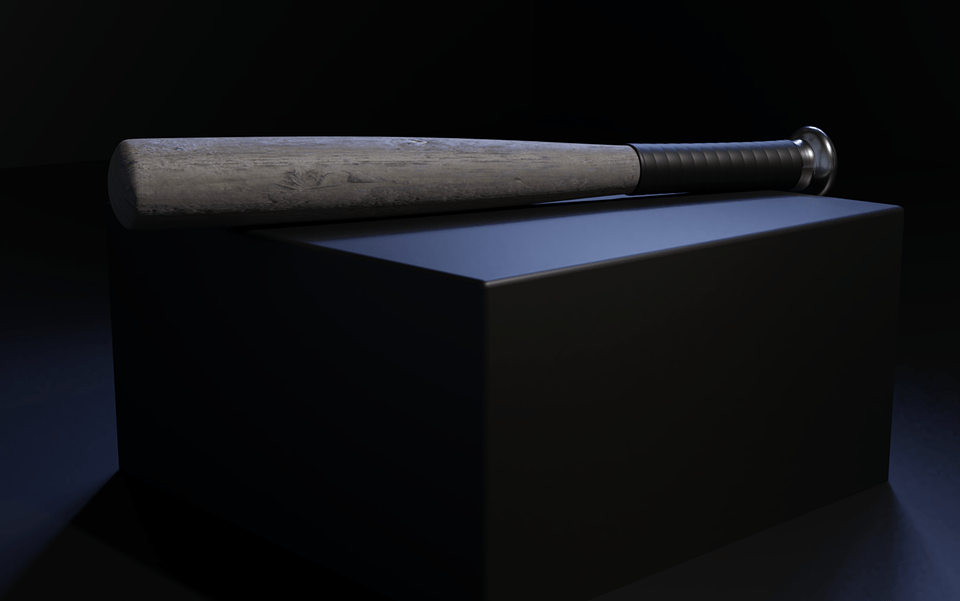
For years, I’ve heard an old adage that says if you’re going to carry a baseball bat in your car for protection, be certain to include some balls and a baseball glove; your lawyer will thank you. The implication there is that the inclusion of balls and a glove will potentially show your intention to use the equipment for their intended purpose as opposed to as a weapon. It’s always made me smile a little when I’ve heard or read it, because my thinking is the SITUATION should dictate if you’re justified, not the tableau that you create around an item you potentially intend to use as a weapon.

The use of weapons is a thing as old as humanity itself, from our ancestors’ humble beginnings with a wooden stick or club to the shiny ol’ red button that world leaders press to annihilate countries. I don’t think it’s a “red button,” actually. I think that’s just something that’s portrayed in the movies. But my point is that humanity has always used weapons in some way, shape and form. And a weapon may be an important tool for one’s self-defence, depending on the situation.

A lot of people think that a weapon needs to be something structured and specific. The baseball bat analogy is a great one because, a bat is intended as an implement for sport. Its use as a weapon is incidental. Or at least it should be. I know some people keep a bat SPECIFICALLY as a weapon. The reason I bring this up is because I’ve often heard people say that a weapons-based martial art is basically useless because you’ll rarely be caught walking around with a sword or a staff. The weapons one trains with won’t usually be readily available.

Depending on where you live and what specific laws outline, it can cause a delicate situation if someone breaks into your house and you’ve run them through with a samurai sword. But setting the legalities aside for a moment, a weapon can be pretty much whatever you put your hands on. Using the example of a sword, I think we can agree that unless you lived in Japan prior to 1868, you’re not walking around carrying a samurai sword nor do you have one readily accessible in your home.

But all the cutting and strike training you take while studying the sword will be just as effective if you manage to wrap your hands around a broom or mop handle and scythe it across your opponent. It won’t gash them open like a sword would but in a self-defence situation, striking with a blade or a stick can potentially yield the same life-saving result. And that’s the important part. That’s the benefit of karate. It’s a weapon all its own and certain movements, blocks and strike are easily transferable to a weapon, should you manage to obtain one in a life threatening situation.

Weapons are a catch-22 because if things get out of hand, they can be taken away from you and used by the very opponent you were defending yourself against. Another great beauty of karate. No one can disarm me of it, so even if I’m empty-handed I always have multiple weapons at my disposal. Obviously, we’re talking about a home invasion or a situation where you believe your life is in imminent danger. One shouldn’t be looking towards the use of a weapon, per se.

The Perfect Hemoglobin A1C

One of the biggest challenges faced by Type-1 Diabetics is maintaining a good A1C level. I’ve been struggling with it for most of my life. In fact, in 2014 I started with an A1C of about 8.4%, which is a level that’s considered to be the beginning of a dangerous level. In this video, I explain exactly what an A1C is and the fact that for the first time in over 15 years, I achieved my goal of dropping below 7.0% with a result of 6.9%! ☯

Just Because It’s Buffed Doesn’t Mean It’s Nice…

Lifting weights is an important part of health & fitness, even if you’re not necessarily trying to bodybuild. And to be clear, weightlifting and bodybuilding are not one and the same; weightlifting is only one of the activities that a bodybuilder performs in order to build upon themselves, with a score of other important factors at play. I’m certainly no bodybuilder, nor do I aspire to be. I use dumbbells and kettlebells freely, as gaining and maintaining true muscle strength is important in the martial arts and in maintaining the bodily strength required to keep healthy.

And before I go too far into my opinionated rant, let me just say that I have a reasonable amount of admiration for those who are able to sculpt and develop their bodies the way you’d see on a sports network. The old-school Schwarzenegger look may even suit some people, although I find it altogether exaggerated and a bit much. And there’s a significant difference between true strength and bodybuilding. In actual strength training, a person will use the lifting of weight to increase muscle size in order to increase strength, and can use that strength functionally. Bodybuilders are lifting weights solely for the purpose of increasing their size. Although there will be increased strength during the process, it may not be as effective as proper strength training.

The purpose of today’s post isn’t to bash on bodybuilding. As I mentioned earlier, kudos to the folks who are able to sacrifice and work hard towards making their bodies the way they want them to look. Today’s focus is on increasing the mass/size of your body and how it relates to the martial arts and proper health. As it just so happens, being a little too “buff” can have some negative and even detrimental side effects on the human body.

Let’s cover off the martial arts aspect, well… just because! I’ve seen a number of heavily-muscled people walk into the dojo throughout my youth, only to walk out after a few classes. And why do you suppose that is? Well for one thing, increased size will DECREASE your flexibility, mobility and range. You’re stiffer and tend to move much less easier. Just to be clear, I’m referring to people who are REALLY muscled. But in a combat art such as karate, flexibility and mobility are extremely important, for obvious reasons. Are there exceptions to that rule? Absolutely. But the really buff people who still have all the flexibility and mobility are VERY far between.

Speed is another. Your punch may have all the strength of those massive arms behind it, but it means nothing if I can casually avoid your fist because you’re moving like melting butter. The bigger you are, the slower you’ll move. Physics says so. You can only move so fast, as speed equals distance over time. The bigger you are, the more time it takes you to cover the distance, hence slower speed. Picture the difference between a 2-door coupe and an 18-wheeler. It’s easier to achieve a specific speed with the coupe because it takes less time to cover a specific distance due to less weight. There’s your high school physics lesson for tonight. But in the event of a real fight scenario where a person’s wellbeing hangs in the balance, expect that I’ll kick in your knee caps while you’re trying to take a swing. You won’t see it, as your field of vision won’t reach over your massive chest, but you get the idea…

And that’s the other problem is the excess size. You’ll be restricted by your own clothing, for Light’s sake! You’ll have less ability to maneuver in tight spaces, leaving the advantage to the smaller, trained fighter. This is why it’s always been a bit of an issue for me, when people automatically say things like, “Look at how buff that person is. I wouldn’t want to mess with them!” Having big muscles is only one small part of the equation that allows you to use them effectively to protect yourself and others.

And now, because I write about Diabetes, let’s discuss how increased muscle mass relates to health. Don’t forget that the bigger the engine, the more fuel is required to operate it. The human body is very much the same way. The bigger you are, the more calories you’ll need to consume to maintain your body on a daily basis. For someone with Type-1 Diabetes, who needs to calculate carbohydrate intake and take insulin dosages accordingly, this can be a significant problem. I’m not saying it can’t be done; I’m saying that finding that proper balance will be all the harder. And you may cause damage in the process, from a Diabetes-standpoint.

The next issue is the toll it takes on the body. Being too muscular is just as bad as being obese. Don’t believe me? Weight is weight, and your skeletal structure doesn’t grow stronger to accommodate your increase in mass. Your bones, organs and vital bodily systems may not be able to accommodate become too buff. Just think of your heart and how much hard it has to work to maintain all the added mass. That’s why bodybuilders will frequently suffer heart and organ issues. Schwarzenegger himself has had heart surgery. That should tell you something.

There’s nothing wrong with increasing one’s muscle mass. In fact, it’s one of those “happy medium” things where lifting weights a few times a week can decrease the chances of cardiac issues while doing it too much will tax your heart. take it with grain of salt. If we’d pay attention to absolutely EVERYTHING that can be harmful, we’d die of worry instead. Ultimately, the point is that muscle mass for strength good/ Muscle mass for size, bad. Especially from the martial arts standpoint. Just for shits and giggles, here’s a commercial from 2011 for Planet Fitness that makes me laugh every time I see it… ☯

This Is NOT The Way…

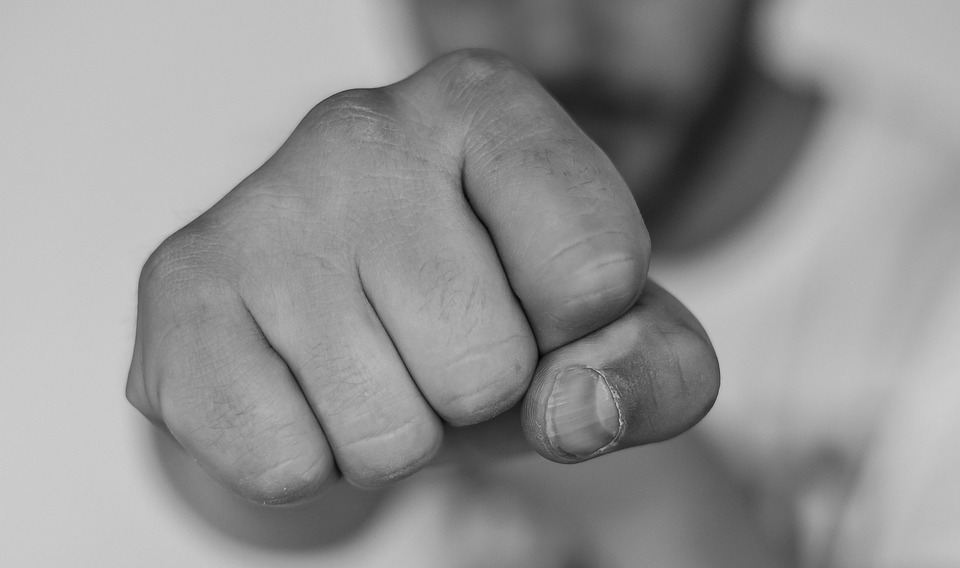
I started watching the Mandalorian a short while ago, so I have the main character’s catchphrase “this is the way,” somewhat at the forefront of my subconscious. Hence the title, in case you haven’t seen the show. But what I’m referring to with today’s title, is the use of force or violence. As a martial artist, people have a tendency to believe that I can kick ass on a whim and at my leisure. I certainly have the capabilities and training, despite the detail that stating that fact doesn’t make me out to be very humble. But humble I am, and my training doesn’t mean that I’m like an action hero who will clear a pub of multiple opponents simply for the indignity of looking at me the wrong way.

The world is a violent place, and there are many people who will make a point of BEING violent for very little reason. And those reasons are generally bullshit, anyway. As a martial artist, I take pride in the fact that I have the ability to protect myself and my loved ones. As a Buddhist, I abhor the idea that I would ever have to use it. And use it, I have. I have the benefit of the fact that for the majority of my life, my violent encounters have been in the line of duty. This certainly has never done anything to soothe the dislike I’ve felt or the memories I carry of every encounter, but it’s an important factor nonetheless.

Unfortunately, I’ve also had encounters that have taken place in my civilian life. And those have carried just as much weight as the ones that happened on the job, if not more so. How does one who believes in the prospect of a peaceful life but trains in a fighting art deal with such a scenario? Never the same way twice, is the first answer that comes to mind. That’s mostly because no two situations will ever be the same. And no two opponents will ever be the same, either. But there are some pretty common misconceptions, when it comes to defending oneself.

There are many reasons why people fight. In many cases, a person feels that he or she has no choice. It may be a question of ego, personality or even honour. Maybe the person just has a shitty personality, temper or outlook on life. Maybe, just maybe, that person is dealing with something in their lives and that something is the final straw and they’re taking it out on you. But the reality is that none of those reasons qualify. If you make the conscious decision to step up to someone and fight them, you’ve already lost. AND you’re in the wrong.

First, let’s examine the concept of self-defence. The term seems to imply that you need to fight someone else off in order to ensure your safety and well-being. Basically, you’re trying to prevent harm to yourself or another. But here’s the thing: that prevention doesn’t mean that you HAVE to fight. That’s what most people seem to misunderstand. You may eventually reach a “point of no return” where you’ll no longer have a choice than to fight, and I’ll get to that. But there are other steps you can take to defend yourself.

Diffusing the situation is a good one. Never underestimate the power of using your voice. Although it may not always be possible to calmly discuss the matter, especially with some liquored up hothead who thinks you were making googly eyes at his lady (true story). But there will be times when you’ll be able to talk your way out of things. The other good one, is getting up and leaving. And I know some fellow martial artists may disagree with this one, but why stick around? If there’s someone there who wants to do me harm, I sure as hell wouldn’t want to stick around.

Sure, some people may call me coward or chicken, but who cares? Know where I am while they’re calling me that? In the safety of my car or home. Away from harm, without broken bones, bloody appendages or criminal charges pending against me for beating the living fuck out of some asshole. But while we’re on the subject of criminal charges, it’s important to know what your rights are and what the laws may apply to your situation.

In Canada, Section 34 of the Criminal Code reads, “A person is not guilty of an offence if they believe on reasonable grounds that force is being used against them or another person or that a threat of force is being made against them or another person, the act that constitutes the offence is committed for the purpose of defending or protecting themselves or the other person from that use or threat of force and the act committed is reasonable under the circumstances.” Section 34, Criminal Code of Canada.

Those are a lot of fancy words, and you can check out the Section yourself to read the before and after, as it can sometimes lend pertinence. But the layman’s version of it, is that if someone comes at you and you genuinely believe that they mean you harm, you can use force in response as long as it’s for your own defence or the defence of another person. They also refer to it being “reasonable under the circumstances,” which basically means you can’t shoot someone in the chest because they try to punch you. But everything is circumstantial to the totality of the situation.

Patrick Swayze had a great line in his movie Roadhouse where he said, “Nobody ever wins a fight.” Kind of ironic, since the movie is all about being a bouncer in a violent bar. But realistically, there’s no shame in walking away. Unless your life or the life of someone else is on the line, fighting just isn’t worth it. Besides navigating the law, which can be open to interpretation, getting into violent altercations will change you in ways you may not anticipate. Peace is easier. ☯

Feel The Burn, But Don’t Ignore The Growl…

In recent months, I’ve been trying to reduce my daily caloric intake in the hopes of slimming down a touch. You’ll notice I said “reduce,” and I mean just that. I don’t allow myself to get hungry and I’ll still permit the occasional snack-based indulgence when I feel it’s warranted. In fact, most research I’ve read has confirmed that this is the best course of action, since denying yourself cravings will usually lead to a slippery slope of binging on junk food. But I digress…

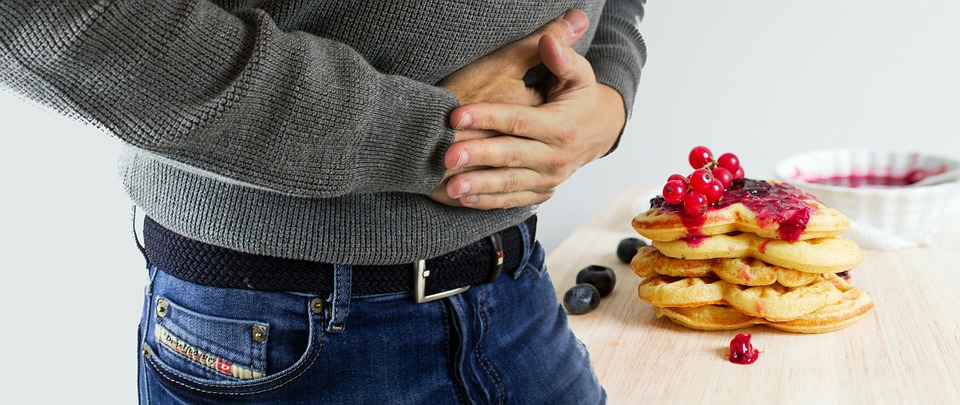
If you work out often and consistently, I’m sure you’ve been there… You’ve got a good sweat going, decent music is blaring on your iPhone, your son is destroying everything in his path… or maybe that’s just me! But suddenly, you feel a hollow gurgling coming from your gut, followed by the telltale growl of hunger. What to do? Do you stop your workout simply to go grab a snack? Out better yet, is it okay to start your workout on an empty stomach? That, dear readers, is the important question!

Speaking strictly from a personal perspective, going into any kind of intense workout on an empty stomach can be somewhat problematic, bordering on the dangerous. After all, depending on the type of workout I perform and for how long, my blood sugars will either drop to the floor or skyrocket. As a simple matter of planning, I usually need to decide what type of workout I’ll be performing before I do it so that I can decide what food (if any) I should be consuming prior to feeling the burn. But the question I posed is whether or not it’s “okay” to work out on an empty stomach.

There’s a prevailing theory out there that if you work out on an empty stomach, your body will be forced to burn fat as fuel and you’re more likely to lose weight through the burning of fat. This is a concept known as fasted cardio and like everything else in the world, its effectiveness has been debated back and forth by various studies over recent years. In fact, according to an article posted by HealthLine.com, a 2016 study showed an increased fat burn and a lower daily caloric intake. But the same article also points to a 2014 study where there was no measurable benefit to doing so.

One of the big problems with working out on an empty stomach is that your body may not necessarily use fat as the next fuel source. An article posted by WebMD explains how the body may lean towards burning the sugars in your muscle tissue, which will actually lead to sacrificing some muscle mass in order to try and lose fat. And both articles agree that even IF your body burns through some fat as energy, it’ll likely just adapt to doing this by storing MORE fat when you finally do eat.

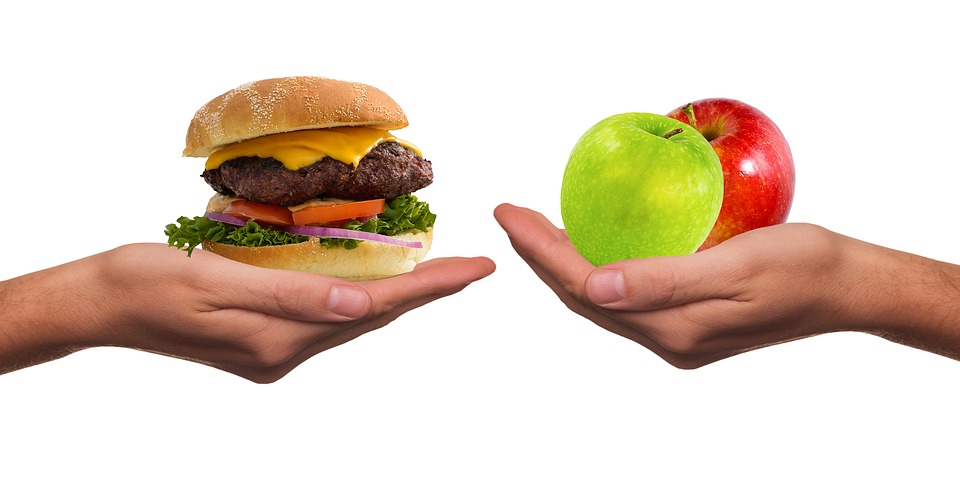
As with most things in life, it’s all about balance. You want to try and consume whole foods that are healthy and prepared at home as opposed to foods that are processed and high in sodium and unhealthy fats. Knowing your body and how your blood sugars respond to specific workouts will go a long way towards helping to ensure you get maximum bang for your buck during your workout. A fasting workout also means that your energy levels and stamina will be much lower, causing you to be far less effective DURING your workout. The flip side is to keep your portions small, which will ensure that you don’t get nauseous during an intense workout from a full stomach.

Personally, I’m not a fan of jumping out of bed first thing in the morning and hammering at it. I’ve done it. But I hate it. But if you keep your portions small and healthy, you’ll have the fuel you need to power your engine and you’ll still hit the fat-burning threshold once you’ve depleted that fuel. I’ve always said that there are no shortcuts or easy steps to losing weight. One needs to be patient and work towards it. And whether you choose to work out on an empty stomach or not, remember that you’ll need to eat in order to replenish yourself within the couple of hours following the workout. Check your blood sugars before and after your workout (and during, if you simply don’t feel “right”), stay hydrated and don’t forget to consult your medical practitioner if you’re starting a new workout routine and you aren’t sure if it’s right for you. ☯

Two Conditions By The Same Name Are Not Created Equal…

You know, I’ve often written about the things I don’t like being said to me or assumed about me, in relation to my Diabetes. I think this is a common issue for most folks; everyone has SOMETHING they don’t like to hear about their specific health condition, lifestyle, choices, etc… But one of the most common misconceptions people have about Diabetes is the difference Type-1 and Type-2 Diabetes. There are a number of other “sub-types,” which I covered quite a while back in my post Everyone Has a Type… but Type-1 and Type-2 are the most common and the most “well-known.” I have that in quotations because it’s amazing how little the general population actually KNOWS about Diabetes.

Every once in a while, I write a fresh post to explain the generalized difference between Type-1 and Type-2. The population at large seem to confuse and even combine the two on occasion, and the questions and “suggestions” I sometimes get from people can border on the ridiculous and dangerous. I once had a guy who claimed to be some sort of holistic healer, who claimed that he could heal my Diabetes by having me sustain myself on a diet of nothing but cruciferous greens and no insulin. Hmm, sounds FASCINATING but I wanna live…

To give you the general difference so that this post doesn’t wind up being a mile long like they usually are, Type-1 Diabetes is a condition known as “insulin-dependent” or “juvenile” Diabetes (although I haven’t heard it referred to as that last one in a long time). It happens when a person’s own immune system attacks the body’s insulin-producing beta cells, leading to the required insulin injections. Although some Type-1’s will continue to produce insulin in small amounts, eventually the pancreas stops producing insulin altogether. There is NO cure (yet), only treatment. It’s a lifelong condition and usually takes hold early in life due to its nature, although some people are diagnosed much later (my father was diagnosed as Type-1 in his 50’s).

Type-2 Diabetes is a much different creature. It usually has to do with your body’s ability to respond to insulin the way it should. It usually has to do with the body’s insulin sensitivity, which is important to remember since most people attribute the condition to obesity (even if that’s only a possible factor and not a definite one). Perhaps the pancreas doesn’t produce the amount of insulin required or the body simply doesn’t respond to it appropriately. That’s the gist of Type-2. It can be treated in a number of different ways, including diet, exercise, oral medication and in some cases, insulin injections as well. Although there is no cure for Type-2 Diabetes, its effects can be reversed through proper diet and exercise so that oral medications are no longer necessary. Type-2’s CAN potentially progress to become Type-1.

It can be frustrating when someone offers the “miracle cure” they saw an ad for on FaceBook or tells you to “just eat this or that” in order to cure the condition. The take home lesson here is that there is currently NO cure for Diabetes. It’s a dark passenger that stays with you for life. And if someone tells you they have Diabetes, don’t be shy to ask what type they have. Most of us don’t object to reasonable questions and you may learn a thing or two that will prevent putting your foot in your mouth. ☯

The Difference Between The Dojo And The Street

There’s a significant difference between training in the dojo and getting into an actual conflict on the street. For one thing, the dojo should (hopefully) be a controlled environment and includes a gi or other garment that’s inherently designed to promote proper movement. And dojos usually involve training barefooted. So what happens when you get into an altercation where your movements may be restricted by street cloths and shoes or boots? In this video, I briefly explain some of the issues you may face when trying to use karate while dressed for street instead of the dojo. ☯

All The Accoutrements…

When people think of Diabetes, they usually associate its treatment with the injection of insulin. Or should you happen to have Type-2, an oral medication such as Metformin or something similar. But realistically, if you’ve had Diabetes for several years or more, the safe bet is that you’re now taking medication beyond the basics that people associate with Diabetes. This isn’t necessarily to treat something that’s already an issue; sometimes it’s simply a preventative measure, which can be important in order to try and lengthen one’s lifespan and increase one’s health.

This doesn’t necessarily involve medications, either. There are a number of specialists, medical professionals and appointments you need to keep in order to maintain your body and health. I suppose that I can start with the basics, since every Diabetic needs to do it anyway. Testing one’s blood sugar. If you’re on pump therapy with a CGM, you can get away with testing three or four times a day. You’d think CGM would circumvent this need, but you actually need to test frequently in order to keep the CGM properly calibrated. If you’re NOT a pump user and take manual insulin injections, well… I used to test anywhere between five to twelve times during a normal day. But testing my blood and taking insulin is the first requirement.

Next, I take a multivitamin. Depending on who you ask, some people believe a multivitamin is either a daily “requirement’ of their diet or they believe that they get everything they need from a genuine diet and that you shouldn’t NEED a multivitamin. Well, the jury is still out on whether a vitamin supplement delivers any benefits or not. In fact, most studies straddle the fence in terms of whether it’s useful or not. My family physician has always recommended that I use a multivitamin and I’ve stuck to that for years.

Basically, a multivitamin contains a cocktail of the daily vitamins, minerals and essentials that can help boost your diet. It’s no secret that the every day person’s modern diet often falls short of providing ALL the nutrition one needs. Plus, one thing to consider is that B vitamins can help reduce stress and anxiety, which is a nice plus. Of course, I get a massive boost of B vitamins every day from the energy drink I have in the morning. But I digress…

The next item on my list is Ramipril. This is an oral medication I take everyday as a preventative way of maintaining my kidney function and blood pressure. I don’t know about y’all, but my kidneys are rather important to me! And the issue with Diabetes is that uncontrolled blood sugars will damage the blood vessels, which result in lowered kidney function. High blood pressure will also affect the kidneys, which is why Ramipril is a nice “catch all” in order to maintain kidney function. Do I have high blood pressure? No. Except for when I catch Nathan doing something he isn’t supposed to. But prevention can often be more effective than treating the damage.

And then, we have Crestor. This is an oral medication used to treat high cholesterol and prevent heart issues through the lowering of the same. Unfortunately, I can admit that for a few years running, my cholesterol has been on the high side. Crestor helps to reduce the aforementioned cholesterol, thereby ensuring better cardiac health. During my last specialist appointments, I’ve come back down to normal levels. It was mostly diet. Exercising and positive diet change can almost eliminate the need for this medication, although it can be useful as a preventative measure as well. Even more so than my kidneys, I kinda need my heart to keep going’…

I get a yearly physical. This is also a requirement of my current job, though I can easily appreciate the preventative nature of this, as well. A yearly physical allows a person to catch any developing conditions before they become a problem. I like to think that I know my body pretty well, but when you consider that chronic headaches can be a sign of brain cancer, it stands to reason that getting checked once a year even if there’s nothing “out of this world” can be beneficial.

Last but not least, we have the specialists. Besides seeing an optometrist, I also see an ophthalmologist for examination as well as my eye injections and I see my endocrinologist every six months to a year, depending on where I’m at with my A1C’s and my pump usage. That’s just the usual stuff. Job requirements have also required me to visit neurologists and other specialists I’m sure I simply can’t remember.

If all that was needed was a quick injection of insulin every day and testing one’s blood, Diabetes management would be a breeze. But in reality, it’s an intricate mosaic of pieces that need to be held together in order to provide the colourful image that is me! (I’m sure my friends and family are peeing themselves a little from laughing, right now) ☯

Sinfully Sweet…

It’s difficult to be a good person. No, let me correct that… It can be exceptionally EASY to be a good person, but society, culture and our own personalities MAKE it difficult to be a good person. I recently read a post by a fellow blogger named Jason Youngman who, if you aren’t doing so already you should follow. He wrote a post entitled Dignity Remains Steadfast where he discusses the nature of vice and it’s vicious effect on people. He ends the post with a comparison that I find extremely fitting where, and I’m paraphrasing here, the sweetness of candy is a slow pleasure that doesn’t show the damage it does until your teeth begin to rot.

It got me to thinking about the nature of vice and how we behave in society, a point which I don’t usually address beyond an immediate situation that may have occurred in my daily life. But that in itself is a form of vice. After all, most people are geared towards living in the immediate moment and don’t usually consider the consequences of what’s to come. And from a Buddhist’s standpoint, I’ve decided it would be a good idea to share my thoughts on this subject with you.

Just to be clear, when I refer to vice, I don’t mean the iron clamping device used by a trade’s person or the nickname given to certain American police units. A vice is what’s referred to as a bad habit, behaviour or character trait that a person may have that is considered wrong by their respective society. That last part is important since depending on where you live and what culture you happen to be a part of, something can be a vice in one culture but not another.

Here’s the reality: no matter who you are or what kind of lifestyle you live, you have vices. Maybe you chew your nails. Maybe you’re a smoker or a drinker. Maybe you tend to judge a book by its cover. These are things that can be considered vices and are negative character aspects that we navigate daily life without usually even acknowledging. This is mostly because we don’t consider them to BE bad habits, even if they may have a negative impact on ourselves or those around us.

Let’s take cigarette smoking as an example, and this is a discussion I’ve had with many a friend who actually smoke. The average smoker (if there really is such a thing) believes that their use of cigarettes is a vice that affects them and only them. It’s not such a bad thing, because they’re not hurting anyone but themselves. Right? Makes sense? Here’s the problem: the eventual health complications caused by your smoking will inevitably lead to a strain on health care systems and your family, especially the if they need to provide care for you when you develop terminal illnesses brought on by your smoking habit.

Further, there’s the pollution aspect from smoking, even if you do it outdoors, the littering from all the cigarette butts left lying around and the financial constraints you’re placing on your household due to the excessive rising costs of cigarettes. I have no idea what the current cost of a pack of cigarette might be at the moment, but I’ve plenty of people complain that it’s a lot. Now, I’m not trying to use my blog as a platform against smoking. To each their own. This post is meant to be about vice, so I’ll move things back in that direction. But smoking is a good example of a common vice that many people partake of.

Another good example is sin. I was raised in a Roman Catholic household. And if I’m being honest, just about everything that someone did was considered a sin in some given way, shape or form. I may be exaggerating to an extent, but it sure felt that way as a child. Now, Catholicism differentiates vice and sin as the habit of sin and an individual morally wrong act, respectively. And they list their seven deadly sins or vices as Pride, Envy, Wrath, Sloth, Avarice, Gluttony and Lust. Does this means that when I shave and pay attention to personal grooming in the morning, that I’m guilty of Pride? If I go out to a buffet dinner with friends, am I indulging in Gluttony? Perhaps.

I use Catholicism as an example, because it’s what I grew up around and it’s familiar. But most organized systems of faith have a list of vice and/or sinful actions that they consider particular. Buddhism does as well, in fact. So if I avoid those seven indulgences, does this mean that I’m free of vice as a Catholic? And do I still have vices from another culture and/or religion’s perspective. This is the problem with vice. It can be insidious and not always noticeable in the every day.

One thought I’ve always had on vice and something I discussed with Jason Youngman, is how does it fit in the perspective of someone who is unaware of it? For example, if a person grew up in a household where there was no faith-based upbringing, are they genuinely guilty of vice? What does sin mean to someone who knows nothing of it? I think that perhaps some vices (not all) may not be viewed as such to certain people, depending on their circumstances. Some vices should just be common sense; rudeness and criminal behaviour should be a given, and every person should know to avoid them, regardless of upbringing, faith or education. But such is what makes these things a vice in the first place: the fact that people don’t acknowledge them as common sense

He made a very good point in stating that regardless of religious or faith-based upbringing, the majority of households will ensure that their children are raised on some level of morality, be it a personal or system-based one. He also pointed out that it’s necessary to acknowledge the consequences of our actions, whether we believe our actions are vice-related or not. From a legality standpoint in Canada, the Criminal Code is pretty clear on the fact that ignorance of the law is no a defence. The same can be said from a moral viewpoint, as well.

This can be easily tied in to Buddhism, as the Four Noble Truths describe that very same thing. Whereas the first Noble Truth explains the existence of suffering in the world, the second Noble truth goes on to explain that we are responsible for that suffering. The third Noble Truth covers the fact that we need to bring an end to this suffering and the fourth Noble Truth explains HOW to do so, which is described as being by following the Noble Eightfold Path.

The Noble Eightfold Path includes Right View, Right Aspiration, Right Speech, Right Action, Right Livelihood, Right Effort, Right Mindfulness and Right Concentration. Through those practices, one can achieve peace and enlightenment, although the latter can be fleeting and difficult to achieve. The point is that one needs to live well in order to contribute to the overall good in the world and help to eliminate suffering.

I could go into detail and describe each of the Eightfold Path, but I think this post has gone on long enough. I want to keep y’all engaged and reading, not using my blog as a substitute for warm milk. The take home lesson here is that we all have vices. We may not always recognize them or acknowledge them as such, but even the smallest ones will have a negative impact if left unchecked. Like the flapping of a butterfly’s wings that eventually cause a ravaging storm on the other side of the world, actions have consequences. ☯