Time To KID Around, Part 3 (The Religion Aspect)

I’m going to start out this post by saying that it isn’t intended to judge or denounce anyone’s personal choices in relation to their children, nor am I trying to say that any one school of faith is better than another. Hey, I’m a man of pretty deep faith myself. But in today’s charged climate of becoming offended at absolutely anything and everything, I feel it’s important to point out that the content of this post is my opinion only. Although I’m always open to other people’s comments and/or questions, please keep them respectful, should you happen NOT to agree with my perspective here. As the last and most controversial post in my KID trilogy, religion continues to play a pretty dominant role in some households.

While faith can be a good thing, forcing one’s kids into it can have negative and even detrimental effects. When I was a child, I had Catholicism forced down my throat. My mother had gone to the seminary during an earlier chapter of her life. I had aunts who were missionary nuns and my Grandmother was about as close to the term “Bible thumper” as you can get without becoming offensive. One of the bigger problems is the fact that an hour-long sermon can be pretty damned boring to a small child, especially when they don’t understand what’s going on. It’s even worse when it’s forced upon you.

My Father worked shift work and I’ve never seen him set foot in a church for anything but a wedding or a funeral. But even on days when my brother was sick and my mother had to stay at home, I was still expected (forced, actually) to jump on my bike and go sit through church on my own. My mother would even go as far as asking me what the topic of the day’s sermon was, ensuring that I paid attention and stayed awake. Kids don’t like having things imposed on them at the best of times. Is it any wonder that I stepped away from organized religion as soon as my mother allowed me the choice?

The irony is, I have a deep love for the Holy Bible. I own two copies. Have you ever read that thing? There’s a reason why it’s one of the all-time most popular books in the world. If I had been permitted to explore the aspects of Catholicism on my own, there’s no telling what level of interest I would have developed during my formative years. Instead, I turned away and renounced any association with organized religion, much to my family’s dismay.

I found Buddhism almost by accident as a byproduct of my martial art’s training. What drew me to it was the peace of mind, body and soul. Also, the acceptance of everyone else’s faith-based perspective is a winning aspect as well. My wife’s family is of a different faith, but it’s not something that ever caused a problem between the two of us. And the important thing is that neither faith will be imposed on our children. Not everyone will necessarily agree with that perspective, and that’s okay. But I believe it’s important for someone to FIND their faith and understand what it is they’re getting into. I’ve seen too many young ones who are introduced into a school of faith without properly learning the basics concepts of birth, life and death.
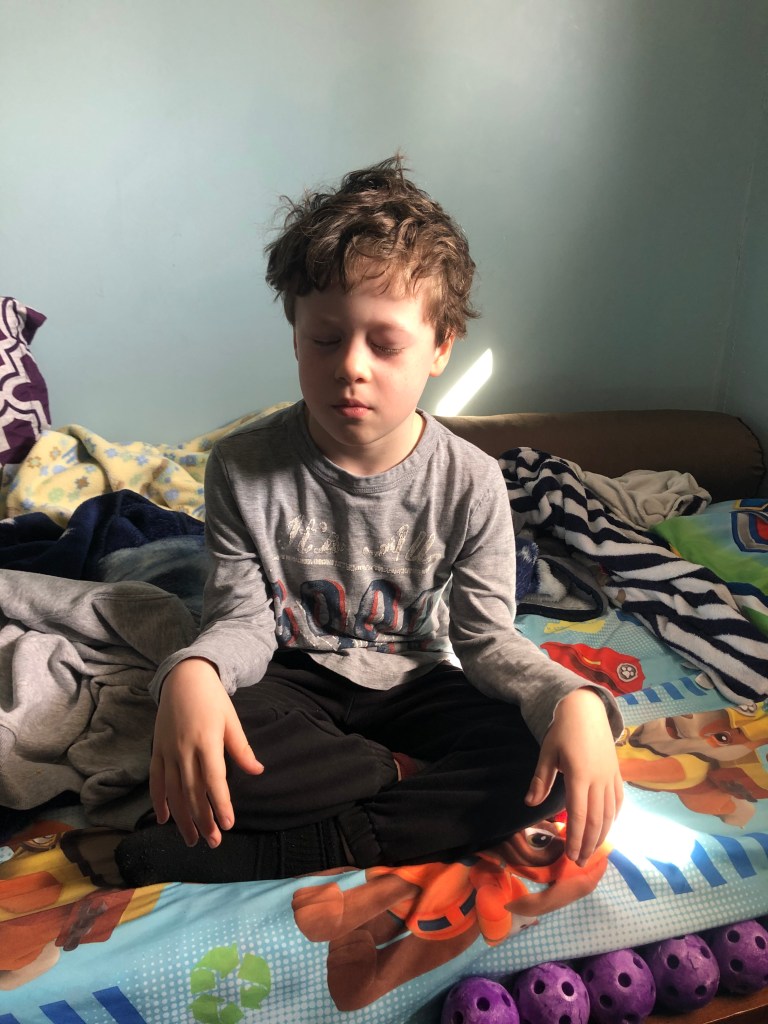
Nathan, pretending to meditate

I feel that religion falls under the same category as martial arts; you shouldn’t force your children into it. Rather, be the example, guide them in the right direction and teach them right from wrong. No matter what your religion, if you let them choose and show them the way you’ll be surprised at how easily their curiosity will lead them to come to you. We’ve grown and evolved to the extent that although faith is still an important aspect of modern society, the right to choose is just as important. As I bring this trilogy post to a close, I feel it’s important for me to repeat what I mentioned in the opening paragraph. This post isn’t intended as a judgement against people’s choices or how they deal with the topic of religion with their children or within their household.

Rather, it’s simply meant get one’s wheels turning in relation to all three of the main topics that my blog is based on: martial arts, Diabetes and Buddhism. My son has seen me meditating on numerous occasions and has occasionally asked what I’m doing and why. Sometimes he imitates me, sometimes he just sits there and watches. Perhaps eventually he’ll get curious enough to ask deeper questions. Until then, as with all things related to our children, patience is key. ☯

Time To KID Around, Part 2 (The Diabetes Aspect)

Have you ever tried to explain to a young child what Diabetes is? Not an easy task, especially when you take all the good, the bad and the ugly into consideration. My biggest fear when Nathan was born was the possibility that in a few short years, he would be diagnosed with Type-1 Diabetes himself and would have to deal with many of the same difficulties that I had. Since Type-1 Diabetes does involve an inherently genetic component, it’s a very real fear and one that I wasn’t looking forward to having him deal with.

Those fears were somewhat put to rest a year or two ago when we had him tested and found no issues with his immune system and insulin production. We were warned that there was still a few years of risk involved, but as it stood he was free and clear. Now, if we can be so lucky with his younger brother, Alex, I’ll be a happy camper. Dealing with the disease affected and altered my childhood in ways that I can’t help but make me wonder how life might have been different for me if I HADN’T been diagnosed. But I digress…

I don’t think I need to point out how many moving parts and components there are to the effective daily control of Type-1 Diabetes. It can be overwhelmingly irresistible for a young child to see all the equipment and electronics involved and they’ll no doubt want to touch, see and play with everything there. The important part is to be honest and not try to sugar-coat any of the details (see what I did there?).

In Nathan’s case, I’ve always been very honest and explained everything in plain language. One of the unexpected benefits to that level of honesty, is that he’s been exposed to seeing blood drawn since the day he was born. I consider this a benefit because he doesn’t have the same fear of blood that most other children do, be it mine or his own. He’ll acknowledge pain, of course. But if he’s bleeding, the blood in and of itself isn’t an issue for him.

I remember dating a girl who already had a son that was about Nathan’s age now. And if he’d scrape his knee and a bit of blood would show, he’d basically blow up and have a panic attack. Although one can understand that children view things differently than adults, even I have to admit that it was a bit much. That’s why I’m happy that Nathan has grown to be desensitized to certain things as a result of having a Diabetic father.

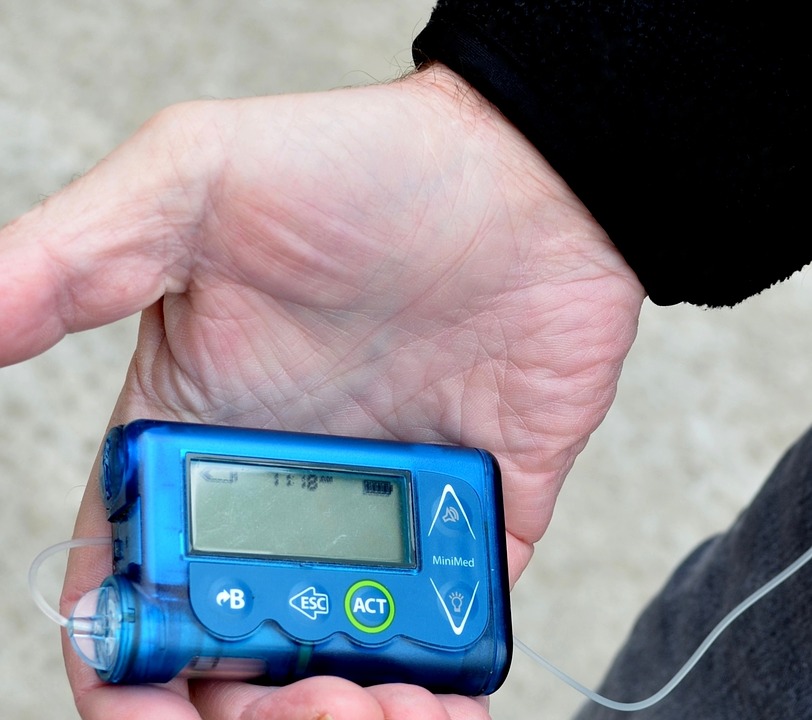
The biggest challenge I’ve face with Nathan, and now his brother Alex, is my insulin pump. When you have a baby sitting in your lap and he’s looking around and grabbing at everything in sight, an infusion set can be a temptation for those little hands. It took a bit of time as well as trial and error, for Nathan to understand bot to touch “Daddy’s Ouchy,” and to leave the pump alone.; something that I am now working at making Alex understand, as well.

The important thing, as I mentioned earlier, is to use plain language and explain things as they actually are. Nathan has seen photos of a pancreas, he knows it helps with the regulation of glucose in the blood through the release of insulin and he’s aware that my pancreas no longer produces insulin, which is why I need to have it artificially injected through the pump. He’s also made his peace with the fact that certain fast-acting sugared goods are for Daddy only, when my blood sugar drops. He’s not a fan of that last one, but he gets it.

Nathan has held all of my Diabetic equipment and supplies in some way, shape or form and has even had the opportunity to press buttons on my pump (with my guidance) in order to see what everything does. By doing this and ensuring his understanding, there’s less risk of him sneaking into my desk and messing around with my Diabetes equipment. But the nice thing is that although he doesn’t like them, Nathan has less fear of needles than the average kid, since he’s been around them and has watched me injecting myself since he was born. Educating is always better than forbidding. ☯

Time To KID Around, Part 1 (The Martial Arts Aspect)

Children can be a wonderful addition to the household and they certainly add a touch of colourful chaos to the overall home dynamic, which is well-demonstrated by my son Nathan’s usual behavioural issues. Today is the first of a 3-part post on children as they relate to the three big pieces of my life: martial arts, Buddhism and Diabetes. As a general rule, I’ve never been a fan of trying to force or coerce children into the martial arts, usually preferring to train kids that actually WANT to be there. But when it comes to those first few, formative years when kids don’t really understand the difference, the best one can usually hope for is to show them little pieces, bit by bit, and hope that they’ll have an active interest. But it doesn’t always work out that way.

When Nathan was a toddler and started scooting around under his own steam, he started imitating the karate movements he’d see me practicing, and started to wrestle and smack me when we’d play on the floor. As some time elapsed, we started to broach the subject of self-control and trying to differentiate the difference between play fighting and harming someone. Not an easy task, when it involves a small child. But critically important towards making the child understand that this self- control is important towards ensuring they don’t grow up to be a bully.

Nathan and I in 2017

One of the more fun aspects has been sparring. Nathan loves to roughhouse and will often try to jump me as soon as I come down to his height, even when we may be doing something completely unrelated to martial arts. It’s a nasty habit I’ve been trying to break in him, but lately he’s been enjoying putting on the gloves and practicing some techniques with me. The photo above shows some playing around that we had started doing a few years ago.

But in recent weeks, I’ve been focusing more on his ability to block and strike, keeping his head up and his eyes open and not allowing himself to simply flop down to the floor when a strike comes towards him. He’s been doing pretty well, and one can’t blame him for squinting his eyes or lowering his head when someone with five times your mass is coming at you with a large, gloved fist. But teaching him balance, footwork and the ability to keep his eyes open so that he can see what his opponent is doing (me) has been going well.

Father and son, hitting the mats

Some people question the idea of having a small kid spar, but control is of the ultimate importance when teaching a young kid something like sparring. Control on the kid’s behalf and control on the teacher’s behalf, as well. It stands to reason that I can’t belt him with solid shots the way I’d do with any of my adult counterparts in the dojo, but he’s still learning a lot of individual skills that will not only apply to karate but any sport or physical hobby he may choose to pursue as he gets older.

Sparring with Nathan is excellent training for me, as well. His random, chaotic movements keep me on my toes and ensure a certain level of development as I work to try and block effectively when I have absolutely no clue where he might swing next. It’s been a great combination of fun, sweat and learning, albeit without him necessarily realizing that he’s being taught something. Maybe he’ll eventually snap out of it and realize, “Hey, this is great! Show me more, dad…” Until then, I ensure that there’s no pressure or coercion towards karate on my part so that he isn’t soured by the idea. ☯

Never Back Down, Except When You Do…

Most people like to act tough, especially those who are trained to fight. There’s a “never back down” mentality that kicks in when someone aggressive is challenged, but real fights never quite turn out the way we see it in the movies. For example, one of my favourite movies that just came out recently (recently, being a loosely-used term) is Creed II. The movie has the kind of inspirational tone one would expect from a Rocky spinoff; the protagonist is defeated by a larger, stronger opponent and is laid up in a hospital with severe injuries. Once he recovers, he goes on this wicked training montage to train and build himself back up before defeating the antagonist in an awesome rematch.

It’s very 80’s, which means I absolutely love it. Despite the unrealistic nature of it. Most people who suffer such injuries will usually call it quits and step away from fighting such opponents. Even in the most traditional of styles, we see a sort of expectation that you’ll hammer forward, even when the odds are against you. I’ve never been one who much felt this way, which makes sense when you recognize that I live my life trying to eliminate suffering and propagate peace. But even Sensei used to say, “If you’re going to fight, make sure you win…” I believe he was mostly referring to competing, which our school never did (officially). But it certainly applies to how we train.

I’ve always been a firm believer in drills. Correction and repetition are important in order to establish muscle memory and make it more likely that your body will react properly in a “real fight” scenario. But you’ll notice that the majority of dojos practice these drills by stepping forward, stepping into the opponent or meeting an attack head on. And there’s nothing wrong with that, but it’s also important to perform drills where the practitioner is stepping BACK. Most schools or dojos don’t recognize this, but it can be extremely important if you find yourself in a real fight.

Stepping back while performing drills holds many benefits. The first one is that it can be helpful in better positioning yourself to block an incoming attack. Sometimes a strike may be close enough to be effective against you without leaving you any room to block properly. Another benefit is that you may need to back away in order to set YOURSELF up for a particular attack. Although one needs to recognize that a real fight scenario likely won’t leave you with enough time to “plan out” an attack, a preferred technique that you’ve worked extensively may need some setting up.

The last point is that there is no shame in stepping away from a fight. If you can avoid the fight altogether, that’s always the best option. But if it means protecting yourself or someone else, avoidance isn’t always an option. This is where backing up or “tactically repositioning” becomes important. Maybe you need that little bit of space to examine and reevaluate the situation in order to make a proper decision. When you get right down to it, backing away isn’t cowardly but quite smart, in terms of finding a way to win your confrontation.

Never back down? Well, I’m not saying you should always quit or give up. You should never give up. But backing down is not the same as giving up. I’ll always be more than happy letting some ‘roided douchebag think he’s the tougher one, if it means I walk away uninjured and safe. As long as I can do without it being at the expense of someone else’s safety and/or wellbeing. The lesson here is that in very much the same way as a karateka should be ambidextrous in his or her techniques, said techniques should also be practice stepping in or stepping back. ☯

Can There Be Hatred In Honor?

The title of today’s post poses an important question: Can you have honor while simultaneously hating another person/thing? The easy answer would be no. No you can’t. And the reason is quite simple. At its core, honor suggests a level of respect that you can’t achieve while hating something. This brings us to the question of whether you can respect a person or thing while hating them, but I don’t want to fall too far down the rabbit hole. Rather, the subject of today’s post is to focus on a strange phenomenon that I’ve seen in the martial for decades. I’m talking about the tendency to dislike and/or hate styles that are not our own. And it happens much more than one thinks.

I first ran into this phenomenon in the late 90’s, early 2000’s when I met a guy who had mutual friends within my small group of associates. We got to chatting one night and it was discovered that he also studied karate. I was a brown belt at the time and somewhat in the prime of my physical abilities, such as they were. But we got to discussing karate in greater detail and he revealed that he studied a style called Kyokushinkai. For those who may not be familiar with this style, it’s one that was developed and founded in 1964 by Masutatsu Oyama and loosely translates as “the ultimate truth,” making it less than a century old and one of the youngest styles of Japanese karate, with the exception of its own off-shoot styles.

When he asked what style I studied and I answered Uechi-Ryu, he asked if that was a style descendent from Naha-Te. I replied that it was and he sniffed and hitched his pants up and said, “Kyokushinkai incorporates Naha-Te as well…” He went on to explain the premise of his style involved constant, full-contact training to overcome the fear of being struck. I was always one to prefer learning to effectively block to PREVENT being struck, but that’s just me. But he showed a visible level of disgust at the fact I would study anything but the style he was in, and his bravado showed that he thought very little of MY karate.

Now, don’t get me wrong… Kyokushinkai is an effective style of karate, despite the fact that Master Oyama created it by bastardizing and combining elements from Shuri-te, Naha-Te, Tomari-te, Goju-Ryu, Shotokan and Shito-Ryu. Quite a colourful soup bowl, which rather goes against the whole premise of “One life, one love, one style” that most Okinawan karate practitioners believe in. But the style even practices Sanchin, one of the basic katas associated with my style, proving that most styles of karate share a background or ancestry that can be measured.

There’s a big difference between feeling one’s style is the better one and openly disrespecting and disliking another. I sincerely felt that the other martial artist disrespected my years of training and hard work with his belief that his style was “superior” and “the only real school of karate.” The boasting and the bravado went against what I was taught as a martial artist and what’s more, ended the friendship before it truly began. He might have been a great guy, overall. But when the first thing you have in common becomes a thorn in your foot, it’s a little hard to carry on.

Truthfully, one needs to understand that there is no such thing as a “bad style.” Simply a style that’s better suited to the practitioner. There are plenty of reasons why I would never practice Tae Kwon Do, but it can be easily argued as an effective martial art. In fact, one of the few combatants who genuinely rang my bell but good, was a practitioner of TKD, and he was more than quite good. The same can be said of any style, unless you refer to one of these jokers “knocking” people out by waving a hand at them… That shit’s crazy! But I digress…

A good analogy that I’ve enjoyed using to explain this to others, is one that I’ve used in martial arts circles and in my professional life. Imagine you’re installing a new bathroom in your home and the time has come to run water lines into your shower. In order to do the necessary plumbing, you’ll contact a plumber versus an electrician. By the same principle, you’ll contact the electrician to install your lighting and electricity as opposed to letting the plumber do it. Both are trained professionals, capable and necessary in their respective fields. But what they do is inherently different. Neither one is better than the other; just different.

This analogy applies to the martial arts, as well. All schools, styles and types of martial arts are different. No one style is better than any other; just different. I’ve been studying Uechi-Ryu for 33 years, this year. But I’ve trained and practiced in Kobudo, Kenpo, Kendo, Judo and Tae Kwon Do. No one will ever convince me that any of those styles are better than mine. But I can respect that they’re just as good, in their own way and offer a different perspective into an art I’ve studied for most of my life.

This is why it’s so important to respect other schools and styles and to understand that if you tried it and didn’t like it, it isn’t because it was inherently bad. It simply wasn’t for you. This is without including the whole McDojo element in the equation, of course. But if one is to have true honor and respect, then genuine dislike and hatred for other styles can’t be something one permits oneself to feel. After all, this isn’t a bad, old-school kung-fu movie. Dojo rivalries were never really a thing on Okinawa, and that’s where karate was founded. It would be reasonable to think that it should exist today, either. ☯

Because It Can’t All Be About The Meat…

In the past year, I’ve tried a wide assortment of meat alternatives and veggie based alternatives that I never would have considered, even just a few years ago. I still favour my Mushroom Swiss Burger from FatBurger and I can’t see myself ever swaying from it. But I would be lying if I said that vegetables aren’t loaded with a wide variety of health and nutritional benefits that make adding them to your meal a good idea. I usually favour a cruciferous option, like broccoli or brussel sprouts. But I seem to be the only one in the household who likes them. I know brussel sprouts are pretty universally hated, but sprinkle a bit of cheese on some broccoli? Fuggedaboutit…

As I have a firm belief in the balance of things, I like to point out how there’s inherently a good and a bad side to all things. We already know that vegetables can provide vitamins, minerals and nutrients that some other foods may not. And there’s certainly the benefit of feeling full for longer that comes with having plenty of green on your plate, steering one away from over eating and helping with the reduction of your total daily caloric intake. But what about veggie-based meat alternatives?

A balance can be important if you’re trying to control say, oh I don’t know… your carbohydrate intake so that you can maintain better blood sugars… From a fitness standpoint, vegetables are important for a variety of reasons besides what they provide your body for building and healing muscles tissue and there are also some vegetables that will help you to sleep and digest better. If you’re looking to replace some of the meat in your diet with an alternative, it would be helpful if you gained all these benefits in the process, right?

If we get to the meat and potatoes of it (see what i did there?), some of the meat alternatives mentioned in the opening paragraph may not be all they’re cracked up to be. And this is where the BAD side of things comes in. I’ve written about this before but as I’ve tried different things, I think it’s pretty important to recognize the potential pitfalls of trying to replace everything in your diet with a vegetarian alternative. Here’s a short list of things to bear in mind when purchase veggie-based meat alternatives at the supermarket:

  1. They’re Loaded With Preservatives: This is the first and probably the top one. Anything you eat that’s been mass-produced and sold at the supermarket will go through some sort of processing that will involve preservatives in some given way, shape or form. Without getting into the specifics surrounding potential pesticides used for crops, you can be certain that real vegetables and real cuts of meat won’t have all these preservatives, making them the better option. There are a number of negative effects to the over-consumption of preservatives, including some forms of cancer. No, I’m not trying to say that eating these meat-alternatives will give you cancer! Simply that excess preservatives have been long found to be bad for the body. Moving on…;
  2. They’re Also Packed With Salt: I’ve often written about the importance of checking the nutritional label when eating something packaged. People rarely consider the amount of sodium they may be eating when consuming something “healthy,” and portion sizes are often not proportionate with how much a person would actually eat. I learned this lesson the hard when, in an effort to reduce the amount of carbs I consume in a day, I was starting my morning with a mug of chicken broth. Sounds like a warm, reasonable way to start the day. But the portion size is usually about half a cup of vegetable broth, which accounts for roughly 25% of your daily sodium intake. Once I’ve guzzled down a full mug, I’ve already packed on well more than half of my daily intake of sodium and it’s first thing in the morning. And speaking of carbs…;
  3. They’re Full Of Carbs: I was pretty excited about six months ago when I found a package of buffalo “chicken” bites that were made with cauliflower. They tasted even better, which made me believe I had found a healthy alternative to eating platefuls of buffalo bites made of chicken, which happens to be my next food addiction after burgers. Then I realized that despite being made from vegetables, the bites had almost double the amount of carbohydrates than traditional chicken bites. It probably didn’t help that they were battered. Not so great for a Type-1 Diabetic who’s trying to control blood sugars and the amount of carbs he’s taking in!
  4. They Can Cost A LOT: Processing and packaging food that’s been prepared in any particular given way gets costly, and that cost is usually reflected in the item’s price point. It’s made all the worse when you have to make something look like something else. Have you seen the chicken nuggets made from vegetables? I swear, I wouldn’t be able to tell the difference, based on appearance. The point is, a small box of cauliflower buffalo bites will usually cost about as much as a traditional box of buffalo chicken bites, making them ridiculously costly.

So the big question is, are these veggie-based alternatives better for you? From an overall and Diabetic standpoint, the answer is a resounding NO. You’ll end up taking in as many carbohydrates, if not more than your traditional versions and you’ll pay more for it, to boot. Watching your sodium intake is quite important when you have Diabetes, as proper kidney health is always a concern at the best of times. The only way to balance the scales (except for the cost aspect) would be to eat significantly less of the alternatives, which could potentially leave you feeling hungry and unsatisfied.

On the flip side, if you’re okay with eating small amounts at a time and you’re looking for a veggie-based alternative snack, they can be okay. So long as you bolus correctly for them and take the sodium into account. The long and short of it (let’s be honest, I always go for the long…) is that you’re better off having yourself a plate of carrot or celery sticks with a touch of ranch dip, a hot bowl of broccoli with cheese sprinkled on top or even a bowl of boiled Brussel sprouts with a touch of melted butter and pepper. Any of those will be far healthier, satisfy you and make you feel full for longer, whether you have it as a snack or part of your meal, and you’ll get all the included benefits without any of the preservatives. ☯

Spatial Awareness

The world is a dangerous place, and it’s made all the more dangerous by people who ignore their surroundings and have no sense of spatial awareness. This can apply to a martial arts context as well as in everyday life. In the video below, I share my thoughts on that very thing. ☯

In Memoriam

Siblings can be a Light-send, despite the occasional rivalry. Not only do they share blood ties, they can be your backup in times of trouble, a welcome celebrater in times of joy and a tandem member of the same generation with whom you can grow up and share the memories of life with. This makes it all the more tragic when one of these siblings leaves this life before they were rightfully intended. This also brings me to my older brother, Stéphane.

On this day 30 years ago, in the early morning hours, I was awoken by my mother who told me that we had to get dressed and get to the hospital as my brother was comatose and would likely die before sunrise. Being as I was only 13 years old, my concept of death held no comfort for me and in fact, simply told me that I would be losing my only sibling and never see him again after this visit. This was mixed with the unhealthy belief I had developed from years of seeing him “on the brink,” only to come out of it and be released from the hospital a few short days later. The first night of my life that I was wrong would prove to be the last night of his.

We arrived at the hospital shortly after midnight. We were met at the elevator as we exited on my brother’s floor, by our family doctor and long-time friend, Dr. Edward Furlong. Some readers from New Brunswick (if there are any for this post) may recognize that name as he was also the Minister of Health and subsequently, Minister of Education for New Brunswick during the first decades of the 2000’s. He greeted us solemnly and walked us to my brother’s room. We could hear his moans floating down the hallway, which elicited my first and only question of the night: “I thought he was in a coma?” The doctor explained that he was, but that some unresponsive people could still make sound, under certain circumstances.

I walked into a scene that until that point, I had only seen on television. My brother was lying on his back with his head slightly elevated. He had tubes coming out of both arms, his nose and all about his head. There were multiple machines with displays, beeping and moving with a measurable rhythm. And once or twice every minute, a low moan of pain escaped from my brother’s unpainted lips. The scene immediately melted any illusions I had for his survival, as similar scenes I’d scene in movies were usually one that accompanied death, soon after. I broke into tears at the realization that this genuinely was the last night I would see my brother alive.

My parents discussed providing me with a private room so that I could potentially get some sleep as it was expected to be an extremely long night. My parents held fast to the belief that my brother would pull through, so they had unfounded expectations I would be going to school the following day. I was brought to an unoccupied room on the other side of the hospital’s wing, a fact which would become important, later in the story. I took off my shoes and slipped under the starched hospital sheets. Although it was the middle of the night and I was exhausted, I obviously couldn’t fall asleep.

I was pretty much a sobbing mess, thinking about all the times when I’d been frustrated and angry with my brother. Instead of focusing on all the good memories, thoughts of all the times we fought or disagreed came to mind, generously sprinkled with the number of times I said harsh or cruel words to him. I instantly regretted each and every one of them and swore a silent oath to make it up to him if I were ever given the opportunity, painfully unaware the chance would never present itself. I was visited frequently by either of my parents, Dr. Furlong and the score of nurses who were keeping an eye on me. I couldn’t hear my brother from where I was, but the constant visits kept me on edge as I kept expecting every person to be the one who would ultimately bring bad news.

Short minutes after the 3 a.m. hour I finally fell into a peaceful sleep, which would be immediately interrupted by my father who had come to announce that my brother had passed away, almost to the very minute that I had fallen asleep. At the risk of sounding creepy, my mother’s side of the family has been often known for strange coincidences such as this. But even the nurse who had been keeping an eye on me was able to confirm that I had fallen asleep almost to the minute that my brother finally passed. I like to think of it as his way of sharing some much-needed peace as he finally obtained his.

The weeks that followed were a blur and quite surreal. At my young age, I had unfortunately attended funerals before but never for a member of my immediate family. During the funeral viewings over two days, I sat a chair next to his coffin and never left his side, painfully aware that once that lid was closed I would never set eyes on my older brother again. It was the greatest sense of loss I had ever felt in my life to that point, for a much needed life lesson that nobody wants. Once the funeral was over, my parents and I took a trip up the Gaspé coast to get away for a bit. It was a pleasant trip, but there was always something to remind me that our family unit was a member short. And always would be.

So, why would I choose to write about this today? Well, besides the fact that today marks the 30th anniversary of his death (despite not being something one celebrates) it also dawned on me that I usually observe this day privately and I’ve never written my thoughts on how that night impacted me. And I believe it’s important. I’ve written about my brother before, and I can tell you that his personality and willingness to fight to live and survive was passed on to me. He is the biggest inspiration in my life in relation to fighting the odds, no matter what. I attribute my ability to never give up and think positive to him. He was certainly more of a teacher to me than he was ever aware.

My brother Stéphane (Left) and I

At the end of all things, his cause of death was heart failure, despite the multitude of health issues that could have done him in sooner. There is great irony in the fact that despite being a young man with the biggest heart, his heart was what finally gave out. I guess that makes sense as his heart was always what he used most. Even now, 30 years after the fact, I’m still brought to tears while writing these words. Considering I’m not the most emotional dude on the block (some rocks show more emotion than I usually do) this goes a long way towards showing the impact he had on my life, for as short a time as we were together.

Hold your loved ones close, dear readers. I often say that life doesn’t care about one’s plans. And we never know when we may lose someone near and dear, or when this life ends for ourselves. It warms my heart to know that my son Nathan now has a younger brother, Alex. Whether he realizes it or not, it’s comforting to know that he’ll have some backup, should anything ever happen to my wife and I. Even now, I pray you’re resting in peace, brother. Whether in this life or the next, I’m confident we’ll see each other again. ☯

Letting Me Off My Leash, Free-Range Diabetic

I don’t think I need to explain that people take most common, everyday things for granted. I experience this a lot because despite the advancements I’ve lived through in the past 38 years, it’s difficult to move around without a SIGNIFICANT amount of supplies. The fact that I’m fed up of it likely makes it sound way worse than it is. But eventually, a guy gets tired of carrying around a man purse just so that he can run some errands throughout the morning without concern. The “for granted” aspect comes in because most people fail to recognize how lucky they are to be able to just step out of the house with abandon.

A week ago, I decided that I would sit through a specific bus route that I would be using for work. This was so that I could time out my entry into the city in the mornings without the concern of being late. Alexander was napping, Nathan was gone to school and my wife was hard at work in front of her own computer, so I felt it was a good opportunity to go out for an hour or two. I started to pack my usual shoulder sling of supplies, when a wave of impatience struck me and I decided to go in a different direction.

I tested my blood. Perfectly normal with no insulin “on board.” Good. I took some sinus medication so that I wouldn’t suffocate through the wearing of a mask in public for a couple of hours. Excellent. That shit’s supposed to last a few hours, anyway. I had my wallet and identification, and I grabbed a face mask and stepped out the door. I waited a matter of minutes at the bus stop and after a 22-minute bus ride, I was in the downtown core and stepping into the local shopping centre.

Not my mall, by the way. I didn’t want to be the creepy dude snapping photos in the mall.

I spent about an hour and a half downtown, walking around and browsing through some of the shops before grabbing the bus for the return journey. My blood sugars didn’t bottom out, I didn’t die and I didn’t find myself needing anything that I would usually pack and drag along. It felt really nice, being able to just step out of the house and go somewhere. It felt “non-diabetic.” I’d like to say it felt normal, but I’ve had Type-1 Diabetes for so damn long that being Diabetic feels normal to me.

I’ve managed to compress what I carry throughout the course of a day into one small, single-shouldered sling and it usually contains the following:

  • Fast-Acting Carbohydrates: I favour jellybeans as they seem to work fastest for me;
  • Nasal Spray: I’ve had some mild sinus issues since childhood and occasionally need a spritz. Wearing a face mask also makes it harder to breathe;
  • Blood Glucose Meter: Besides the fact that my insulin pump seems to be a temperamental bitch who screams at me every couple of hours despite smooth blood sugars, frequent blood sugar testing is still required to ensure the proper calibration of my CGM. Plus, should there be an issue with the CGM, I need to have the ability to properly ascertain my blood sugar levels; and
  • Extra Supplies: This is a broad one, but it can involve anything, including spare pump supplies, extra insulin or added lancets and strips. There can be a lot more, depending on the situation.

Most of the time, it’s just for when I go out. But realistically, when I travel to Saskatoon overnight, I often opt for something small and portable to carry. Considering I travel up, get the injections, sleep it off then drive right back down the following day, I make a point not to pack a huge suitcase. There are no nights out on the town, requiring extra clothing or special stuff. But when I make a point to stop and take notice, I really never leave the house without bringing a whole shwack of crap! This comes from years of situations where I’ve developed a “better to have it and not need it” mentality, as it relates to Diabetes.

It felt nice to be out for a few hours without dragging a bunch of stuff. I almost felt normal, walking among people. Note that I said “almost.” Besides, as I said earlier, I’ve had Diabetes for so long that it seems normal to ME. I can hear some friends thinking, “Shawn? Normal…?” Come on, guys! Give me a break! I’m about as normal as I’m ever going to get. But seriously, if you’ve ever had a friend text you to randomly go for coffee or you’ve decided to go sit through a movie on a whim, appreciate that freedom for what it is. There are so many things that a Type-1 Diabetic needs to consider before leaving the house that it almost makes it tedious to do so. Don’t take the little freedoms for granted. Sometimes, they’re the best ones. ☯

Not All Karateka Are Created Equal (The Invisible Armor)

One of the problems with telling people you do karate, besides what I wrote about a few days ago in relation to having others prove how tough they are, is the fact that the average person will assume you’re able to kick ass. The truth is, people join karate for a variety of reasons, including but not limited to wanting to lose weight, get in shape, improve their physical and/or mental state and potentially learn how to fight or defend themselves. Honestly, I’ve even seen some folks who join karate with the only goal being to socialize and be around other people. Granted there are a lot of better, easier ways to socialize than joining something as complex and intricate as karate.

But so long as your goal isn’t to intentionally harm others or turn yourself into a bully, the sky’s the limit. One of the beautiful things about karate is that there’s something for everyone. But the reality is that not all of us are top-tier fighters who can fend off any opponent. Movies and television have also done a pretty good job of spreading this belief, when you see a protagonist fighting off large groups of assailants with reasonable ease and skill. But none of that is realistic and if I’m being honest, only about one percent of people who join martial arts will become proficient at the skills they study.

That may seem like a bit of a narrow view, so allow me to explain with an example. Some years ago when I was still in New Brunswick and training in Sensei’s dojo, one of my high school teachers decided to join. I won’t guess at her age and it would have been rude to ask, but I knew she was of at least one generation older than myself. Obviously, since she was a teacher of mine when i was in high school. But suffice it to say that she joined for the physical and mental improvement aspects and had no physical constitution to allow her to participate in combat or even light sparring. Although she no doubt learned SOME skill while training with us, it would be doubtful that she would have the ability to fight off anyone but a much weaker assailant.

The truth is that this will apply to quite a number of karate students, regardless of how much they train. And if we’re being honest here, everyone kind of has their “specialty.” Some favour forms, others like pressure points or weapons, some may enjoy sparring and fighting. Most students will become reasonably proficient at the specialty they enjoy and as much as it would be nice to say that all karateka are jack and jill-of-all-trades, this is rarely the case. Although I’m quite fond of forms and absolutely LOVE doing kata, I consider myself a sledgehammer as compared to a scalpel. I can brawl with the best of them, but I’m not so great with the specific, fine-muscle techniques.

My point behind all of this, and the message is mostly for the non-martial artists, is that just because someone studies karate or any other martial art, that doesn’t mean that they’re good to go and can pull an Ip Man and fight off a crowd of enemies in one sitting. And the realities of actual fighting versus what the majority of people see on television also make such things impossible. So, if someone you know tells you they study karate, don’t bother to ask, “Could you kick THAT person’s ass?” Because the likely answer will be, “No. No, I can’t.” ☯