The Bystander Effect…

Ah, bystanders… If you’ve ever been present during a fight in school, you know that there’s usually ALWAYS a group of looky-loos who will stand around and watch things play out. Even if one of the combatants happen to be a bully and seems to be overwhelming the other, people will usually just stand and watch as opposed to stepping in and helping or breaking them up.

This phenomenon is known as the Bystander Effct, and in simple terms it refers to a social theory where people likely won’t help someone (even if they need it) if there are other people there with them. Part of the concept is that most people are likely to believe that someone else will step in, making them hesitate to step in and help, themselves. These days, the big problem is that the majority of people are obsessed with whipping out their fucking cell phones and filming what they see in the interest of posting it on the internet as opposed to helping their fellow man/woman.

According to an article I found posted by Psychology Today, “the bystander effect occurs when the presence of others discourages an individual from intervening in an emergency situation, against a bully, or during an assault or other crime. The greater the number of bystanders, the less likely it is for any one of them to provide help to a person in distress. People are more likely to take action in a crisis when there are few or no other witnesses present.”

The article goes on to explain the perception of diffusion of responsibility and what influence society has on a person. Also, some people may choose not to react in response to fear, believing that intervening could lead to an increased level of danger against themselves. Depending on where you live, some people also have the fear of liability if they intervene, with the prospect of getting sued, buzzing at the back of their minds. While many places in North America have no legal obligation for someone to step in and help, there are places that have adopted “duty-to-rescue” laws, making it illegal to simply sit and watch if someone is in distress.

Last but not least, as I mentioned earlier, we live in world of social media and the internet. This has had an increased impact on the Bystander Effect, since most people are more likely to whip out their phones and record an incident than get involved. Another aspect is many people will avoid getting involved BECAUSE they fear it being documented on the internet. Chicken and the egg. But I if you Google “bystander effect,” you’ll find tons of examples where someone has been in distress and even in mortal danger, where others have simply recorded with their phones or sat back and done nothing.

So, how does one break this spell? Well, the ideal thing is to assume you’ll be the only one to do something. Then do it. Even if that only means using verbal intervention and yelling at the aggressor. As I always say, anything is something more than nothing. But from strictly a moral standpoint, it’s important for one to consider that if one was stuck in the same situation as they’re witnessing, they would likely appreciated someone helping out. Could there be legal ramifications? Yes, there could. But at the end of the day, if it means everyone gets to go home to their loved ones, any other challenge can be overcome. Food for thought… ☯️

Cobra Kai, Season 4: A Review (Mild Spoilers)

Look, I’ve often written about some of the issues I take with how martial arts are portrayed on the big or small screen. And those opinions still hold true but this doesn’t mean that I don’t fully enjoy watching martial arts on television. Especially when the story is sound and the plot is solid. With that in mind, I thought I would take a few moments to share my thoughts on Season 4 of Cobra Kai, which my wife and I just finished binging this weekend.

First, I’ve provided my opinion on previous seasons of Cobra Kai in previous posts, so even though some of what I’m about to say will be repeated, it’s still relevant. When I first heard about this show, I was beyond excited. After all, the last time a genuine instalment of the Karate Kid came out was 1994, with Hilary Swank playing the delinquent student who couldn’t stay out of trouble. It was an interesting take on the series, considering the original Karate addressed the classic scenario of the new kid being bullied, ten years prior to that.

When I first watched the Karate kid, I recognized a lot of what Daniel Larusso was going through in myself. Although not so much when the film came out, my formative years were chaotic at best, being bullied and considered an outcast (sound familiar?). When Cobra Kai came out, I was happy to see that Larusso had found some success in his life, including a beautiful wife and kids (one of whom is Type-1 Diabetic in real life), lovely house and prosperous business, he overcame the apparent issues of his youth and made life work for him. This resonated with me deeply.

Then, I faced a speed bump in that only the first two episodes were available on YouTube unless one signed up for YouTube’s streaming service. Unfortunately, I wasn’t willing to subscribe to YET another service, since I already have a few on the go. Lucky for me, Netflix picked up the series a short while later. I started watching it and enjoying every episode. I think it was an interesting turn of events to see Johnny Lawrence, big, bad-ass bully in the 80’s having fallen down on his luck and became the one with the struggles.

I would never wish ill on any person but there’s something to be said for karma. I know that some of the guys who used to bully me have gone on to face the same karmic consequences as the show’s anti-hero. But I digress… The concept and the storyline was sound and it only took one or two episodes for my wife to get on board and I started the series over from the beginning so that she would be caught up.

Season 3 left off with some really important cliffhangers, including long-time enemies joining forces to overcome a common foe, something you might not see in reality. It also featured episodes where Larusso returned to Japan and Okinawa and put an old rivalry to rest by sparring with Chozen and acknowledging that their respective karate comes from the same roots.

In making my way through Season 4, I could clearly see the struggle of two teachers with very different philosophies trying to keep their students on the straight and narrow. It would be similar to a plumber and an electrician trying to teach a group of apprentices BOTH sets of skills; it can be done, but the difficulty would be immense. Some students would adapt better than others and both groups would go on to compete in the All Valley Tournament, which I won’t get into detail as it may spoil a bit too much of the storyline for those who haven’t yet seen it.

The season finished on a curious note, with Larusso appearing once again to team up with another old rival. It will be interesting to see how Season 5 plays out. That being said, let’s examine a few of my pros and cons for this show. It stands to reason that it IS a show and total realism can’t and shouldn’t be expected. The storyline is somewhat sound, considering I’ve known dojos that demonstrate similar rivalries as depicted in the show.

One aspect that really gets my hackles up, is the fact that we see a number of newly-minted karate practitioners who had never donned a gi before, learning karate and suddenly getting into these long, drawn out fights with their peers within weeks of starting. Considering karate takes YEARS to become proficient, this is definitely an unrealistic expectation for anyone studying unless they have previous training and experience or have done some other martial art.

We see this effect in Samantha Larusso, the protagonist’s daughter. She had been studying karate with Larusso throughout her childhood before taking it up again. And as I’ve recently realized, it can be very much like riding a bike. Tori, one of Cobra Kai’s top students, had some previous training as well before stepping into the Cobra Kai dojo. But then we see some of the less-athletic students who, just a short while prior, were getting their asses handed to them becoming proficient in a short period of time and holding their own. Right. Okay, moving on…

All in all, it is a fantastic show with some great writing and evokes definite feelings of nostalgia in old dogs like me. Including karate into the mix is simply icing on the cake. If you’ve never seen the show, I highly recommend it as something simple and easy to binge, with the seasons running on only about a dozen episodes. ☯️

A Stroll Down The Dojo Memory Lane…

I was communicating with one of my readers and fellow bloggers yesterday (you know who you are) when I was reminded of my old dojo. Not “my old dojo” as in, where I used to train. No, I mean “my old dojo” as in, where I used to TEACH. That’s right, most of you know I practice karate by virtue of mentioning it in almost every post (did y’all know I practice karate?). But many of you may not have known that for a short time, I actually had my own dojo open. Some may assume that having practiced martial arts for over three decades, it would only make sense that I had a school open. But the reality is that teaching is a very particular beast and one that not every practitioner undertakes. In fact, I’ve known some fellow black belts who have been studying as long or longer than I have and have never taught. It happens.

At some point, a couple of years before I joined the Force, Sensei received an influx of requests for children to join the club. Although we accepted anyone who wished to learn, our teachings were a bit strict and rough for some younger children and Sensei thought that opening a second, separate dojo would be a good idea. With three current black belts (besides Sensei) currently training in the main dojo, it was agreed that I would undertake the project and take in these new students. I would come to understand years later that it might have been more productive to have a younger practitioner attend to the kids’ dojo, since they would “potentially” be more in tune with their students needs. But I was being offered a chance to open my own dojo and I leapt at the chance.

I was pretty excited to get to the dojo that night and even more excited to see how many students I would have coming in the door. More than a dozen children of varying ages were waiting for me with their parents nearby. It was a pretty slow first night, considering I had to cover off the basics and discuss dojo etiquette, as well as get all the kids registered through their parents and get certain forms filed out, etc… I still felt it went well and I was looking forward to the next class. Honestly, that first week flew by without too much difficulty and I thought I had found a niche in the form of teaching these young students. I would discover soon after that I was wrong…

You see, there’s a HUGE difference between the concept of teaching adults and teaching children. I’ve taught adults a LOT in my three decades of karate. For the most part, when an adult walks into a dojo they’re choosing to be there. I mean, I suppose it COULD happen that an adult would join karate because they’re being told to do so but I’ve never seen it. One can also expect that they’ll join for a number fo specific reasons relating to their health, weight-loss, wanting to learn a new skill or defend themselves. With children, they usually fall under two categories: they asked to be join or they are being MADE to be there by their parents. The unfortunate reality is that the majority fall under the latter category.

Another issue that I’ve noticed is that when you get an adult who joins and wants to learn, they’ll usually do everything and anything that’s required of them, even if they consider it boring or stale. Children don’t jive with that concept. In fact, for the majority of kids the curriculum needs to be kept dynamic and exciting. It needs to be fun or their eyes will start glazing over and you’ll “lose the crowd.” This is especially true of those kids whose parents have forced them to join and didn’t want to be there in the first place. It wasn’t my cup of tea but I could have learned and adjusted to this concept, given enough time. It turned out to be the parents who did me in…

After the dojo had been open for a period of time, some of my students were ready to start grading for their yellow stripes. For any non-practitioners out there, my style carries a yellow belt but for most students, the yellow belt is reserved for children and young practitioners who need room on their belt for growth over a number fo years more than their adult counterparts. Long story short, since I had never issued grading before, this was done under the supervision of my Sensei. Unlike many other schools out there, our students don’t have the luxury of testing simply by virtue of the amount of time they’ve been with the dojo. It needs to be a combination of how long you’ve been training, attendance and actual proficiency in the required techniques.

By virtue of this, not all of my newly-acquired white belts were tested for their first yellow stripe that night. While Sensei assisted in grading the students, I kept the ones who wouldn’t be testing busy. I know had a ranking system within my dojo, which should have been a good thing. Seniority can be an important aspect of karate, especially when taught in the Western world. This is because it gives the other students someone to lean on and aspire to besides the Sensei. I thought things were going significantly well for the next couple of weeks despite the fact that I certainly wasn’t made for “having fun” in the dojo. I had fun training, learning karate was fun in and of itself, but playing games and having a loud, boisterous class was weighing on me as it didn’t fit into the neat, compartmentalized image of karate that I had developed in my head.

Then, a cauldron of resentment and jealousy began to rear its ugly head as the parents of a few select students caught me before the start of class to discuss why their child hadn’t received a yellow stripe like many of the others had. I made the mistake of indicating that it was because they hadn’t been tested, which I thought would explain things. Much like a doctor who will explain something medical with the plain idea that it would explain everything, I assumed that provided an adequate answer. Instead, it added fuel to the fire in the form that the parents demanded to know WHY their children hadn’t been tested. Letting them know that they hadn’t yet acquired the level of skill required to grade for their stripe did nothing to assuage their concerns.

Within the next couple of weeks, I had a number of parents basically threaten to remove their child from the dojo if I didn’t give them a yellow stripe. This is actually a phenomenon that happens among child and adult practitioners. Some adults are pretty good at becoming petty and failing to realize that just because one has been training as long as a counterpart, it doesn’t mean you’re ENTITLED to the same belt. I had always made a silent promise to myself that a student would never receive a grading unless they’d earned it. I’m proud to say I’ve kept that promise, but it came at a cost. Once I explained that a student would not be tested for any grading until they had developed skill that would justify the rank, I began losing students. Within the next calendar month, the number of students I held and their dwindling attendance became almost non-existent.

Once it became abundantly clear that it was beginning to cost me more to run the dojo than I was making, I had to make the difficult decision to close my doors. Sensei was understandably not happy with this, but I didn’t feel I could bring myself to compromise my values and the value of the art I practiced JUST to satisfy the parents belief that “I’m paying, so you work for me,” or the jealousy their children may have felt at seeing their peers receive rank where they didn’t. I think it speaks to an ever-increasing concept of self-entitlement that the world has been developing for decades. In traditional karate, there are no participation trophies. You don’t get rewarded JUST for showing up. You want the belt, you gotta do the work.

Ultimately, I closed the doors of my dojo and we were able to absorb some of the kids into the main dojo (the ones who wanted to stick it out to learn and grow). Back then, I had often juggled with whether it was a good experience or a bad one, a good choice or a terrible one. The decision I finally came to was that there really aren’t any BAD experiences; it’s all in how we interpret them and what we learn from them. But I’ve come to learn that this is the direction the world has taken. People feel they’re entitled as opposed to working towards earning. And although I’ll be the first to admit that you gotta show up, you also gotta do the work. I would never attempt or continue to teach someone otherwise.

I never opened another dojo, after that. It was a combination of how the first one had gone down, mixed with the fact that once I joined the Force, I was transferring every few years, which I felt would be unfair to any practitioner who walked into my dojo. How bad would it suck to have someone commit themselves to my style, only to have me say, “Sorry, guys. Duty calls and I’m moving away…” only a few years into their training? That wouldn’t be fair to someone who genuinely wants to learn a style. But it also serves an important lesson to anyone looking to get into karate. If you walk into a dojo and the focus is money and EVERYBODY grades and passes when there’s testing, it may not be the school for you. I prefer to have closed my dojo than teach a watered-down version of my art to accommodate the ones who feel entitled. This is how an art remains true and pure. Food for thought… ☯️

An Interesting Perspective…

I found the above illustration a short while ago and it spoke to me. I like how the illustrations shows the giant carrying everything material on his back and is attempting to scoop up pieces of nature to keep “feeding the machine.” At least, that how I’M interpreting it… And if you look closely enough, you’ll see a person, presumably human, stand beneath the giant firing an arrow up at it, suggesting that not all people are the same as what this short message indicates.

I don’t believe myself to be perfect in any way, shape or form and I can honestly say that I see myself in some of the things I write about. But i see some of the truth in this illustration with how one need only to step out their front doors to see everyone who isn’t actively behind the wheel of a car (and a few who are) with their faces firmly buried in the screen of a smart device. People associate success with the accumulation of things, instead of the accumulation of memories and experiences, which is a shame since life has far more to contribute than how big your house is, or how expensive your car is. Food for thought… ☯️

An Update…

It’s a snowy, Saturday morning here in Regina but the good news is the boys actually let my wife and I sleep in until 9:30, this morning. I never thought I’d reach a point in my life where that was considered “sleeping in,” but here we are, hence the lateness of this post going up. Considering we usually try to get the whole family to go out on Saturdays for whatever errands we may need to run, I’ll try to keep this brief.

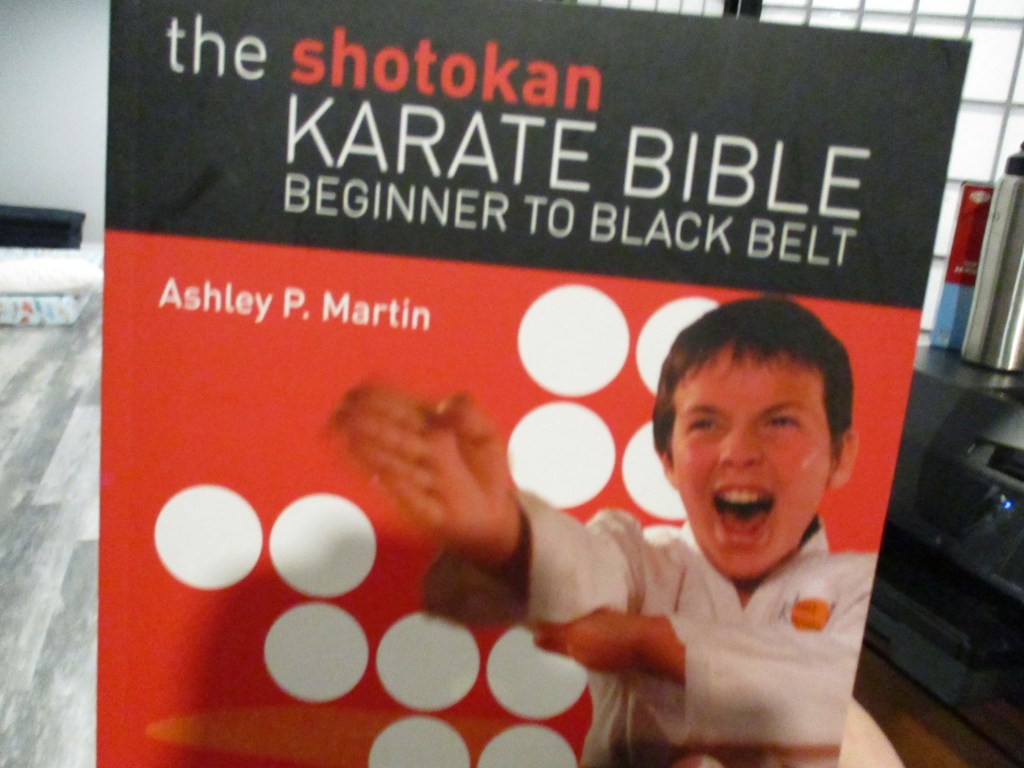
Since it’s been two weeks and I’ve actually registered, I am now an attending student of Midwest Karate. There, I have begun studying Shotokan, which is also an Okinawan style of karate, featuring many turns, stances and hands positions that I find myself unfamiliar with. It’s a rich style and although I missed a couple of classes last week due to Diabetic difficulties, it’s been challenging and I haven’t had a class yet where I don’t break a sweat.

Since I was actually looking for a challenge, this dojo seems to be a good fit. What’s more, the senior students appear to be interested in learning some of my forms and techniques as well, making for a good exchange of philosophies. So who knows? If we stay in Regina for the next decade or more, I may just get my wish and learn a new style from scratch. Time will tell, I suppose. After all, life rarely cares about ones plan. ☯️

Cookie Cutters Should Stay In The Kitchen

If you look back about fifty years, society had certain expectations from a person. Hell, even just thirty or twenty years back will let you see it. In general, a person was expected to study, work hard, get a job, meet that special someone, buy a house, get married and have kids. Raise those kids to do the same, wash, rinse and repeat ad nauseam.

During my mother’s generation, schooling didn’t need to be completed in order to have a successful life, with many dropping out in early high school in favour of getting a job and starting their lives early. Such a thing isn’t COMPLETELY unheard of now, but it’s discouraged and even frowned upon in most instances, with even the simplest and lowest paying jobs requiring a high school diploma at minimum in order to be hired.

Why is this important and why am I bringing it up? Well, it relates to a phenomenon that’s caused a shift in societal view in recent decades. Although the expectation in the past couple of decades is that a person will not only attend school but see it through to graduation, there was a rising wave of belief that post-secondary education was the most valuable route to a successful life. That wave has crested and fallen in recent years, with many people acknowledging that a college diploma or university degree isn’t the “be all, end all” of a successful life.

Along with this changed perspective comes the enlightened view that not all persons learn in the same way. Some are visual learners, some need to practice and exercise the material themselves while others simply need to hear something once to absorb it. I think we can all admit to being a little jealous of the latter. The point is, that learning institutions are slowly coming around to the fact that one can’t expect to deliver a single curriculum to three dozens individuals and expect that they’ll absorb it the same way. Many schools have started to incorporate some of this forward thinking into adaptive learning for the students who may struggle or show difficulty in certain environments.

This also applies to the martial arts. Over the decades, I’ve come to understand that not all practitioners are created equal and not all students will learn the entire curriculum the same way. If we apply this principal to class in general, we come to realize that one-on-one learning with some personalization becomes necessary in order for the practitioner not only to learn the material but to apply it properly. Depending on the size and style of a given dojo, this presents SOME difficulty, although there are always alternatives.

When I was coming up in the ranks, it was common that most students wanted a piece of Sensei’s time. After all, he was the patriarch of the dojo, had “been there, done that” decades before any of us had, and was the image of the kind of martial artist we all aspired to be. But getting some time with him was usually difficult when held up against actually starting the class, teaching and coaching all the students and the awkward ask of having him stay on after hours for some additional coaching. All things considered, Sensei often did this for me and a number of other students.

Considering I never paid more than $25 for a karate class in my life, it was pretty generous of him when you consider that he was basically teaching us for free and our monthly tuition barely covered the month’s rent on the dojo. But there was one concept he maintained that was sound: I would never be allowed to move on to the next step until I had mastered the current one, which is likely why reaching senior belt levels took well over a decade as opposed to just a few years like some other dojos.

School teachers face an interesting challenge because students are generally MADE to go to school, whereas the majority of students in karate are there by choice. This makes teaching them somewhat easier, despite frustrations faced when dealing with aspects of training a particular students dislikes. If I take myself as an example, I was always more of a forms guy than a sparring guy. I never really enjoyed the fighting aspect, preferring the careful, meditative nature of a well-performed kata. So, Sensei trained me as such.

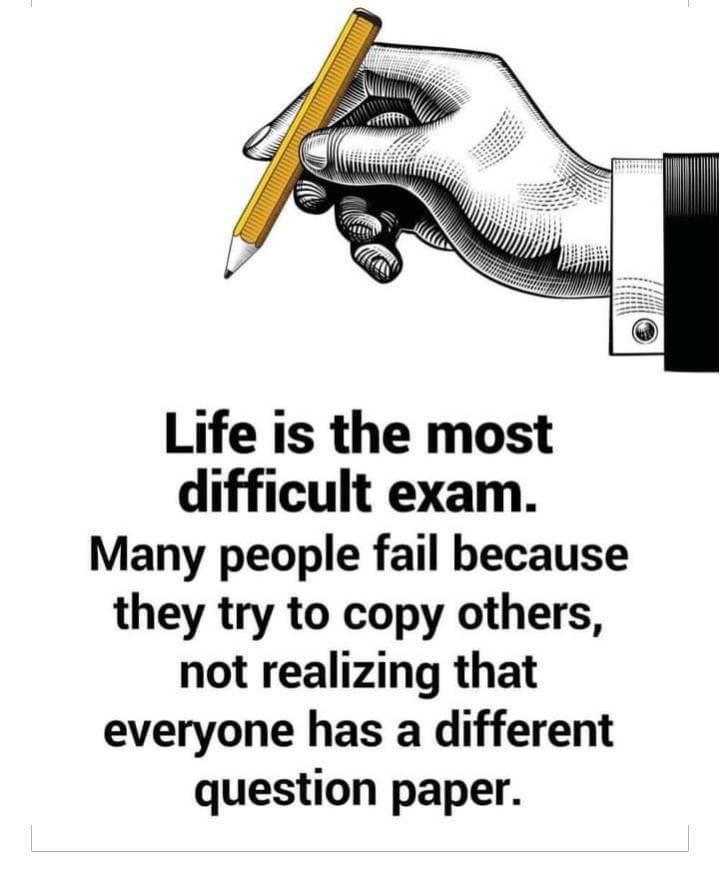
It’s important to tailor one’s curriculum to how the student will learn, and to help ensure that they absorb it, as opposed to force a cookie cutter curriculum to an entire group, expecting that everyone will learn it. Work on one thing at a time. yes, it’ll be slow as hell, but it ensures the roper progression of a student. It’s better for a practitioner to learn and absorb one technique properly and completely, than to learn very little of the entire art. Food for thought… ☯️

He Still Surprises Me…

I was running an errand at a local retail outlet and I had decided to bring Nathan along for the ride. He can be a bit tedious upon his arrival from school, antagonizing his 2-year old brother and usually causing friction within the household with his energy levels. By bringing him with me, I hoped to mitigate that a bit. At least until supper could be served and the boys would be seated with food for a time. So, we took off for the store to pick up a couple of things.

The ride was pretty uneventful and Nathan wasn’t chatty besides asking me to turn on some music, which I gladly obliged. We parked in our usual spot against the outer edge of the parking lot, which faces a large, open field. Once we were completely parked, Nathan commented on the fact that there was some trash in the snow at the edge of the parking lot. I acknowledged what he was seeing and he asked me why people throw trash on the ground instead of in the garbage receptacles. Not wanting to imply that every situation is something negative, I suggested that the high winds we have in Saskatchewan may have been the culprit as it could have blown stray refuse across the field to get stuck in the snow.

Once we were out of the car, he told me that some people are bad and throw trash on the ground. he went on to explain that we need to take care of the planet and that trash shouldn’t be on the ground. I watched with a mixture of pride and awe as my 7-year old son, who can barely manage to perform even the simplest of chores without complaining, wandered the snow and grabbed his fill of stray cans, bottles and trash. His arms full, he looked at me and said, “Okay, let’s go!” I watched as we walked towards the entrance of the building and he dumped all the refuse he had collected into a garbage can.

I congratulated him on doing something good and I couldn’t keep the surprise out of my voice. My compliment earned me a look of disdain as Nathan boldly informed me that I could have picked up an armful of refuse as well. Little bastard. Nothing worse than complimenting someone, only to have them throw it in your face. In any event, I’m not sure if he learned this behaviour from school or if another source planted the idea in his head. I was mildly ashamed of the fact that I’ve never really discussed the environment with him, but I was happy with the perspective he held. We should all be that enlightened. ☯️

An Empire State Of Mind

Despite the fact that I make a real effort to have something posted every day (I’m close to 700 consecutive posts), finding material to post about can sometimes be a bit challenging. I can only bitch about the pitfalls and difficulties surrounding Diabetes so much, otherwise y’all would likely be of the opinion that I’m only ever negative. Which is not the case, by the way.

So today, I thought I’d keep things simple and simply write about something fun. Telling stories is as much a part of blogging as providing information, after all. In 2001, I had the opportunity to o travel to Japan and Okinawa with Sensei and a few other members of our dojo. It was the trip of a lifetime and even though I make a point of never living with regrets, I can honestly admit that I always wished I could have gone back, considering Sensei has been back almost a dozen times in the past twenty years.

Although I could fill a book with all the little details surrounding that trip, I wanted to focus on the aspect of our first stop on the way to the land of the rising sun: New York. The trip started in the very wee hours of the morning, with a drive into Quebec where we took a short-term flight from Mont-Joli to Quebec City. From there, we travelled to Montreal and then New York. All the bunny-hopping apparently made the overall trip less expensive.

Despite how tired and sleepy I was, I couldn’t contain the absolute excitement I felt at landing in New York. Besides the locals boasting being the greatest city in the world, I had spent most of my life seeing the city featured in television, movies and just about everything else. I had to seriously convince myself that Japan was the destination and that I couldn’t STAY in New York. We booked into a nice hotel in Manhattan and took to the streets.

Never one to pay for anything he didn’t need to, Sensei had us walk to a local neighbourhood that served traditional Japanese food. It was absolutely delicious and Sensei’s thinking was that it would start getting us into the groove for where we were headed. Then, we walked to the Empire State Building. Considering that up to that point, I had spent the entirety of my life in Northern New Brunswick and never travelled much past the Province of Quebec, I was on sensory overload and about as giddy as a teen girl who just won the cheer competition.

We purchased tickets to access the building and took an elevator ride that felt like forever. When we stepped out onto the observation deck, I was taken aback at how high I was and the amazing view that was spread out before me. The sun had just about set, and there was just a thin sliver of light on the horizon. Then, another site caught my eyes… I looked southward and saw a massive cloud of dust, lit up by powerful spotlights.

It was mid-October of 2001 and what I was looking at was the former site of the World Trade Center’s Twin Towers. Even a month after their collapse, a heavy cloud of dust was still hanging in the air and could be visibly seen from two dozen miles away. It snapped me back to reality in the sense that it was my first time witnessing something terrible that I had only heard about through the media.

But I was talking about how I’m not always negative in the opening paragraph, so let’s get back to the trip as a whole, shall we? I stepped up to the protective fencing around the edge of the building and looked down. Big mistake. I was hit by a sense of vertigo that I can’t really explain. I’m not afraid of heights, but the height I was standing at made it look like I was staring straight down ABOVE the street, which obviously doesn’t make sense. But the perspective was freaky,

Once I was done trying to induce vomiting, we left the building and decided to hop a bus to get back to our hotel. Like something out of a bad comedy movie, we somehow took a bus in the wrong direction and ended up in Harlem. Some friendly and helpful locals were nice enough to direct us to the correct bus line and we were on our way. Despite doing the lost tourist thing, we made it back to our hotel in one piece.

We spent the rest of the evening relaxing in the hotel’s pool area. It would have been nice to explore Manhattan a bit more, see the Statue of Liberty, Central Park or one of many world-renowned museums located within the district. But after along day of flights and our adventures throughout the earlier hours, it felt nice to kick back and relax. The next day would see us board a 14-hour flight to Japan. Sleep was welcomed, especially in light of the adventures to come. ☯️

It’s Not Me, It’s You…

People can be cruel. I don’t think that’s a grand revelation, by any means but there’s definitely something to be said for how we, as a people, treat each other on a daily basis. Matters have been aggravated in recent decades with the inclusion of social media and the internet. As I’ve often voiced before, having the world’s information at one’s fingertips has some potential negative connotations.

I spent SOME time wandering the realm of social media as it often provides me with ideas on what i can blog about and I notice that people will often comment on things negatively, rather than simply scroll on by. This is perplexing to me, as I’ve always been taught that if you have nothing nice to say, you should say nothing at all. It boggles the mind how some folks will reach out and complain about even the most insignificant of things, often for the sole purpose of inciting hate or anger.

The kind of energy you put out into the world is contagious. One might almost say it’s insidious… working it’s way into other people that you direct said energy at. If you put out negative energy, it will incite negativity. And if you put out positive energy, it’ll likely have a positive effect. To moist, this concept makes sense, despite the fact that they will sometimes go on a rant or tirade that will adversely affect others.

The other side of the coin in this situation, is the fact that people will react in different ways to different things and that positive/negative energy will be absorbed as such. one good example is within the workplace. If one gets a “good job” from someone, most people will be motivated and feel positive from it. But if one is given corrective feedback or correction on something they’ve worked on or done, they’ll be inclined to feel slighted, belittled or insulted for being corrected on something they’ve done.

This brings about the concept that one can only control what one says and not how the other party reacts to it. however, it’s important to recognize that you’re ultimately responsible for the TYPE of energy you release into the world and whether or not you choose to make it positive. It’s easy to admit that there’s enough negativity and suffering in the world without intentionally adding to it. Maybe your don’t need to name-call that person online. Maybe you don’t need to comment on every little thing you don’t agree with. It’s okay to be wrong. It’s okay not to agree. But it’s also okay to let things go. You’ll be happier for it. Food for thought. ☯️

Snowy Saturday Sliding…

I’m not a big fan of snow or the winter. Besides the pleasure of sitting in front of a window during a snowy episode with a hot drink or a stiff one, adult usually means that snow brings shovelling, trouble starting one’s car, difficulty getting into work or being cold while outside. That being said, there’s something to be said for being outside when the weather is mild, enjoying the crisp air and winter scenery. Last Saturday, Nathan and I had the opportunity to spend a couple of hours ripping down a small hill located in our neighbourhood.

Nathan was lucky to have this ski-based sled as a Christmas gift from his uncle Jayden. For almost a month, it’s been sitting in our newly-renovated basement space with Nathan sitting on it to eat and watch Netflix, dreaming of the day he would be able to rip down a slope with it. With recent temperatures getting as low as -50 degrees Celsius with the wind factor, it’s been difficult to get Nathan or even myself, outside for any extended period of time. But Saturday showed a cold of only -4 degrees with some sunny conditions. So we were good to go and not a day too soon.

We arrived at a site in northern Regina called Mount Pleasant, which has been groomed and is the location of dozens of people who were sledding as well. Nathan was a champ, dragging his sled up the hill himself with every run. I also brought along a crazy carpet that our neighbour donated to Nathan a couple of months ago. I took advantage of the opportunity to take a few rips down the slope but it was quite a different experience from what I recall in my youth. My added age and weight made it so that I essentially felt every lump and hole on the slope. It was actually a bit painful, although I enjoyed the experience.

After a few runs, I let Nathan have at it while I stayed at the top of the hill and chatted with some of the other parents. Despite the mild temperature, a cold wind started to whip through and make it difficult to stay warm. Nathan was having a blast, so I sucked it up. I also couldn’t help but enjoy the scenery, as the hill allowed for a very nice view of the city of Regina (pictured above). Some of the other parents were well prepared, having brought hot drinks, water bottles for the kids and sporting thermal snow pants and such. I had a pair of long underwear under cotton pants, since I have no snow pants.

As kids are usually inclined to, Nathan befriended a couple of young boys and they traded sleds back and forth so that everyone had the opportunity to try out different ways to go down the slope. Nathan also tried out the crazy carpet, which was entertaining since there’s no way to steer that thing so one is more inclined to wipe out while sliding. Nathan had a blast whipping down the hill and tumbling as he went.

Winter can be a challenge, since the cold and inclement weather can have the unfortunate effect of making people turn into hermits and stay indoors. It was definitely good to get outside and spend some time in the fresh air, even if I was shivering towards the end. It was also important to let Nathan run wild outside for a bit. Kids don’t do very well when they’re cooped up for too long. Although Nathan has the opportunity to spend every morning outside when he walks to school, it isn’t quite the same as getting outside to run and play.

Last but not least, since Diabetes is an ever-present consideration in everything I do, there had to be some blood sugar involvement. I’ve noticed that cold weather usually drops my blood sugar levels significantly. I did suffer a low while we were at the hill but I was prepared with some fast-acting carbohydrates, so it was a non-issue. It’s simply a reminder of the constant need to stay on my guard. We had a lot of fun and a huge thank you goes out to my friend Jayden, Nathan’s uncle, for such a wonderful gift. I know Nathan is looking forward to going back and using his sled further. ☯️