A Strange Odyssey, Day 2…

I’ve always heard that things start to slow down as a person reaches my age. Considering how much of myself I put into everything, I never really believed it until today. But, man…

I suffered through yet another near sleepless night. The person in the room next door decided to be a total jack ass and try to open the adjoining door between our rooms. This resulted in my eyes popping open and vaulting out of my bed like a maniac. It was difficult to return to slumber after that.

I woke with my alarm at 5:30, wondering why the hell my alarm was going off at 5:30! When my senses cleared and I remembered where I was, I hopped out of bed and started my day.

The first half of my morning was pretty standard; administrative testing in multiple choice form. Although still a touch on the stressful side, it wasn’t anything I haven’t done many times before. The hard part would come later as I would have to run a physical assessment.

I chose to skip lunch, as eating would have had me running the test on a full stomach. This means that although I wasn’t feeling full or bloated when I got to the physical test, I was certainly hungry, which isn’t much better.

When my turn came to run, I took the starting line. I felt confident. After all, this was also a test I’ve done many times before. That confidence may have proved to be exaggerated. The first three out of six laps were easily doable and I was able to maintain a decent pace.

Right around the midway point of the fourth lap, the muscles in my legs turned lactic and I started to struggle. By lap five, my lungs turned to liquid fire and my legs and body decided to start ignoring the signals I was sending them to keep going. I forced myself through the final lap and moved on to the resistance aspect of the assessment, which included a number of semi-circles using a specialized weight machine. All of this had to be done within a specific number of minutes. As I had been warned I was nearing the time limit, I gave myself a final push and completed the last two semi-circles.

on the last semi-circle, the sole of my left running shoe dragged on the floor for about a half inch. That’s all it took. My weakened legs buckled and I went down. Then I drove all 210 pounds of my bulk head-first into the brick wall and crumpled to the floor unceremoniously.

Next thing I know, I have the instructors and several of the candidates standing over me. My face was numb, the left side of my skull was throbbing and I was seeing stars. My only concern was whether or not I had passed the test. Evidently, I made it but with only seven seconds to spare. I knew I had a hard head…

I took a couple of minutes to collect myself and finished the remainder of the test, which was an untimed portion. Once I knew I had passed, I stumbled back to my hotel and grabbed a shower and passed out for an hour. I think it may be time to get some food. This was day 2 of my strange odyssey. I have to make it through a full week. I wonder what the following days will bring…☯

A Strange Odyssey, Day 1…

Life doesn’t care about your plan. I’ve written about that on several occasions. In fact, I’ve always come to think of life as being a story that is unique to me. We all know how everyone’s story begins and ends. But it’s the chapters in between that allow us some control on the rudder as we sail through life.

This morning, I woke up a few minutes before my alarm went off. That usually drives me crazy but considering I woke up at 2:30 this morning, it was welcome as I didn’t want to wake my wife. I especially didn’t want to wake my son and cause havoc in the household right before I left.

Although I had gone to bed early enough to allow for almost seven hours of sleep, I barely got more than two. The prospect and anxiety of my trip weighed heavily on me and kept sleep from taking over. I kissed my wife goodbye and looked in on my son, who was blissfully snoring away (lucky little jerk).

I stepped out of my house and into the morning chill. Although it can hardly be called winter, it was only 4 degrees Celsius this morning. I could see some mild frost on the roof of a vehicle parked at the curb. The taxi I had pre-ordered pulled up to the curb and I hopped in.

I was dropped off at the Regina International Airport and made my way up to the security gate. I made it through without issue and boarded a plane that would usher me towards the next chapter of my life. The odyssey had begun…

The morning sun starting to rise over the Prairie horizon

The first leg of my flight went without issue. Better than usual, in fact, as I had the benefit of having a vacant seat next to me. This meant that I could sprawl and not deal with the awkward, uncomfortable pressing of my body against someone else’s for two and half hours.

I landed in Toronto around 10 o’clock local time. I had just over an hour to spare before making my connecting flight. I grabbed an overpriced burger from one of the food court eateries and stuffed my face with ravenous enthusiasm. Lack of sleep, stress and anxiety tends to work up an appetite.

The second leg of my flight left on time and also went without issue. Unbelievably, I was once again the only occupant in my two-seat row. Was it possible that for the first time in a couple of years, my luck was turning positive? Would this luck hold out over the week to come?

I landed at my destination and picked up my rental car. I had arrived. I checked into my hotel and now I sit before my keyboard with hope and grim determination for the challenges to come during the week.

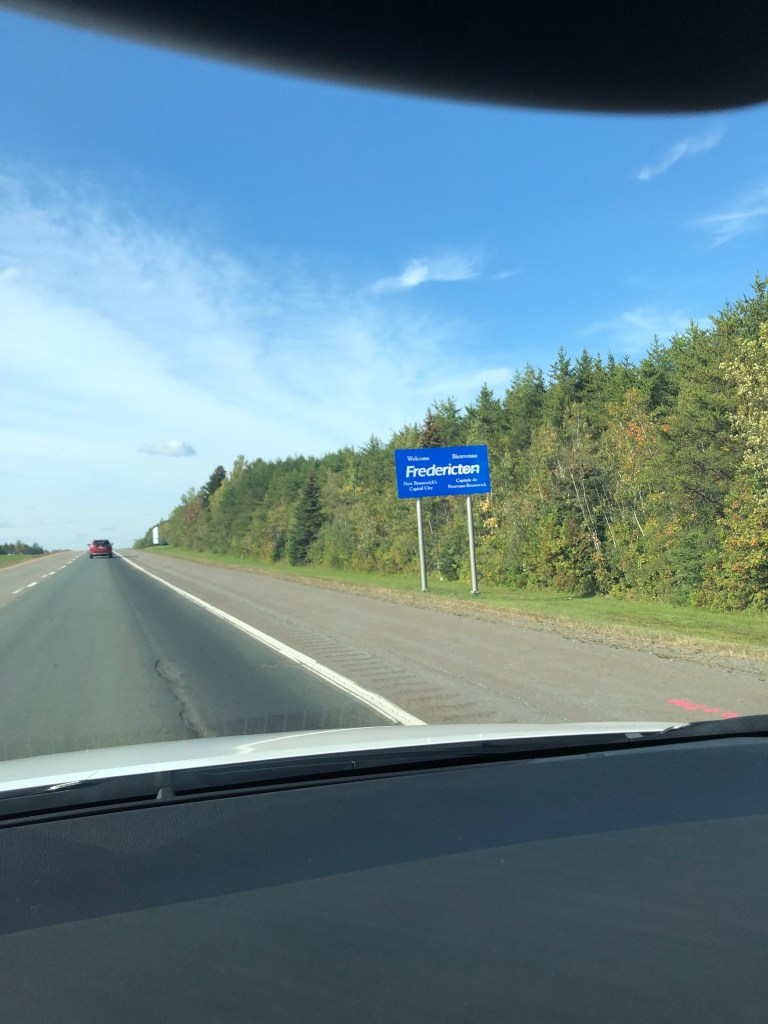
New Brunswick’s Provincial Capital

I’m in Fredericton for the next five days. I’m trying hard to understand how I got here or what incorrect choices I may have made that led me here. But at the end of the day, I acknowledge that no matter what my plan may have been, life doesn’t care. It throws whatever curve balls it may choose.

I’m therefore going to face this week’s challenges the same way I’ve faced every other obstacle in my life: with a hand on my heart and a fist towards the target. When the dust clears, I’m certain things will be better. I’ll keep y’all posted! ☯

No Pain, No Gain! Some Pain, Though…

Everyone wants to seem like they’re tough. Most training regiments encourage the aspect of “push through the pain” and many will follow this credo a little too literally. Almost to the point where some people will cause serious injury or even aggravate existing ones in order to continue training.

The most common injury that we deal with in the martial arts (besides the occasional bloody nose or bruise) is pulled muscles (sometimes referred to as a “strained muscle”). This is what happens when any given muscle is overused, overstretched or torn. For the most part, these injuries are minor and will subside after a few days, provided the practitioner takes appropriate steps to help the injury heal. In some extreme cases however, the injury can become aggravated and require medical attention.

According to a post published by Harvard Health Publishing, doctors often classify pulled muscles under three categories:

  • Grade I Strain: In this mild strain, only a few muscle fibres are stretched or torn. Although the injured muscle is tender and painful, it has normal strength;
  • Grade II Strain: This is a moderate strain, with a greater number of injured fibres and more severe muscle pain and tenderness. There is also mild swelling, noticeable loss of strength and sometimes a bruise;
  • Grade III Strain: This strain tears the muscle all the way through, sometimes causing a “pop” sensation as the muscle rips into two separate pieces or shears away from its tendon. Grade III strains are serious injuries that cause complete loss of muscle function, as well as considerable pain, swelling, tenderness and discolouration. Because Grade III strains usually cause a sharp break in the normal outline of the muscle, there may be an obvious “dent” or “gap” under the skin where the ripped pieces of muscle have come apart.

Pretty gross, right? I’ll admit to having dealt with Grade I and II strains, but I’ve never had a Grade III. The article goes on to explain that if you are suffering from a Grade I or Grade II strain, you should follow the RICE acronym:

  • Rest the injured muscle (and take a temporary break from sports activities);
  • Ice the injured area to reduce swelling;
  • Compress the muscle with an elastic bandage;
  • Elevate the injured area.

Some further recommendations may include taking some over-the-counter pain medications such as Acetaminophen or Ibuprofen. Here’s the article if you want to read the whole thing: https://www.health.harvard.edu/a_to_z/muscle-strain-a-to-z

Although the RICE acronym is accurate, there are a few points to bear in mind. First, although it is important to rest the injured muscle, you have to be cautious not to rest it for TOO long. Otherwise, it’ll heal up stiff and with reduced flexibility and movement. Light, mild stretches should be done as soon as the pain subsides in order to ensure the continued full use of the muscle. Icing to reduce swelling is important, but the average medical practitioner recommends icing for no longer than fifteen minutes at a time to prevent tissue damage.

Another detail that many people tend to forget about is that swelling is not only a normal part of a pulled muscle, but a necessary one. So while it’s okay to help REDUCE swelling, trying to eliminate it isn’t recommended. The big takeaway, and the hardest one for us old school martial artists, is to rest up and give the muscle time to heal. you aren’t doing yourself any favours by pushing the injury and aggravating it.

There’s plenty you can do to prevent pulled muscles. Start by ensuring you take the time to stretch and warm up properly prior to any workout. Increase the intensity of your workouts gradually and try not to stay static in the same position for prolonged periods of time. This tends to reduce flexibility and proper blood circulation, all of which can contribute to possible muscle strains. Think about times where you’ve worked at a desk for eight hours at a time; you should be getting up and stretching at least once every hour.

If anything unusual is noticed about the pulled muscled, be sure to seek treatment from your medical practitioner. And by “unusual”, I mean things like severe bruising, numbness, a “pop” sound at the time of the incident, complete loss of use of the affected muscle group or even if your symptoms don’t clear up after a few weeks.

Although it depends on how severe your pulled muscle may be, you might be able to return to full use after a few weeks at minimum, provided you take care of it. Severe strains may require months to heal and possibly even surgery.

Being “tough” and pushing through it definitely isn’t worth the potential possibility of aggravating an injury to the point where you’d require surgery. There’s no shame in taking a break and letting an injury heal. Your body will thank you for it. And depending on what sport you’re training at, there’s nothing saying you can’t continue a light training regiment, taking close care of the pulled muscle. ☯

On The Road Again…🎶

One of the biggest things people tend to overlook when referring to Diabetes is the amount of planning that goes into everything we do. It’s not so much that we can’t do any particular thing; in fact, we can do anything a non-Diabetic person can do (and in some cases, more).

But depending on the activity, we sometimes have to take a few added steps and pre-plan how things will go down. When you have Type 1 Diabetes, you often need to expect the unexpected. Im reminded of a trip I took with a friend in my early 20’s. We spent three days travelling down the Restigouche river by canoe. It was loads of fun. We started at the crack of dawn with a warm campfire and makeshift breakfast before hitting the river and spending all day paddling down the river. It was fantastic exercise, mixed with the excitement of being in the great outdoors. I had brought some glucose tablets, but on my second day down the river I hit a low that pretty had me eat through them all. I was fine, but had I suffered another low I would have been up s$%t creek, pun fully intended.

This is a perfect example of why proper planning can go a long way towards ensuring one’s safety while travelling. Long trips are one of the activities where this aspect is SO important. My family and I have driven across the country with our family vehicle twice in recent years. During those trips, I learned a great deal and I’m going to be sharing them with you. Here are my top ten things to consider when travelling long distance:

  1. Plan your route before you depart. You would think that this one is common sense, but you’d be surprised at how many people just hit the open road without considering the actual trip; they only look at the destination. you may know where you want to end up, but it’s important to plan a route that will bring you through populated centres and give you an opportunity to stop for the night and have access to rest stops and food;
  2. Tell someone your plan. Even if you’re not travelling alone, you can never predict what may happen on the open road. Be sure to let someone know where you’re going and by what route. Whether it’s family, friends, neighbours… whatever. This ensures that in the event of an emergency, someone knows where you’re going and how you’re getting there. This is similar to some sports like spelunking or sailing that require you to log a travel plan;
  3. Don’t travel alone. The previous point brings up my next one. Whenever possible, try not to travel by yourself. I know that speaking for myself, I always believe I can take care of myself and control my blood sugar levels. But it honestly only takes one incident to be deadly on the road;
  4. Take frequent breaks. Whether it’s to use the washroom or grab coffee, getting out to stretch your legs and crack your back will help to prevent unnecessary fatigue. This is a good recommendation for anyone;
  5. Test your blood often. When you’re taking those breaks, test your blood glucose levels. As I’ve written before, EVERYTHING affects your blood sugar levels. This means that fatigue, exhaustion, stress on the road, excitement on the road… All of it can adversely affect one’s blood glucose levels, making it important to test often;
  6. Eat properly and regularly. We tend to eat like trash pails when we travel. With fast food restaurants and truck stops readily available on most popular travel routes, burgers and chips can end up being a staple of long road trips. I probably shouldn’t have to explain why high-fat, high-carb foot is a bad idea when you’re sitting in a vehicle for hours on end;
  7. Bring supplies. This sounds redundant, but brings plenty of snacks with fast-acting carbs in case you get a low while on the road. Extra insulin and supplies are a must as well. Bring whatever supplies and sugared goods that you may require if you were to be stranded for an overnight. Better to have it than not need it. Where have I heard that before…?
  8. Get a good night’s rest. Look, I get it… We all get excited at the prospect of travelling and being on vacation (or whatever your reason for travelling may be). But your body requires all the same things it needs when you aren’t travelling. Make sure you have somewhere safe to stop and get your 8 hours. Your body and blood sugar levels will thank you;
  9. Pack an emergency kit. There are lots of sites online that can provide you with a simple list of emergency items you should be keeping in your vehicle. The Government of Canada’s “Get prepared” webpage has a decent list of basic items that should be in your vehicle on long-distance trips. That list can be found here: https://www.getprepared.gc.ca/cnt/kts/cr-kt-en.aspx
  10. Perform a pre-drive checklist. Do a walk around of your vehicle before hitting the road and that you have everything required while travelling. Know the laws of the Provinces you’ll be travelling through. Remember, you’re responsible for the proper condition of your vehicle and obeying all laws in every jurisdiction you travel through. Bring phone chargers and battery packs.

Some of these seem rather obvious, but even the most organized person occasionally needs a reminder. Road trips can be fun and you shouldn’t let Diabetes stand in your way of travelling. You simply need to ensure you’re properly prepared. ☯

Stuck In The Middle With You…🎶

I have to be honest with you: One of the things that drives me absolutely bat-shit crazy during a sparring match is one of these fools who “bob and weave,” constantly. Although this may be a short post, it covers something very important in the martial arts.

The human body has a centre of gravity. That is to say, a specific line that runs down your body into the ground that signifies where gravity has the greatest pull on you. No matter what technique or form you happen to be performing, it’s important that you keep this invisible line sitting right between your feet.

There shouldn’t be a whole lot of rocking back and forth, and your head should always stay positioned above your feet. This ensure that your centre of gravity is, well… centered! I know some mainstream martial arts styles have some very colourful flying kicks and techniques that contort the body and have the practitioner bending and leaning, but the reality is that one needs to maintain a proper fighting stance, with their feet well positioned beneath them.

If you punch or kick, don’t overreach. If you’re blocking, let the attack come to you. If you’re doing calisthenics, keep your head positioned straight up and between your two feet. your centre of gravity should always be well-balanced. If you lean of put off your centre of balance, you risk being pulled off balance or caught off guard. ☯

Learn To Count Past Twenty-Five!

Humans are creatures of habit. I’ve written about this before, and it’s no less true than it was when I wrote specific posts about it. And despite this truth, habits can often have a nasty HABIT (see what I did, there?) of leaving us in a slump.

Take your fitness as a prime example. Remember a time when you found a workout that suited you. Maybe it was the style of workout. Maybe it was the specific exercises involved or the amount of sets or reps that were included. Maybe you started jogging or cycling the same route, day after day. No matter the reason, you enjoyed this workout and started doing it regularly.

The problem with this type of habit is that it can lead you into a slump. I know someone who always used to warm up with the same number of push-ups. Every workout, the exact same number of push-ups… His claim was that always doing the same number of any exercise allowed him to know his body well enough to realize if something was wrong, if a muscle was pulled or something in his body wasn’t quite right, he could compare it to the last time he did that specific number of push-ups. Although this sounds like a good theory, it is inherently flawed. You can’t grow and progress without pushing yourself beyond the limits you’ve imposed on yourself.

Imagine that every morning you wake up, have your coffee then head downstairs to your workout area to get a sweat on. You grab some 25-pound weights and do bicep curls for 3 sets of 20 reps. You do this same routine, every morning. Maybe you get a light sheen of sweat on your brow, maybe you don’t. The problem with this sort of a routine is that it doesn’t have the results that weight exercises SHOULD have.

When you weight lift, it causes microscopic tears in the muscle tissue. These tears cause the healing process of your body and encourages your body to develop to prevent that same damage in future workouts. This means that once you’ve gained everything you can out of those 3 sets of 20 reps, you either need to increase your weights, increase your sets or reps or start doing something different.

Routines can be a good thing. They’re constructive and can help you in many ways. Habits, however, are a different story and are what can cause a slump.

Don’t be afraid to change it up. If you’re a weightlifter, go take a bike ride. If you’re a marathon runner, do some light weights. One of the most difficult aspects of challenging yourself is being able to step outside of your comfort zone and do something different. ☯

Why Are You Hitting Yourself???

I’ve occasionally written some posts that have elicited some pretty “strong” responses from people. Especially within certain sports and martial arts circles, some old school practitioners aren’t always game to hear about things they don’t want to change.

That being said, I want to discuss a particular bad habit that some modern martial arts practitioners have adopted in the past two decades: holding one’s hands on front of one’s face.

There is a significant difference between boxing and the martial arts. Boxers train for hours on end to endure repeated hits to the face and body, all while delivering them to their opponent as well. It is a sport. Mixed Martial Arts, or “mixed up” martial arts as some associates of mine have called it, have included these aspects into their fights as well. Although not boxing specifically (I’m guessing this is where the “mixed” part comes in), MMA includes many of the characteristics of boxing.

Boxers and some MMA fighters tend to square off by keeping their hands close to the sides of their faces. This is intended as a means of guarding the face and making it easy to block incoming strikes to the head and the deep bend of the elbows helps to block shots to the body. Unfortunately, to the traditional martial artist, this is a HORRIBLE way to face an opponent.

The big problem with this type of “face guarding” is that it has a tendency of blocking part of your field of vision. You’re effectively preventing yourself from seeing all around you. The other big downside is that you’re leaving your hands very close to your face, which can lead to an unintentional game of “why are you hitting yourself.” Especially when your opponent crushed your own fists and forearms against your face because you didn’t see their attacks coming due to the decreased field of vision. From your hands. Because of your shitty fighting posture.

When squaring off in a proper fighting stance, one needs to stand comfortably with the feet equidistant apart. the hands should be closed into fists and the arms should have a slight bend and at chin level. The hands will be well away from the face in front of the body. This allows a full field of vision around your immediate area and also allows you to respond and block much quicker than if your hands are right in front of your face.

Obviously, this information is based on opinion and the techniques used by my specific style of karate. I’m certain that some of my counterparts would have some “corrections” or style-specific differences. The takeaway here is that when practicing, you must train yourself to keep your hands at a relaxed posture, away from you face. this allows for the best field of view and best ability to properly execute blocks in a real fight situation. Although the normal human reflex is to cover up when someone is throwing punches, overcoming that fear and being able to trust your hands will help ensure you prevent getting smacked in the face. ☯

The Times, They Are A-Changin’…

The world is a constantly evolving creature. Much like each individual person grows and alters with their environment, the world as a whole tends to follow suit. Aspects of the world that don’t move along with the times tend to get left behind, almost like the weaker member of a herd that gets ditched to the rear of the pack. Such is the nature of life.

This concept tends to apply to most aspects of our society. Just think back to the decades preceding the internet. Landline telephones and phone ordering through catalogues were all the rage. But landline telephones have essentially gone the way of the dinosaur and most retail companies no longer entertain the aspect of a catalogue, especially with shopping sites like Amazon floating about. The industry had to follow the times.

The same applies to the business world. Most little mom and pop businesses are slowly disappearing in favour of large chains. Most people tend to forget that those large chains originally started off as mom and pop chains. That being said, it’s important for smaller businesses to understand that they have to keep up with the times as well.

Time for a story…

Last week, I had an unfortunate run-in with a local business. Despite my best efforts to meditate and keep a cool head, I often tend to let my mouth run off before I can stop it (I can almost hear my wife’s head bobbing in agreement…) This generally tends to happen most when I’m dealing with stupidity! But as usual, I digress…

For liability purposes, I won’t name the business in question nor will I specify what the problem was. But needless to say, we had an emergency within the home that required professional help. Given that it was a Sunday afternoon, our options were limited and we already knew we would likely be paying a hefty amount for calling someone out on a weekend.

While I was running around like a chicken with its head cut off, my wife was calling the only available option. The person we called, who was obviously the business’ “on call” person, gave us an unreasonably expensive hourly rate and advised that regardless of job length, we’d be billed for a minimum of an hour. I’m not saying I was happy with that, but I expected it. Our situation was dire, so we had no choice.

The nail in the coffin came when we asked to be billed or invoiced, since we were trying to keep things under control at the house and couldn’t leave until the issue got rectified. The on call person made it clear that he would require payment on site and that if we didn’t have it, he wasn’t coming. Just to be clear: He didn’t say he COULDN’T come or that his company’s policies wouldn’t ALLOW him to come. Her very much said “I’m not coming.” I would have likely discussed the possibility of letting him do the work while I went out and got some money, but he couldn’t give us an idea of how long it would take. Hence, no idea how much money to go get. I asked how he expected us to arrange payment if the job ended up taking a few hours and we had no idea how much money to obtain. He seemed unmoved by our plight.

I won’t go as far as to say that I begged, but I repeated the urgent need to be billed or invoiced, which he curtly and adamantly refused. When I began explaining that most businesses in the city would usually bill for payment at a later date, he made it clear that his business has always done it this way and that they’ve done it this way for over thirty years. He also seemed insulted at being compared to these other businesses. The conversation pretty much ended there.

We weren’t able to get anyone else to come help until the following day. The delay caused a mess and some mild damage within our home. I don’t think I need to explain that I was NOT a happy camper.

I consider myself somewhat “old school” in the sense that I’m the last person to jump online and start bashing a business that gives me bad service (or in this case, no service). As a general rule, I’ll simply avoid using said business in the future. But I have to say, this business pushed my buttons.

When I started to read some of the reviews of this business online, I came to realize that they had a history of problems of this nature with a number of clients. This led me to wonder what has kept them in business for as long as they have been, considering the person we had to help us the following day went above and beyond what we needed and at almost half the cost!

Folks, the world won’t stop changing. That much has been made clear, over and over again. So for the business owners out there, I’m the last person who will ever say that the customer is always right. But in the interest of continuing to have a prosperous business, the customer does still need to be ACCOMMODATED.

Just because something has “always been done this way” doesn’t mean it is right. It may no longer be a viable method of performing your specific task. And this is true of all things in life. We often spend our lives in a routine setting. But eventually, the routine may need to be altered in order to keep up with the ever changing face of the world. Food for thought… ☯

Life Is Short

David Wong once wrote, “…life is a flickering candle we all carry around. A gust of wind, a meaningless accident, a microsecond of carelessness, and it’s out. Forever.”

The fragility life is no secret. No matter how strong or healthy we happen to be, the way life ends is the same for all of us. And there is ultimately no avoiding it.

Regardless of what your beliefs may be, religious or scientific, death is a contemplated reality for all of us. We’ve all wondered and pondered about it at some point. For the most part, our ability NOT to think about it on a constant basis is what makes it possible for us to make it through life every day without freaking out.

Lately, I’ve begun realizing that I have reached the point in my existence where life has started to take away more than it gives. Although life is a balance of give and take, eventually the well dries out.

About a week ago, I heard about a work colleague who passed away. It was tragic and sudden. He was out with members of his family and just… died. The only thing worse than passing away like that is doing it in front of family. What struck me most significantly is that this colleague was the same age as I am. Sort of got me thinking.

Sometimes we take life for granted. We neglect to take note of the beauty and the blessings in our lives. It’s human nature to find it easier to complain than praise. But we need to realize that problems can be dealt with, money can be earned but time can never be taken back. So appreciate the life you have in the moment. If your life has aspects that make you suffer, make a change. Do whatever is necessary to keep that smile on your face! ☯

Even If You’re Hard-Headed…

I wrote a post a few days ago about the reality of fighting in the street versus how they happen to be portrayed on film or even in the context of a class or gym. Following that, I had some people ask for clarification regarding the comment I made about how getting struck in the head is likely to put you down.

Just to be clear, I’m not a medical practitioner. I’ve mentioned that a number of times, but you’d be surprised how often people tend to call me on the information I share, despite making it clear from the get-go that I’m not a freakin’ doctor! So keep this in mind as you read the information I’m about to share…

First of all, if you get punched or kicked in the head by another person, it causes your brain to bounce around. Seriously! Although it isn’t all that cartoony, it will suffer some movement. And because there isn’t a great deal of space in the brain pan, the brain will likely bounce and rebound once or twice.

Unlike the romanticized image that Hollywood has created, no one has the genuine ability to receive multiple blows to the head and keep on fighting with little more than a split lip or bloody nose. Even after only one punch, the receiving person is likely to experience dizziness, nausea and loss of consciousness. This is one of the reasons why real fights barely last a minute.

That’s at the low end of the spectrum. On a more serious level, getting struck in the head, even once, can result in skull fractures, concussions and damage to the brain stem.

According to an article posted by Queensland Health, a person with a concussion may or may not have lost consciousness. They may suffer from headaches, memory loss, nausea, dizziness and ringing in the ears. Since many of those symptoms can also occur WITHOUT a concussion, it’s important to get yourself checked by a doctor if you experience any of these symptoms after being struck.

The article also goes on to describe other conditions such as damage to the brain stem, brain hemorrhage or hematoma and swelling of the brain. The article can be read here: https://www.health.qld.gov.au/news-alerts/news/one-punch-medical-effects-can-kill

And yes, one of the myths that has at least touch of truth to it includes the fact that a person CAN actually die from one strike to the head. Ultimately, the martial artist and Buddhist in me feels compelled to say that one should avoid physical confrontations at all costs. But should it happen and you get struck in the head, the next step (once you’ve explained your actions to law enforcement) should be to consult a doctor. ☯