Bald As A Baby’s Bottom

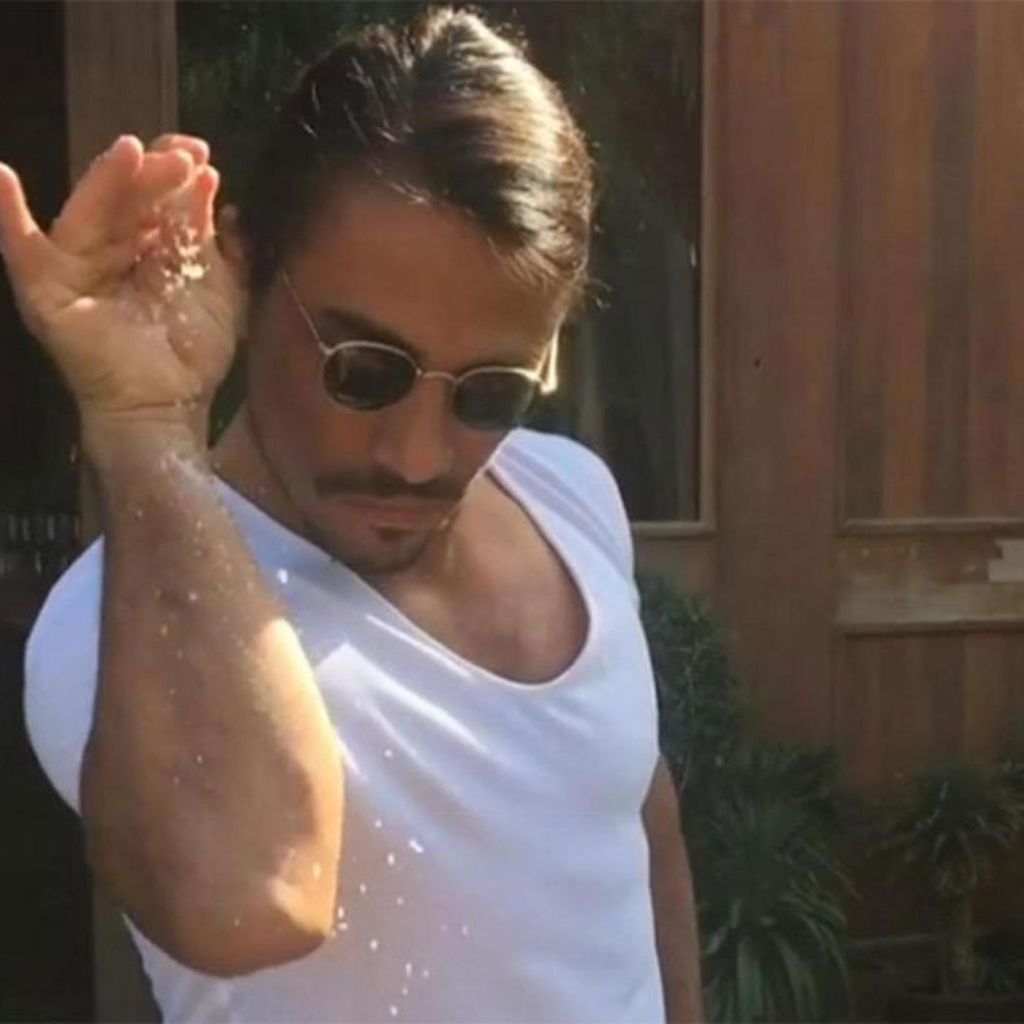
Those who know me well are aware that for the most part, I’ve kept a shaved head. This has had a bit to do with aspects of my beliefs, although one might be surprised to know that I don’t NEED to shave my head, I simply choose to do so as a show of discipline and as a sign of my devotion to said discipline.

If I can be BRUTALLY honest, it also plays a role in the martial arts as having a bald head gives a sparring opponent one less thing to grab onto. This has also been a practical application in my chosen career, as the very real threat of someone pulling on long hair and exposing a throat is a significant concern.

However, what most people don’t know is that you can practice Buddhism and NOT be bald. It’s not actually a requirement. In Buddhism, the shaving of one’s head and face signifies one of the first steps involved in becoming a monk and starting a monastic life.

This has been a common trait in monasticism for a number of different religions throughout the ages, including but not limited to Hinduism, Buddhism, Judaism and some sects of Christianity. This was usually done as a means of showing religious devotion or humility, but has also been used as a rite of passage at certain stages in life.

But for Buddhist monks, the shaving of one’s head acts as a symbol of denouncing worldly attachments. It also helps to act as a symbol of monkshood and to emulate the Buddha, who also shaved his head prior to attaining enlightenment.

So yes, Buddhist monks shave their heads and this is an observance they must follow. No, Buddhist practitioners who are not ordained as monks are not required to do so. Some of us simply choose to do so for the reasons I mentioned in the first paragraph. And no, rubbing a Buddhist’s bald head for good luck is absolutely NOT a thing. In fact, it is strongly discouraged. ☯

The Learning Stops When The Attitude Begins…

Karate requires a lot of dedication and commitment. This should go without saying, although as an instructor I have often found myself HAVING to say it. I have had a number of people who have come to train and have seen it all: sports enthusiasts, athletes, boxers and practitioners of a different style of martial art. But one thing remains consistent, regardless of your background: you have to start from scratch.

“Empty Your Cup…”

Zen Proverb

I’m sure some of you have heard the story… The one about a scholar who visited a wise Zen master and asked him to teach him Zen. Although the Zen Master did his best to try and teach the scholar, he kept interrupting and providing his own stories and opinions. The Zen Master calmly suggested that the pair have tea.

The Master poured a cup for the scholar. Although the cup was full, the Master kept pouring until the cup was overflowing. The scholar asked the Master to stop because the cup was already full. The Master agreed that it was and replied, “You are like this cup; so full of ideas that nothing else will fit in. Come back to me with an empty cup.”

There are a number of different versions of this story. I believe that even Bruce Lee offered up his own version at some point, but the lesson remains the same. You can’t walk into a dojo with a chip on your shoulder and expect to learn something. This reminds me of two stories…

“Empty Your Cup So That It May Be Filled; Become Devoid To Gain Totality.”

Bruce Lee

The first story goes back to the late 80’s, early 90’s… I was a white belt on the cusp of promoting to green. I had been training hard; three days in class and the remaining days, training at home. I was pretty good, despite being in my teens and how much of a conceit that likely sounds. I had gained mass and became larger than life; speed and precision were my tools.

One day, we had a guy who walked in off the street and wanted to learn karate. As was our custom, we explained that he could try a couple of classes to see if he liked it and if it would be something he would pursue. The man agreed to this and participated in his first class. It seemed to go well.

On his second class, we were paired off and practiced some punching drills. As luck would have it, I was paired with him. He struck me several times, causing pain and some mild injury. He had a grin on his face and when I explained that we weren’t supposed to be having contact with each other for this drill, his explanation was that this was karate and I should be able to block if someone punched. Really, asshole? That’s what you’re taking from it?

Sensei saw the entire exchange and opted to pair up with the man on the next run. Foolishly, the man tried the same tactics with Sensei, who was having none of it. Sensei exchanged blow for blow with the guy, without harming him (in any significant way). The guy inevitably ended up bowing out and stepping to the back of the class. Sensei stopped the drill and followed the man to the back of the class and spoke the words that have stuck in my head for almost three decades…

We are here to learn and teach karate. In order to learn, you have to let yourself be taught. You can’t learn if you bully your way through the people trying to teach you. And you certainly don’t come into a karate dojo with the attitude you possess. Come back when you’re ready to learn…”

The man left and we never saw him again. The second story comes much more recently… It started when I joined the Regina Institute of Kempo Karate in 2016. By that point, I had been studying karate for over 28 years. I hold a black belt and have proven my skills more times than I could count.

But when I walked into Kempo to watch that first night and the head instructor asked if I’d ever studied karate, I admitted that I had. But I wanted to learn their art in as pure a way as possible. I told the Master that I wished to start with them as a white belt. He was taken aback, considering I was already a black belt.

I walked into the Kempo dojo the following class with a white belt around my waist. I’ll admit it felt strange, wearing white around my waist when I hadn’t done so in over twenty years. But I bowed into the class and was as proud of the white belt around my waist as I was of the black one that represented my style.

The head instructor ended up forbidding me from wearing white, as he considered it an insult to my Sensei for me NOT to acknowledge my rank. The next class saw my gi adorned with my black belt, but I still held fast to the back of the class and remained humble. And this has been my practice for the past three years.

I’ve had opportunities to coach and correct some of the junior students, which has been great. But for the most part, I’ve accepted my role as a student and have spent the majority of my time learning as opposed to teaching. And this is the important part of today’s post…

The most important part of mastering any skill is rooted in one’s ability to learn. You have to open yourself up not only to learning, but to criticism and correction. Even if you’ve studied something prior to walking in, you have to be willing to admit that you may know NOTHING about the art you’ve chosen to add to your repertoire.

Although studying two arts at once includes a significant number of issues on its own, as long as you humble yourself and be wiling to empty your cup, there’s always a little more room to learn.

Think about it… Let’s examine one of the most basic techniques in the martial arts: a punch. If a 20-year student tells you that they’ve learned how to punch, that’s fine. If that same 20-year student told you that they “mastered” how to punch, they’d be lying as there’s always something more to learn.

And that’s how you should approach anything you try to learn. Face it as a beginner and learn as much as you can. Even a master can be humble in the face of learning something new. ☯

If The Smell Doesn’t Kill You, The Benefits Will Heal You…

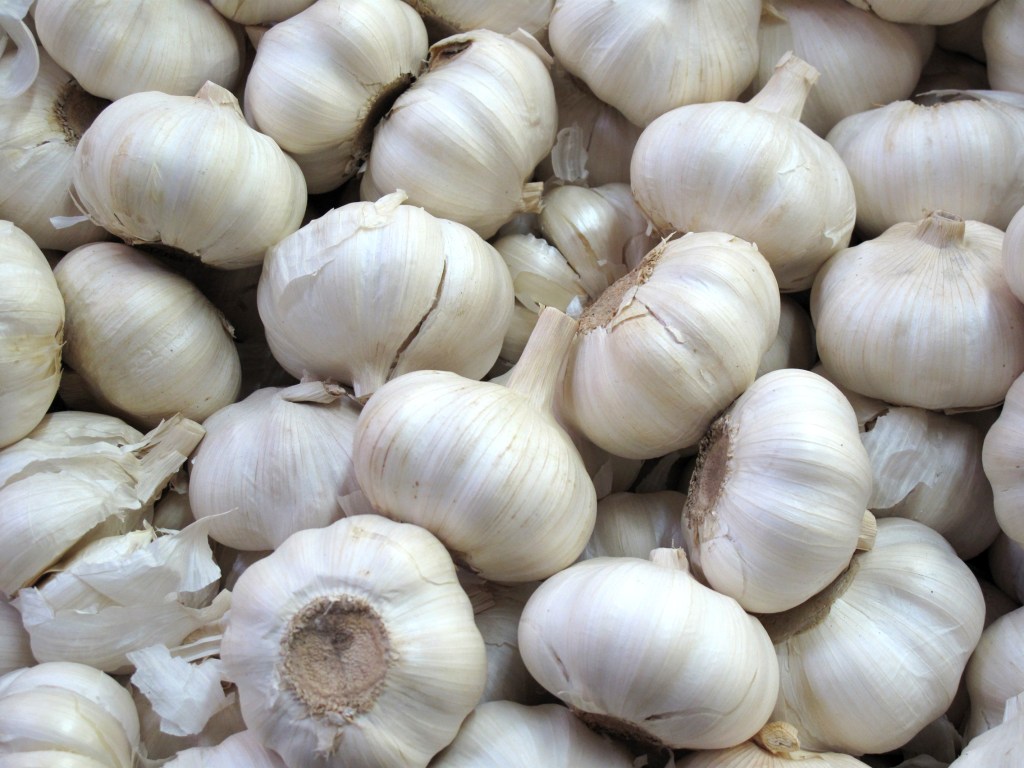
Yeah, it isn’t the prettiest fragrance in the vegetable world, but damn is it delicious! I’m a big fan of garlic, and I use it in most of my cooking. Garlic comes in many forms when used in the kitchen. You can buy garlic butter, garlic powder and even garlic spread. And that’s on top of the usual fresh whole cloves and chopped, freeze-dried garlic.

Most people obviously know that garlic is a vegetable (I hope), but something many don’t know is that it’s related to the onion. And on top of the delicious flavour it adds to my stir fry, it has a number of proven benefits for the body, as well.

Garlic contains a decent amount of vitamins and minerals, including some B vitamins, calcium and potassium.

Fresh garlic has been studied and shown to boost immune systems, reduce blood pressure and lower your risk of heart issues. Taking garlic supplements has even been shown to help reduce pre-meal blood sugar if taken over long periods of time.

According to an article posted on WebMD, there is a bad side to garlic. Considering it has the potential to lower blood sugar, it’s definitely something to watch if you’re eating it in large amounts. Other problematic issues includes heartburn, bad breath and a distinct and noticeable door of garlic when you sweat. Lovely, eh?

There are also some medication interactions to watch for, if you eat large quantities of garlic. You can check them out here: https://www.webmd.com/vitamins/ai/ingredientmono-300/garlic

At the end of the day, we mustn’t forget the most important benefit of garlic: it’s delicious! Fresh, chopped garlic always adds a little “je ne said quoi” to your meal, whether it’s a stir fry or a meatloaf. Did I mention it’s delicious? I recently found an in-store made garlic spread that’s pretty good on toast. The best part is that my son seems to have taken to it and can’t get enough, as well (the five-year old, not the three-month old).

So, garlic it up! Just don’t forget to keep your toothbrush close by to eliminate that death-breath afterwards! ☯

From “In-Class” to “On-The-Streets”…

I think that one of the biggest issues facing the martial arts is the misconception that what we learn in class is an accurate depiction of what you can expect in the streets. Unfortunately, there is a HUGE gap between the barefoot, gi-wearing structure of a dojo and the harsh, life-threatening realities of a real fight in the real world.

For the most part, the dojo environment is structured, controlled and there is minimal (although not non-existent) possibility of injury. The head instructor usually dictates what techniques are practiced and what drills are performed, and this leads to a controlled environment that allows a student to learn and develop at a proper pace.

But what happens if said student finds themselves squaring off against someone outside the dojo? Putting aside the premise that a martial artist shouldn’t be using their skills to fight out in public, there are a number of differences that would catch you by surprise…

  • The apparel: A karate gi is usually made of sanforized cotton, and allows for a certain level of flexibility and breathability. If you get into a fight in public, you’ll likely find yourself wearing regular civilian clothing, including but not limited to denim pants and/or coats or coverings that may hinder your movements and techniques:
  • The feet: Although certain kicks differ with different styles, the kicks I’ve trained with rely heavily on the toes and the top of the feet. Front kicks and roundhouse kicks can’t be properly executed the way they would be in class if you’re wearing footwear. Although sneakers may allow you to throw a kick in a pretty similar way as you would while barefoot, there will still be a discrepancy and therefore a possibility of injury, if you do it while wearing shoes or boots;
  • The techniques: In general, we pretty much train that if an opponent throws a high punch, we excuse a high block, right? In-class drills have a significant level of structure and control, which we lose once we face a real-life scenario. If a real opponent throws a high punch, you may find yourself dodging and striking as opposed to blocking and counter-striking.

The point behind all of this is that it’s a good idea to continue drills and techniques in class, and especially sparring. The practice as well as the sparring will go a long way towards developing muscle-memory and help you in the event of a real-world application of your art. But one should nonetheless be aware that there will be differences and even hindrances that will occur in the field. They could come as a surprise and cost you the battle, should you not be prepared. ☯

“Where Have You Been?”

Karate is a strange creature. For the most part, people tend to come and go in weird intervals throughout the calendar year. And they can hardly be blamed. Sometimes life just gets in their bloody way and there’s nothing we can do about it. I know that for myself, I’ve had work and familial obligations that have often prevented me from attending class. I’ve often had a particular instructor ask me, almost every time he’s seen me, “Where have you been?”

This is a question that has grated on my nerves, regardless of the source, for over thirty years. For the most part, I tend to get a workout in about four to six times a week, depending on appointments, work and other life obligations that seem to slither their way into my personal schedule. But the point is that my fitness and my karate are engrained into my weekly routine, in such a way that surpasses the two classes a week that I attend.

But every once in a while, these absences will be noticed by an instructor or someone else and they always seem to consider it necessary to ask why I’ve missed the classes I was absent for. Needless to say, this is a bad idea for any student, especially beginners.

Karate (or any martial arts) is a lifetime commitment. I know guys who only studied the Way for a few months and still retain some of their lessons and apply them to their everyday lives. The overall effect martial arts can have on someone is measurable, but the emotional effect it can occasionally have on one’s life is palpable…

I’ve had times in my youth when I missed a number of classes. Either because I was exhausted, sick or just plain didn’t feel like coming out. I would often scuttle my way back into class and feel ashamed at my lapse in discipline and hoping that no one would take notice. One of the benefits of being a white belt or junior grade, is you tend NOT to stand out when you’re at the back of the class.

But as far as those periods when I didn’t FEEL like training… Imagine if I was berated and pestered about my absence back then? This might have led to my departure from class for a longer period of time. But instead, my absences were considered a time of reflection and I was always welcomed back.

In my current school, I have a particular instructor who seems to make it his business to point out and ask about any absence I may have. He does this to most students, but if I’m being honest I consider myself to have a bit of a louder voice than most.

“Where do you think I’ve been…?” I usually ask. I point out that in the period where I haven’t been to class, I’ve usually managed to work out three times, which is one workout more than the scheduled classes I have with my current dojo.

This is one of those times when it’s more important to focus on the why and not the what. We all have times when we lapse in our attendance and skip a few classes. There’s nothing wrong with that, inherently. The important part is that you go back. And if you happen to be a senior belt or instructor, do both yourselves a favour and don’t poke the beast! Take your student’s absence in stride and teach them accordingly! ☯

There’s No Crying While Meditating…

You know, there’s a reason why monks prefer to live out their lives within the walls of a monastery. Sure, some of them do it as part of a vow of silence, some do it because they prefer to live a simplistic life of minimalism.

Living a monastic life has some measurable benefits when it comes to meditation. For the most part, monks have an easier (notice I said “easier”, not “easy”) time finding harmony and inner peace, thanks to the quiet and serenity that comes with living within the boundaries of a monastery. Although finding one’s balance and harmony is possible even when one does not live within a monastery, there’s a hiccup to modern life that the monks likely didn’t anticipate: kids!

Picture this, if you will… You settle into a comfortable position, perhaps cross-legged, perhaps sitting on your knees. You close your eyes and start taking several deep, steadying breaths. Maybe you even have a bit of relaxation music playing in the background. As you feel yourself sinking deeper and deeper into your meditation, you feel a shift in the air. A disturbance in the Force, if you will! You have your suspicions about this disturbance, but you continue to concentrate and focus on your breathing.

Then it happens: you feel a light, nasal breathing against your face, followed by a soft whisper, “Daddy?” This is accompanied by the typically expected poke of a small, bony finger; perhaps against my cheek and if I’m a real winner in tonight’s story, perhaps against the eyelid. “Daddy, you’re a statue…”

You try your best to stay focused and concentrate, hoping that your first-born will take a hint at your lack of a response and back the hell away. But of course, my offspring is stubborn and tenacious and refuses to surrender. Especially when faced with the mystery of what daddy is doing (I have no idea where he gets THAT from!) He’s fascinated at what his father is doing and wants some answers.

Just then, salvation comes in the form of my wife who steps into the basement and softly whispers that Daddy is meditating and that he should leave me alone. The boy responds, “Daddy’s not meditating, he’s a statue!” My wife agrees that it’s fine, I’m a statue but to leave me alone nonetheless.

Just then, my infant son who was until this point quietly cradled in my wife’s arms, decides to burst out with a mighty wail equivalent to someone getting their family jewels stomped during a mosh pit. This effectively dissolves my focus with the imaginary sound of a shattered pane of glass.

Meditating is already something that requires a deep level of focus and practice. It takes time to find your groove, become comfortable with what your doing and get to a point where it provides you with any sort of noticeable benefit. So learning, practicing and becoming proficient is all the more challenging when attempted in a modern family setting.

Eventually my son may come to learn and understand what I’m doing and respect the need for a few moments of silence. In the meantime, be sure to find time for yourself in order to search for harmony and inner balance. As the skills develop, it will become easier even WITH all the “little distractions” that come with life. ☯

Sprinkle A Little Of That Goodness…

When you have Type-1 Diabetes, you have the unfortunate requirement to pay attention to everything you eat, everything you do and the activities in which you participate and monitor your body closely. Most things tend to hit us harder, and we’re not only hit with a shorter life expectancy but our organs all tend to play Russian roulette with life.

Luckily, some of the things we need to watch for do apply to non-Diabetics as well. One of these things is the intake of salt. For many years, it was believed that the best course of action was to eliminate your intake of salt as much as possible. This is a flawed logic and including salt in your diet is actually important.

First of all, let’s clarify: there’s a difference between salt and sodium. Salt is the combination of sodium and chloride, as well as trace amounts of other minerals. Sodium is a stand-alone mineral, and is usually what is measured in terms of dietary and daily intake requirements.

Salt, as I’ll refer to it for the remainder of this post, is a catch-22 seasoning. Too much can cause a score of health and medical issues. But believe it or not, completely eliminating salt from your diet can cause a number of issues for you, as well.

But since people in general tend to think that salt = bad, let’s examine some of the benefits of including salt in your diet. Some of these healthy uses of salt include:

  1. Dental Hygiene: Swishing a teaspoon of salt in a half cup of water can help with good oral health by helping with infections, mouth sores, wounds and some forms of gum disease. It’s also a dentist-recommended natural treatment to help heal canker sores, which are a real sore spot for me (see what I did there?);
  2. It’s a natural disinfectant: It’s no mystery that salt has been used for centuries as a curing and/or preserving agent, as salt prevents certain bacteria from growing and spoiling food. But soaking certain wounds (especially those on your feet) in warm salt water can help with healing;
  3. It eases sore throats: Gargling with salt water can ease swelling and irritation caused by sore throats;
  4. It can ease cramps and dehydration: I know that most people tend to think that salt dehydrates you. And this may be true, if you consume heavy amounts of it. But healthy amounts of salt will actually help you to stay hydrated and by proxy, eliminate muscle cramps during physical activities. Salt is an electrolyte and is required in order to keep you hydrated;
  5. It can help clear your sinuses: Using a saline solution can help to alleviate sinus issues caused by colds or allergies. You can find over-the-counter saline bottles at any pharmacy or if you want to be totally disgusting, you can use a netti pot to pour salt water into your sinus cavities to wash them out.

There are a few good posts that cover further benefits. WebMD has a good one and can be read here: https://www.webmd.com/a-to-z-guides/ss/slideshow-salt-uses. HealthLine.com also has a good one and can be read here: https://www.healthline.com/nutrition/salt-good-or-bad

As far as eating salt is concerned, the average person pretty much consumes their maximum recommended amount of salt through most of the foods they eat. But if you drink plenty of water throughout your day and are not faced with any outlying medical conditions that prohibit the use of salt, sprinkling a lit bit of goodness on your food is not a big deal. It’s one of those “happy medium” situations where too much is bad, but too little can be just as bad.

According to the HealthLine.com link I provided above, reduced sodium intake can lead to an increase in heart issues, LDL and Triglyceride counts as well as an increase in insulin resistance. So one would likely not want to cut out salt COMPLETELY.

Last but not least, when it comes to choosing your salt, natural salt wins over common table salt. Like most things you find in a consumer’s world, table salt is processed and has a negligible mineral content. Natural salt includes types such as sea salt and Himalayan pink salt.

With salt, much like everything else in life, moderation is key. Although you don’t want to be pouring that stuff freely onto everything you eat, you certainly don’t want to eliminate it completely either. Your doctor or health practitioner should be able to tell you if you need to reduce or increase your sodium intake and as with everything else, drink plenty of fluids along the way. ☯

To Be Born Twice…

When I take stock of my life, I realize that through time and circumstance I have experienced something of a rebirth on more than one occasion. In my youth, the path of my life and how I grew up was determined by a single diagnoses of Type-1 Diabetes at the age of 4. I’ve often reflected on how differently my life may have been had I not been diagnosed as such.

Later on, I would start my training in karate; a move that I would ultimately come to see as a rebirth. The person I became and the health I gained showed a marked departure from where I began. It also helped define the kind of drive and ambition I would have in almost everything I’d do in my life.

My chosen career, although started later than most, was most definitely a rebirth. It was almost like being under water for so many years, only to finally come up for air. When you finally find what you were meant to do, it seems like a perfect fit and everything else seems to melt away.

But sometimes, these rebirths don’t happen on their own. Sometimes you have to take yourself in hand in order to make them happen. I’ve often said that life doesn’t are about our plan. Things will happen in due course, but this doesn’t mean you should just sit back and wait for it happen.

Change may be organic to life, but POSITIVE change requires your active involvement. You can’t remake yourself by hiding away from the outside world. You are part of the living organism that is the world, and the only way to have a positive impact is through positive thinking and positive action. ☯

Doing It Wrong Ruins It For The Bunch…

For the past two centuries or so, many instructors of the martial arts have made a go of teaching their art as a career. There’s nothing inherently wrong with that, so long as you do it properly. Realistically, as soon as you start teaching something that you’ve spent a lifetime mastering, you’ve established yourself as a professional in that field. And any professional who teaches their trade should be compensated. Makes sense, right?

The unfortunate reality is that some of these “professionals” are anything but, and they continue to teach something that can only be described as a watered down version of the pure styles that the founders intended. This has prompted the trend known as the “McDojo”.

For those who may not be familiar, a “McDojo” is a school of martial arts that teaches a watered down version of their style and provides no genuine skills training. They often focus more on profit and student retention than the proper education of their students. McDojos can be dangerous because they instil a sense of confidence based on skills that may or may not exist within the school.

With my own karate classes starting back up after the holidays, my thoughts have been dwelling on some of the dojos I’ve visited over the decades and how they’ve presented themselves. And believe me, I’ve visited a LOT of them. Some people will tell you that style isn’t important. It is and it isn’t, as some styles will work for some but not for others. When choosing a dojo to train with, it can be difficult to identify a McDojo if you’ve never dealt with them My goal is to provide some “tips” on what to look for. Here we go:

  1. They have children as instructors: This is a problem, because it is IMPOSSIBLE to achieve a black belt in less than ten years. The amount of knowledge, skill and training required in order to reach black belt level in ANY traditional style takes years to accumulate. That means that even if you started karate at the age of 4, you would be into your teen years before the color black even comes close to adorning your uniform. I think someone described it best when they said to think about a medical doctor. Would you want to be treated by a doctor who graduated after two years as opposed to 7 to 9 years? Obviously not. The same goes for black belts;
  2. They don’t fight: Look, you can be as peaceful and serene as you want to be but the truth is that the martial arts are “fighting” arts and you can’t learn properly if you don’t fight. And there can’t be any rules. When I grew up, our sparring involved an “anything goes” mentality. We obviously avoided striking each other’s groin for the obvious reasons, but strikes to the head, throws, pressure points and any strikes you could think of were incorporated. It’s comparable to becoming a great painter; how can you become an artist if you never intend to use a brush? The only true way to measure your skill is by exercising it in actual fighting;
  3. They cost a fortune: Tuition fees, uniform and equipment purchases (which HAVE to be through the dojo) various “suspicious” costs, such as registration fees, club fees and such can all be indicators that you may be in the wrong place. When instructors focus on ensuring that you’re paying your monthly dues and each belt test has a cost for the test, the belt, the certificate and “registering” your rank with the style, there’s definitely a problem. I started karate in 1988. I started paying a fixed monthly tuition and in 30 years, it has never increased. I never paid for a belt test and in fact, my instructor always gifted each colored belt to me. Although this is the extreme, it is also a standard that other schools should follow:
  4. They don’t adhere to a structured system: This means that either they teach a Chinese style but use a Japanese belt system, or have weird patches and crests all over their uniforms or have belts that don’t exist in the martial arts (such as pink or camouflage belts);
  5. They have “masters” or “grandmasters” in their school below the age of 50: This is a difficult one, because it isn’t so much that it’s IMPOSSIBLE as it is unlikely. Attaining these ranks takes decades, and the general age that one reaches them is pretty consistent. I was raised on a system where the title of “Master” is provided to someone who has achieved a rank of 5th degree black belt or higher. But when you get someone who is reasonably young and has already achieved this rank, there’s a good chance it’s a self-promotion for the image of the school as opposed to actual rank;
  6. The information is lacking or seems “sketchy”: An instructor should be able to recount the history of his/her style. How else can you teach the style if you don’t know where it came from? If an instructor is unable to provide you with basic background of where they trained and what the history of their style is, there’s a problem.

There’s a lot involved in choosing and training with a martial arts school. The reality is that you’re going to sweat, you’re going to cry, there will be pain and you’ll likely want to quit as often as not. THAT’S the reality of training with a genuine martial arts school. It’s a life-long commitment and it will take decades to reach a significant level. And it shouldn’t require a second mortgage or your first-born to do it.

At the end of the day, I’m in my 40’s and I’ve been doing karate (as well as some other martial arts) for over 30 years. I still don’t have the title of “Master” in front of my name and maybe I never will. But my skill has been acquired through decades of blood, sweat and tears. Such is the truth behind the way; if it were the simple way, a passing way, everyone would do it. ☯

I Don’t Care How You Spell It, Honor Is Important…

Honor is an important aspect of life and society. We hear a lot about it in the movies and in books, but we don’t always lend much thought to the prospect of honour within our own lives. Most people adhere to a system of honor without even realizing it. Maybe you were raised on a system of honor and you stick to it without acknowledging that this is what you’re doing.

Honor is a very fluid word, and holds a number of different definitions depending on the context. For the most part, it means sticking to what’s right or following a code of conduct. If you look at it as an action, it means to have great respect for something/someone or hold them in high esteem. it can also mean to fulfill a previously made agreement.

“Stand Up For What’s Right, Even If You Are Standing Alone!”

Suzy Kassem

For the most part, honor is mentioned and/or covered in great detail in many of the books I’ve read; the Hagakure, The Bubishi (Karate bible), The Art of War, Bushido’s Code and The Book of Five Rings, among many others. And those are just the “non-fiction” books. One of the main characters from my favourite book series, The Wheel of Time by Robert Jordan, lives his existence based on a code of honor he sticks to quite fervently.

Depending on what system or style of martial art you’ve studied, aspects of honor is covered by a number of different rules; protect the weak, never attack the helpless, follow the rules, etc… Despite an inherent aspect of violence in the martial arts (kind of hard not to be when you’re training to punch and kick), there is also an inherent peace and discipline involved, which leads to a realized practice of politeness and gentleness. Some would call this “balance”.

Maintaining one’s honor is important; not only for yourself but for your family and the people close to you. And with that honor comes a level of irreproachable honesty that should be observed as well. ☯