As The World Turns…

I’m no environmentalist. I’ve done my fair share of wasting, just like the rest of ’em. Having grown up through the 80’s, which most recognize as the decade of decadent waste, I’ve had some bad habits, most of which my parents still have, despite my best efforts to stem them. But despite my past, I’m very keen on looking towards the future. Especially since I’m the father of two young sons who will inherit this planet when my generation steps down.

With that in mind, I’ve been doing some reading on simple ways to reduce my household’s carbon footprint and minimize waste, as much as a single household can. I am very much on board with the concept that big corporations need to be held to task and made to toe the line in terms of the waste they produce, but I also believe that if everyone starts by doing their own little bit, we can certainly improve things. Just to be clear, a carbon footprint refers to the amount of green house gases emitted by any individual, group or corporation.
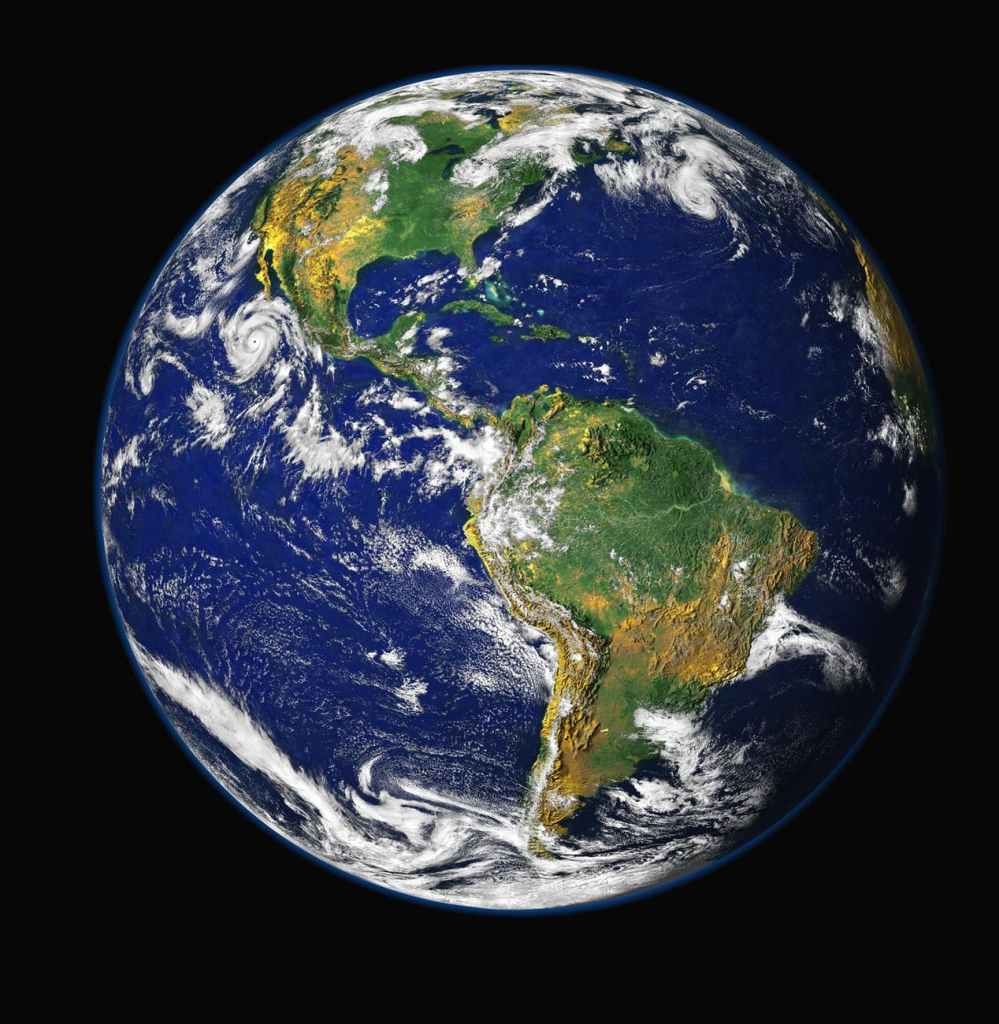
I’ve recently read about how the current pandemic is having an unexpected positive effect, where air pollution is dropping, water is becoming cleaner and animals are beginning to reclaim some of the lesser frequented areas of the world. It was a good article and posted by a fellow blogger (TheEnlightenedMind622, I’m looking at you) and can be read here: https://theenlightenedmind622.wordpress.com/2020/03/20/coronavirus-shutdowns-have-unintended-climate-benefits-cleaner-air-clearer-water/

Although many believe that we’ve passed the point of no return, I think that some of this proves that it’s never too late and we can all do our part. With that in mind, here are a few easy steps I’ve looked up that you can all do from home:

  1. Have a Recycling Bin: This is a pretty simple and straightforward step, and should be in effect in most Canadian towns and communities. In fact, many locations actually have it legislated in their city bylaws that you WILL make use of a recycling bin, or face monetary penalties if you’re caught tossing recyclables in the refuse. The city we live in has a blue bin program, where they allow for all your recyclables (cardboard, paperboard, cans and such) to be piled into one bin and picked up every two weeks for sorting and sending to the appropriate locations for reuse. My wife is a champ at this, as she’s usually the one to identify the items that can be recycled that I usually overlook. She keeps me on my toes;
  2. Make Use Of Reusable Items: My family and I have a dozen reusable cloth totes and bags in the cargo area of our vehicle. Whenever we do groceries or run errands, we do our best to ensure we’re using our cloth bags as opposed to using the plastic bags provided by most retail outlets. If you must get the plastic bags, be sure to reuse them or recycle them back to the store. Most retail outlets have a bag collection bin, where the used bags are collected, melted down and recycled into new bags. One of the more popular reusable items are travel mugs and water bottles. I have an aluminium coffee mug, and it gets a lot of mileage (ah, me and my caffeine). Just about any coffee chain or restaurant will accommodate a request for your coffee to be served in a travel mug (except for right now, thanks to COVID-19). Aluminium water bottles are also fantastic. If you’re like me and need to consistently sip water throughout the day, a reusable bottle certainly make the job easier;
  3. Use Rechargeable Batteries: If your children are anything like my son, they love their games and tend to consistently burn through batteries. Although rechargeable batteries tend to be a bit harder on the wallet, they essentially pay for themselves in the long run as you don’t need to keep purchasing new ones. Plus, using rechargeable batteries helps to eliminate batteries in the trash, since batteries have their own whole recycling process and most people can’t seem to be bothered;
  4. Preserve Water: You would think this one would be pretty easy, but it’s surprising how much water the average household wastes. Shut the water off while brushing your teeth. It doesn’t need to run while you’re scrubbing. Put in the stopper immediately when filling your sink with dish water. Even if the first ten seconds is cold water, the hot water that follows will still provide the desired effect, and you can prevent wasting litres of water by letting the cold water run down the drain. Men, fill your sink with a couple of inches of hot water and use it to shave. Running the hot water over your razor after every swipe uses WAY more water and doesn’t provide any further benefit; and
  5. Shut Shit Off: Unless you live in a cave or underground, the majority of households can get away with using natural light during most of the waking day. As I write this, I’m sitting in a basement office with a small 1′ x 3′ window, and the Sun’s light is enough to visibly see and work within the office. So the same can certainly be said and done for the average home. Open up your drapes and curtains, lift your blinds and let natural light in, rather than turning lights on. Get into the habit of unplugging electronic devices that make use of a “standby” function, as these tend to use electricity even when not in use.
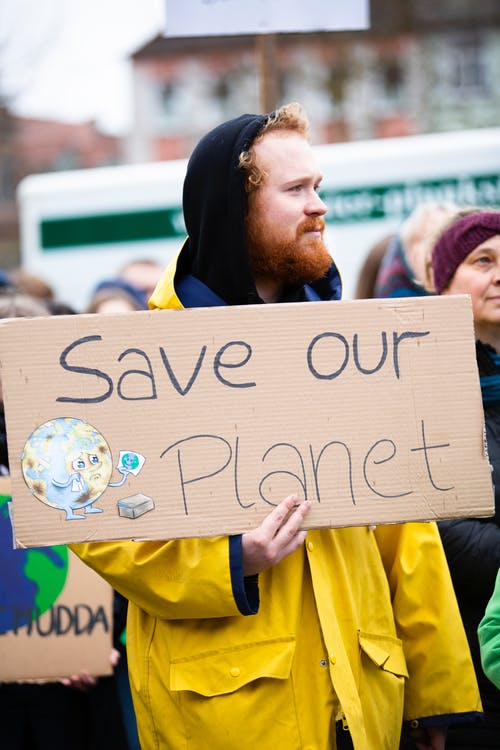
There’s ton more, and they can be easily found by Googling things like “recycle from home” or “how to reduce my carbon footprint”. Most of these can be done daily as an afterthought and require next to no effort on your part. So why wouldn’t you do it?

This is one of those scenarios where every little bit helps and one of the biggest challenges is teaching these habits to our kids. My son is the worst at leaving lights on, wasting food and walking away with his iPad still running (Damn Paw Patrol!). But it’s a work in progress and if we all do our part, we can mitigate the damage and hopefully even start to reverse some of it. Because I don’t know about y’all, but I rather enjoy drinking clean water and breathing. ☯

Embrace Your Dark Side

Who doesn’t enjoy a nice piece of chocolate? It’s tasty, and can easily replace a sudden sugar craving. If you know your chocolate, you likely know that dark chocolate is a great alternative to satisfy your sweet tooth. Reasonably low on sugar, dark chocolate traces its roots to several thousand years ago in Central America. They usually consumed it by fermenting it and drinking it with wine.

I won’t get into the whole process of how the modern form of it is made, but it’s safe to say that it can be used in many forms and is generally enjoyed by all. To be clear, dark chocolate is any chocolate that contains higher than 50% cocoa and unlike “milk” chocolate, has no milk added to it. Obviously. And if you’re part of the rare percentage of the population who doesn’t enjoy chocolate, move along! This post is not for you…

Dark chocolate is rich in a lot of things, including but not limited to flavanols, which have been proven to help with heart health, lower blood pressure and increase insulin sensitivity. That last one can help reduce the risk of Type-2 Diabetes. Dark chocolate also happens to have high percentages of iron, magnesium, manganese, copper, potassium, phosphorus, zinc and selenium. Healthline.com has a great post that lists the recommended daily intake for all these, and can be found here: https://www.healthline.com/nutrition/7-health-benefits-dark-chocolate#section2

The article goes on to explain how dark chocolate is loaded with antioxidants and is considered brain food. The benefits of increased blood flow to the brain make it so that it increases cognitive function. Not to mention that dark chocolate also contains traces of caffeine, which I’m a big fan of. Two ounces of 70% dark chocolate contains about 60mg of caffeine, which is a bit less than a small coffee at most popular chains. The higher the percentage of cocoa, the higher the caffeine content. Wrap that shit around coffee beans or Swedish berries? Fugedaboutit!

Obviously, in order to reap the most benefits you should try not to cheap out on your chocolate. Get chocolate that’s at least 70% or more. Generic chocolate will often use processing that, although improves flavour, will cause the loss of flavanols, which are one of the key benefits. Another recommendation is NOT to refrigerate your chocolate. I’m guilty of this one. I like the snap and crunch of refrigerated chocolate. But if you keep it in the fridge, it can cause something called “blooming”, which is the white substance that appears on chocolate that’s been sitting around for a long time.

If your chocolate HAS bloomed, you can basically melt it down, stir it up and let it harden and you’re good to go. Granted, I wouldn’t try that with the chocolate you find stuffed at the back of your grandma’s pantry that’s likely been there for thirty years, but I digress…

Don’t go stuffing your face, yet! It’s not all good news. Chocolate, especially dark chocolate, is extremely high in calories. So if you eat it by the fistful, you’re susceptible to weight gain. Dark chocolate may have the benefit of lower sugar content, and the higher the cocoa, the lower the amount of sugar. But you’re basically eating a slab of fat, considering dark chocolate is made of cocoa, butter and sugar. So if you’re eating chocolate to try and raise blood sugar after a low, you may be waiting a long time for it to kick in since your body processes the fat first.

Dark chocolate is best enjoyed by eating a small piece after a meal, melting a square into your coffee or melting it to drizzle on fresh fruit. Despite the health benefits, it can be easy to indulge and overeat. And this is one of my rare exceptions where I encourage people to go organic. Finding dark chocolate that advertises as “organic” is a good thing as it prevent exposure to pesticides and chemicals that may have been sprayed on the cocoa beans.

So grab a slab, melt some down or have a bite. Even a small piece every now and then will allow you to satisfy sugar craving, enjoy the many health benefits and last but not least: you get to eat chocolate! Pairing it with red wine is also an excellent alternative. So, go get you that chocolate, yo! šŸ«

Keeping’ It Clean

I know that just about everyone is tired and fed up of hearing about the current pandemic spreading across the globe, but the reality of the matter is that it’s happening and there’s no getting away from it. Another reality is that this crisis brings up a number of interesting thoughts and ideas, which has been an interesting side effect of the whole thing.

One of the ideas I’ve been rolling around in my head, is the way people seem to be dealing with this whole issue. We already know that folks have gone ape shit and started hoarding and gathering toilet paper, which has led to arguments and fights in public with total strangers and people who genuinely need a twelve pack as per usual that can’t seem to get any. Non-perishable food items have also been something of a popular staple.

But oddly enough, retail locations don’t seem to have any issue carrying full shelves of daily essentials, such as shampoo, soap, cleaners and toothpaste. Although many people have pointed out the fact that eating is a tad more important than worrying about wiping your backside (and I’ll point out that there are a number of countries that don’t even use toilet paper and depend on water-based or other methods of clean-up), everyday hygiene should also be a concern.

So let’s examine this aspect in slightly greater detail, shall we? Daily personal hygiene is an extremely important part of staying healthy. There’s a reason why the big push at the moment is to have everyone wash their hands frequently: because cleanliness = health. This should make sense to the average person, but in a real-world quarantine scenario, worrying about food is normally the top concern.

There are some basic, common sense levels of hygiene that most people know about. For example, we all know we need to brush our teeth. Failing to do so will cause tooth decay, plaque and gum disease and can lead to coronary problem through bacterial infections. Not to mention bad breath that can lead to a serious decrease in kissing. Brutal. Washing our hands frequently helps to mitigate the spread of germs, bacteria and other nasty things that some people may not even be aware that they’re carrying.

But it needs to be taken a step further than that, which includes showering, bathing and personal grooming. Most medical professionals will agree that bathing or showering should be done at least every other day. Basic cleaning of your own body will prevent the lesser issues, such as oily skin and body odour.

But failing to properly follow good personal hygiene can lead to serious complications and illnesses. According to lists I found as posted by Healthline.com and the CDC website, these conditions include but are not limited to: scabies, lice (of varying types), diarrhea, athlete’s foot, ringworm, swimmer’s ear and hot tub rash (whatever the hell THAT is). And don’t aren’t the worst ones.

Here are the respective websites to read specific detail on all of the above as well as others:

Last but not least, we need to remember that failure to follow good hygiene can lead to the propagation of germs and bacteria, which is kind of what the world is trying to avoid right now. “Social distancing” won’t keep that other person in Walmart’s cereal aisle from smelling your personal brand of funk, either.

For us Diabetic types, keeping clean can also help with other issues. I don’t need to tell you that T1D’s tend to be prone and susceptible to infections, which can be caused by poor hygiene. This is why any medical professional recommends keeping your feet clean and dry, since foot issues are prevalent with Diabetics. But that concept applies to your whole body.

So while you’re busy stocking up and squeezing the Charmin, don’t hesitate to grab some freakin’ Irish Spring and shampoo! Keep yourself clean and smelling pretty. It’ll keep you healthier and will guarantee that once all this has blown over, you won’t step out of your house looking like a reject cast member of Lost and smelling like today’s catch! ☯

Not All It’s Cracked Up To Be…

I would be lying if I said that this isn’t the definitive time to be alive with Type-1 Diabetes. Treatment options, medications and education that definitely weren’t there even 50 years ago are a Godsend and reinforce the possibility that the lifespan of someone with condition is much more assured than it used to be.

Prior to the creation of insulin, the average person with type-1 Diabetes would typically die after 7 to 10 days, usually due to complications such as ketoacidosis. But despite all the benefits and available resources (which are not necessarily available to everyone, FYI), there are still significant difficulties that come with living with T1D. If I had a dollar for every person who told me how lucky I am to have an insulin pump, I could likely retire.

And while they’re quite right about how lucky I am, most non-Diabetics don’t realize the amount of work and effort required in order to maintain our health, despite all these benefits. Because I’ll tell you right now, even the best technology is NOT all it’s cracked up to be!

Let’s take the overnight odyssey I suffered last Monday as an example. Last Monday was a pretty typical day for me; work and errands in the morning, time with my son in the afternoon and some television and R&R during the evening before bed. I used Monday as a rest day, since I foolishly did a marine workout on Sunday evening that pretty much slaughtered my legs.

We had dinner, and as is often the case I miscalculated and boluses too much for the amount of food I ate. The end result was a low, which I treated but overcompensated. What followed was to be a night of sweats, nausea and lack of sleep…

Here’s the logbook entries for the end of Monday night, as taken from my Freestyle Libre. My family and I had dinner around 5 p.m., which would explain why my slightly elevated blood sugars started to go down within the next hour. At 6:38, I realized my blood was starting to drop. I retreated to me basement office, where I indulged in a handful of fast-acting carbs.

Usually, it works like a charm so I gave it time and thought nothing further of it. About forty minutes later, I checked my levels again, only to realize that I was sitting at 3.8! It had tapered off, sure, but it was still too low to safely sit at. So I suspended my pump and wolfed down more fast-acting carbs, uncertain of how much insulin beyond what was required I may have coursing through my system.

At 9 p.m. we were getting ready to crash for the night, so I checked my levels again and realized that I overcompensated and was now at 14.2, with the indicator arrow telling me that I was still climbing. I bolused accordingly and hit the sack, confident that my pump would bring my levels under control. I mean, why wouldn’t it? That’s what it’s for, right? Unfortunately, as convenient and effective as my pump may be, it’s still a mindless machine and requires direct human intervention to function. Adding to the fact that it’s prone to malfunction like any other piece of technology, it can make proper balance of blood sugars rather challenging.

Less than an hour later, I hadn’t fallen asleep yet so I checked again. I had continued to climb to 15.2, but the indicator arrow showed that I was levelling off and I still had a lot of insulin on board, so I went to sleep confident that it would be fine. It would NOT be fine… I woke up just before midnight, feeling flush and nauseous and checked my blood sugars again. I was sitting at 14.2, which was odd considering how much I’d bolused. Concerned I may overdo it and slip in the other direction, I nevertheless instructed my pump to bolus in order to correct. The pump indicated I still had too much insulin in my system and did not provide any further. Fair enough, machine! Take the wheel, I’m going back to sleep!

I tossed and turned for a few hours and may have slipped in and out, but I didn’t really get much sleep. I was awoken by the violent spasming of my pump and checked the alert, which indicated the worst message a pump user can see: “NO DELIVERY”. What the hell? I resumed my pump’s normal function and checked my blood, to see that I was still sitting in the high 14’s. I requested a bolus to correct. The pump began to comply.

Then, 2 units into the bolus, the pump vibrated once more and still provided the message “NO DELIVERY”. I wasn’t due to change out my set until the day after, and I still had a LOT of insulin in the pump. I made several attempts to get the pump to comply. After three attempts at trying to get insulin into my system, I finally surrendered and took a manual injection, the old fashioned way.

I performed a “FILL CANNULA” to see if insulin would drip freely from the infusion set, which it did. I reset the pump to continue with its normal basal rate and tried to get back to sleep. I tossed and turned, washed some Netflix on my iPad and got up for the dreaded Diabetic cycle of drink, pee and repeat. I may have snoozed off and on from sheer exhaustion, but I awoke at 8 a.m. and found my blood sugar to be sitting at 19.8! In the interest of preventing further complications and despite the waste of insulin and pump resources, I completely changed out my pump assembly and started a new infusion set.

I spent the next 8 hours (yes, you read that right) working on getting my blood sugars back down to a normal level. I was exhausted, parched and felt like absolute shit. I did a workout on Monday evening despite my fatigue, in order to help get myself balanced. The big problem is that I have no idea what caused the pump to stop delivering insulin, whether is may have been a bad site or bent cannula… who knows?

This simply goes to show that no matter the advancements, no technology is perfect and no two days for a T1D are ever the same. The challenges, issues and complications continue to pile up, even when one does everything as properly as they can. I’m hoping that my new pump system will help lessen and alleviate some of the issues, but until a cure is found, Diabetes is still a full time job. ☯

All Things Considered…

What’s been happening in the world in recent weeks is certainly stressful and I think I can comfortably speak for everyone when I say that the hope is that this pandemic will pass quickly. With all non-essential services being shut down and the total number of confirmed COVID-19 cases in Canada having doubled since I posted about it two days ago, things are looking bleak.

With families self-isolating and people gathering two-week supplies of everything and staying inside their homes, schools and businesses closing and little to do outside of the routine many of us get so used to, it can be easy to go a little stir crazy. Far be it from me to intentionally break the rules, but certain necessities still need to be accommodated. I’m talking about groceries…

I stepped out of the house to gather some required groceries, and there were a number of things that I noticed along the way. There was a sort of hush over the city. This is saying quite a bit, considering the fact that we live in a suburban area of the city. There are always sounds of car horns, people moving about and the continuous pulse of the city. But not yesterday morning.

There was an eery yet calming silence as I walked to my vehicle. I could even hear birds chirping, which is usually not the norm. As I drove to the local grocery outlet, traffic was light and things felt calm. I didn’t have the typical stress and anxiety I usually experience while running errands, which was kind of nice. Despite the reason behind it, less vehicles in motion, less hustle and bustle and a quieter environment certainly was nice.

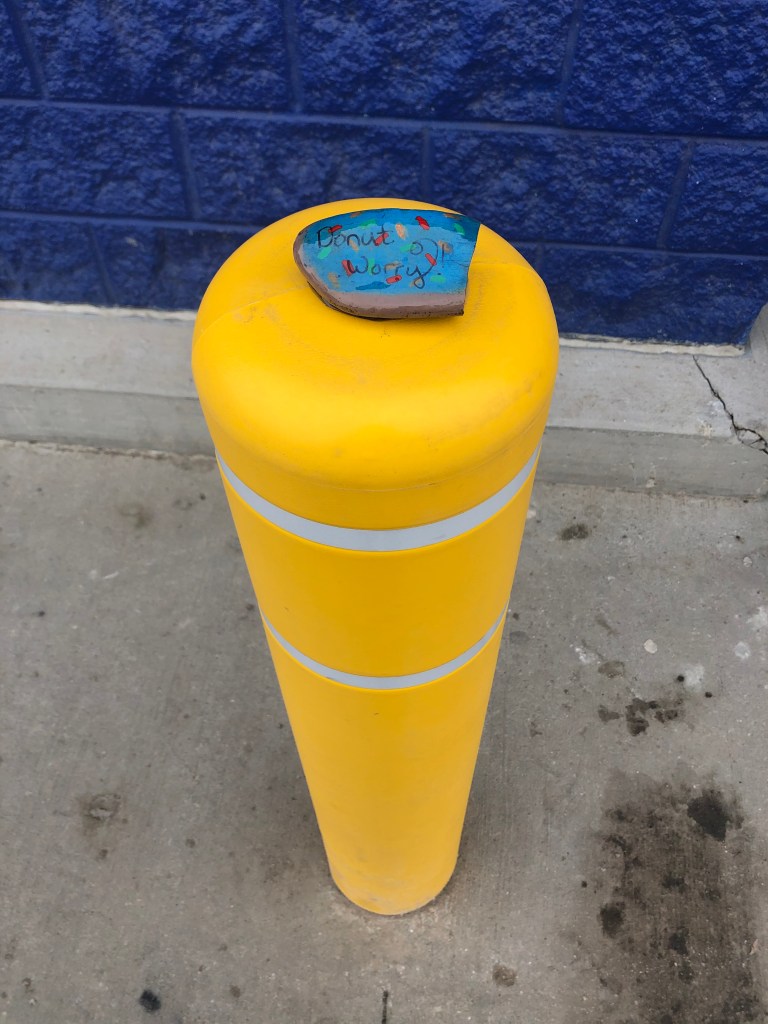
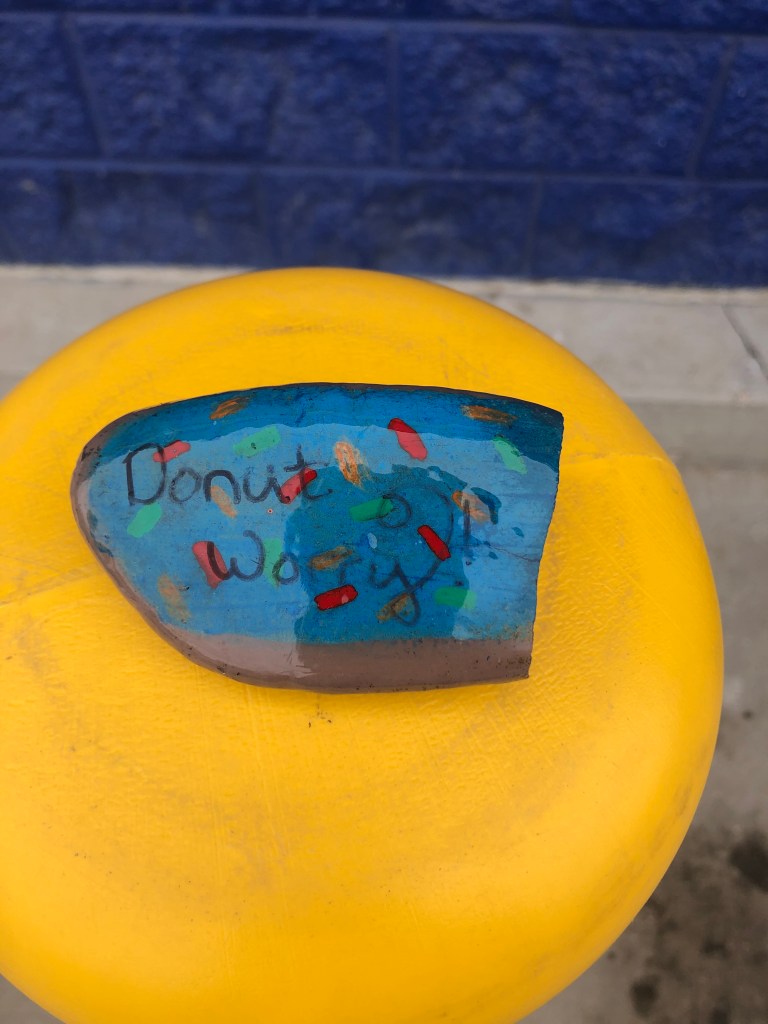
Then I walked out of the retail location I was shopping in, and found something I didn’t expect: a rock! More of a stone, really. But it was painted and polished and left sitting on top of one of the concrete pillars outside the building. It caught my eye, and as I looked closely I noticed that it had the words “donut worry” painted on it.

It was kind of nice to know that amidst all the chaos, some people were still trying to encourage calm and peace. I snapped the photos attached to this post, but left the stone where it sat, so that others could enjoy it as they stepped out of the store.

A close-up of the stone

Despite everything happening in the world right now, there are always little rays of light that shine through. We need only to be receptive to them in order to see them. Stay safe and stay the course. ☯

Love Yourself, And All Your 2000 Parts!

Life is never without difficulty. It seems as though no matter how hard you work at it, there is always a new bump in the road, a new obstacle to overcome and another problem to solve. Sometimes, carrying the weight of the world is more of a burden than the toned shoulders are worth!

We all have aspects of ourselves that we’d rather live without. Some of these aspects are internal; a personality trait or emotional state. Some of those aspects may be something physical, like my love handles. There’s nothing to love about them, really! I joke, but the honest truth is that no matter what aspects of ourselves we don’t like, we really need to learn to love ourselves, flaws and all. If you can do that, then your flaws become strengths. Allow me to provide you with a vague, yet fitting example…

Let’s say you’ve cooked your specialty for dinner. Maybe it’s a meatloaf or a shepherd’s pie; something you’re really good at making (speaking from experience). It’s absolutely delicious and the whole family enjoys it. Unfortunately, there is some left (or fortunately, depending on your perspective). You scoop the leftovers into a tupperware container, intent on enjoying it the following day.

Now, if you forget that the meal is still hot, seal the lid and place your leftovers in the fridge, the heat and cold contrast will create a heavy amount of condensation. When you remove the lid the following day, all that wet condensation will fall onto the leftover food, making it wet and soggy. Do you still eat it? Or do you get grossed out by the prospect and toss it in the trash?

If you chose to toss your leftovers on the trash, you have much to learn. After all, that condensation is actually part of the meal you prepared. The moisture is a byproduct of the heat from the food and the cold from the fridge. The gaseous vapour from the food fall into solid form and collects on the container. Regardless of how you look at it, that moisture is part of the leftovers and shouldn’t be simply tossed aside, even if your perspective of its effect may not be favourable.

The same can be said about yourself. No matter what you feel your flaws or weak points may be, you owe it to yourself to love yourself despite these things. If it happens to be something you can work on and improve, then go to it! If it’s something that you may need to simply accept and learn to live with, this can be a tad more difficult but you can do it. Even if it means you may have to adjust or learn to focus on the positive. After all, you’re worth it. Don’t let the world tell you otherwise. ☯

Stick To Your Guns, And Don’t Be Afraid To Pull The Trigger

Having been diagnosed as Type-1 Diabetic at quite a young age (4 years old, to be precise), I’ve had just about every type of doctor imaginable. I’ve had the detached cynics, who see their patients but are just trying to scrape past the retirement line. I’ve had the eternal optimists, who seem to go out of their way to have you call them by first name and focus on being a friend more than a doctor. I’ve also seen the medical dominatrix types, who basically make you feel like shit and a failure if your last A1C isn’t absolutely spot on. So from a patient standpoint, I’ve pretty much seen it all, Diabetes or not.

There has been a silent tipping of the scales taking place over the past twenty years. It’s been subtle and if you haven’t been paying attention, it’s snuck up on you without notice. I don’t need to tell anybody that waiting to see a medical professional can be excruciatingly frustrating. Increased wait times, doctor availability and sometimes feeling as though you’re being ignored and rushed out the door can all lead to bad experiences and scare you off from going to a doctor, even when you need one.

This tipping of the scale basically involves the internet. I’ve never hidden the fact that the internet and I share a rather love/hate relationship. I admit that I absolutely love the internet for the purposes of education and research, but I loath the effect that social media and the unnecessary propagation of disinformation has damaged our society. But I would be lying if I said that the internet hasn’t been a thorn in the side of most medical professionals. Most doctors absolutely hate “Dr. Google”. And why is that? Wouldn’t it make sense that a doctor would want to get all the help they can to ensure the best diagnosis? Apparently not. And there are reasons behind that.

First of all, unless you ARE a trained diagnostician, you can do more harm than good by going online to seek out the cause of your symptoms. Especially if your symptoms are vague. For example, having frequent headaches does not necessarily mean you’re having migraines. Online symptom checkers can be a real pain in the ass for doctors, especially if you arrive and “challenge” your doctor with a half dozen possible diagnoses that you’ve found online.

According to an article posted on Forbes.com by Robert Glatter, MD, a study was performed four years ago that compared the results of online symptom checking when compared to visiting an actual doctor. He wrote, “When doctors in the study were armed with patients’ medical history and symptoms, and then compared the information entered into a symptom checker, doctors arrived at the correct diagnosis 72% of the time, as opposed to 34% for the apps.”

I don’t know about you, but 72% accuracy doesn’t make me feel all that comfortable when confronted with a possible illness that could be treated by way of medications or other treatments. But it’s a hell of an improvement over the 32% that you would get from using an app. The article goes on to say, “And 84% of the time, doctors provided the correct diagnosis in their top three choices, compared with only 51% for the symptom checkers.”

Here’s the online article, if you wanna give it a read. It’s pretty interesting: (https://www.forbes.com/sites/robertglatter/2016/10/13/doctors-beat-online-symptom-checkers-new-study-finds/#246af81e2d44)

The take-home lesson here is if you want to go on a reputable, peer-reviewed medical site such as WebMD or the Mayo Clinic to look something up, such as Diabetes… What is it? What causes it? Can it be prevented? Etc… That’s fine! The problem is if you go online to find out why your legs might be turning blue and assume you have deep vein thrombosis, when all you did was fail to properly wash your new jeans before wearing them for the first time. This is where doctors and health professionals get pissed and frustrated.

The other side of the coin is no brighter. Because of people’s tendencies to look symptoms up on the internet before consulting their doctor, many medical professionals have started shirking or ignoring what their patients may bring up upon arrival. Don’t even get me started on a doctor’s reaction if you utter the words, “I looked up” or “I read online that…” That’s a surefire way to start a verbal battle of wills. Most medical clinics have extended wait times and many medical professionals have even started limiting the number of things that a patient can bring up during any one visit.

In some respects, it’s rather hard to blame them. The average doctor spends well over a decade of study and training to actually BECOME a doctor. So if you walk in and presume to have diagnosed your problem already by spending two minutes on Google, it only makes sense that they may be offended and dismiss your thoughts.

The best approach would be to ask your doctor questions. Don’t necessarily bring up your online search, but feel free to ask your doctor if what you found is possible and why he or she believes that it’s not. This keeps you involved in the diagnosis process and doesn’t make the doctor feel offended or as though you’re trying to tell them their job. If you feel as though your concerns are being ignored, then say so. And be certain to exercise your right to a second opinion if you aren’t comfortable with what’s being done to help you.

When I was a kid, I literally never waited more than 15 minutes to see my doctor. Once in, I’d be greeted with a handshake and we’d talk about how my Diabetes was doing, how I was managing with my current medications and what life and family issues may be affecting all of it. Nowadays, seeing my personal physician includes well over an hour’s wait, followed by a five minute visit that usually doesn’t even involve reviewing my most recent blood results or Diabetic issues. Times have changed.

As the world continues to turn, we all have a tendency to turn towards the World Wide Web for answers. After all, we have the world’s knowledge at our fingertips. And although all the information required to become a doctor may be available on the internet, it doesn’t mean you have the skills or knowledge to use it. As far as doctors go, they could probably stand to lighten up a touch and be willing to listen more. Because as time passes, the growing trend of doctors using online resources is increasing, as well. Food for thought… ☯

The Whole World’s Goin’ Crazy…šŸŽ

Sometimes I try to avoid being mainstream as much as possible. It’s not that I’m anti-social, per se. I’m more of what I call “socially independent”. Be that as it may, my wife and I don’t have cable. We don’t subscribe to the news or social media and we tend to be somewhat disconnected from mainstream issues that surround us. My wife is pretty good at keeping me in the loop by following certain discussion groups. Otherwise, I learn everything as I go along through pure research. This usually involves subjects related to this blog: Diabetes, Buddhism, Martial Arts and Health & Fitness.

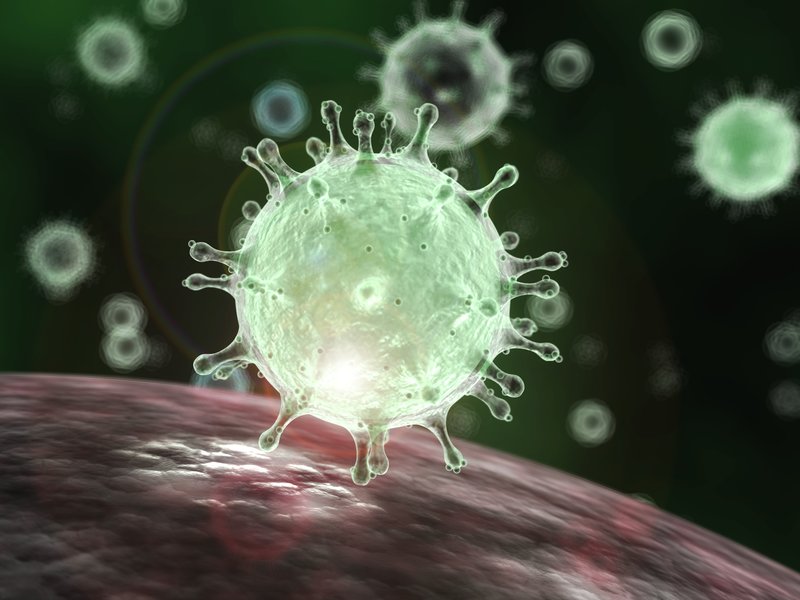
Despite everything I’ve just explained, it’s time for me to jump on the proverbial band-wagon and talk about the latest pandemic that seems to be on everyone’s mind and involves absolutely every aspect of current society. I’m talking about the Coronavirus Disease 2019, better known as COVID-19.

So what the hell is this nasty bug? According to a page on Diabetes.ca, “Coronavirus (COVID-19) is a respiratory infection that causes patients to develop mild to severe symptoms including a cough, fever, and difficulty breathing. Symptoms may take up to 14 days to appear after exposure to COVID-19.” Because it so closely resembles generic symptoms that a person can get with the common cold, some people who have been infected may not even recognize that they’ve been exposed until they’ve exposed a bunch of other people through their work, schools and public places.

Why is this so important? Well, I don’t think I need to bring up the ridiculous issues surrounding the selling out of toilet paper or hand sanitizer from practically every available outlet in Canada and the U.S. Most people of common sense are of the opinion that you should be able to find plenty of alternatives to wipe your backside, so why aren’t more people focusing on food and medications in order to get through their quarantines? We went grocery shopping this morning and I noted that the shelves in the paper aisles were essentially empty. But I digress…

According to the Government of Canada Website (https://www.canada.ca/en/public-health/services/diseases/coronavirus-disease-covid-19.html), there 324 confirmed cases of COVID-19 in Canada as of 9 a.m. this morning with another 17 probable cases that have yet to be confirmed. It’s not an “out there” problem; it’s very much real and present in Canada.

For folks with Type-1 Diabetes, COVID-19 poses a particular threat. According to that same post by Diabetes.ca, “Since Diabetes is a chronic disease, questions and concerns about the impact of COVID-19 is understandable. People living with Diabetes, especially those with poor glycemic control have an increased risk for infections. It is for that reason that vaccinations are recommended when available.” (https://www.diabetes.ca/media-room/news/novel-coronavirus-(covid-19)-and-diabetes–what-you-should-know)

There is currently no vaccine for COVID-19, but this is why it’s SO important for people with Diabetes to eat well, exercise and check their blood sugars often throughout the day. The better control you maintain on your condition, the better the chance that you’ll keep your system strong. I may sound like a broken record with how many times I’ve repeated this holy trifecta, but it seriously eliminates and/or reduces so many issues and complications associated with Diabetes. And COVID-19 is no exception. No, it doesn’t mean you won’t get infected if exposed, it may simply help to prevent it.

You can check the CDC website, Government of Canada website and Diabetes.ca, but the general guidelines for prevention of the infection are pretty standardized:

  • Wash your hands often, with hot water and soap. This should be done before and after eating, after any visit to the washroom and if you’ve shaken hands or had contact with members of the general public;
  • Don’t travel abroad. Let me say that again: DON’T TRAVEL ABROAD!!! This whole mess might have been better contained had people listened from the beginning and didn’t travel internationally. Preventing the spread of the virus is quite a bit more important than making your yearly trip to fuckin’ Cancun or travelling to another country to film a movie. It’s simply not worth the risk;
  • Sneeze or cough into your elbow (which people should have been doing prior to this anyway) and try to avoid touching your face any more than necessary;
  • Be prepared. Make certain you have an adequate supply of insulin and medications to get you through a 14-day quarantine if necessary, and enough food and supplies for the household in general. This doesn’t mean buying out the toilet paper aisle or panic-shopping, but buying a little extra in order to be prepared is not a bad thing (whether there’s a pandemic or not).

Since being sick affects someone with Diabetes, be sure to contact your medical practitioner if you become ill and symptoms become aggravated or worse over the course of a week. If you believe you’ve been exposed to COVID-19, the Government of Canada website has guidelines to follow and you should phone your doctor BEFORE going into any offices in order to obtain pertinent instructions.

Far be it from me to make light of the situation, but hopefully people will shake off the panic in the short days to come. So far, COVID-19 has not been shown to be lethal to strong, healthy individuals. We just need to nip this thing in the bud. Considering that since the turn of the century, we’ve had to deal with SARS, H1N1, outbreaks of ebola and cholera as well as the resurgence of polio (thanks to anti-vaxxers), this too shall pass!

As long as the proper preventative steps are taken and protocols are followed, this WILL pass in time. And then everyone can get back to buying their bathroom tissue at a normal rate, twelve rolls at a time. ☯

Summer Bod, Bring It On!

One of the biggest struggles for folks with Type-1 Diabetes is weight loss. People who don’t have Diabetes have qa rough go of it as it is, but when you throw Diabetes in the mix, it becomes all the more difficult.

One of the reasons behind this is insulin therapy. Believe it or not, constant insulin injections may lead to weight gain. According to an article posted by MedicalNewsToday.com, “Eating more calories than the body needs will lead to excess glucose levels. If the cells do not remove glucose from the blood, the body will store it in the tissues as fat. When a person takes insulin as a therapy for Diabetes, their body may absorb too much glucose from food, resulting in weight gain.” (https://www.medicalnewstoday.com/articles/325328#link-between-insulin-and-weight)

Realistically speaking, there are a number of things that can be done to help trim you down for the coming summer months. First and foremost, we need to agree that weight loss requires a combination of exercise AND diet. If all you do is binge on every fad diet that floats by, you may see some immediate results but it likely won’t stick. If you work out consistently but eat like a living trash can, you’ll still start chugging out.

Before you blow the dust off of your cut-off jean shorts, try doing some of the following:

  1. Exercise 3 to 5 Times A Week: This one should be pretty obvious, since I mentioned it earlier. But physical activity is important, whether you have Diabetes or not. A workout doesn’t have to be an all-encompassing activity that takes hours. Even 20 or 30 minutes of activity that leads to an increased heart rate will be beneficial;
  2. Quit Snacking: Most people have a compulsion to snack. When you’re sitting at home, watching a show or a movie, we generally tend to want something to munch on. Although one can find some healthier alternatives to snack on (granted, you won’t catch me eating celery sticks while watching Avengers: Endgame), limiting or eliminating snacks is even more ideal. Salty or high-sodium snacks may cause you to retain water and/or gain weight;
  3. Drink Plenty of Fluids: Many times, we eat out of habit and not necessarily out of hunger. Dehydration can be another problem, as it can cause a person to feel the same sensation as hunger. Stay away from sodas and sugared juices and stick to water and herbal tea; and
  4. Embrace Your Technology: I use a water drinking app (My Water), a fitness app (Runkeeper) and a workout designer app (Seconds Pro). These things can be helpful in helping to keep you on track. Runkeeper has GPS tracking that allows you to measure your time, distance and average speed, all while tapping into your music playlist. Seconds Pro allows you to design your own circuit, HIIT, Tabada and interval workouts. You can program it to use the music on your phone and set whatever times and periods are required. All three of these are free of charge, with the option of upgrading to pro versions that have additional features (I’ve upgraded My Water and Seconds Pro).

Keep in mind that eating well and also meal planning are much easier than it probably sounds. Frozen vegetables have proven to be just as healthy and beneficial as fresh ones, and can be way easier as they won’t spoil. Black coffee is also a big plus, since it contains zero calories and can give you the caffeine boost required for that workout.

No matter what route you take or what methods you use, the biggest thing is to give it time. If you expect to see results within a week or two, you’ll be greatly disappointed. In fact, IF you see results in as shirt a time as a week, you should probably consult a medical practitioner. Every individual person is different and what works for one person may not work for you. ☯

Two Of The Same Can Still Be Different

Karate has a rich and fantastic history, and has branched out into many different styles and genres. Karate is a specific type of martial art and not a style in and of itself. The word karate (or two words, if I’m being specific) is Japanese for “empty hand”, meaning that a practitioner is said to be studying karate do, and the practitioner is known as a karateka.

One important detail to discern is that there are two main branches of karate: Japanese and Okinawan. And although they are similar, there are some important discrepancies between the two. Here are some of the more important differences:

  1. We’re More Traditional: Okinawan karate uses karate as a way of life as opposed to a being interpreted as a sport. All the original systems of karate came out of Okinawa, and when they hit mainland Japan, the Japanese took these styles and began altering altering a number of things including the forms and techniques. Although highly effective, one of the things that Japanese karate changed was striking for points. And yes, Okinawans also compete in modern times, but it isn’t always so;
  2. We Use Weapons: Okinawa was a pretty brutal place way back in the day, and the use of weapons by the criminal element was pretty prominent. This meant that martial artists had to incorporate weapons into their training as well. After all, it’s hard to defend against a weapon unless you have one as well. For this reason, most practitioners of Okinawan karate also studied Okinawan Kobudo, which a style of weapons training. Although the use of weapons has diminished significantly over the decades, Japanese karate doesn’t use weapons at all;
  3. We Have More Natural Movements: Okinawans practice karate in ways that accentuate the natural movements of the body. Our stances are high and natural, our blocks use our opponent’s energy and we prefer to execute techniques at close range rather than from a distance. Japanese karate does very much the opposite, by focusing on low stances and approaching combat from farther distances from their opponents;
  4. We Don’t Yell Constantly: Although I will admit that there are kiai in Okinawan karate (a kiai is a single-syllable yell to focus energy during an attack), we practically never use them. Most Japanese karate styles use a form of kiai known as “osu”, which drives absolutely bat-shit crazy. Styles like Kyokushinkai use the term “osu” constantly and for everything. Osu did NOT originate in Okinawa and is widely misused in modern karate, especially in the western hemisphere; and
  5. We Focus On Our Students: Okinawan karate is particular, because the Sensei will spend one-on-one time with his or her students. Japanese karate, by contrast, teaches to large masses of students at once. This is why some Okinawan techniques are significantly more involved than their Japanese counterparts; because they are individually taught to the student, as opposed to a large group of students at once.

One last detail I’ll provide is that karate refers specifically to Japanese or Okinawan empty-hand styles of martial arts. If someone is teaching a Chinese or Korean style of martial arts, it rightfully shouldn’t be referred to as karate.

I’m not saying that Japanese karate isn’t as effective or as good as Okinawan karate, they’re just different. It’s like how a revolver and a pistol are both handguns, but their features, pros and cons are quite different from one another. Know the background and history of the art you’re looking to study, and make sure you choose the style that’s right for you. ☯