Take Time To Heal

Like most martial artists, I’m no stranger to blood, sweat and tears. There have been multiple times in the past thirty tears when I’ve “pushed through the pain” and trained and/or worked out even when I felt ill or weaker than I should have. It’s no mystery that high blood sugar and other Diabetic issues can weaken the body’s immune system and make Type-1 Diabetics more prone to colds and other annoying illnesses.

But despite one’s pride and hard-headedness, is it IDEAL to train when one is sick? Depending on who you speak to, recovery time is always the best route. Allowing your body the time it needs to heal is preferable, especially when Diabetic, to pushing your body to where you compromise your immune system and potentially open yourself up to infection.

I’ve been struggling with a cold for the past four days. At the risk of being accused of having “man flu,” my face has been swollen and in pain, sinuses are pooched and I have an extreme lack of energy. Today is one of the first days that I’ve begun to feel better. I’ve stayed off my feet and taken it easy but my wife has suggested that maybe the best medicine would be a solid workout to build up a sweat and burn the illness out of me.

I’ve done some reading from all of my general go-to websites, including WebMD and the Mayo Clinic. I’m surprised to find that most of the sources I consulted all seem to agree on the same limitations and factors when considering working out when sick.

According to a quote on WebMD by Neil Schachter, MD, “if your symptoms are above the neck, including a sore throat, nasal congestion, sneezing, and tearing eyes, then it’s okay to exercise,” He goes on to explain, “If your symptoms are below the neck, such as coughing, body aches, fever and fatigue, then it’s time to hang up the running shoes until these symptoms subside.” (https://www.webmd.com/cold-and-flu/features/exercising-when-sick#1)

According to a Q&A response provided by Edward R. Laskowski, MD on the Mayo Clinic’s website, the same “neck check’ rule is to be considered when thinking of working out while sick (https://www.mayoclinic.org/healthy-lifestyle/fitness/expert-answers/exercise/faq-20058494)

The point at which you should NOT work out, includes when one is suffering from a fever. Having a fever puts you at higher risk of dehydration, muscle cramps and aggravated Diabetic issues. Below the neck symptoms that should be considered include vomiting, diarrhea, coughing where something is expelled, body pain and fatigue.

At the end of the day, the decision whether you work out or not falls on your shoulders. If you’re not feeling up to it, don’t do it. Another option, if you feel well enough to do anything, is to simply tone down your workout so that it doesn’t floor you. Take a walk instead of a run. Do Tai Chi as opposed to shadow boxing. And if you are returning to your workout routine, do it gradually.

If your workouts are done in a public setting, such as a gym or fitness centre, then be considerate of others in relation to your illness. Don’t be blowing your nose every five minutes and putting your hands all over the equipment, spreading your phlegm on every surface. Carry a towel and be certain to place it on the bench before you lay on it. Use an alcohol-based sanitizer after you’re done with the equipment. And be certain to scrub your hands with soap and hot water often.

At the end of the day, you and your body will dictate whether you decide to continue exercising or not. Considering my cough, fatigue and all over bodily aches, I don’t regret choosing not to workout over the past several days. And a decent workout can even be beneficial as it can provide benefits such as opening the breathing passages. But I’ll admit that I can’t wait to get back at it. And don’t forget to test your blood sugar often. ☯
Around The World

Diabetes is a prevalent condition in Canada, with roughly one in three Canadians diagnosed with some form of Diabetes or pre-Diabetes. This means that as of 2019, roughly 12.5 million Canadians have Diabetes. This includes Type-1 and Type-2.

According to an online article posted by Diabetes Canada, Diabetes accounts for 30% of strokes, 40% of heart attacks, 50% of kidney failures and 70% of non-traumatic amputations that occur annually in Canada (https://www.diabetes.ca/media-room/press-releases/one-in-three-canadians-is-living-with-diabetes-or-prediabetes,-yet-knowledge-of-risk-and-complicatio)

I had someone recently ask me if there are any countries that have a higher rate of Diabetes than others. I did a reasonable amount of digging and research, but I wasn’t quite able to find anything definitive. The World Health Organization’s website had a spreadsheet that showed prevalence of Diabetes in different countries, but when I landed on Canada, the numbers didn’t seem to add up to what’s reported on Diabetes-related websites and Statistics Canada.

So, what country has the highest rate of Diabetes? According to a site called Statista, China is the country with the highest prevalence of Diabetes at 116.4 million people with some form of the disease (https://www.statista.com/statistics/281082/countries-with-highest-number-of-diabetics/).

According to a page on dLife.com, a ranking of the top 20 countries with the highest prevalence of Diabetes shows a small island country called Tokelau as the top country with a prevalence of 96%. I had to look this place up, since I’d never heard of it. And Tokelau, as it turns out, is a small group of atoll islands in the South Pacific Ocean. (https://dlife.com/20-countries-with-the-highest-diabetes-rates/)

I’m not sure how confident I am in these numbers, as I usually prefer to lean on verifiable sources to confirm these types of statistics. But one of the things that was mentioned in the sites I searched is that a higher percentage of Diabetes prevalence seems to affect small island countries where malnutrition and bad food labelling is a measurable problem. This would seem to suggest that the result lean more towards Type-2. Long story short, I didn’t find anything definitive, which disappoints me…

The World Health Organization states that there are 422 million people world-wide living with Diabetes as of 2014 (https://www.who.int/news-room/fact-sheets/detail/diabetes) and that was the latest information. 2014! Who knows how high that number has risen in the past six years.

Maybe I’m losing my touch and my ability to research and look up information is slipping. But I can certainly confirm that Diabetes is a very real presence in most countries around the world. It usually causes a strain on the health industry and contributes to a significant number of deaths every year. ☯

Adding Insult To Injury

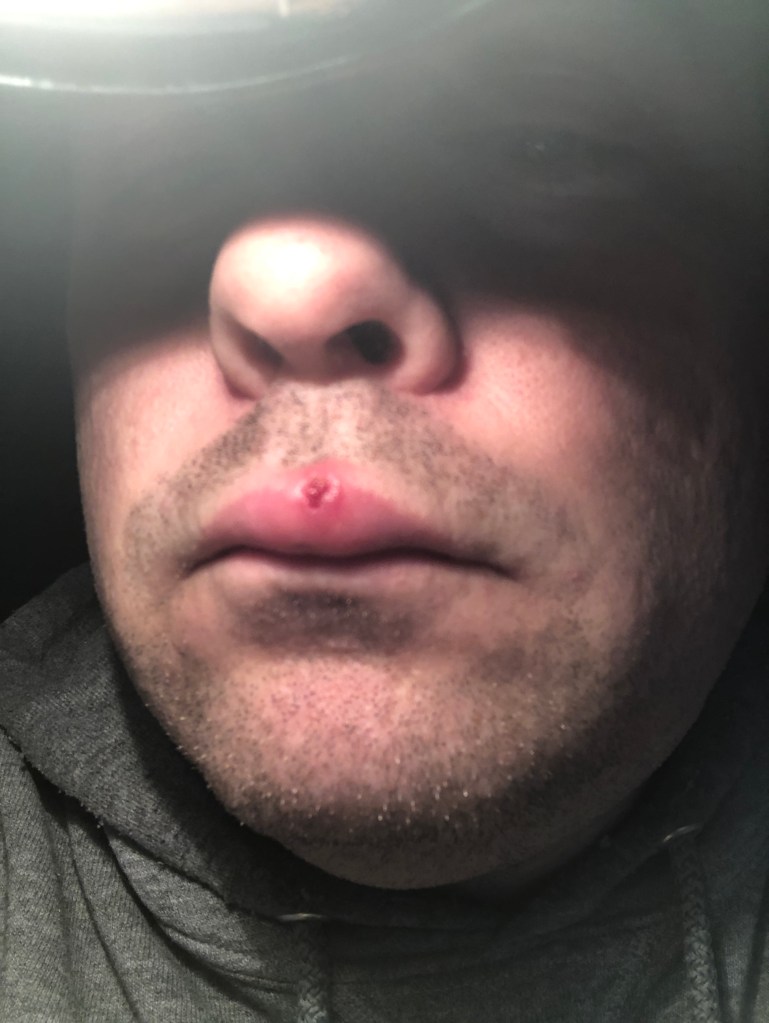
I woke up yesterday morning feeling like a dried piece of beef jerky left out in the sun for too long. Since this isn’t a NEW experience for me, it didn’t surprise me. I have this weird thing where my face swells up when I get a cold. Yes, you read that right; I will usually get a small swelling of the upper or lower lip (usually upper) that inflames and doubles by the next day.

And yes, I’ve already had it checked by my doctor on a previous occasion. Apparently it’s totally normal for your face and neck to swell when you catch a cold. This is because a cold will make it easier for your sinuses to infect, causing swelling around the face, eyes, forehead and base of the neck. Fun, eh? Not least of which to mention that it plays hell with the blood sugars. I woke up with 15.7 mmol/L as a waking blood sugar level. Brutal.

Not to gross anyone out before lunch, just a quick look at my swollen face

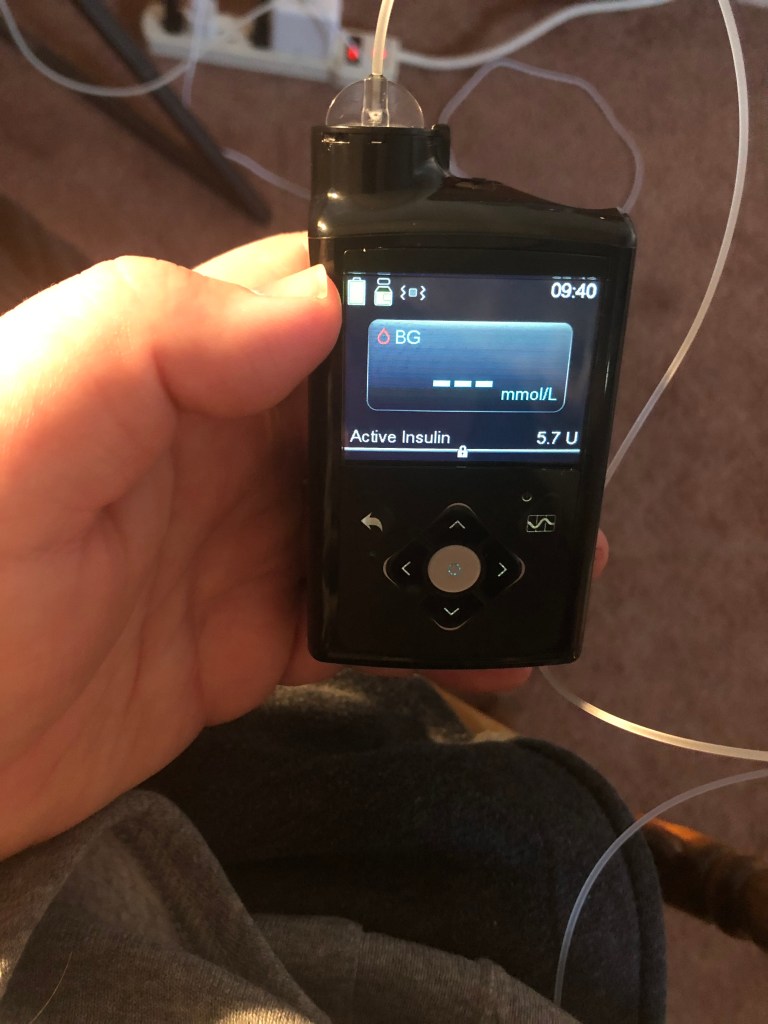
It’s already bad enough that everyone is limited to their homes due to quarantine measures, but somehow catching a cold on top of that seems to add insult to injury. I’ve relegated myself to the basement so that I hopefully don’t pass it on to my wife and kids. The part that sucks is that getting some fresh air occasionally helps with swollen sinuses and makes me feel a bit better, and it’s quite cold and windy today. Hmm, if only there was something to help cheer me up a bit… Oh, wait!

I started on this new bad-boy this morning. All pretty and shiny, but it felt weird to load up a pump that wasn’t my usual one. I’m certain that once I get my in-person training (IF I get my in-person training) and start on Continuous Glucose Monitoring, it will make a world of difference in how my blood sugar levels are maintained. High hopes are the best ones, right?

Hopefully everyone is staying safe and healthy. Remember that sitting at home presents a number of problems for someone with Diabetes (doesn’t everything?). Get some exercise, even if it means crushing out a batch of push-ups, squats, sit-ups and jumping jacks in the living room. Stay well hydrated. People have a nasty tendency of neglecting that aspect when sitting quietly at home, but sipping water or fluids consistently throughout the day is still important.

Now if you’ll excuse me, I’m going to grab some cold meds and unceremoniously curl up in the fetal position and pass out (No, I do not have “man flu”). ☯

Sharpen Up With Some Knowledge

I’ve been studying martial arts for over three decades (32 years this month, actually) and I’ve trained in a number of different disciplines during that time. Although it’s normally ideal to stick to one style so that you can master it (or at least attempt to), it gets a bit difficult NOT to dip your toes in the proverbial martial arts pool, from time to time.

Training in the Way of the Empty Hand is usually the best option as it means that you’re never disarmed. But I would be lying if I said that the prospect of training with a weapon hasn’t appealed to me, from time to time. With that in mind, I began studying Kendo and Iaido. I studied for a number of years, although I didn’t stick to it long enough to reach a mastery. But I have enough skill with a blade to make it a useful implement of self-defence if necessary.

A wakizashi or “short” sword

Samurai swords are iconic and have come to be recognized in and out of the martial arts world. An extremely fluid weapon, the samurai sword was normally a symbol of military nobility in feudal Japan, and was considered to be the soul of a samurai. The wearing two swords was outlawed by the Japanese government during the Meiji Restoration (I’ll let you Google that) but they continued to be used by police and military personnel.

So, what’s known about these famous swords? Well, samurai swords are unlike any other swords in the world, with their unique curvature and single-edged blade. They’ve been forged since as far back as the 10th century, and there are legends of the first actual katana being forged by a wordsmith named Amakuni Yasutsuna as far back as 700AD.

Samurai swords, or katanas as I will refer to them from here on in, are characterized by a long, curved, single-edged blade that is at least twenty-four inches in length and a grip that is long enough for both hands to hold. When samurais wore the two swords, the katana was the longer of the two, with the shorter sword being between twelve to twenty-four inches in length and called a wakizashi.

Because the wakizashi was shorter and had a grip that would only accommodate a single hand, it was generally used for closer combat as opposed to the katana, which was better suited for full combat (once they worked their way through the plethora of weapons they carried BESIDES swords).

Last but not least is the tanto. This is a short, dagger-style sword that usually measures six to twelve inches in length. Although intended more as a stabbing weapon for close combat, the edge could also be used for slashing. Over time, it became more ornate and acted as a ceremonial dagger, but a martial art called tantojutsu.

The creation of a katana is an entirely unique process. Unlike most swords that are forged by pouring molten steel into a mold, then tempered, katanas are created by forging and combining multiple layers of different types of steel. The layers are folded, over and over again and the curvature happens over a long process of curing and tempering.

The forging process creates a curved blade that combines softer and harder metals. Hard and soft… Sound familiar? (☯) The curve and flexibility of the blade makes the katana incredibly fluid and durable. Then the blade is sent to be polished, which can take weeks, in order to get that mirrored look.

Katanas are fascinating weapons, and would often be customized with images, lacquered scabbards and even family crests and symbols on the guard and grip. And as Ryan Reynolds said in X-men Origins: Wolverine, “I love this weapon more than any other thing in the whole wide world […]. You whip out a couple of swords at your ex-girlfriend’s wedding, they will never, ever forget it.”

At the end of the day, learning to defend oneself with your bare hands should be your primary goal. After all, you’re more likely to find yourself WITHOUT a weapon than carrying one. But should you find yourself with a weapon, it’s also nice to be able to use it properly.

National Beer Day… 🍺

This morning’s post was a bit short and I thought that was fine for a change, but it wouldn’t be me if I didn’t provide something longer to read. And here we are. Last year, I covered a number of different “holidays” in April and May that come around every year. You’ll notice the quotation marks, because these so-called holidays are generally not recognized and are just for fun.

Some of these are pretty weird (like National Ferret Day), but some are pretty interesting and decent (like National Siblings Day and Deep-dish Pizza Day). Although the majority of these come out of the United States, I can promise you that most of them are celebrated here in Canada as well; there’s no way in hell that Canadians WOULDN’T celebrate National Donut Day (that’s coming on June 5th, BTW).

But today is National Beer Day, and yes, it IS an American holiday but it’s well-observed in Canada as well. National Beer Day is celebrated on April 7th marking the day that the Cullen-Harrison Act was enacted after being signed into law by President Franklin Roosevelt in 1933. Although this didn’t mark the end of prohibition in the US, which took place later on in the year, it was the beginning of the end.

National Beer Day was created by an American named Justin Smith in 2009, who started the “holiday” as a Facebook page at the behest of his friends. Since then, it has become a recognized holiday by the Commonwealth of Virginia (where Smith is from). I checked Wikipedia for these facts, so take them for what you will: https://en.wikipedia.org/wiki/National_Beer_Day_(United_States)

Beer holds a particular interest for me. And unlike the average consumer, I enjoy consuming it for the different flavours and different blends, as opposed to the intoxicating effects (that’s my story and I’m sticking to it). I’m an odd duck in comparison to my counterparts in Canada, as I only start drinking beer when I was 23 years of age in Japan of all places, as opposed to early in my teens like most of my friends. This is mostly because of beer’s significant carb-count and effects on the waistline.

Depending on what history book you read, the first beer is thought to have been brewed by the Chinese almost 9,000 years ago. But beer as it’s brewed today (or close to it) is believed to have been started by the Mesopotamians around 3,500 to 3,100 BCE. Although some scholars think it may have been accidentally discovered when grains used for bread fermented, some postulated that not only was it brewed for its intoxicating effects but also as a dietary staple.

Regardless of who did it first, beer is here and most of us couldn’t be happier. And believe it or not, beer may have some particular health benefits in addition to being the beverage of choice for guitar-playing teens sitting by the fire on a beach. I found an article on a website called EverydayHealth.com, which lists 8 ways that beer is good for you. Here are the ways…

  1. Beer Fights Inflammation. The article suggests that some of the hops used in beer can contain bitter acids that help fight inflammation;
  2. Beer Aids Digestion. Those same bitter acids can also help with the release of stomach acids, essentially helping you to digest;
  3. Beer May prevent Some Cancers. Beer contains Lupulone and Xanthohumol, which have shown promise in fighting tumours. Most of these are just in the study phase;
  4. Beer Builds Bones. Beer contains silicone, which is said to be important for the building of strong bones. The article suggest India Pale Ale (my favourite) as the best source for this;
  5. Beer Is Heart-Healthy. A study in 2012 apparently links the consumption of one or two beer a day as beneficial for the prevention of heart issues, and the prevention of further issues in those who already have them;
  6. Beer “Polishes” Your Teeth. Beer apparently beats out tea and other methods of eliminating the biofilm that accumulates on your teeth if you haven’t brushed for a while, according to another study done in 2012 (were we all just drinking THAT much in 2012?);
  7. Beer Protects Brain Cells. A 2015 study from China describes some benefits in this regard. Finally, a study that WASN’T done in 2012;
  8. Beer Prevents Kidney Stones. Some studies have shown that consuming beer may help prevent the formation of kidney stones.

Here’s that EverydayHealth page, should you want to get further details, and perhaps read some of the linked studies I mentioned above: https://www.everydayhealth.com/pictures/ways-beer-good-you/

So there you have it! Beer isn’t all bar fights and hangovers but can actually do some good for you. As with all things, the idea is moderation. Too much consumption can lead to the reversal of some of the benefits listed above, and can also include increased blood pressure and weight gain. So the idea isn’t to down a twelve-pack thinking you’ve found the secret to eternal life! And bear in mind that the average can of beer can be anywhere between 11 to 25 grams of carbohydrates, depending on the blend and size of container. So, know what you’re drinking and how to bolus accordingly.

Enjoy National Beer Day and treat yourself to a cold one! I’d say wait until 5 p.m. but believe it or not, that’s not an actual rule and is mainly a social norm because the majority of people end their work day at 5. So, if you’re sitting at home binge-watching your preferred streaming service and you have nothing else to do considering quarantine measures, enjoy a beer (in moderation). I miss going out for beers with my occasional beer buddies (you know who you are!) so hopefully the state of the world will change soon and we can get back to the norm. ☯

I’ll Just Leave This Right Here…

I found this online a few days ago and I thought I’d share it. Its probably surprising to read a post of mine that doesn’t involve lists or long convoluted explanations about something, but sometimes you just gotta keep things simple. Enjoy! ☯

Don’t Fear The Reaper, Kick His Ass Instead

When faced with a medical condition you know nothing about, people will often make their own assumptions. One can hardly blame them, especially if their education and/or upbringing has provided some “seeded” information that they believe to be true. This is one of the reasons why I find it extremely interesting when someone decides to get past the fear voicing those questions, especially to someone living with the condition.

Enter the big question of the week: “What will happen to you if you don’t have insulin?”

The short answer is that I’ll die. There you go. Thanks for reading. It’s actually a bit more complicated than that, but that’s the short of it. The answer not so much involves the “if” I’ll die so much as it involves what I’ll die from. The bottom line is that before the arrival of insulin, people with Diabetes just didn’t survive. Simple as that. Once diagnosed, they slipped into a coma and died.

Just to be clear, I’m referring strictly to Type-1 Diabetes. For people with Type-2, whether using insulin therapy or not, their life expectancy can extend as long as years, depending on the specifics of their condition, diet, age, exercise and all that fun stuff. But for the average Type-1 Diabetic that can recognize early symptoms and takes precautions, the average life expectancy without insulin is believed to be about 7 to 10 days at most. Nice, eh?

“But why don’t you just diet and restrict yourself from carbohydrates, and exercise more when your blood sugar rises?” Very good question, anonymous person! Here’s the answer…

According to an article posted on Healthline.com, without insulin, your body can’t use glucose as fuel and begins to break down fatty tissue as a replacement, which causes those fats to turn into acids called ketones. These ketones build up in the bloodstream and eventually get expelled through one’s urine. However, when these ketones accumulate in the bloodstream, the blood starts to become acidic. This causes a condition called Diabetic Ketoacidosis.

Ketoacidosis is usually the condition that winds up killing the patient, but some of the symptoms may get to the patient first. These symptoms can include dehydration, shock and slipping into a comatose state. Here’s the HealthLine article, if you want more details: https://www.healthline.com/diabetesmine/ask-dmine-lifespan-sans-insulin#How-did-people-with-type-1-diabetes-survive-historically?

So no, the easy answer is that I can’t simply stop eating carbs and exercise more if my blood sugars rises to dangerous levels. The unfortunate reality is that this would be like sticking a piece of duct tape to stop a crack on the Hoover dam! Eventually, DKA would take over and my blood would turn acidic, effectively killing me despite my best efforts. This is why good blood sugar control and proper insulin therapy is so necessary.

The best way to maintain your health and stay alive, other than proper insulin therapy, is to stay hydrated and recognize the symptoms of DKA before they hit. Your body will cramp and ache everywhere, you’ll fall into the “endless diabetes cycle” of drink, pee, repeat and you’ll likely have confusion and bad breath. This is why it’s important to check for elevated ketone levels if you’ve suffered extreme high blood sugar, as the ketone process may have begun even if you’ve corrected your high with insulin.

Just one more aspect of Type-1 Diabetes that we have to worry about! But this is an easy one to prevent and manage, so long as you adhere to your insulin therapy, stay hydrated and watch your blood sugar levels carefully. Diabetes is already believed to shorten a person’s life expectancy; no need to give it any further opportunities. ☯

There Is No Keurig In The Apocalypse ☕️

We recently suffered a loss in our family… It’s been hard and we’ve been coping as best we can, but there’s little that can be done to get past the deep feelings of grief and loss… from our Keurig machine breaking down! Alright, my apologies for tugging at your heart strings, but coffee is pretty damn important in my daily routine.

I’ve had a coffee pod machine for years, in some iteration or another, and I got the first one in 2013 as a gift to my wife. We’ve had one model or another since then. A few weeks ago, we started to notice that our Keurig machine started brewing a much lower amount than it used to. All “pod”-based coffee machines tend to succumb to various issues over time, including erosion or corrosion of their inner tubings and workings. Most of them have to be descaled and clean on a regular basis, but eventually even that no longer works.

I had the genius idea of taking our current machine apart and seeing if I could clean its inner workings myself. But once the bottom panels were removed and I got a look inside, I was taken aback by the amount of electronic components it contained. I’m not a big fan of trying to fix something electronic that uses water, so we “retired” the machine. It was a pretty nice one, as it only held enough water for a single cup, preventing the usual issues that come with a large canister of water.

It got me to thinking about the little, everyday pleasures that we take for granted. With most things closed for business, doing something as simple as enjoying an espresso on the terrace of a local coffee shop can’t happen. So, it’s important to find some new “little pleasures” in your everyday life that you can indulge, despite the current issues facing the world.

Coffee and caffeinated drinks are a pretty customized and personalized experience in our household, with my wife and I preferring different blends and brews of coffees. This presents a challenge when faced with only one coffee machine. But we’re making it work (especially since I enjoy an energy drink, first thing in the morning) and their are bigger problems in life. Stay caffeinated, people! ☯

A Little Light Shines Through…

Having Type-1 Diabetes is expensive! I’ve spent the majority of my life saying, “I can’t afford to have Diabetes…” And with good reason, considering the cost and expense that goes into everything required to help keep us not only alive, but in good health.

In Canada, the average cost for a bottle of long-acting insulin such as Lantus (this is the type of insulin that would provide basal coverage over a full day) is about $80. A bottle of short-acting insulin, like Humalog, will run you anywhere between $35 to $40 a bottle. And if you’re anything like me, you may require two to three bottles of that sweet stuff in a month.

Now if you’re lucky, a bottle of long-acting stuff will get you through the month. So according to new math, you’d be looking at well over $200 a month for JUST the insulin. Don’t even get me started on the cost of syringes, needles, blood glucose sticks and various other supplies required to maintain oneself in the wonderful odyssey that is Type-1 Diabetes. If you don’t have some sort of medical coverage or benefits, it can be a life-threatening issue.

This is why it’s always so heart-warming to hear about something that helps to alleviate or lessen the burden, financial or otherwise. I just recently read about a bill passed by the Illinois state legislature in November of 2019, which puts a price cap on out-of-pocket cost for insulin at $100. Illinois’ Governor signed the bill into state law in January, with the law taking effect in Illinois in january of 2021.

Illinois will be the second state to pass such a law after Colorado, with several other states beginning to follow suit with bill of their own. An article posted by Newsweek provides further details, including outlining the increasing issue of some people dying from rationing their insulin supplies or skipping doses, to being unable to afford their insulin. Here’s the article: https://www.newsweek.com/illinois-becomes-second-state-cap-monthly-insulin-prices-more-states-are-considering-it-1483987

This is a fantastic step, but obviously it’s only a beginning. To be clear, this price cap applies to a patient’s co-pay, and not to the cost of insulin when purchase over-the-counter. This does not prevent drug manufacturers from charging increased prices for the sale of their products. It is said that in the United States, the price of insulin has tripled over the past decade.

Although this article is based on pricing and laws from the United States, the situation is very much the same in Canada. I remember the difficulties and financial strain I had to deal with, all through my 20’s and into my 30’s, due to the fact that I had no medical benefits to help take the burden of cost off my shoulders. It will be a wonderful time, when governments come to realize that life-saving therapies such as insulin should be made available, free of cost. ☯

T1D, It Could Happen To Me

Ah, Diabetes… Eternal thorn in my side and the “behind the scenes” silent partner that guarantees all the things I MUST do in my daily routine in order to survive. Type-1 Diabetes has been around for a very long time, from its “humble” discovery in the late 1800’s by doctors who recognized the condition developing after removing the pancreas, to the ancient Egyptians mentioning something pretty close to sounding like Diabetes almost 3,000 years ago.

For those who may not be in the know (and who have never read my blog before), Diabetes occurs when one’s own immune system attacks the body’s insulin-producing beta cells created by the pancreas. Depending on when you were diagnosed, T1D may have been referred to as “child’s” Diabetes or Juvenile Diabetes. The latter was the term I spent my childhood hearing, since the majority of Type-1’s are often diagnosed as children. So, this raises the question as to whether one can contract this specific type of Diabetes later on in life, such as during adulthood…

The short answer is yes. Although we know that Type-1 is linked to the body’s immune system attacking the beta cells, doctors aren’t entirely certain WHY it happens. Some research suggests that it can have genetic components, and researchers are also of the opinion that it could be triggered by outside components like diet or a pre-existing medical condition. That last one is certainly the case for my father who, in his 60’s, developed Type-1 Diabetes. And before everyone chimes in, no, he didn’t have Type-2 prior to this. But he has been diagnosed with a number of medical conditions, including Degenerative Spine.

The challenge with a diagnosis of Type-1 in adults is that most people (and most doctors as well) tend to assume that an adult actually has Type-2. This can be difficult and confusing, since both types will often have matching symptoms. Although the weight component is the x-factor between the two types, you can easily find Type-1’s who will have weight issues and Type-2’s who don’t. The tricky part is figuring out if your Diabetes is caused by your immune system or your inability to absorb insulin properly.

A sub-type of Diabetes, sometimes referred to as Type-1.5, is referred to as LADA (Latent Autoimmune Diabetes in Adults). As defined on a web page posted by the Mayo Clinic, “Latent autoimmune Diabetes in adults (LADA) is a slow-progressing form of autoimmune Diabetes. Like the autoimmune disease type 1 Diabetes, LADA occurs because your pancreas stops producing adequate insulin, most likely from some “insult” that slowly damages the insulin-producing cells in the pancreas.”

LADA pretty much embodies the issue I described earlier, where a diagnosis of Type-2 may happen because someone with LADA will still continue to produce insulin for months, maybe even years before insulin therapy will be required. Here’s the Mayo Clinic article, which provides further information; https://www.mayoclinic.org/diseases-conditions/type-1-diabetes/expert-answers/lada-diabetes/faq-20057880

The bottom line is simply this: if you find yourself experiencing excessive thirst, frequent urination, constant fatigue and moodiness as well as fluctuating weight, you should get yourself tested for Diabetes. And if you suspect that a diagnosis of Type-2 may not quite fit, don’t be afraid to consider that you may actually have contracted Type-1 and get a second opinion, if necessary. After all, Type-1 isn’t just diagnosed in children, anymore. ☯