Tai Chi, The Underestimated Martial Art ☯

When one thinks of martial arts, what springs to mind are the mainstream styles that almost everyone has heard about. In that respect, I’m referring to Karate, Tae Kwon Do and Kung Fu as prime examples. And any of their offshoot styles, of course. But when someone tells you that they study the martial arts, the first thing that comes to mind likely isn’t Tai Chi

First of all, what is Tai Chi? According to a page on the Tai Chi Foundation’s website, “Based on softness and awareness instead of force and resistance, tai chi chuan (also referred to as tai chi, taiji or taijiquan) has been recognized for centuries as a method of self-cultivation and an unexcelled form of self-defence. In Chinese, tai chi means “Supreme Ultimate.” (https://taichifoundation.org/what-tai-chi-chuan?gclid=EAIaIQobChMIupeU-Kjr6AIVLf_jBx2uOA6SEAAYASAAEgLrrfD_BwE)

Fitness group doing tai chi in park on a sunny day

That’s just scratching the surface, really. Tai Chi is a Chinese martial art, which makes it a style of Kung Fu. In the Western hemisphere, people associate Tai Chi with something that the older population does to improve flexibility and blood flow in the body. Although these certainly are some of the benefits, people often seem to forget that Tai Chi is actually a fantastic style of self-defence, and traditional Tai Chi includes all the same aspects as any other martial art including weapons, forms and faster movements than the slow and steady pace we usually see happening at a public park.

The beauty of Tai Chi, which has often been referred to as “meditation in motion”, is that it’s low impact and places very little strain on the joints. For an old dog such as myself, who has been practicing high impact and full-contact martial arts for over 30 years, this can be a welcome change. The movements automatically cause you to inhale and exhale appropriately to control breathing and helps you to solidify your posture.

Tai Chi also helps by providing other benefits, including but not limited to improved flexibility, balance and muscle strength despite the slow speed and low impact. These are a result of circular movements that never extend or stretch the joints or connective tissue. The Mayo Clinic’s website has an excellent article on further benefits and advantages of Tai Chi, which can be read here: https://www.mayoclinic.org/healthy-lifestyle/stress-management/in-depth/tai-chi/art-20045184

Much like Karate, Tai Chi boasts a number of different styles and offshoots that focus on different aspects as they relate to their respective benefits. So if you’re thinking of starting Tai Chi, you may want to observe a couple of classes before you make a choice. Like any martial art, styles are subjective to the practitioner so you’ll want to ensure that you join a school that will fit your needs and requirements.

Lastly, I’d invite anyone who still thinks of Tai Chi as an “old person” style of the martial arts to do some research into the more traditional forms of the art. In fact, there are a number of reasonable videos on YouTube that demonstrate Tai Chi at combat speed and some with weapons. I, personally, have studied Taoist Tai Chi, which is an offshoot of Yang-style Tai Chi. I never stuck with it, given everything else I try to cram into my brain, but it was certainly an enjoyable experience. ☯
Hollywood Magic…🥋

You could probably kick my ass. No, really… I have every confidence that anybody who made a serious effort would likely beat the brown emoji out of me. One of the important things that any student of the martial arts knows is that no mater how hard you train and how “good” you get, there will always be someone better. I put the word “good” in quotations, because a martial artist who genuinely believes that they are good, usually isn’t.

I can freely admit that as a child, besides my waning health, martial arts movies were one of the driving forces behind my interest in training. Watching such films as Enter the Dragon gave me the inspiration I needed to make the journey towards the martial arts. But there’s a lot you can do with a movie camera. Even create a martial arts master where none exists. And that’s just a little bit sad. But I digress…

Now, don’t get me wrong. There are a number of actors who have traditional martial arts backgrounds; some whom you wouldn’t even believe! For example, did you know that Elvis Presley held a black belt in Chito Ryu Karate? A style that by all accounts, happens to be Okinawan like my own, but was developed mainly in Japan?

My point in this post, and I will attempt to keep it brief, is that you can’t always believe the skill you see on the silver screen. Actors often take supplementary training in order to fulfill the requirements of their roles. And in some instances, stories can be told that may not have necessarily happened. I am speaking, of course, of Mr. Frank Dux…

One of the most iconic and inspiring movies of my childhood was a movie released in 1988 called Bloodsport. The movie was said to be based on the true life of Frank W. Dux, although in recent years, many of Mr. Dux’s claims were found to be fraudulent and false.

This was heart-breaking for me, since Bloodsport was one of those inspirational movies that moved me to the martial arts. Although I had already started looking into different styles and training on a rudimentary level, Bloodsport push me over the top. With the inspirational story of a troubled youth seeking out the training and guidance of a well-rounded martial arts master, which leads him to a life of the straight and narrow…

I would be lying if I said that this DIDN’T bear some passing resemblance to my own youth, where I sought out Sensei’s teachings in order to improve my health, well-being and provide for a better future. I often attribute the positives ion my life to the fact that I was able to stick with it and train the way I have, and continue to do so. But this movie was based on a life that the character DIDN’T actually live!

Most people can still agree that Bloodsport was an awesome movie, a fine example of 80’s action and martial arts films. I’m not a fan of propaganda and disinformation, so I’ll let you make your own determinations on this one. If you search for Frank Dux on YouTube or Google, you’ll get plenty of articles on what I’m talking about. I will once again point out that I think it’s sad when a person can’t make their own way through life without creating a persona or a history for themselves. ☯

Good Vs. Evil

Are you a good person? I’ve asked this before in a previous post, where if you were to ask the average person on the street whether they believed they were good or not, the safe odds are usually that they believe that they are. As I’ve said before, most people don’t go through life trying to be inherently bad.

But what about evil? The word is thrown around a lot, usually by people who have had some wrong inflicted on them by someone else, but can a person genuinely and truly be evil? The Oxford Dictionary defines evil as “profoundly immoral and wicked”, with other sources citing the term “evil” with colourful adjectives such as “wicked”, “disastrous”, “harmful” and “injurious”. My favourite is the term “imputed bad conduct”. The point is that all of it is meant to refer to people.

First and foremost, I wouldn’t be the researcher and eternal student of life that I am if I didn’t take a moment to try and put a defined explanation on evil from someone else’s perspective than my own. According to an article posted by the Stanford Encyclopedia of Philosophy, “Evil in the broad sense has been divided into two categories: natural evil and moral evil. Natural evils are bad states of affairs which do not result from the intentions or negligence of moral agents. Hurricanes and toothaches are examples of natural evils. By contrast, moral evils do result from the intentions or negligence of moral agents. Murder and lying are examples of moral evils.”

I like this explanation, because it shows that bad things can often happen without the necessarily bad intentions of people, or of people BEING bad. The article was actually quite an interesting read and goes into deeper detail. Here it is, if you want to give it a read: https://plato.stanford.edu/entries/concept-evil/

If you were to search your thoughts for a moment, I’m sure that we could all conjure up the name of a person or persons that we consider to be evil. Dictators, murderers, terrorists, that lady who lets her poodle crap on my lawn every morning… Plenty of examples would fit the bill. But is it possible that BEING evil isn’t actually a thing?

I’ve spent most of my life studying and believing that the universe as a whole contains a balance. Newton’s Third Law is a good example of this, “For every action there is an equal and opposite reaction.” Although this is primarily meant to refer to motion and physics, I believe it very much applies to every thing in general. Because Newton’s Third Law sounds suspiciously a lot like some aspects of karma.

The universe always tries to find a balance; light and dark, hot and cold, black and white, matter and anti-matter… Depending on your school of thought, there are plenty of other examples you can find. But I provide these examples because for the most part, one is an absence of the other. For example, darkness isn’t a thing. It’s simply the absence of light. Cold isn’t a thing, it’s simply the absence of heat and so on and so forth.

So with that line of thinking in mind, is it possible that evil is not a thing but simply the absence of good? This would have some pretty deep implications as the concept applies to people, as it would mean that a person simply lacks the goodness necessary to fit the standard as opposed to necessarily being evil themselves.

I don’t think that this moral definition will ever be changed, as it is the nature of people to consider anyone who does something intentionally bad to be categorized as evil. But sometimes we need to consider the perspective. I can almost promise you that for the most part, both sides of a violent conflict likely believes themselves to be right and the other side is evil. As Winston Churchill said, “History is written by the victors.”

To Train Or Not To Train…

Not a month goes by where I don’t see a blog post, video or article that shows some average, everyday schmuck off the street, talking trash and challenging a trained fighter. It NEVER ends well, with the average Joe (or Jane) getting their proverbial clocks cleaned. As the saying goes, “You would be better off sand papering a lion’s ass in a pair of pork chop panties…”

A part of me totally understands the instinct; you’re watching a fight or watching an action movie and you may think, “That’s ridiculous! I’d totally block that and do this, instead.” But depending on whether or not you’ve received any level of training (or have trained at all), challenging someone who trains in the combat arts is a foolish endeavour at best; a dangerous one at worse.

When I trained in my younger decades, I had three two-hour classes a week, two days of training on my own at the beach or at home, several bouts of cycling, weights and rock climbing… This was all in addition to whatever materials I’d read or study, as well. I’ve always been what I would consider “skilled”, but even I wouldn’t be foolish enough to intentionally challenge someone who spends their time learning how to kick someone’s ass.

Especially in today’s modern society of armchair warriors, people who just love to chime in and provide their two cents even when it’s worth less than that, it’s a trend that I seem to notice more and more. The beauty of the martial arts is that it’s not about being bigger. Or stronger. Or faster. The martial arts is a unique journey for every student, but intense study makes for a deadly warrior, regardless of one’s motivations.

Why anyone would choose to challenge a trained fighter is beyond me. It’s one of those things that I rank right up there with snorting condoms or eating Tide pods. But it certainly makes for some entertaining videos. There are plenty on YouTube, if you feel like having a laugh… ☯

Fuel The Machine 🍔

A big part of maintaining good health is nutrition. Food plays an important role in most of the aspects I write about, including Diabetes and fitness. Obviously. So how does one use their eating habits to maximize their fitness? I may have used a cheeseburger emoji in the title, but this doesn’t mean you should start wolfing down burgers. I’m just a fan of burgers…

It stands to reason that some of the basic food elements should be observed. Protein is important for the construction and repair of muscle tissue and carbohydrates are required as fuel. I’ve covered those aspects in previous posts, but when is the best time to eat when working out? The jury is out and sometimes it depends a bit on preference.

According to an article posted by HealthLine.com, exercising on an empty stomach could have some benefits. A fasted system means that the body may burn through its fat stores as fuel as opposed to using carbs, especially if you haven’t ingested any. There’s no firm evidence showing that will lead to permanent weight-loss, and the article also indicates that food should be consumed some hours prior to a long workout, as your body may need the additional fuel to get through the workout.

Either way, the article postulates that one should definitely eat AFTER a workout, especially if you worked out with a fasting system. The body will need to replenish its energy store and replace lost nutrients. (https://www.healthline.com/nutrition/eating-before-or-after-workout#long-duration-exercise)

Timing can also be an important factor. One usually shouldn’t eat immediately before working out, as this can cause stomach problems as your blood supply is dedicated to your muscle tissue instead of digestion. But you should certainly snack/eat a meal within an hour of working out in order to replenish yourself.

Try to choose healthy options that will provide what your body needs. Chocolate milk is a fantastic fitness staple, since its loaded with protein and carbs. Excellent for replenishing your body. It’s also made primarily of water and will help to keep you hydrated. You want to avoid fatty foods as these will take your body longer to break down and digest and, well… fat, right?

At the end of the day, the best course of action comes down to your preference. Every person’s body is different, so the requirements may be different as well. But the important and common factors are to drink plenty of water to stay hydrated, eat well to replenish AFTER a workout (but mind your portion size) and don’t be afraid to snack. Bear in mind that one of the things your mother told you growing up was accurate: breakfast is the most important meal of the day. ☯

Is Free Will An Illusion?

Once and a while, I start to dwell on things and ask questions of myself as they apply to life. One of these questions is the title of today’s post: Is free will an illusion? I think that most people would agree that for the most part, people in the western world live as free people with all the choices and entitlements associated with our lifestyles.

But how much of it is real? And how much of it is simply a comforting dream that we allow ourselves to have in order to cope with the prison of our own reality? Not to sound totally morose, but sometimes one needs to question things. This appears to be the mood I’m in today.

As usual, I’ll start by defining what it is I’m referring to. Free will is defined as “the power of acting without the constraint of necessity or fate; the ability to act at one’s own discretion.” This is according to the Oxford Dictionary, which also provide the action of doing something voluntarily.

So, how much of our free will is real and how much is the illusion. I like thinking that I walk through life doing whatever the hell I want, but I may be incorrect in some respects. Allow me to explain…

For the most part, we get to decide and choose what we will do with our lives. As long as we work hard and study (or so we’re told) we can choose an avenue of post-secondary study and embark on a career that will make us happy and fulfilled. If one is lucky enough to become successful in that endeavour, then we usually slip into the expected and often wanted aspects of societal norm; a home, a spouse, children and vacations…

But what if you happen to lack the financial means to make that post-secondary study happen? You can be as good at schooling as you want to be but if you can’t afford college or university, some of your chosen professions will be off limits to you. Or the other side of the equation would be if you don’t have the best grades in school, some post-secondary opportunities will be off limits, regardless of your financial means.

But is this truly free will? I use schooling as an example, but there are many others. For example, if you decided you wanted to drop everything and spend your life travelling the world as a nomad, could you? Or would there be societal, governmental and familial obligations that would prevent you and potentially ruin you if you tried?

Let’s say that you get everything you wanted: complete your chosen studies, obtain the job of your dreams and everything falls into place. Is everything one in your life now dictated by your free will or is some of it still imposed by outside factors? Things such as work schedules and paying taxes are required of people and are usually outside the purview of our free will.

The importance behind free will isn’t so much in getting to do what you want, so much as it relates to the ability to make a choice. Choice is the true aspect of free will that every person has. In truth, even doing nothing is still making a choice. And even in the face of constraints or restrictions, making a choice will always be the true free will. Food for thought… ☯

Supplement Yo’self to Improve Yo’self 💊

If you have Diabetes and are anything like me (and hopefully you are, if you’re Diabetic) you work hard towards maintaining your blood sugar levels. While diet, exercise and frequent blood sugar testing are the top methods of ensuring proper blood glucose levels, there are some supplements that are believed to help you along.

I wrote a post last year about the differences in vitamins and supplements, their varied uses and benefits. I re-posted this article in February, called Let’s Boost That System, Shall We? (https://thebloggingbuddhist.com/2020/02/22/lets-boost-that-system-shall-we/)

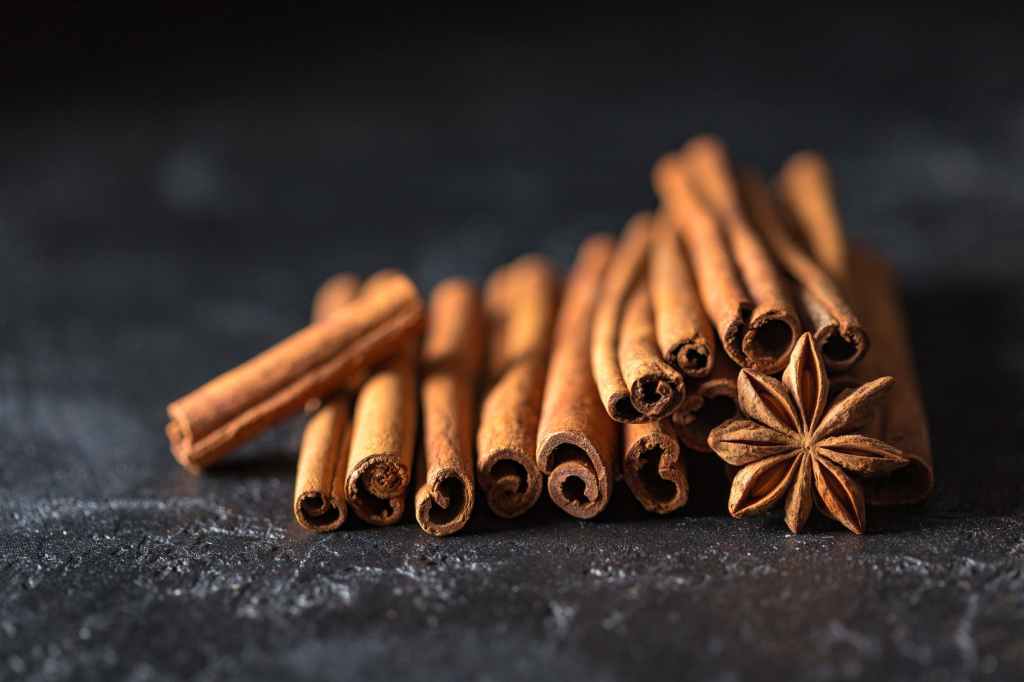
Cinnamon, one of the more popular Diabetes supplements

One of the things that irk me the most about these supplements is that they’re generally described as being the most beneficial for people with Type-2 Diabetes. This is because people with Type-2 generally still produce insulin of their own, if only in small amounts. So their systems use and manage insulin and supplements in different ways than a Type-1’s system would. With that in mind, here are some of the more commonly known supplements that can be helpful…

  1. Chromium. This is the one I have something of a familiarity with, since it’s one that my Sensei has been recommending to me since my teens (Sensei happens to be an herbologist and practitioner of Chinese medicine). Chromium doesn’t so much affect blood sugar as it helps to improve the effects of insulin, thereby helping control blood sugar levels. This supplement can apply to both Type-1 and Type-2;
  2. Magnesium. This is a supplement that your body uses during normal insulin production. For people with Type-2, magnesium deficiency is often a thing. For this reason, taking magnesium supplements can help improve fasting blood sugars. Magnesium should usually be taken with a meal for better effect, and taking too much can play hell on your digestion and cause unwanted bathroom issues, if you take my meaning…;
  3. Vitamin D. This is another one that usually applies to Type-2. This is because Vitamin D is believed to improve the function of the pancreas, which produces insulin. This wouldn’t apply to Type-1. Some studies have shown that most Type-2’s have some level of deficiency in Vitamin D, which is why supplementing can be helpful;
  4. Cinnamon. This is the most popular and well-known of supplements associated with Diabetes, although it also applies primarily to Type-2. It helps the body absorb and respond to insulin, improving blood sugar and A1C levels overall. The caution with this one is that excessive amounts of cinnamon can be damaging to the liver, depending on the variety of cinnamon you’re using.

I’ll be totally honest, I kept repeating the fact that most of these apply to Type-2 because I don’t want someone with Type-1 potentially wolfing down supplements, thinking that it’ll fix their blood sugar levels for them. My familiarity with the specifics of Type-2 is significantly less than it would be for Type-1, which is why this is the time where I recommend speaking to your doctor or health practitioner before starting on ANY supplements that could affect your overall Diabetes control.

It would be fantastic if there were a magic pill we could take to maintain our blood sugar levels. Hell, sometimes I find myself jealous of Type-2’s who can control blood glucose levels through the use of oral medication. But for those with Type-2, it’s important to know that there are things you can take to help yourself along. ☯

Shake It Off 🤝

There are hundreds, if not thousands of different cultures and religious beliefs around the world. Each and every one of these have their own set of traditions and habits that they follow, based on their scriptures and/or cultural and societal habits. But in a lot of cases, some of these traditions can conflict with those of other cultures and religions.

Although this should be fine, and everyone should simply adopt a modus operandi of live and let live, it continues to surprise and fascinate me how some people appear offended or even insulted, when someone does something different than what they do. Although this would make sense if you did something heinous like blowing your nose with a holy scripture or something, I’m talking about the little things…

Flashback to an incident that happened last year when I visited my parents in New Brunswick. My mother happens to be French Catholic and as such, I have the habit of attending a church service with her whenever I visit. I am appreciative of all people’s faith, so it’s always a pleasure to be able to share in the experience with my mother.

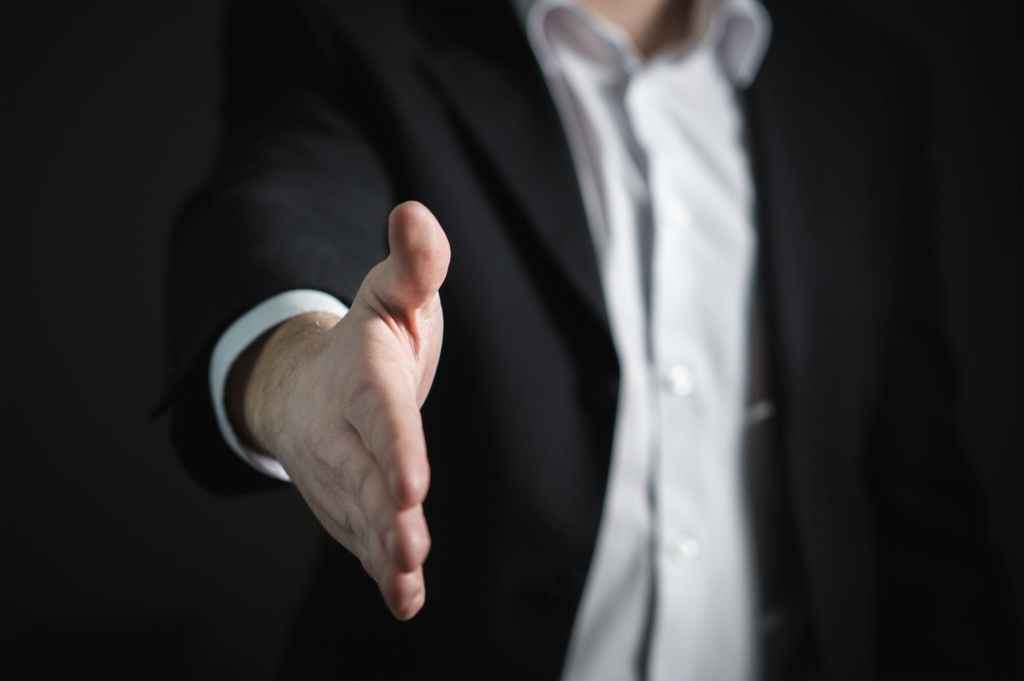
One of the Catholic church’s traditions during a typical service is to turn and wish peace and well-being upon your neighbours in a practice referred to as “Passing the Peace.” This is usually done by shaking peoples’ hands while saying “Peace be with you.” From my understanding, it’s a practice that’s observed by a number of Christian sects and churches.

This is an interesting topic, considering the advent of social distancing and most people trying to avoid physical contact with others. For the most part, and considering the nature of my job, I don’t avoid shaking hands as a rule but I do tend to restrict physical contact with total strangers to an extent. My mother is very much the same, and has long discontinued the practice of shaking hands and simply says “Peace be with you” and moving on.

For most people, there’s nothing wrong with this. But some people always seem to see the negative in a situation. During this particular service, my mother and I were seated behind some people who took some… liberties with their time within the church. The woman took her shoes off and appeared to be picking at her feet throughout most of the service.

I’m not here to judge. I wasn’t THERE to judge. Especially in a church whose holy Bible reads, “Judge not lest ye be judged.” But perhaps shaking your hands after you’ve been picking the light knows what from the crevices in your feet is NOT in my best interest. So when the time came for Passing the Peace, I respectfully bowed to the woman while saying “Peace be with you.” The look of utter shock and judgement on that woman’s face caught me completely by surprise.

Now to my mother’s credit, she makes a point of telling people that she doesn’t shake hands. Pretty clear cut. But in my case, I don’t know if it was my refusal to stick out my hand, the woman’s embarrassment because she HAD stuck out her hand or the bow, but I had somehow rubbed her the wrong way. To the point where she felt it necessary to approach me after the service to say that it was customary to follow the church’s customs when visiting.

Here’s the joke: I grew up in the Catholic church. Up until my teens, when I started making my own way, I followed my mother to church every week. So I knew her point of view was skewed and incorrect. Could I have corrected her? Sure. Could I have explained my religious views? Probably. Was it easier to leave her in her ignorance and walk away? It was, and you bet your keister I did!

Unless your traditions and beliefs bring harm to yourself and other people, we should all be able to share a respect for each other’s faith. They may all be different, but they should all be meant to evoke acceptance and understanding. Otherwise, what is faith for? The appropriate response from this woman would have been to ask questions and perhaps learn about our respective differences in faith. Given the way the world has evolved, haven’t we reached a point where said acceptance and understanding rule the day? Food for thought… ☯

Time Is Of The Essence

One of the biggest love/hate relationships I have with modern society is people’s use of their time. Not how they occupy or entertain themselves, but the ACTUAL use of time, as in getting to an appointment, making deadlines and adjusting for outside factors when doing so. People are horrible at it, and I would be lying if I said I wasn’t, on occasion, guilty of what I’ll write about as well. But for the most part I FEEL immune to it, which is why I often don’t understand why others aren’t as well.

As you can tell, today’s post may be a bit of a soapbox rant. But in today’s fast-paced environment, society needs to learn and understand the importance of time-management and being on time. For some, time management comes easily. You set an appointment, you keep the appointment. Rinse and repeat. For others, it often feels as though they have no clear concept of time or how to be ON time.

According to an article posted by Psychology Today, some people may be late or have difficulty managing time for a number of reasons, including but not limited to enjoying the attention they get when showing up late, being indifferent to the effects of their tardiness on others or lacking some of the time-management skills that the average person uses, such as checking the time and leaving early. (https://www.psychologytoday.com/ca/blog/the-homework-myth/201107/why-are-some-people-always-late-and-other-human-puzzles)

A good example of this, is a girl I dated some years ago. She had a nasty habit of not only showing up late to pre-determined appointments, she would often makes others wait for unnecessary periods of time while she got ready, thereby causing them to be late as well. I’ll admit that I was guilty of providing a much earlier appointment time in an effort to have her actually reach the appointment at the correct time. This tactic did not always work.

Friends and family members would tell me that she had always been this way, and that they believed that it was a subconscious way for her to see if you cared enough NOT to leave her behind. She’s obviously not the woman I’m married to, so we can all see how THAT worked out for her. But this could easily fall under the category of the attention-seeking mentioned in the linked article above.

In some respects, people can also be slaves to their routine. For example, if you’re used to waking at 6 a.m. every morning to get through your routine and reach work by 8 a.m. then you likely won’t consider waking 30 minutes earlier even if the roads are snow or ice covered and may require extra time. It isn’t until you’re trying to reach the office as usual, that you notice your inability to travel at normal speeds, resulting in showing up late for work.

This is only one example of course, but there are many. I’ve never been a fan of using traffic as an excuse, unless you’re from out of town. “Sorry I’m late! Traffic was brutal, this morning!” Bro, haven’t you lived here for years? How can you be late because of a gathering of vehicles on your route to work, that you probably see EVERY FREAKING MORNING? Shouldn’t you have an idea of the required time by now?

I used to have an instructor who said, “If you arrive on time, you’re already late!” I have to admit that this saying has stuck with me for years. I always attempt to show up at least fifteen minutes early. To everything. This helps prevent any issues that may be caused by outside obstacles, or having the person you’re meeting show up first and have to wait for you.

Time management and getting to someplace at an agreed time are not only important in order to maintain some semblance of order in your own life. It’s also an important factor to reaching milestones, getting ahead in life and making life in general work for you. At the end of the day, it isn’t just your time. It’s the time of the people waiting. Rant over… for now. ☯

Some Watered Down Information

Water is life. Quite literally. The human body, on average, is composed of about 60% water depending on age, weight and varying factors. Water is one of the simplest things in the world, composed simply of hydrogen and oxygen. It’s odourless, tasteless, inorganic and contains absolutely no calories. Despite these facts, we need to consume a reasonable amount of water ever day in order to survive. But not all waters are created equal…

First of all, let me be clear that I’m not talking about flavoured or sparkling waters, or anything that’s been processed or served into bottles or cans that you might find at your local convenience or grocery store. I’m talking about the differences between distilled and spring water.

Let’s start with spring water, or what one typically sees at the store as bottled water. This is water that has come from a natural source, like the mountains or underground. Although most people tend to consider this water to be the “best” water to drink, those same people don’t realize that this water may or may not have been treated and have no idea what contaminants may be included.

Now, I’m not trying to get myself taken out by an assassin hired by “big water” but I should probably point out that for the most part, drinking bottled water is no better and no worse than drinking tap water. In fact, tap water often has more stringent treatment and purification processes than the water you get in a plastic bottle. in fact, studies performed by the NRDC (Yes, the National Resources Defence Council that Marshall Erikson worked at in How I Met Your Mother) have found contaminants contained in some bottled water (https://www.nrdc.org/stories/truth-about-tap#table2)

Distilled water is an entirely different creature. Distilled water is purified, filtered and stripped of absolutely everything EXCEPT hydrogen and oxygen. That’s why most people consider distilled water to be stale and flat. Because there’s literally nothing in it. You know that one specific brand of bottled water that you absolutely LOVE the taste of? That taste is the result of the minerals and contaminants within the water.

Distilled water is usually what’s used for medical purposes or for people with vulnerable systems. For example, my wife and I use distilled water to make our infant son’s formula, since it prevents the addition of said contaminants. Depending on what you’re trying to do, distilled water can also be used for recipes and such. So distilled and spring water are not necessarily interchangeable, depending on who’s consuming it and why.

At the end of the day, if you have a dedicated drinking water tap at home with a decent filter, that option is perfectly fine and will do the job. You’ll also notice that bottles of distilled water will often cost a touch more than spring water, due to the process required to purify it. if you wonder about the purity of your tap water, check with your municipality’s water board. Depending on where you live, the majority of towns and cities are obligated to test their water frequently and make the results public.

Most importantly, be sure to drink plenty of water. Staying hydrated will help eliminate fatigue, stave off unnecessary hunger and help to flush out your body’s systems. Although not all waters are created equal, as long as you keep on drinking it, you can’t go wrong. ☯