Fake It ‘Til You Make It…

Something that drives me absolutely batty is when I see folks intentionally going out of their way to prove martial arts as something fake. It’s one thing if someone takes steps to expose someone they know for a fact is teaching a fake form of martial arts, but I’m referring to those who simply have a blanket belief that ALL martial arts are fake. As someone who has spent over three quarters of his life studying traditional martial arts, I can promise you that genuine fighting arts, such as they are, are anything but fake.

Unfortunately, movies and television make a pretty good attempt at portraying martial arts as something mystical and almost ethereal. But the true reality of martial arts, if it’s a genuine style, is that it requires a shit ton of hard work and dedication to hone one’s skills in this respect. I found myself falling down the YouTube rabbit hole last week, and ended up watching a bunch of videos where “fake” martial arts were being exposed.

Some of the stuff those videos showed was beyond borderline ridiculous, if I do say so myself. With this thought in mind and with all due respect to the hundreds of YouTube videos exposing fake martial arts, here is my top 6 list of things that the martial arts does NOT do:

  1. We’re not undefeatable: Masterhood is something that should happen organically. A student should never get into the martial arts with the thought of “I’m gonna be a master” in their heads. Although I’ve often said that no reason is inherently bad, there are some obvious exceptions. But no matter how long you trained and developed yourself, there will always be someone stronger and better skilled than you. Even though I’ve had the benefit of being the victor in the fights that mattered, there are some that I’ve lost. Martial arts does not make you invulnerable;
  2. We don’t keep secrets: The true goal of every traditional martial artist is to develop a student who will pass on the teaching in order to guarantee the continuation of the style. The concept of a master holding back a “secret technique” so that they can win any fight. Once we take on a pupil, we teach them everything there is to our style, albeit in due time. Advanced techniques obviously aren’t shared with someone who JUST started. The material is doled out according to experience level and skill. But we don’t hold anything back. Our systems wouldn’t survive if we did;
  3. We can’t move or affect people/objects without touching them: Some of my favourite videos are the ones where you see some fuckin’ idiot holding a hand out to someone charging at them, only to have the charging pupil pass out or fall over from an “unseen force” or energy that the “master”is projecting. This is, without exception, only effective against the master’s own students and never works in a real environment. Because it’s fake;
  4. There’s nothing “mystical” behind what we do: Martial arts isn’t some magical or mystical thing that originated from a spiritual source. Not to be mistaken with the fact that some us are “spiritual,” but martial arts is based strictly on how the human body moves, responds and functions. That’s it. Strikes, blocks and movements are all based on how the human body allows them. Even the styles that profess their origins from animal movements are still using natural movements of the body. There’s very little more natural or instinctive than a punch or a kick. We’ve been doing that for as long as we’ve existed;
  5. We don’t feel the need to compete: With the exception of a couple of times where I’ve demonstrated forms, I have never participated in tournaments. The need to pit myself against another person or style has never been necessary, nor do I want to. trust me, when I say that my martial skills have been proven in the line of duty on more than one occasion;
  6. We don’t hide our history: If the instructor or “master” you speak to can’t answer some basic questions about the style, where he was certified or who he’s trained with, he or she is likely a sham. I was trained by Guy-Sensei in New Brunswick. He was trained by Nakama-Sensei in Okinawa who was trained by Uechi-Sensei. I’m third generation, directly under the style’s Grandmaster. I obtained my black belt in 2002 in Dalhousie, New Brunswick after training in Okinawa during the previous year. I can explain the lineage and creation of my style with ease, and any true martial artists should be able to do the same (beginner’s being the exception).

There are a number of fakes out there, as with any sport or industry. Even though it can easy to watch all the uploaded videos and assume that martial arts are fake or ineffective, the important takeaway is that even someone who has spend decades training in a style can still be defeated on camera by someone else. This doesn’t mean that martial arts are fake; it simply means that you need to keep a keen eye open for some of the things I’ve pointed out.

Otherwise, recognize and acknowledge that like boxing and MMA, someone who has trained for long years in martial arts of any style and has put in the effort will undoubtedly have the skill and capability to defend themselves and others. So maybe it isn’t a fight you wanna pick. Granted, the YouTube videos are definitely good for a laugh. Some people will do anything for a buck… ☯


Best Of The Best

Listen, anyone who reads my blog regularly, knows that I’m not here to endorse any specific source or product. But once in a while, I feel it necessary to speak about particular books or films that have had an impact on my life, training or beliefs. A few days ago, I had the opportunity to re-watch a movie from my youth that had a definite impact on my choices regarding the martial arts. I’m talking a little movie called Best Of The Best…

Released in 1989, the movie follows the journey of five American fighters who are chosen to be part of an American Karate Team intent on competing against five fighters from the Korean team… In Korea! The team couldn’t be any different from each other, with a traditional Korean Tae Kwon Do champion, a dedicated karate practitioner who has a young son (sound familiar?), a chubby, hillbilly asshole who challenges everyone’s patience and even includes a caucasian Buddhist to add some flavour to the group.

I tried to find a promotional poster to share with the post, but there was nothing that was free or wouldn’t have cost me a ridiculous amount just to share, so I’ll satisfy myself with sharing the movie’s IMDB link here. IMDB is a phenomal tool for reading about a movie, but if you have Canadian Netflix, it’s on there right now and you should stop what you’re doing and watch the movie immediately! Starring Eric Roberts and Philip Rhee, the movie includes many aspects that I can relate to (minus competing, of course) in relation to my own martial arts journey.

This’ll be a short post, especially since I don’t want to provide any spoilers. But if you want a decent, realistic martial arts movie, Best of the Best is definitely the movie for you. It can feel like a bit of a slow burn at times, but the story is solid, the training is realistic and factual and the message is timeless. I’ve seen this movie almost a dozen times, and I never hesitate to sit through it when I see it cross my path. If you want a story of true martial arts prowess and dignity, pop a bag of Orville’s best and fire up your Netflix and watch Best Of The Best. If you love martial arts, you won’t be disappointed. ☯

A Shovelful Of Advice…

I hate snow. I have a pretty solid dislike for the cold in general, despite the fact that I don’t yearn for sandy beaches and hot climates, but the snow holds a special place in the dark recesses of my heart. Mostly because I have to shovel that white shit. And as much as I enjoy the occasional romp in the snow, or pelting my son with a solid snowball, shovelling snow is my personal version of hell freezing over.

The depth of snow behind my vehicle at 6:30 am

Last Monday, I awoke to the sight of snow on the ground. At first glance, it didn’t seem to be a big deal. Then I opened my door and noticed that the snow around my SUV was two-feet deep. FML! I have a pretty specific and time-sensitive routine during weekday mornings. Most of it involves getting my 5-year old fed, dressed and his lunch kit put together before ushering him out the door to his bus stop.

Since his bus driver has instructions not to pick up or drop off without a parent present, I’ve taken to driving Nathan to the bus stop in order to wait for the bus inside a warm vehicle. I know, right? First world pleasures, to be sure. But considering the weather reached -20 degrees on Monday, it wouldn’t have been ideal to stand outside waiting (despite the fact I used to walk in colder temps when I was a kid).

I whipped through my morning routine at double speed then bundled up in warm thermals and winter clothing in order to go shovel out my vehicle. After about an hour of shovelling, I was sweating inside all my layers and had barely cleared half of my driveway. The worst part? Three of my neighbours were smiling and waving while quickly clearing their driveways using a snowblower. I was thinking, what kind of a masochist am I? I’m 42 years old, Type-1 Diabetic and a heart attack waiting to happen!

The world is blanketed in white

After noticing that I was the only goon using a manual shovel, and the calls for service I’ve attended where people have dropped dead from heart attack while shovelling, I had decided that enough was enough. I had been complaining to my wife about it for the four years we’ve lived where we are; this winter would be the one where I purchase a snow blower.

Shovelling snow puts enormous strain on the human heart. One doesn’t realize it when doing it, but you’re moving hundreds of pounds of snow over a short period of time, when shovelling out your driveway. Add that to the increased blood pressure one suffers due to the colder weather, and it’s a recipe for disaster. Add weakened organs due to Type-1 Diabetes, and it’s almost guaranteed that you’ll drop from the strain when all you were trying to do is clean out your driveway.

One of the worst calls I’ve ever attended involved a guy just a few years older than I am, coincidentally with Type-1 Diabetes. He was clearing snow with a snowblower and simply dropped on the side of his driveway. All those factors were in play. Last Monday was enough to convince me that even if I do consider myself to be somewhat in shape, I no longer want to be struggling with the evil white stuff at 6 in the morning. Bring on the snowblower.

If you routinely shovel snow, or are one of those idiots that try to make a few bucks doing so, you need to consider a few aspects. Like any workout, you should stretch and warm up before you go conquer the great, white yeti. Even while shovelling, you need to make sure to lift and push with your legs, not your chest or back. And you should exhale as you hurl your shovelful of white shit. These are all things that you would be doing for a traditional workout, so why wouldn’t you do it RIGHT before stressing your body in cold temperatures?

Take breaks, drink plenty of fluids and treat shovelling the same way as you would, any other physical activity. This means test your blood before, during and after as well. Now if you’ll excuse me, I need to go clean the snow off my car and snow blow the driveway… ☯

World Diabetes Day 2020

I know I harp on many of these so-called “holidays” that seem to riddle the calendar with every passing month. But this one just happens to be personal to me, for obvious reasons. Every year on November 14th, which is the birthday of Sir Frederick Banting, we celebrate World Diabetes Day. November is already Diabetes Awareness Month in most medical circles, but today is a day where focus is brought to the growing number of people being diagnosed with type 1 Diabetes.

World Diabetes Day was created in 1991 but the International Diabetes Federation and the World Health Organization, and is often recognized by the signature blue circle logo and is usually accompanied by a different theme every year. But rather than get into all the hubbub that is yet another yearly holiday, I thought it would be a good idea to remind folks about the actual discovery of insulin and a bit of its history.

As most may know, insulin is a peptide hormone created by beta cells inside the pancreas. Insulin helps with the processing and regulating of carbohydrates by absorbing glucose from the blood into various tissues of the body. Beta cells release insulin into the body in response to blood sugar levels, specifically high ones. Insulin plays a number of different roles outside of this, but for the purposes of this post, I’ll keep it simple.

Although the discovery of insulin is attributed to Sir Frederick Banting and his lab assistant, Charles Best, it should be noted that the road to insulin’s discovery started over 50 years before Banting made the discovery. The relationship between the pancreas and Diabetes was therefore established during the late 1860’s and 70’s, with a number of experimental treatments never quite hitting the mark. It also surprised me to discovery just how many of these experiments were performed on dogs. Whether this is because they constitute a large mammal or because they were simply available is beyond me. Oh, how they were different times!

Starting in the early 1920’s, Banting and Best began experimenting with islet cells and injecting them into a Diabetic dog, which resulted in a dramatic drop in blood sugar levels. In January of 1922, the first injections to human patients were given and the rest is history. Banting won the Nobel Prize in Physiology or Medicine in 1923, for the discovery of insulin. He shared the prize with Charles Best and sold the patent for insulin to the University of Toronto for a dollar.

The world would be a significantly different place if insulin had never been discovered. Obviously, I wouldn’t be here. But the millions of people who have been diagnosed with Diabetes certainly wouldn’t be either, as that diagnosis was basically akin to a death sentence before insulin came along. This isn’t really a “celebratory” holiday; you won’t likely catch people throwing parties or going crazy in any significant way. I mean, good on them if they do! Hopefully, they take the time to count the carbs in their drinks while they celebrate… ☯

Nobody Ever Wins A Fight

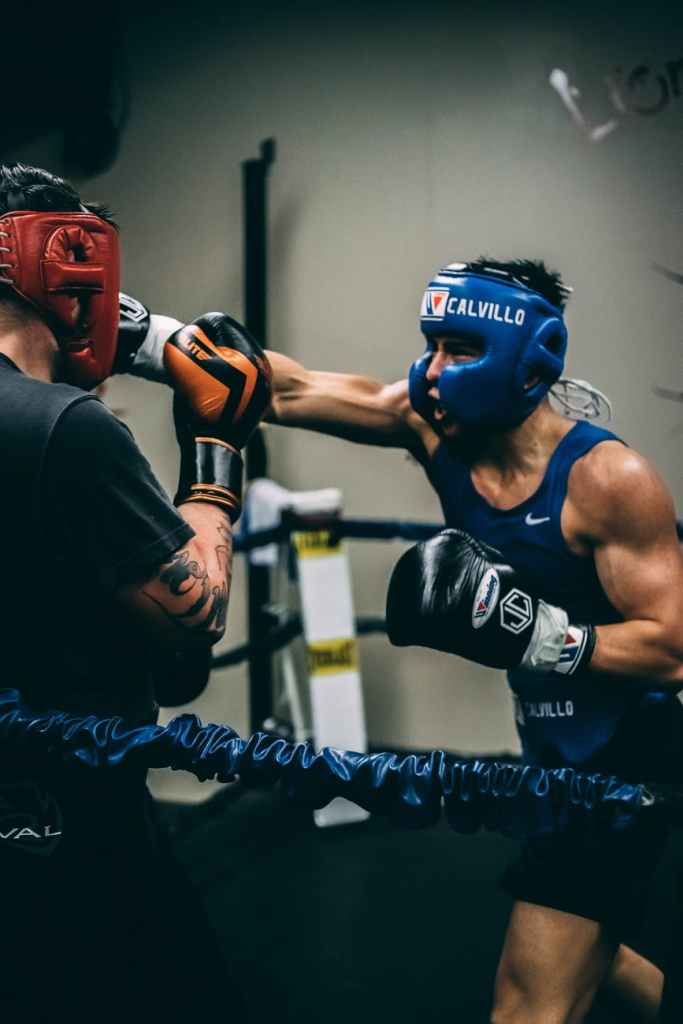
Fighting is an unglamorous thing. Although it looks real neat and epic on the big screen; two trained fighters squaring off, monologuing to each other then beating the living crap out of each other for almost half an hour before one of them finally succumbs to that one punch or kick that puts them down… What bullshit! I can promise you that a real fight is normally nothing like that. Even “professional” fighters train for hours and hours for a scheduled match and even they usually deal with heavy exhaustion by the end of it.

“Nobody Ever Wins A Fight…”

– John Dalton (Patrick Swayze), Road House, 1989

I’ve been training in the martial arts for over thirty years now, and I’ve run out of fingers on which to count the number of fights I’ve been involved in. To be clear, I refer to the fights that were in the line of duty or in the defence of myself or another person, not sparring matches or in karate class. None of them have been by choice, and the few of them that were a “choice” were not mine to make. But since I’m sitting here writing this, they were obviously mine to finish.

As time and the years have elapsed, I’ve taken stock of the old adage that a true martial artists trains to fight so that he or she will never have to. I can say with firm honesty that I have never been the one to start any fight I’ve been involved in. The choice to take violent action has always been made by my opponents, although they’ve always regretted it, soon after. I’m sure that sounds like bragging, but rest assured that I say it only because it illustrates an important point: every fight MUST have a victor and a loser. Any true battle that is seen to its conclusion can only be as such.

So, which one will you be? I’ve read that you win every battle you never fight. That may be true. It’s kind of hard to lose if you don’t fight to start with. But it all depends on one’s reasons. I’ve lived with the belief that violence is never a reason. You should never seek out violence or to do harm to others. That being said, it would be a great dishonour to sit back and allow events to unfold if violence is visited upon your family and loved ones. At this point, learning to fight so that you’ll never have to is no longer a choice. Someone else has already made the decision and has dragged you into the consequences.

I’ve never stepped onto a sparring competition mat. Ever. The concept of fighting for a plastic trophy has always left a bitter taste in my mouth. My Sensei never believed in it, either. He always said that if I chose to participate in tournaments that he only had two conditions: never to ask him to train me for it, and to make damn good and sure that I won. And in truth, I’ve participated in forms on a couple of occasions when I was invited to attend certain tournaments. And form, or kata if you will, is a beautiful demonstration of the discipline that is learned din the martial arts. But even on those instances, I never demonstrated in a competitive manner.

I believe in peace. I believe in “live and let live.” And so should you. If you choose to fight, you must be certain that your reasons are noble. And worth it. The protection of yourself. The protection of others. To keep your family and loved ones safe. The preservation of peace. Upholding the law. There are some reasons worth fighting for. But even in those circumstances, it should never be your “choice” to fight. But once the choice is made, be certain that you win. Especially if your reasons are noble and honourable. ☯

Weight A Minute…

A person’s body weight holds a lot of sway on many aspects of their lives. Social acceptance, self-image and what societal sub-culture you may end up with, can sometimes be influenced by your body type and overall weight. Throughout the decades, what’s been considered a “sexy” body type has changed dramatically based on the state of the world and said societal trends.

In the 1910’s, a slender body with little to no body fat was considered the ideal weight and attractive body type. But once the end of World War II rolled around the corner, the extended period of scrimping, sacrificing and the Great Depression came to end an end as well. And everyone’s body weight started to increase in the 1950’s. But how body weight has been perceived by people has changed dramatically over the decades.

It’s no secret that Type-1 Diabetes can sometimes contribute to a thicker middle. So much so, that the population often puts the cart before the horse and assume that heavier set people are more prone to Diabetes. But studies have since shown that obesity and heavier weight isn’t what causes Diabetes (even type-2), although it can be a factor in the overall totality that may cause a person to be diagnosed.

Because of this, I’ve found my weight fluctuating back and forth a reasonable amount in the past three decades. Sometimes for the better; sometimes, not so much. One of the worst instances I can remember is going home to New Brunswick to visit family. At one point, I was visiting with my grandmother along with some other family and she looks at me and says, “You’re looking well-fed, Shawn! You’ve gained lots of weight!”

Da fuk did you just say to me??? It took me a minute to understand that to her perspective, having gained some weight is a good thing in light of the fact that she spent her adulthood through those turbulent times when people could only indulge and start to gain weight once they had worked their way past the war and the economy began to recover. A weight gain was seen as a positive thing; just not to me.

My point is, despite the fact I seem to be going on a rant, is that finding one’s ideal weight not only depends on your specific body type, but a number of different factors. For example, two people can weigh the exact same thing, with one having too much “fat” and the other simply having heavier muscle mass. Consulting a medical practitioner is your best bet, since things like BMI are insanely inaccurate without medical interpretation.

The flip side to this coin, is that too LITTLE weight can also be problematic. Being underweight, despite one’s self-image, can lead to joint issues, fertility issues and immune system problems, to name a few. Even though everyone may be telling you that weight loss is ideal, such a thing is only ideal within the right context for your body type, health conditions and requirements.

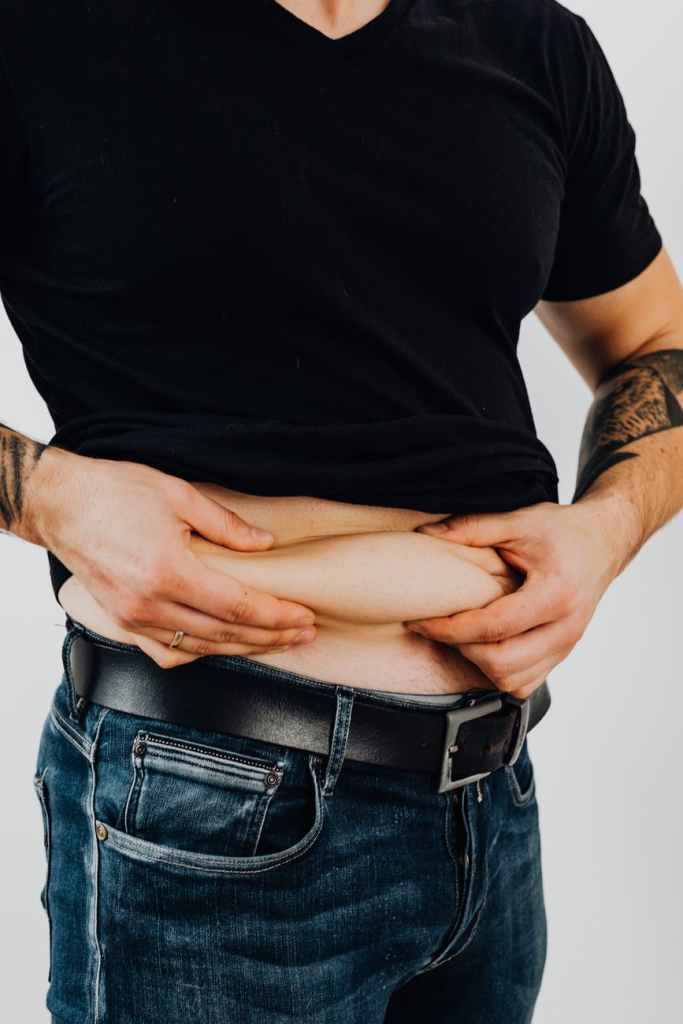
Most people don’t enjoy looking in the mirror and seeing a pouch, hanging off their gut. Trust me, I speak from experience. But realistically, so long as you’re healthy, you eat and exercise regularly and be sure to consult your doctor or medical practitioner before starting any new exercise regiment or diet, you’ll come out shining with the results you need to have. Stay healthy. ☯

Remembrance Day

November 11th is well-recognized in most Commonwealth countries as a day where we take the time to recognize those who died in the line of duty during the First World War. In Canada, the day is observed with the wearing of a poppy on the outer collar or lapel in the weeks that precede Remembrance Day, couple with the calling of the roll on the day itself, observing a period of silence during the 11th hour of the 11th day of the 11th month.

For me, the day holds a special place in my heart. Most of my family has served its country in some given way, shape or form. And in a variety of uniforms, no less. My own service has come at great personal cost, in recent years. As a result, I’ve had difficulties remembering why I put on a uniform in the first place. I need only to look at the history of the world to understand why it’s so important to remember the past. Or be condemned to repeat it.

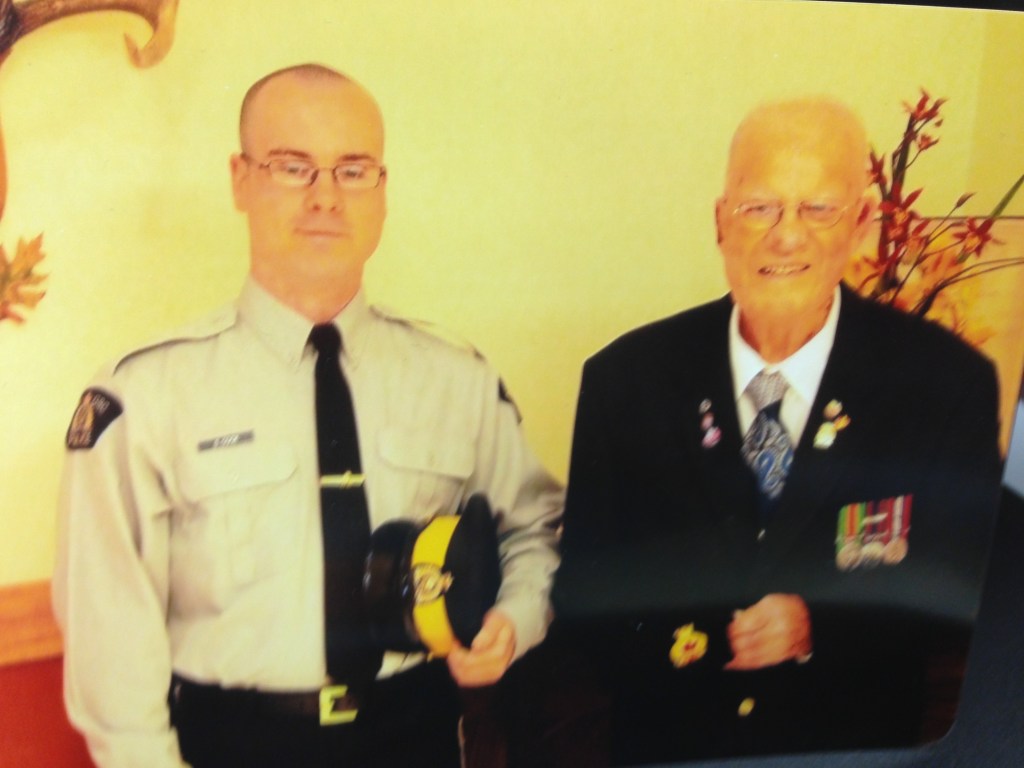
My grandfather and I in 2009. Generations of service.

It’s important to properly observe this day. If there’s one thing that pisses me off beyond reason, it’s when I see people starting to decorate for Christmas right after Halloween is done. Is Christmas an important holiday? Yes. Absolutely. But is allowing a period of remembrance and observance for those who fell in order to guarantee our freedom important, as well? I would say so.

My grandfather taught me everything I ever needed to know about honour, duty and obligation. They say that when an amputee loses a limb, they can still feel pain in that limb. Phantom pain, non-existent but felt nonetheless. Although gone, the pain is still real and very much felt. This is how I remember my grandfather. Gone, but still very much felt. I remember the stories my grandfather told me about his time on active front lines in Europe during World War II. He may have always been a simple working man from the North shore of New Brunswick. But to me, he will always be the hero who helped to keep his country free.

Today is important. No matter what country you may be reading this from, what your background or your beliefs may be, remember your heroes and remember their sacrifices. Hopefully, the world will never be foolish enough to engage in the sort of battles it did in the early 20th century. ☯

Life May Move Fast, But Its Speed Should Be Slow

Anything one experiences in life should be taken slow. This isn’t without exception, of course. I could barely wait to put a ring on my wife’s finger and did so quite a period of time sooner than most other guys would have. But in terms of life in general, sometimes it’s better to take it slow. Consider a fine bottle of wine… Perhaps it’s a blend you’ve never tried before and maybe it cost a little more than you’d usually pay. Are you going to simply chug it down like a $9 bottle of wine cooler, picked up on the fly? Or will you take the time to breathe in the bouquet, sip it slowly and enjoy it?

“Life Moves Pretty Fast. If You Don’t Stop And Look Around Once In A While, You Could Miss It.”

– Ferris Bueller

All things in life involve a balance. The same can be said for the speed at which the world turns. The REQUIREMENTS of life come at you pretty fast. Getting to work on time, paying your bills and making sure your kids get on the bus. All the more reason for the PREFERENCES of life to be taken slowly. Enjoy your meal and take time to chew. Taste and enjoy that ethnic food you’ve decided to try. Shed a few tears at the sad scene in the movie you watch with your significant other.

As Mr. Bueller indicated in one of my favourite movies, “Ferris Bueller’s Day Off,” life can come at you pretty fast. It’s important to stop and smell the roses once in a while. Whether it’s choosing to read a book, slowly enjoying a glass of wine or simply taking an hour to play on the floor with your kids without looking at your phone, it can make a difference in the level well-being you experience in your daily life. ☯

A Strong As Your Weakest Link

Martial arts requires a lot of things: focus, concentration, dedication and commitment, to name a few. To a true martial artist, practicing any given style usually requires a life-long dedication and is a way of life as opposed to a hobby or a sport. This is why it’s typically referred to as “the way of karate.” Depending on one’s reason for joining martial arts, the sports and fitness aspect can be a good reason; provided you’re willing to include all the aspects I’ve listed above.

One of the unfortunate side-effects of having multiple styles of martial arts, is that everyone thinks that THEIR style is the best. Every person is likely to have a preference. After all, there are nearly 200 different styles of martial arts in existence around the world, including the popular ones that people are familiar with, such as karate and judo. But there are many that are a bit less familiar. No matter the style, the result should be the same: train to fight so that hopefully you never have to.

The truth is that it isn’t so much the style that matters, as much as the effort put in by the practitioner. When I first started out in martial arts, I studied Tae Kwon Do for a number of years before I recognized that it wasn’t for me. This is something that most of my friends and family don’t know. The high-flying kicks and flashy movements did not encompass what I felt MY martial arts needed to be about.

But this doesn’t mean that Tae Kwon Do isn’t an extremely effective form of martial arts. It simply wasn’t effective for me. Trust me, when I say that I’d think twice about exchanging blows with a properly trained Tae Kwon Do practitioner. During basic training, I was thrown into the ring with a Tae Kwon Do black belt. I consider myself to be an adequate fighter, but I got my bell rung several times. A tip of my hat to you, Jesse! I had a headache for days, after that fight.

The same can be said of just about any style of martial arts. Most people would think that Tai Chi is nothing but a style for the elderly, something to get older folks together for something to pass the time with the added benefit of increasing circulation and mobility. But the reality is that Tai Chi (and all its sub-styles) is an incredibly old and effective form of Kung Fu. The question is whether the practitioner chooses to train and study it as an effective form of martial arts or as a passing thing.

The big screen has done a fair bit to create this effect. Old school Kung Fu movies often showed the wise, old master holding back a special or “secret” technique that would allow him to maintain the upper hand in a fight with anyone he came across, including his students. And most martial arts movies will usually depict a student from one style pitted against a student from another, with only one being the victor. But this is hardly the reality of how things are actually done. My Sensei never held back any “secret” techniques and always shared everything he learned. This is genuinely the only way that a style would ever be successfully passed on.

Martial arts only gives out as much as a student puts in. If you don’t show up and don’t put the time and effort in, you won’t get much back as a result. Somewhere in the back of my mind, I can confirm that there have been times that I judged other styles of karate against my own. That’s simply human nature. One will always believe that their way is best. But it isn’t so much the way you choose as it is the path you take while studying the way. ☯

What’s Your Dollar Worth?

Despite the downward spiral that my fitness routine has taken in recent months, I’m a big fan of staying healthy. All the time and effort seems well beyond worth it, when I get the opportunity to visit with my endocrinologist and he tells me that I have the heart of a horse and all my systems are functioning ALMOST as well as someone who doesn’t have Type-1 Diabetes. This was further confirmed last week, when a visit with my ophthalmologist confirmed no presence of macular edema in my eyes, the first time in over five years.

Now that I’m done bragging about how I AM ALL THAT IS DIABETES!!!! I can get to the point of today’s post. Something I’m not a big fan of, is crowds. I prefer to train in private or in the company of my family or like-minded martial arts individuals. This doesn’t mean I won’t train with anyone who wants to learn or get in shape, but I’m not a big fan of working out in public gyms. There are a few personal reasons behind this, but there are some definite pros and cons behind getting a gym membership and working out in the public eye.

I try not to be cynical about things that can be of definite benefit to someone’s overall health, so I’m going to share my top five pros and top five cons when it comes to joining a gym and working out in public. This isn’t sourced from anywhere, it’s all me. Here we go:

PROS:

  1. They have equipment you can’t afford: I’ll be honest, paying for fitness equipment is killer. Most retail and fitness equipment outlets charge more than a dollar per pound for dumbbells, which means you’ll be hitting the 100-dollar mark for a pair of decent 45-pound hex dumbbells. The cheapest treadmill I’ve been able to find online (that isn’t second hand) came in at just over $500 dollars. Working out with a variety of different equipment can be costly. Working out at a gym can circumvent the need to buy everything you need;
  2. They’ll have resources: Most gyms offer personal coaching, group workouts as well as access to things like yoga and Zumba classes. It’s a great place to meet like-minded people; not the weirdos who are all muscle and no brains that monopolize workout stations, but people who are genuinely interested in getting in shape and working on their personal fitness;
  3. It’s convenient for the working population: You can take advantage of lunchtime workouts, get to the gym right after work or even before you start work. Since most membership-based gyms offer shower service, you can be cleaned up and on your way to the office before start of shift;
  4. It’s great for motivation: There’s no denying that humans are pack animals. There’s a reason why we gather in towns and cities. Fitness and working out is no different. Trying to get in shape can be easier if you try to do it around other’s who have the same goal in mind;
  5. It gets you out of the house: I enjoy working out in my basement, garage and back yard. But once in a while, quarantine measures be damned, you need to get out of the house. A gym membership can be a good way to get out of the house a few times a week, even if it only means a simple travel from “A” to “B”.

CONS:

  1. Memberships are expensive as shit: Honestly, a year’s worth of gym membership could effectively pay for that $500 treadmill I mentioned in the PROS list. And don’t even get me started on these fuckin’ gyms that are so high and mighty that they make you sign a “contract” that makes it almost impossible to quit once you’ve joined. I’ve had gym managers I had to verbally fight with, just to cancel a membership so that I could transfer with my job;
  2. They smell like a warm bucket of hamster vomit: Not all gyms are created equal. As much as the Rocky franchise romanticized the concept of gyms that smell like blood, sweat and puke, no one wants to be in a bacteria-infested environment that smells like the backside of a dead calf. Especially if you’re breathing hard during some extreme cardio or trying to use some equipment that the last douchebag forgot to wipe down;
  3. You may be forced to deal with haters: In my opinion, a gym should be a haven of fitness for anyone who wants to work on themselves and improve their lives, either physically or mentally. But there is an unfortunate small group of people who go to the gym and belittle people who are trying, making fun of them and making them feel worse about themselves. It can make working out difficult;
  4. You sometimes have to wait: The one, nice thing about working out from home is that you don’t have to wait to use whatever you have available. Even if gyms have a ton of equipment you either don’t have or can’t afford, you may find yourself in a position where you have to wait in line for someone else who may be using the particular piece of equipment you need;
  5. You gotta leave the house: Go figure, I’ll share point #5 with both lists. I’m weird, that way. And a bunch of other ways, but honestly I LOVE working out at home. I prefer it, in fact. But that’s just me. It’s always a good idea to get out of the house once in a while. But honestly, I like the practicality of having my wife and children nearby, access to my own shower and snacks, drinks and all the other stuff.

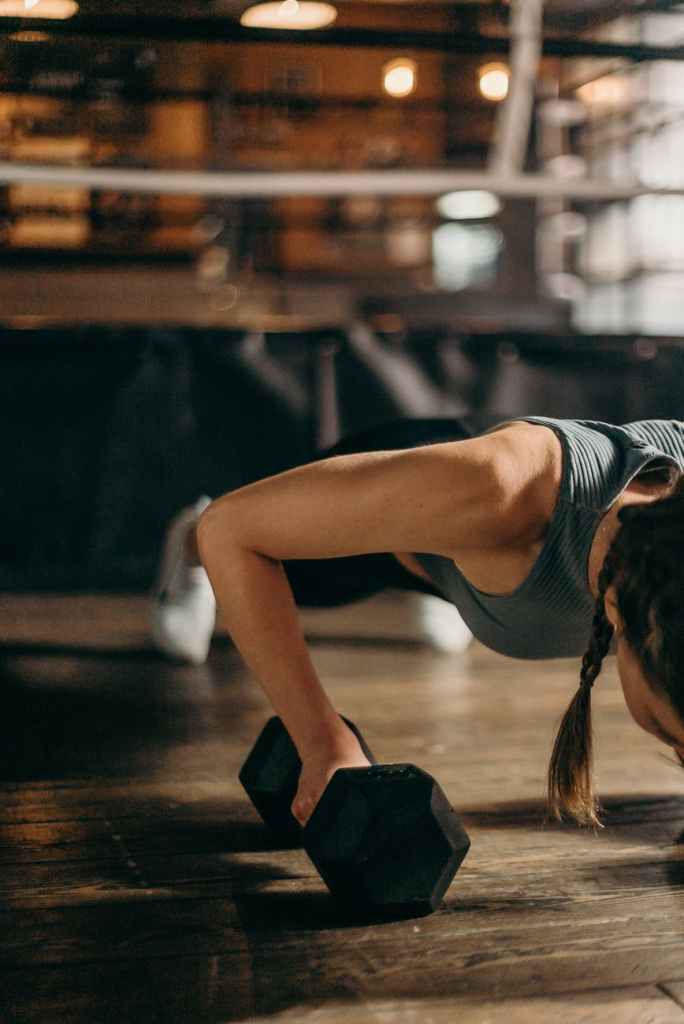
At the end of the day, I’ve worked out in public gyms AND I’ve found ways to work out at home. My personal preference is to work out at home. If I had to weigh out the pros and cons, cost ends up being the big deterrent. I’d love to keep a membership and enjoy all the benefits of working out at a gym. It would be incredibly fun to bring my wife and have her enjoy those benefits as well. But considering there are dozens of “body-weight only” workouts that one can do from home, it’s hard to justify the cost.

The rest of the PROS and CONS can sort of cancel each other out. But it’s a matter of preference. My best advice would be to give it a try. But be sure to protect yourself and join that gym that doesn’t require a contract membership and that you can leave with only a month’s notice. That’s usually pretty reasonable. You should be able to let them know within the month if you plan on quitting. But with the reasonably balanced amount of good and bad, you really can’t tell if a public gym is for you less you try it. ☯