
You know, I’ve been doing karate for over 35 years at this point, and have trained in more dojos and locations than I can recall. I’ve seen some really good clubs and met some really solid people. I’ve also been exposed to the majority of cliches that we see in modern martial arts. McDojos, inexperienced senseis, bullies and worst of all, the wayward student who walks out of his dojo and opens his own school without his Sensei’s consent. Brutal. My point is, like every other thing one can join, they come in all shapes, sizes and philosophies. I’ve written on occasion, about the importance of cleanliness with gym equipment and dojo gear. Most people don’t think to clean things like punch mitts, sparring gloves and pads, but everything that can be touched, should be cleaned. This includes a very overlooked item in the karateka’s bag; the karate belt.
I’ve been seeing a lot of online articles about one’s belt, and whether it should be cleaned or not. I’m not clear on why this has come up so much or why it suddenly appears to be the flavor of the day, but the reality is that I’ve now seen it on four different pages through social media, from different sources. Most people recognize the need to wash one’s gi after each use. Granted, I’ve trained with a lot of people who would only wash their uniforms once a week, which often led to some awkward training when you got paired up with them. Nothing like that mildewy scent to distract you enough to let that technique slip through! Hey, maybe that’s why he did it! But I digress… We’re talking about belts, here…
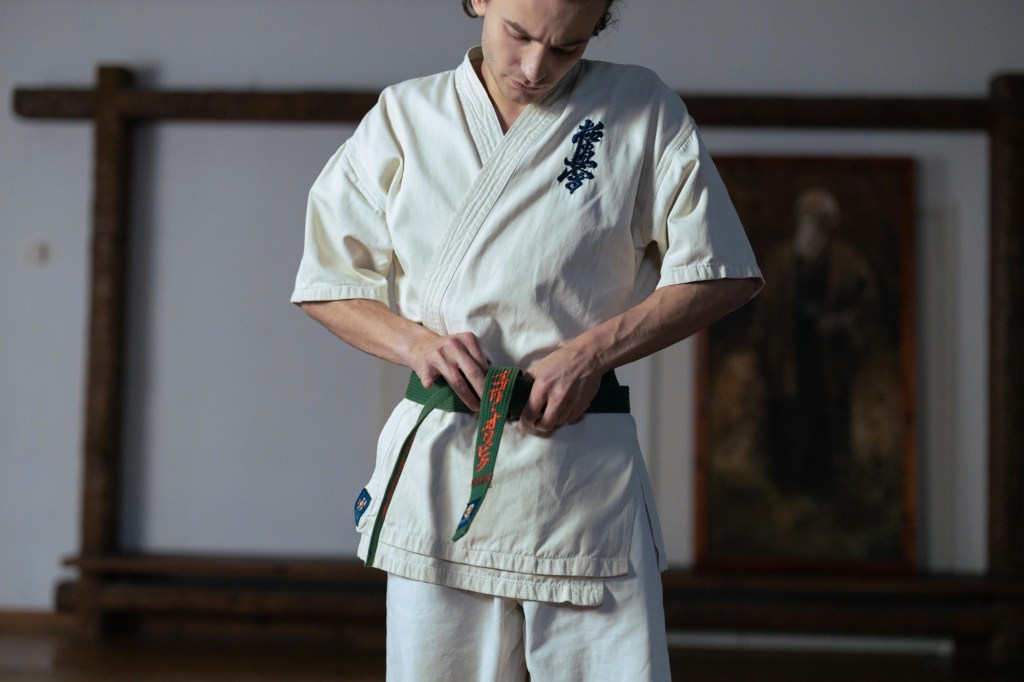
The karate belt, or obi, as it’s sometimes called, is a thick belt that wraps around the practitioner’s gi to help keep their top closed and properly cinched to the body. At some point, it also began being used to signify rank within the dojo, with black being the most recognized rank to most outside folks. This started with the styles that were on mainland Japan. If you look at some of the older, historical photos of retaining in Okinawa, it was usually bare-chested, with shorts or short pants. But in modern times, the belt has become something of an icon in martial arts circles, not only serving the expected function of holding your gi closed, but slid to signify rank, seniority and most cases, experience. I say most cases for a reason, but I won’t get into that here, since it’ll be a topic for a different post.
Most karate belt are made of the same durable, stitched cotton materials that the practitioner’s gi is made from. That being said, some styles and brands have them made from different materials like polyester or, believe or not, silk or satin. I can’t imagine wearing a silk belt. Can you imagine??? How would that fuckin’ thing eve stay tied? Wouldn’t it slip free after a bit of movement? I wouldn’t know because I’ve never worn one made of silk and I don’t plan to start. My point is, they can be made of different materials but are generally made from cotton. Moving on. The issue with the belt, and if the wearer is training the way they should, is the tightness around the waist means the belt is in prime position to be exposed to some of that lovely back sweat that comes dripping down the nape of your back during heavy workouts. Eventually, the belt will soak this sweat up and it’ll dry on there.
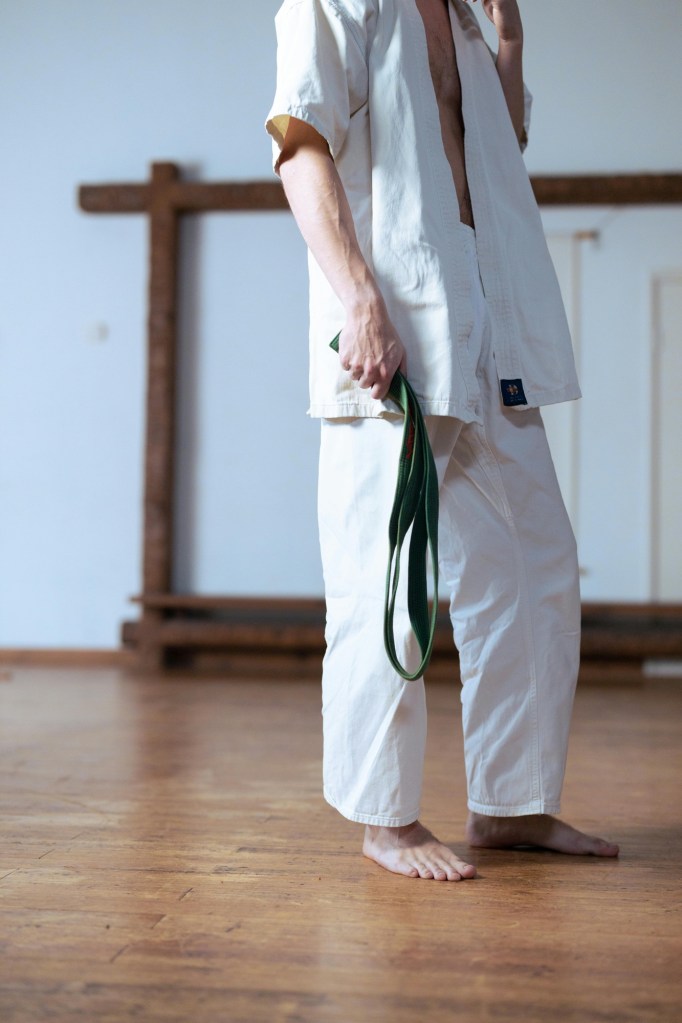
Generally speaking, cotton garments are great for soaking up sweat and allowing your skin to breathe. This is why most trainers will advise their clients who wear moisture-wicking materials or get-fit garments to wear a cotton t-shirt over it, if they’re jogging or cycling outdoors. This is so that the shirt can absorb the expelled sweat, instead of letting it linger on the garment. One does not have this benefit with a karate belt. As I mentioned in the opening paragraph, I’ve written posts in the past about cleanliness, and this has included the washing of one’s gi. Because it’s usually made of cotton, the gi soaks up all the blood, sweat and tears (usually literally) that are shed during the two-hour workout in the dojo (yes, class should be at least two hours). If allowed to sit and dry, eventually and after only a few wearings, your gi will start to smell like that squirrel that fell into your rain barrel and drowned over the summer. This is why it’s important to keep your gi washed and clean between classes, to prevent ruining it, prevent the smell and prevent the inevitable rash you’ll give yourself from wearing something riddled with bacteria.
It’s often boggled my mind how most practitioners never think to wash their belts. This is something that’s come up in quite a few social media posts lately, on some of the karate pages I subscribe to. Most traditional practitioners have heard the story or have followed the belief that you start with a white belt and as it taints and gets dirtier through the blood and sweat, it eventually darkens to a blend belt, signifying the wearer’s experience and knowledge. First of all, not only is that completely fuckin’ disgusting, if you wear a white belt through filth long enough for it to turn black, but it’s also somewhat incorrect. When I was a white belt starting out, I had asked my Sensei at one point if I could just drop my belt into the washer with my gi. I got a slightly different iteration on the story I mention here, but the message was simple: don’t wash your belt. As a result, my original white belt (which I do still have despite almost 40 years passing) is a patchwork of off-white and slightly dingy yellows. While it shows the hard work and efforts I’ve put into my karate training, it’s gross to look at, even now, and still carries a musty odor that no wearable garment should carry.
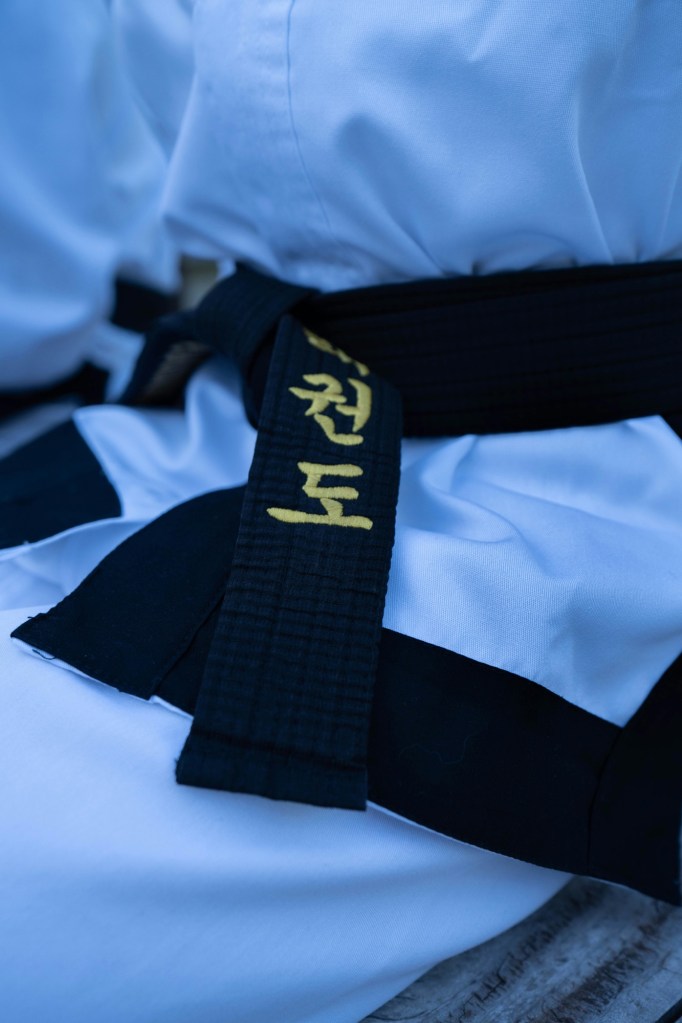
Once I graduated to green belt and I noticed the green starting to shift colors, I changed up my practice a bit. While I didn’t want to chance laundering a green belt with a white gi for fear of the color running, I also had to contend with the rubberized electrical tape Sensei would use to signify stripes on one’s belt. This meant that tossing the belt in the washing machine would be a no-go, since it would probably cause the tape to peel off. As a result, I got into the habit where at least once a week, I would use a small container of cool water would. Touch of laundry detergent, and I would hand wash my belt using a small nail brush. The size of the nail brush made it ideal to scrub along the length of the belt. The cool water helped maintain the color and the laundry detergent helped wash it out. While somewhat faded from the years, my green belt is in a much better shape than my white belt. I did the same for my brown and black belts, respectively.
One of the social media posts that I read referenced visiting Okinawa, and how the karate practitioners there find it puzzling that Western practitioners don’t wash their belts. Having visited some dojos in Okinawa, I can reflect that comment in saying they don’t believe in the concept of not washing the belt. So, despite the stories, legends or doctrine of your specific dojo, you SHOULD be maintaining trooper cleanliness and hygiene practices and wash your belts regularly, whether by hand or otherwise. It’ll preserve the state of the belt and prevent bacteria, rashes on skin, and the unpleasant odor that accompanies ANY training equipment that doesn’t get washed and/or sanitized. Your karate belt is included in that. The only aspect I agree with and am on board with, is that most senior practitioners wear their black belt until it basically falls of them. Different styles will have different approaches, but my style is consistent in this practice. My black belt shows some of the wear and tear markings of years of training. Those are my badges of honor and I would replace them. Some folks will obtain a new belt every few years as the previous one starts to wear. That’s a preference.
At the end of the day and what the main message to this post is all about, is make sure that you help keep yourself in good health by observing good cleanliness and hygiene practices with ALL of your training equipment, including your belt. It’s part of the process, it’s on you and others will inevitably notice if you’re unclean. Especially in an environment like a martial arts dojo. And it really sucks to train and work so hard at developing and bettering yourself, only to have you get a rash, infection or be shunned where no one wants to train with you because you smell like a mildewy clothes hamper. Not a good look. So wash up, clean and keep yourself healthy. Light knows that during the second hour, the sweat is already flowing enough without your added funk getting into the mix. Food for thought… ☯️


