The Uechi Chronicles, Vol. 2: JL

Here we go with another instalment of The Uechi Chronicles, where I provide interview answers I’ve gathered from some of my longer-standing karate colleagues. I’ve actually started accumulating a number of responses, so there’ll be a few of these coming out. It’s interesting to see the different perspectives, opinions and reasons behind why all these people chose to join the martial arts and in some cases, were forced into the martial arts.

In this post, I’ll be providing JL’s answers. JL is a friend of mine from back in New Brunswick, who ironically lives and works here in Regina. A few years younger than I, I first met JL while visiting his Sensei’s dojo. His Sensei happened to be a student of my Sensei, and she had opened a dojo of her own. Since we had recently dropped from three classes a week to two, I decided to supplement my training by working out in JL’s dojo on Fridays. Since the class was entirely comprised of new students, everyone was a white belt, save for the Sensei and myself.

This being the case, when the class formed up I took the front spot to the right, which is where the most-senior belt is to stand. Turns out that this was the spot JL was accustomed to standing, despite being ranked the same as everyone else. When he walked up to the front, he confronted me and asked, “What the hell are you doing, that’s my spot!” I remember thinking I couldn’t decide whether I should laugh or punch him, but the Sensei recognized the situation and eased it for all parties concerned.

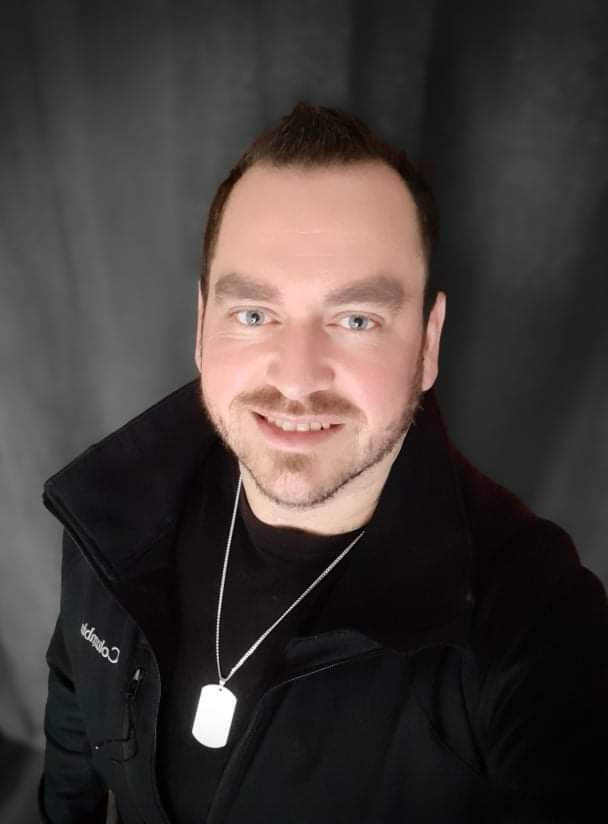
Jean-Luc (JL) and his dog, Baxter

Despite that rocky start, JL would go on to be one of my oldest friends. We would train in karate together, go on to pursue the same career and despite the massive size of our country, somehow managed to inadvertently end up in the same area. Life has progressed in such a way that we don’t get to see much of each other anymore, despite living so close to each other. But we still get the opportunity to grab the occasional coffee and catch up. And that’s more than a lot of people have. Despite his busy schedule, he managed to eke out some answer for me. Here they are:

  1. Why did you join karate?
    “Tired of being the small, weak kid. Wanted to be able to defend myself, as I was picked on every now and then while growing up.”
  2. When did you join karate?
    “I joined when I was in Grade 9, so 1996.”
  3. How many years have you been training?
    “I trained for 4 years. I would have continued, but I made the choice to go to college to ensure I would be ready for the rest of my life. After college, I thought of getting back into it but I wanted to get muscular, so I started hitting the gym.”
  4. What have you gained/hope to gain from karate?
    “A little more self-confidence, some skills to defend myself and somewhat prepared me for the idea of wanting to become a police officer.”

His answers were short, succinct and less detailed than Ricky’s. But this is a good opportunity to point out that it’s never too late. I’ve had students start karate from day 1 in their 50’s and have gone on to build skill and precision and become avid martial artists. I, myself, worked through two years of college WHILE training regularly in karate. As the old saying goes, where there’s a will, there’s a way. I anticipate that once the renovations are done in my basement, I’ll be setting up a home dojo. JL, if you’re reading this, here’s and open invitation to come train for free. Hell, since I have a punching bag and a garage, that invitation is effective immediately! ☯️

The Uechi Chronicles, Vol. 1: Ricky

It stands to reason that I’ve met and trained with a number of interesting people over the past 33 years that I’ve been studying karate. I’ve seen the entire spectrum, from folks who walked in and tried it out before walking away, to those who toughed it out and developed themselves beyond the basics. And I have a handful of long-standing friendships that have developed as a result. By virtue of this, I thought it would be interesting to get each of their perspectives on what brought them to karate and some of the details of their material arts journey.

I’ve known Ricky for a little over twenty years at this point, and met him while visiting one of my Sensei’s students who had opened a dojo of her own. Over the next couple of years that followed, the student body at this dojo dwindle to the point that the lead instructor chose to close her doors, leaving thee remaining students with little options. Some went off to different styles but a few chose to join Sensei’s dojo and continue their development in Uechi Ryu. Ricky was one such individual.

The man, the myth, the legend… Ricky!

Friendly and always quick with a laugh, I’ve come to appreciate Ricky for his warm-hearted and level-headed approach to life. He currently holds a brown belt and is one of the few active, remaining students of my Sensei’s dojo. I had the opportunity to ask him a few questions. Here are the answers:

1. Why did you join karate?
I joined Karate for confidence and reassurance. I needed that protection not, only physically but mentally as well. I didnt want to go somewhere and be afraid of conflicts. I wanted to protect myself and/or people I cared about. Also, I watched a wack load of movies about martial arts and seen many demonstrations that I found “out of this world” and instantly caught my interest.
Plus, it was cool and deep inside wanted to impress people like they impressed me. Lol”

2. When did you join karate?
”I joined karate in 1997. I was 12-years old at the time.”

3. How many years have you been training?
”When I was younger, I wasn’t taking my training seriously. So it became an on and off thing but when I began to upgrade in ranks, I felt like I needed to change to become better. Focus, determination had to be in me to succeed.
So to answer the question, I’ve been training for over 20 years give or take.”

4. What have you gained/hope to gain from karate?
”I gained the power of mental discipline and a focus I never thought I could acquire. I gained not just friends but a family outside my family.
Physically, I am stronger, faster and tougher.
I truly gained a skill that I can now pass on to people that need it, like I did at the time and to my children one day.”

It’s definitely interesting to hear the different perspectives and reasons behind peoples’ choice to enter into the martial arts. Sometimes, it’s hard to believe I’ve known Ricky for half my life and although we’ll never know for sure, we likely never would have met if not for karate. Another shining example of how the martial arts can provide so much more than just the skills and knowledge of the style. I’m looking forward to providing interviews from a few other people. Stay tuned. ☯️

The Pandemic Taketh Away…

There’s no shortage of areas that have been affected by the pandemic, including work, schooling and social aspects. Some businesses have closed, some jobs have sent their staff to work from home and schooling was largely done online in the past year with graduating classes having virtual ceremonies or none at all. For me, the biggest effect was having the karate dojo close,

Although I recently wrote about how good it was to be back in the swing of things, we got word last week that we were once again closing amidst increased restrictions. This came after consulting with a martial arts association that the dojo is affiliated with, as they regulate what conditions we can train under and what’s permitted. Although we were scheduled to have class, last Tuesday, we got word on Monday that training in the dojo would be temporarily “paused” until it could be properly determined what we were safely permitted to do or not. A wise precaution. Or, is it…?

To some extent, I totally get it. Karate is a contact art, requiring practitioners to have some hands-on contact with each other while training in the dojo. Having someone literally in your face while training, without knowing their medical status, vaccination status or whether to not they may be a carrier can be a concern. And it certainly doesn’t conform to social distancing requirements. But one needs to recognize that to an extent, some conditions are more of a society-calming placebo than an effective means of stemming the virus’ propagation. That’s strictly an opinion, of course.

As it stands, we lost the entirety of last week without any word on what will become of classes for the foreseeable future. We were doing Zoom classes last year, which was a good alternative but it lacked a certain “oomph.” With this 4th wave hitting Saskatchewan, who knows what may come of all this. I don’t have a crystal ball. After 33 years of studying karate, I’m well-suited to continue training on my own, despite the fact the ambiance and joy of training with others definitely brings something to the table. If the world and society could just right itself, all of this would be significantly easier. I guess we’ll just have to wait it out. ☯️

Some Cold, Hard Facts…

I’ve noticed in the past week that the weather seems to be at single digits in the morning, prompting a lot of pain in my old joints and signalling that the warmer, summer months are gone for another year. With that comes the need to recognize that one’s fitness routine may be altered or NEED to be altered in order to accommodate the colder weather. We all know what’s coming next…. That wonderful white stuff that makes getting to work ion the morning an absolute nightmare.

But we aren’t going to talk about THAT, since we still have time before it starts hitting the ground. Hopefully. Today, we’re simply going to talk about colder weather as it pertains to fitness. For the most part, our brains tend to tell us that comfier and easier is better. This means that when we notice cold winds or a drop in temperature, we may be less inclined to step outside to do something physical. But there’s some inherently good and bad aspects to working out in the cold.

On the positive side, doing something physical outdoors will help with blood circulation, will wake you up better than a cup of coffee and will leave you feeling even cozier once you DO decide to hit the couch with a blanket and a warm cup of joe. Working out in colder temperatures can improve your mood and provide a somewhat different challenge than working out in the warmer weather.

For me, I’m slowly falling into the season where cycling for long distances is becoming less-favoured as a form of working out. Besides being cold, the colder wind whipping my face while cycling is a definitely no for me. I prefer to work up a sweat than try and defrost myself, so I look to different workouts, such as punching bag workouts or karate in my garage. I’m still outdoors, but without the Prairie winds taking advantage of my award-winning face. Kidding.

There are definitely some things to keep in mind, when stepping outside in cold weather. The first, is that you WANT to feel cold. Don’t believe me? The problem is that if you step outside feeling warm and comfortable, you need to understand that once you start exercising, your body heat will cause an increased amount of sweating, which is a recipe for disaster when you’re outside. Dress appropriately with a layer of moisture-wicking material first, and something insulating and breathable over that. This prevent the sweat from staying wet against your body.

When you sweat, your body inevitably loses heat through the evaporation of that sweat, which can leave you susceptible to being chilled. So, if you start off feeling cold but start working out, your body will take care of itself. The other side of the coin is to know what you’re personal and preferred limits are, and stick with them. Cold is cold, but only you will know what’s TOO cold for you. Is there a weather warning in effect? Maybe work out inside on that day.

Lastly, people tend to ignore a lot of the important steps when training outside, like applying sunblock to your exposed skin if it’s sunny and staying properly hydrated. The cold doesn’t protect you from UV rays and you’ll dehydrate just as easily in the cold. In some cases, easier. Not least of which is the fact that cold weather can have adverse effects on underlying health conditions, like asthma and Diabetes. Although subjective to the person, blood sugars will vary from prolonged exposure to the cold.

Keep an eye on yourself for warning signs of frostbite or hypothermia. Drink plenty of fluids and monitor your blood sugars frequently. And remember that if you FEEL it’s too cold, there’s no shame in moving your workout to the indoors. After all, winter is coming…. ☯️

Supplements? We Don’t Need No Stinkin’ Supplements…

Supplementation can be an important tool for proper fitness, but it’s one of those things that is very specific to the user. What works for one person may not work for the other, and if you happen to have Type-1 Diabetes, you need to be very careful about what you may be putting in your body, as it may inadvertently affect your blood sugars.

So, what are supplements? As they pertain to this specific post, supplements are anything you consume in order to help improve performance, muscle growth and/or energy levels in order to allow one to develop better. They can come in various forms, including pills, powders and even pre-mixed shakes. They vary in their delivery, meaning some need to be taken prior to working out, some after and some don’t really matter and simply need to be consumed on a daily basis.

I think that one of the important aspects to bear in mind, is that there’s no “magic pill” or supplement that will do anything for you. You have to put the work in, even if you take supplements and use them on a regular basis. I’m always reminded of an old friend of mine, from years ago. I stopped in during early morning to go for coffee. before we left his house, I noticed he scooped out a spoonful of some unknown powder and consumed it with a glass of water. When I asked him what the powder was, he said it was creatine, because he was trying to gain mass. When I asked him what workout regimen he was following, he gave me the curious puppy look and asked, “Workout? What workout? That’s what the supplement is for…”

Here’s the thing: a supplement is defined as something that completes or enhances something else when added to it. This means that there’s no supplement that will make you lose weight, help you gain muscle mass or burn fat on its own. The important thing to remember is that ALL of these supplements need to be used in conjunction with proper diet and exercise. It won’t DO the job for you, it may simply help make it a touch easier.

Another important aspect to remember is that most supplements are substances that you either already get from a proper diet or that your body already produces. Creatine or whey protein for example, can be good supplements to help push you along your fitness routine, but these are substances produced by the body and/or can be obtained by consuming certain foods. “Pre-workout” supplements, that I’m aware a lot of people I know consume, are basically just B vitamins, caffeine and creatine, which you can obtain naturally or elsewhere. I would argue that unless you’re feeling sluggish, there may not be a great need to take a pre-workout supplement.

From a Diabetes standpoint, it’s important to recognize that a lot of supplements may contain sweeteners, carbohydrate amounts or simply affect the body in such a way that will cause fluctuations in overall blood sugars. I’ve noticed over the years that almost everything indicates “not suggested for people with Diabetes” for exactly this reason. It isn’t that it will inherently cause issues. But it COULD affect Diabetes, which is why it becomes important to consult your doctor prior to starting any supplementation.

I’ll be the first one to admit I’d be hitting up my pharmacy, should they ever create a pill that will melt the fat off my gut. Otherwise, know what you’re putting into your body, consult your doctor and remember that there are no shortcuts to fitness. It’s incumbent on the person to include proper diet and exercise in order to reap the benefits of supplements. The body is programmed to do what it needs to, but should you feel the need to use a supplement, just be wary. And keep a close eye on what secondary effects you may get from using them. ☯️

Tired Because of Exercise, Or Trying To Exercise When You’re Tired?

Life is exhausting. If anyone says that it isn’t, they’re lying to themselves. I could get into the whole reason behind some of that exhaustion, including the plethora of Diabetes-related issues that can cause lack of sleep or fatigue, even when you are well-rested. But that ins’t really the purpose behind today’s post. I recently wrote a post about the issues surrounding working out when you’re hungry. Therefore, it stands to reason that my next step would include addressing the issue surrounding working out when you’re tired. Buckle up!

Maintaining a fitness routine is difficult at the best of times. Between work, family and home responsibilities and health concerns, being able to say you work out at specific times on fixed days is spotty, at best. So, hat’s off to the folks who manage to be part of fitness clubs with scheduled classes or who go that extra step and manage to maintain consistent fitness at home, because I personally know it ain’t easy. It becomes all the more difficult when you’re tired.

Being tired is one of those things where one needs to find a balance, or perhaps compromise with oneself. On the one side, being tired will often elicit the response that one should take the opportunity to rest. On the other side, sometimes you just gotta push through your fatigue or you’ll never overcome it or get anything done. Assuming you can tell or “feel” the difference, here are some potential effects of working out when tired:

1. You’ll Resent Your Fitness: It’s hard to concentrate and be motivated when you’re tired. If you find yourself “pushing through,” and I’m not saying you shouldn’t, you could find that exercising when tired will do little more than tire you further and possibly make you resent exercising. Much like the bedroom should only be associated with sleep, associations help to form our opinions on certain things;
2. You’ll Make Mistakes: Being tired or exhausted could lead to making mistakes, being inadvertently clumsy or working out improper. Ever drop a dumbbell on your foot? That shit hurts, and can potentially break bones., which leads me into my next point:
3. You Could Injure Yourself: Fatigue can be distracting, and if you’re tired to the point where you’re making mistakes, you may potentially harm yourself as well. Besides dropping random weights on yourself, fatigue may distract you in karate class enough to cause injury. These are just some examples, of course;
4. You Won’t Achieve Your Fitness Goals: This is a big one for me and pisses me off to no end. There’s nothing I hate worse than being out on the bike for a solid 20k, thinking I should push through the fatigue, only to completely drag ass and have it take twice as long to complete my distance AND I’m just further exhausted afterwards; and
5. You May Require Longer To Recover: If you push yourself too hard when you’re tired, it may take longer for you to recover and feel better. This applies both to feeling rested and to recover from any fitness-related healing you may need, including muscle and tissue repair.

So, what can you do to prevent some of this? Obviously, I’m a big fan of naps. If you’re tired and you know that you have a workout coming up, grabbing a quick snooze on the couch can be helpful. One need only be cautious about sleeping for too long, which can have the effect of leaving you groggy and slow-moving, which isn’t the best when you’re about to get into some physical exertion. Keep your naps short, about twenty minutes or so. Just enough to take the edge off.

If your fatigue is light and perhaps just the result of the typical daily grind, this might be where you want o push through. Fresh air and movement will often be an effective means of wiping out fatigue and getting your day back on track. I’ve lost count of how many times I sat on the bike or went to karate class, feeling as though I should be hitting the bed instead, only to be re-energized and rejuvenated once I got through it.

Ultimately, there will be times where you may simply need to take a step back and take a break. Naps and pushing through notwithstanding, there will be times when the best alternative will be to simply acknowledge that you need to take a day and just rest. The key is knowing one’s body enough to recognize whether it’s a “take a nap” scenario or a “push through” scenario. But in there interest of being rested and allowing one’s body to heal, sometimes taking the day and saying “screw it” may what the doctor ordered. ☯️

Your Muscles Know, Even When You Don’t…

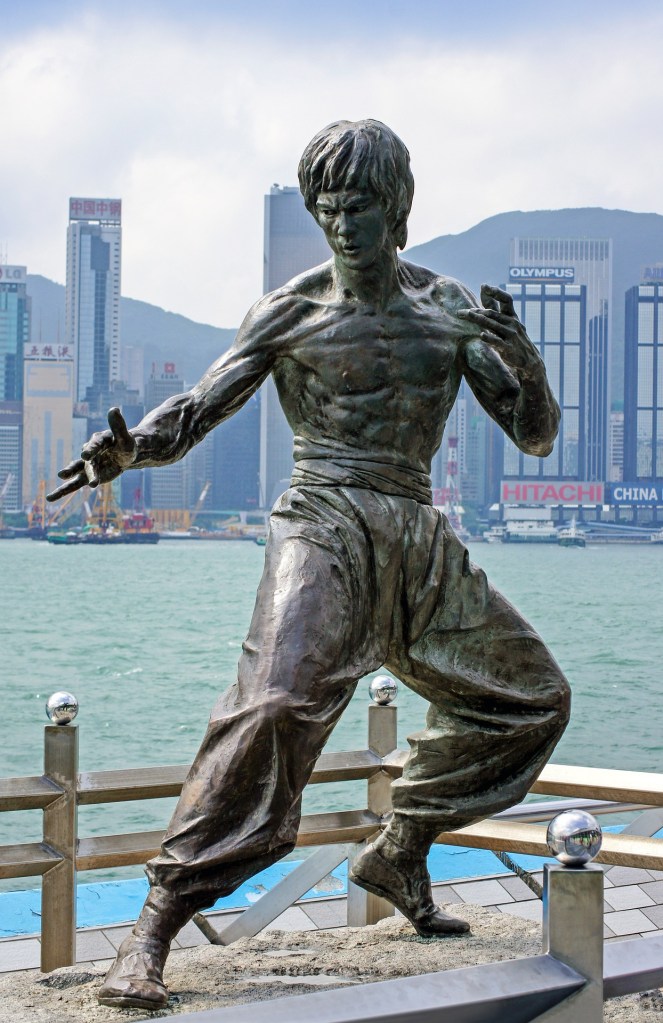
“I fear Not The Man Who Has Practiced 10,000 Kicks Once, But I Fear The Man Who Has Practiced One Kick 10,000 Times”

– Bruce Lee

Who doesn’t love Bruce Lee? Even folks who don’t study the martial arts can have a deep appreciation for his skill, speed and technique. The quote above the photo is one of the most widely-shared quotes allegedly said by Bruce Lee. I say “allegedly” because, well…. I wasn’t there! And there’s often a significant number of quotes attributed to a person, even when it may not be provided that they said it. After all, you can’t believe everything you read on the internet. Abraham Lincoln said that. See what I mean?

But now that I’ve finished being sarcastic, let’s get back to the quote itself. If one were to question the thought behind this quote, one could easily interpret that it suggests muscle memory is more effective than variety. And I would be inclined to agree. Even in smaller numbers, you may gain more from doing one technique for an entire workout than doing ten techniques over the same period of time. The idea is that doing too much waters down your ability to master certain techniques and find the ability to do them without thought.

This is why muscle memory is so important in the martial arts. When it comes to a real life fight situation, which you’ll hopefully never have to deal with, having the ability to call upon muscle memory can mean the difference between getting your ass handed to you and being seriously injured, or hopefully coming out of it with only mild injuries. Because realistically, there’s no such thing as a real fight where you don’t get hurt in some given way, shape or form.

So, what is “muscle memory?” Well, the Oxford Dictionary defines muscle memory as “the ability to reproduce a particular movement without conscious thought, acquired as a result of frequent repetition of that movement.” Even just based on that definition, I’m sure you can see why it would be important in the martial arts. It’s a bit like a toddler, learning to walk. They’ll stand, stumble and take a few steps before falling. But then, they’ll get back up and keep at it. Through repetition, they’ll learn to walk and it occurs naturally through muscle memory.

Can you imagine if you had to remind yourself how to walk EVERY time you went somewhere? Granted, I have a tendency to walk into walks at the best of times, so perhaps my muscle memory isn’t as good as I think it is. But I digress…. The point is, muscle memory is important to the overall function of routine movements in the body. From the martial arts perspective, it becomes important because in a real fight scenario, your ability to respond depends on your muscle memory. Taking the time to plan out your defense usually doesn’t happen and if it does, chances are your opponent isn’t patiently waiting for you to figure it out.

Back in my “younger” years, I used to hate doing lines of one particular technique. It irked me to be doing only one movement when my body and mind wanted to throw in so much more. During youth, it can seem boring to do so little and we rarely have appreciation for the fact that as we perform frequent repetitions, we’re honing our bodies to be able to reproduce that movement on a moment’s notice, usually without thinking about it. Mastering one piece of the puzzle is how you ensure you’ll get a clear, complete picture. ☯️

How Buddha Got His Groove Back…

It’s been a difficult couple of years for the entire world and very few people have gotten away unscathed. The pandemic caused a lot of upset and difficulty for most people, causing the closure of businesses, loss of jobs and the loss of key life experiences that one will never get back, like high school graduation. As society begins to lick its wounds and the world re-opens (for now), I take stock and reflect on the fact that one of the biggest things that has affected me, besides Nathan being kept home from school, is the closure of my karate dojo.

For almost fifteen years, my policing career has dragged me all over Saskatchewan, to an extent where the thought of joining a karate class was a moot point. After all, what’s the point of joining a martial arts school just to have them lose me after the 3 to 5 that the Mounties usually required at any given one spot? So, it was an important step in the right direction for me when I transferred to Regina and found the current dojo that i train in. Imagine the irony, when I was forced to step away when the dojo closed due to the pandemic.

Oh, we tried the old Zoom training thing, as I posted about here. It was alright, per se… But karate isn’t a knitting circle. Eventually, you need some physical contact with an actual partner in order to train and practice certain techniques. We closed up shop for the summer, as we usually do. As Labour Day came and went, i got a little concerned when I didn’t get the customary “back to the dojo” email that I’ve gotten every year for the past five years. Five years… I’ve been training with the Regina Institute of Kempo Karate for five years, Still feels like yesterday…

Anyway, I got the email on Monday for class on Tuesday evening. I walked into the dojo and time melted away. it was two years ago, before the pandemic and lockdown. The same faces and the same class. the same energy and the same mojo. We were back. I was back. It was glorious. We were all a little excited to be chatting and catching up, so we started a little late. AND we took things a little easy to start off the season (I may or may not have pulled a bicep during a ridge punch) but it was a fantastic class. Next one is tomorrow night and I just can’t wait to get back.

I’ve been so focused on cycling and training by myself, I had almost forgotten the importance and value behind training with others. Who knows what the months to come may bring? With all the variants floating around and the way the world is treating the pandemic, things may lock down again shortly. And if they do, so be it. But when opportunities present themselves, it’s important to jump on them while we can. After all, you never know what you got ’til it’s gone. ☯️

The Cost Of Karate

I once wrote a post about the cost of Diabetes supplies and how financially devastating it would be to someone who isn’t lucky enough to have medical coverage. I won’t get into the specifics, since I’ve posted on it before and it can be read here. But there’s no denying that there’s been a noticeable increase in the cost of things, even in JUST the past twenty years. I remember buying my first car when I was 16 years old (that’s the reward of working at a young age, I was able to purchase my own first car) and gasoline prices were in the 50 or 60 cents/litre. When I got fuel for my SUV yesterday, the current cost was 132 cents/litre. Crazy, right?

This increase in cost has affected everything, from food to commodities and leisure products. But it wasn’t until recently that I discovered that it had affected the martial arts world, as well. And why wouldn’t it, right? The costs associated with running a dojo have undoubtedly increased with the years, same as everything else. I’ve just been fortunate enough that it’s never affected me. Between time and circumstances, I was always in a position where inflation never came to my attention, at least not where karate or martial arts was concerned. Until recently.

When I joined karate in 1989, I was paying a monthly tuition of $20/month. That’s it. I bought a GeneSport cotton karate gi for $40 and there was nothing else associated. Of course, Sensei was always the kind of instructor who never charged for anything. He basically charged JUST enough tuition to keep the lights on. That’s it. There was no entry fee, membership dues besides monthly tuition and no charge for sport insurance or any of those things. Obviously, I’m not hear to argue the necessity of those costs in a modern dojo; I’m simply pointing out that they didn’t apply to our dojo.

During the last ten years that I trained in Norther New Brunswick, Sensei announced that due to the school board increasing rental costs for the gym we used, he would have to increase our tuition cost. The irony is most of us were wondering how we would afford a more expensive monthly tuition to keep training. Sensei announced he would be increasing tuition to $25/month. I remember thinking, “Wow, that’s it?” He even asked us if that was okay with us, and we were all fine with it, but I can’t help but wonder what he would have done if we’d all said we weren’t fine with the increase.

Besides that 5-dollar increase in monthly tuition, I’ve never had to worry about increase cost of studying karate. That is to say, besides my own indulgences, such as purchasing a Tokaido or Shureido gi, or purchasing a custom belt with my name on it, when I graduated Shodan. But those are not necessities to studying martial arts. Otherwise, Sensei never charged us for belt tests, certificates or even his time. On reflection, I have to say that I got really lucky in finding him, as the character of one’s Sensei dictates how the pupil will grow or even whether they stick it out.

In 2009, I moved out to Saskatchewan where I joined the Royal Canadian Mounted Police and attended training for six months in Regina. When I completed my training, I was posted to the Province of Saskatchewan and have been here ever since. I was posted in multiple places within the Province but as I was never anywhere for longer than a few years, it made it difficult to commit myself to a local dojo or even open one of my own, which would have been my preference. But in 2016, I transferred to Regina and ultimately retired from the RCMP. We’ve been living in Regina ever since, and the city actually has better than a dozen martial arts schools of varying styles.

For the first time in almost ten years, I found myself searching for a place to train. I had gotten so used to training on my own that it was a bit surreal. I visited a number of dojos, but joining a martial arts school is a very personal and individualized process. Most people don’t understand that different people will be suited only by certain styles. But after visiting some schools, I settled on one and was taken aback at the prospect that monthly tuition was $60/month. This was almost triple what I had been paying a decade earlier. Despite that concern, I joined the club.

I trained with this club for almost two years when issues at work and with the house caused some financial hardship to the extent that I could no longer justify using $60/month for something that I could rightfully be teaching on my own. I made the difficult decision to step away, since I had made friends in this dojo. Luckily, the head instructor’s perspective was in keeping with Sensei’s and he agreed to allow me to train without tuition, given my rank and contribution to the club. It was extremely generous and I accepted.

Then, the pandemic hit and we tried some different things. We used to have training over Zoom, which allowed us to have group exercises and such. But i don’t think I need to explain that martial arts requires contact. I was looking forward to the dojo re-opening with the conditions lessened in our Province. But it doesn’t seem to have happened. The club’s website still indicates it’s closed with no indication of when it may open and no correspondence has been received. Which is odd, but it is what it is.

So I once again started looking for a dojo in which to train. Interestingly, I found a school of traditional karate, which would have been alright. Then I got roundhouse kicked in the face with the reality of inflation. monthly tuition was listed for adult pupils at $95/month! Are you fuckin’ kidding me??? That’s almost $1200/year JUST on tuition, not including the fees for sport insurance and the “mandatory” memberships to certain karate associations. And we all know how I feel about THOSE. Needless to say, it appears as though I’ll be training on my own for the foreseeable future. ☯

The Politics Of Karate…

This coming April (2022) will mark 33 years that I’ve been studying and training in Okinawan karate. It’s been even longer than that that I’ve been studying martial arts in general, so it stands to reason that over the last three decades, I’ve seen and done a lot while wearing what my son once referred to as “daddy’s magic kicking pyjamas.” And there’s one thing that I have unfortunately seen and been a victim to, over those years that I feel has no place in martial arts: politics.

I know what you may be thinking…. Hasn’t there always been a political side to the martial arts? Especially in Japan? Yes, you would be correct. Most people associate the term “politics” with the government,a new rightfully so. But it can be loosely defined as the activities associated with the governance of a specific activity, as well. In this circumstance, the politics behind the practice and governance of karate dojos and clubs. And this is something that’s been in place since the time when karate gained popularity at the end of the 19th century/start of the 20th century.

Originally, karate founders brought their teachings back from China, where they studied Kung fu in certain monasteries while trying to escape the military draft in Japan. This somewhat depends on what history book you’re reading, of course and it really doesn’t change the topic of today’s discussion. But these founders brought the martial arts to Okinawa, where interested pupils decided they wanted to learn. Okinawan karate was born!

These founders didn’t have associations, organizations and in most cases, they didn’t even name themselves as a style, per se. In most cases, karate styles were named and discerned from one another after the founder’s death, when students would name it after the founders, in their honour. It isn’t until all these styles began mingling with one another and spreading to the mainland that certain vested parties began imposing rules, restrictions and governance on karate schools, and the ability to do certain things or train in certain ways became difficult, if not outright forbidden.

Why am I bringing this up? Well, I was lucky enough to be taught by a Sensei who had no interest in politics. Sensei was never one for joining associations or organizations and taught karate plainly for the purpose of karate itself. And to pass on the knowledge, which should be an ambition of every committed practitioner. But I was never exposed to anything that required further membership to practice and study karate, nor were there any conditions to being taught or tested. Decisions and choices ultimately fell to the relationship between Sensei and myself. As it should be.

I bring this up, because I recently had the good fortune to find a school of my style within a day’s drive from my current location. This is important, as Sensei lives on the opposite end of the country and visiting for even just a few days costs thousands of dollars in flights and travel expenses. Not least of which is the fact that putting myself inside a contained, metal tube with a batch of people who could potentially be carrying the COVID-19 virus doesn’t appeal to me. So I was excited at the prospect of having found some of the “brotherhood/sisterhood” I had hoped to visit and train with, albeit on a contingency basis.

I excitedly opened up my email and reached out to the dojo, which brought me into contact with the dojo’s secretary. First red flag. Although it’s 2021 and I can easily understand that many if not most dojos have started to carry an online presence, knowing that a dojo has a secretary to manage day-to-day affairs tells me that this dojo is likely very commercialized. I’m viewing this through the lens of someone who has trained his entire life in storage rooms and rented gyms, after all. I received a response from the dojo lead instructor. Out of respect for his privacy, I won’t name him here.

Our conversation was short and to the point. I explained that I was about 3,400 kilometres from my Sensei and would be, for the foreseeable future. I explained that I wanted a place to train where I could connect and grow with my style of karate (since there are dozens of martial arts schools in Regina,m but none are Uechi). I humbly asked permission to travel to the Sensei’s dojo to participate in a couple of classes on a contingency basis, and we could see where things would take us.

I should make a point of mentioning that the Sensei was completely polite, respectful and friendly. There was no animosity or rudeness in his reply. But the content of his reply took me aback. I had a phone call with this Sensei in order to introduce myself and discuss the matter further. Basically, I was a black belt but I wasn’t a black belt by “their standards.” In order for me to train and have my rank be recognized, I would need to be tested against their standards. I’m sorry…. I thought we were studying the same style. Perhaps I was wrong.

Once I took their equivalency testing, my rank would be recognized but I would need to join their karate organization, which of course involves fees and membership requirements. Then, I would be required to alter my training to accommodate the “right way of doing things,” based on the specific lineage of their school as their master had branched off from Uechi-Sensei some time ago. So, things I’ve learned and have been practicing for over three decades would need to be changed. Yeah, because THAT sounds like something reasonable…

But here was the last straw that broke the camel’s back…. He wanted me to get my Sensei’s permission, in writing and signed, allowing me to train in his dojo. Well. Last time I checked, I was an adult and free to come and go as I choose, but maybe I missed something in the fine print. Oh, wait! Sensei never HAD any fine print! I ended that phone call with a feeling of loss. I thought I had found like-minded individuals who trained in my style with whom I could connect and occasionally visit. This apparently wasn’t the case. Despite Sensei’s best efforts to prevent it, I had now been exposed to the political side of karate.

Maybe I’m being too sensitive on this one. Who’s to say? Well, I’m to say, and I don’t I am. The martial arts is something steeped in deep tradition, history and discipline. The political side of things should never touch karate. This who teach, should teach for the sake of passing on that knowledge and avoid the trappings of bureaucratic nonsense. But that’s just me. I’m old school. But it appears that at least for the moment, I will continue my martial arts journey on my own. ☯️