
My specific style of karate has never focused much on weapons. After all, karatedo means “way of the empty hand,” not “way of the weapon.” But there’s no argument, from my perspective, that learning and gaining proficiency with some form of weapon is not only important and a valuable addition to one’s overall self-defense toolkit but has the potential to be life-saving. Generally speaking and for the most part, martial arts will focus on manufactured weapons that either provide blunt impact or a cutting edge. Prominent examples would include kali sticks or Bo staffs for the former and swords, spears and knives for the latter. There would be no measurable way to start going through all of the weaponry associated with the various styles of martial arts in one post. I’m sure they number in the thousands and that’s likely a conservative estimate. Ever hear of a weapon called the manriki-gusari? I guarantee you’ve likely seen one in comic books, movies or martial arts shows and didn’t even know that’s what it was. My point is, there are tons of weapons out there that allow for comprehensive and formal training with specific weapons.
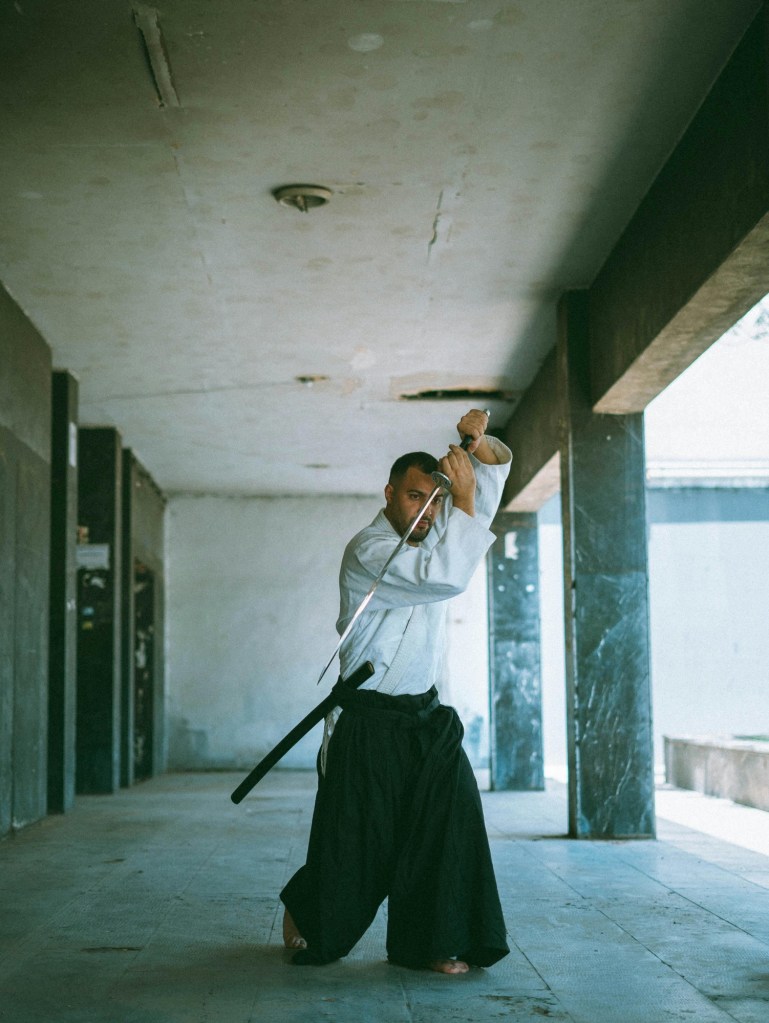
During my formative years in karate, I began to recognize the need to have some training in something else. These days, most martial artists I speak with tend to supplement themselves with the opposite of their home style. Practicing a striking art? Maybe take some grappling or throwing, like JiuJitsu or Judo. Already engage in one of those grappling arts? Maybe supplement with some striking art, or kick boxing. It allows one to become a well-rounded practitioner who is prepared for the eventualities of the fight falling to the ground or already being there and needing to strike the opponent to end the threat. And that last part is an important takeaway; end the threat. At the end of the day and for a genuine practitioner of the art, we’ll never be the ones to start the fight. But you’d better damn well believe that we’ll be the ones who will end it. And that becomes an important detail. So, what if you have multiple opponents and you know you’ll be overwhelmed? What do you do now? Roll over and just let it happen? Accept one’s fate? Yeah, screw that noise.
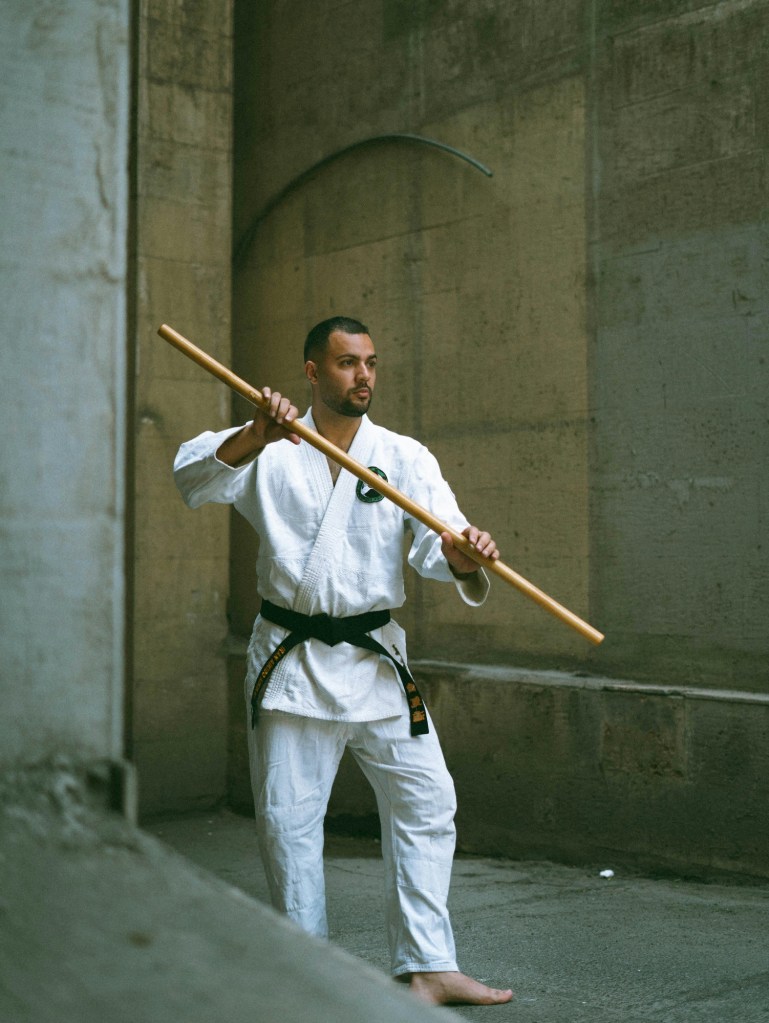
In such a scenario, I would find something, anything, that would allow me to gain a martial edge over the opposition. If I weren’t already in possession of a weapon, I would find a broom stick, a pocket knife, a broken tree branch… Anything that would allow me to even the playing field against multiple opponents OR an opponent who has a weapon themselves. Ever try to defend yourself bare-handed against an armed opponent? We train for it. It’s possible. But it’s also sketch as hell and there’s no guarantee you’ll be successful. If you’re lucky and manage to defend yourself, good for you. But all it would take is one lucky shot, whether with a stick or an edged weapon, for your opponent to put you down and then you’re completely at their mercy. Not a position I’d want to be in. I prefer to be prepared. And a big part of the preparation is ensuring you have some familiarity with a weapon.
Most of the techniques in martial arts is rooted muscle memory. The concept of practicing and drilling a technique into one’s mind so completely that it can be recalled and executed by the body without thought or hesitation. This is one of the many reasons why you’ll see karateka practicing the same technique dozens and even hundreds of times before moving on to something else. If someone attacks me on the fly, my body will instinctively react, block and strike. It’s been drilled into my very soul and over the years, I’ve never really been caught completely unaware as a result. Setting aside the possibility of unwanted hyper-vigilance, this is an important approach to whatever weapons you choose to train with. The idea isn’t to get caught in a scenario where you suddenly find your fate dependent on the use of a club or stick; rather, ensuring you have familiarity with the feel, reach and possibilities of any given weapon is what will make the difference.
In the dojo, we frequently trained with knives, practicing certain blocks in order to avoid getting cut. Outside of that, we never really focused on weapons to any extreme, much as I indicated in the opening paragraph of this post. There is one notable, unspoken weapon not opportunity that I’ve trained with independently over the decades; the BELT. No, that isn’t a typo. A belt makes an effective weapon, both for blocking and in some instances, striking. Let’s start with IN the dojo. Your belt, or obi (depending on your style), can be an effective tool for blocking and diverting your opponent. Usually made of thick, durable cotton-blend materials with deep stitching, using your belt to block an opponent’s incoming attack, followed by grappling and entangling the opponent’s limbs, the karate belt is an unspoken and unhandled hero of the unarmed. And this practice can be extended to many household items that have the same functionality. I’ve lost count of how many times I’ve had my sons come “play” while I’m doing dishes and grappled my sons’ wrists using the dish towel. All in good fun, of course but it keeps me in practice.
Outside the dojo, one’s everyday leather belt is even more effective. Usually containing a buckle or fastener made of a metallic compound, swinging the belt and having it strike with the metallic end is not only a significant deterrent to an oncoming opponent but is also an effective enough striking tool to possibly end the threat. Able to block and deflect attacks in the same way as your karate belt, you also have option to wrap the belt around your knuckle and wrists to help protect them during hands strikes. And let’s not forget the potential for whipping. As they used to say in the old days, nothing deters a threat like a good ol’ fashion “whoopin’.” It’s kind of like snapping a wet towel. You ever get struck by the crack of a whipping belt. That shit hurts like hell. There are some styles and schools out there that focus on training and practicing belt techniques and I consider it to be one of the most underused methods of self-defense.
All and all, while this post rather feels a bit like it’s all over the place, the important takeaway here is that there’s plenty of opportunity to increase your self-defense toolkit by indulging in methods that aren’t empty-handed. Protecting oneself and others is key, and it would be a shame if one were unable to do that because they were focused and limited on only one means and one style. Yes, one should dedicate themselves to one parent style as “their” style. I’ll be a practitioner of Uechi-Ryu until the day this life ends. But one must be open to exploring and expanding. True learning can never happen by limiting oneself. So, get out there and see what you can learn. Some skills are inherently transferable. I promise you that if you train in Kendo, Kenjutsu or Iaido, you’d be able to swing a club or a stick and defend yourself just as admirably, even if the club or stick doesn’t have a cutting edge. So branch out and learn. As the old saying goes, if you’re breathing, you should still be learning. Food for thought… ☯️

 The Blogging Buddhist